

P1098 on 2009-2017 Audi Q5 2.0T: Intake Manifold Runner Sensor Causes and Fixes
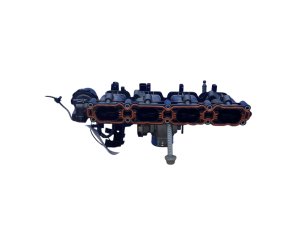
On the Audi Q5 2.0T, code P1098 almost always means the plastic intake manifold has failed. The position sensor is part of the manifold and isn't sold separately. The fix is to replace the entire intake manifold assembly, which costs between $250-$450 for the part. This is often seen with the more common P2015 code, which points to the same failure.
- P1098 on your Audi Q5 2.0T is not an electrical sensor problem, but a symptom of a failed intake manifold.
- The only correct repair is to replace the entire intake manifold assembly; the sensor is not sold separately.
- While performing this repair, it is crucial to also replace the fuel injector seals and clean the carbon buildup from the intake valves.
- Visually checking the actuator arm on the driver's side of the manifold is a quick way to confirm a common mechanical failure.
- Do not confuse this with the definition for P1098 on GM vehicles, which refers to a completely different part (coolant control valve).
What's Unique About the 2009-2017 Audi Q5
The 2.0T TFSI engine (specifically Gen2 EA888, engine codes CAEB, CAED) in the first-generation Audi Q5 uses a plastic intake manifold with an integrated runner flap system that is a well-documented, common failure point. While the code P1098 points to the sensor, the sensor itself rarely fails electrically. Instead, the problem is usually a mechanical failure, such as the actuator arm popping out of the manifold, the internal plastic linkage breaking, or the flaps themselves getting stuck. Because the position sensor (G336) is integrated into the manifold assembly, Audi does not sell it as a separate part, making complete manifold replacement the standard repair. This issue is so common that it often appears alongside or is diagnosed as the more frequent P2015 fault code, which indicates the same mechanical failure.
Symptoms You May Notice
- Check Engine Light illuminated
- Rough or unstable idle
- Hesitation or lack of power during acceleration
- Reduced fuel economy
- In some cases, a noticeable hissing or sucking sound from the engine bay if the actuator arm has created a vacuum leak.
- EPC (Electronic Power Control) light may illuminate, especially under high load or high RPM.
- Replacing only the position sensor, which is not possible as it's integrated into the manifold.
- Replacing spark plugs or ignition coils to fix a rough idle without first addressing the intake manifold fault code.
- Assuming the issue is purely electrical due to the 'Open or Short to Plus' definition, when it is almost always a mechanical failure causing the sensor to read out of its expected range.
Most Likely Causes
- Intake Manifold Assembly Failure 🔴 High Probability The plastic construction of the manifold and its moving parts are susceptible to wear, heat, and carbon buildup from the direct injection system. The most common failure is the actuator arm pivot point wearing out and popping loose, creating a vacuum leak and loss of flap control. The internal plastic triangle that connects the actuator to the flaps can also wear out and develop slack, leading to an implausible position reading.
How to confirm: Visually inspect the actuator arm on the driver's side of the manifold; if it's disconnected or broken, the manifold has failed. A professional scan tool (like VCDS) can run 'Basic Settings' for the intake runner flaps; failure of this test or seeing specified vs. actual values that don't match confirms a fault. You can also manually move the actuator (with the engine off) to feel for binding or excessive play.
Typical fix: Replace the entire intake manifold assembly with a new, updated part from the OEM or a quality aftermarket brand. It is highly recommended to clean the intake ports and valves of carbon buildup (walnut blasting) at the same time. Some aftermarket companies sell a metal 'repair bracket' that clips onto the actuator to prevent it from over-traveling or popping out, which can be a cheaper, temporary fix for P2015-related wear.
Est. part cost: $250-$450 - Broken or Disconnected Vacuum Line 🟡 Medium Probability The vacuum lines that control the runner flap actuator are made of plastic and can become brittle and crack over time due to engine heat. Debris can also clog the lines or the 'T' fittings.
How to confirm: Visually trace the vacuum lines from the vacuum pump to the intake manifold control solenoid (N316) and actuator. Look for obvious cracks, breaks, or loose connections. A handheld vacuum pump can be used to test the actuator and lines for leaks. A smoke test can also be used to find small leaks.
Typical fix: Replace the damaged section of vacuum hose or the entire line.
Est. part cost: $10-$50 - Wiring Harness or Connector Damage ⚪ Low Probability The wiring to the position sensor is located in a hot, tight area of the engine bay and can become brittle or damaged during other repairs. Corrosion at the connector pins is also possible.
How to confirm: Inspect the wiring and connector going to the intake manifold runner position sensor (G336) for any signs of damage, corrosion, or loose pins. Check for correct voltage at the pins with a multimeter (Pin 1: Ground, Pin 3: 5V reference). A reading of 5V on the signal pin (Pin 2) is incorrect and points to a short.
Typical fix: Repair the damaged wire or replace the connector pigtail.
Est. part cost: $15-$40
Diagnosis Steps
- Read the fault codes with a VAG-compatible OBD-II scanner to confirm P1098 and any other related codes like P2015, P2187, or P030x.
- Perform a thorough visual inspection. Focus on the driver's side of the intake manifold. Check if the black plastic actuator arm is connected and moves freely. If it has popped out, the manifold has failed.
- Inspect all vacuum lines connected to the intake manifold's control solenoid (N316) and the actuator itself for cracks, brittleness, or disconnection.
- If no obvious mechanical damage is found, inspect the electrical connector and wiring to the position sensor (G336) for damage, corrosion, or backed-out pins.
- With a scan tool like VCDS, navigate to the engine control module and access the measuring blocks for the intake flaps. Look for values like 'load flaps actual vs load flaps specified'. Command a 'Basic Settings' or adaptation test (Group 142). If the test fails or the values do not change as expected, it confirms a fault in the manifold assembly.
- If a vacuum leak is suspected but not visible, perform a smoke test on the intake system.
- If all tests point to a mechanical fault within the manifold, the conclusion is to replace the entire intake manifold assembly, as individual components are not sold separately by the OEM.
Parts You'll Likely Need
- Intake Manifold Assembly
(OEM #06H133201AT)— This is the primary point of failure. The code P1098 almost always indicates a mechanical problem with the manifold, and the sensor is integrated into the assembly. The 'AT' revision is a commonly used updated part.
Trusted brands: Genuine Audi/VW, Vaico, Pierburg, MANN+HUMMEL
OEM price range: $350-$450
Aftermarket price range: $250-$350 - Fuel Injector Seal Kit
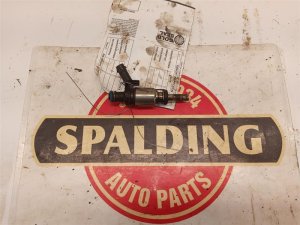
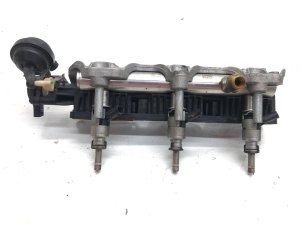
(OEM #06J998907B)— The fuel injectors must be removed to replace the intake manifold. The Teflon seals are single-use and must be replaced to prevent fuel and vacuum leaks. Special tools are required for proper installation.
Trusted brands: Bosch, Genuine Audi/VW, Elring
OEM price range: $60-$80
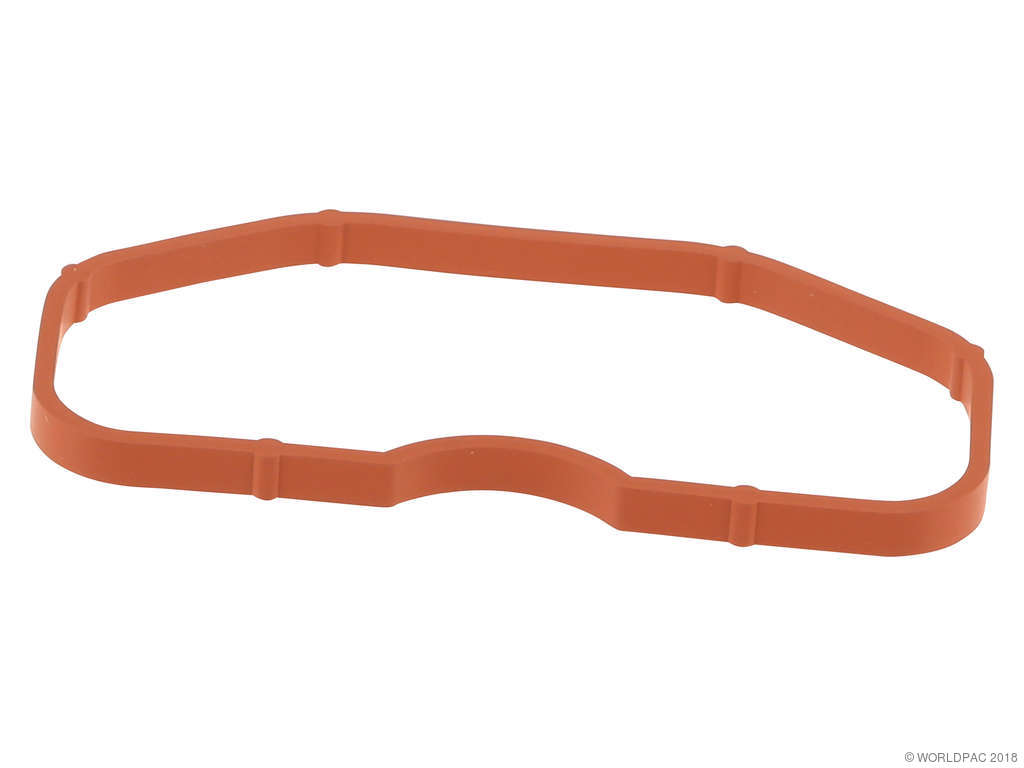
Aftermarket price range: $30-$50 - Intake Manifold Gasket — While most new intake manifolds come with a new gasket, it's crucial to verify. If buying a used manifold or if the new one doesn't include it, a new gasket is mandatory to prevent vacuum leaks.
Trusted brands: Victor Reinz, Elring
OEM price range: $20-$30
Aftermarket price range: $10-$20
Related Codes That Often Appear With This One
- P2015 — P2015 is the most common code for 'Intake Manifold Runner Position Sensor/Switch Circuit Range/Performance'. It often appears for the exact same mechanical failures of the intake manifold on this engine and is functionally the same diagnosis.
- P030x (e.g., P0300, P0301) — Cylinder misfire codes can be triggered by the incorrect air/fuel mixture resulting from the malfunctioning intake runner flaps, especially if there is a vacuum leak.
- P2187 — A 'System Too Lean at Idle' code can occur if the manifold failure creates a significant vacuum leak, such as when the actuator arm pops off.
- P2004 — This code for 'Intake Manifold Runner Control Stuck Open' can also be triggered by the same mechanical failures of the flap assembly.
Technical Service Bulletins (TSBs) & Recalls
- TSB 24-16-53 (2044003/1): Addresses DTC P201500 and mentions routing a clean air line to the changeover valve to prevent contamination, suggesting debris can be a contributing factor.
- TSB 01-13-50 (2030192/2): While for 4.2L/5.2L FSI engines, it describes the P2015 code and diagnostic path, showing the code's prevalence across different VAG engines with runner flap systems.
Platform-Specific Known Issues
- The 2.0T TFSI engine is a direct-injection engine, which makes it prone to significant carbon buildup on the intake valves. When replacing the intake manifold, it is the perfect time to perform a carbon cleaning service (e.g., walnut blasting), as the intake ports will be fully exposed. Ignoring this can lead to persistent rough idle and misfire issues even after the new manifold is installed.
- Some owners on forums report success using an aftermarket metal bracket (e.g., from ECS Tuning or Bar-Tek) that clips onto the actuator arm assembly. This bracket acts as a hard stop, preventing the worn mechanism from over-traveling and triggering a P2015 code, but may not resolve a P1098 'short to plus' fault if the sensor's reading is electrically invalid.
Mechanic-Grade Diagnostic Values
- G336 Position Sensor Signal Voltage — expected: A smooth, gradual sweep between ~1.2V (flaps fully open) and ~4.5V (flaps fully closed).. Failure: Voltage that is stuck, jumps erratically, or reads outside the expected range. A reading of 5V on the signal pin indicates a short to positive.
- VCDS - Runner Flap Position (actual) — expected: Should read ~0-27% at idle and switch quickly to ~99% when engine RPM exceeds 3,000.. Failure: The 'actual' value does not match the 'specified' value, or fails to move when commanded during a basic settings test.
- VCDS - Runner Flap B1 Position Offset — expected: Should correspond to the sensor's output voltage at startup, typically around 4.5V.. Failure: A value significantly different from the expected ~4.5V can indicate a faulty sensor, even on a brand new manifold assembly.
- G336 Sensor Connector Pin Voltages (Key on, Engine off) — expected: Pin 1: Ground (0V), Pin 2: Signal (~4.5V with flaps closed), Pin 3: Reference (5V).. Failure: Missing 5V reference or ground, or signal voltage that is incorrect.
Scan Tool Commands That Help
- VCDS (VAG-COM): Engine -> Basic Settings -> Group 142 — This function runs the intake manifold runner adaptation. It must be performed after replacing the intake manifold to teach the ECU the new sensor's position range. A failure of this test points directly to a problem with the manifold, sensor, or actuator system.
- VCDS (VAG-COM): Engine -> Meas. Blocks or Adv. Meas. Values — Used to monitor live data of 'Runner Flap B1 Position (spec.)' vs. 'Runner Flap B1 Position (act.)'. This allows a technician to see if the flaps are physically moving as commanded by the ECU when revving the engine past 3,000 RPM.
Wiring & Ground Locations
- G336 Sensor Connector — On the front of the intake manifold (passenger side of the engine in LHD vehicles), next to the oil filter housing.. This is the direct electrical connection for the sensor. Damage here from heat or during other service (like oil filter changes) can cause the P1098 fault.
- Ground Point 609 — In the plenum chamber (the area under the windshield wipers), on the right side.. The Engine Control Module (ECM) is located in the plenum chamber. A poor ground connection in this area can cause erratic behavior and fault codes for various engine sensors, including the G336.
- Ground Point on Long Member — On the left lower front long member of the chassis.. This is a primary engine bay ground point. Corrosion or a loose connection here can affect the entire engine management system.
Real Owner Repair Stories
- Ross-Tech Forums user 'stefdds' (VW 2.0 TSI (CCTA Engine) - similar EA888 architecture) — P2015 code after intake manifold replacement, adaptation would not complete and reported an ERROR in VCDS.
❌ Tried (didn't work) Replacing the entire intake manifold with a new Febi unit.
✅ What actually fixed it The position sensor (G336) on the brand new manifold was faulty out of the box. The tell-tale sign was the 'Runner Flap B1 Position Offset' value in VCDS being out of spec. Replacing just the sensor on the new manifold with another new sensor allowed the adaptation to succeed. - Ross-Tech Forums user (2010 VW GTI (2.0TSI Engine)) — P2015 and P2004 codes with CEL, adaptation error in VCDS despite actuator appearing to move correctly.
❌ Tried (didn't work) Replacing the intake manifold with the newest revision., Smoke testing for vacuum leaks., Testing with a vacuum pump., Spraying carb cleaner to find leaks., Checking wiring harness resistance and voltage.
✅ What actually fixed it The G336 flap angle sensor itself had failed electrically, even though it seemed to work and there were no mechanical issues. The user was able to source a genuine VW sensor separately from the manifold and replacing it solved the problem, allowing the adaptation to pass immediately.
"I Checked Everything" — The Actual Cause
- A known case involved P2015/P2004 codes where extensive vacuum leak testing (smoke test, vacuum pump) showed no issues. The actuator arm moved, and the flaps seemed to operate correctly when tested. The root cause was not a vacuum leak or mechanical failure, but a purely electrical failure of the G336 position sensor itself. It was providing an invalid signal to the ECU, causing the adaptation to fail despite the mechanicals being sound.
OEM Part Supersession History
06H133201AF, 06H133201AN→06H133201AT— Revisions to address the high failure rate of the runner flap mechanism.
Heads up: While later revisions are meant to be direct replacements, there are anecdotal reports of fitment issues with the fuel rail bracket on certain aftermarket or even revised OEM manifolds, sometimes requiring the user to swap components from the old manifold to the new one.
Model Year Variations Within This Range
- 2009-2017: The Audi Q5 in this range uses the EA888 Gen 2 engine (codes like CAEB, CAED, CPMA, CPMB). While there were minor running changes and a facelift in 2013, the fundamental design of the plastic intake manifold with vacuum-operated runner flaps remained the source of this common problem across the entire generation.
Diagnostic Flowchart
Other Known Issues on This Vehicle
Issues unrelated to this code that are worth knowing about as an owner of this generation:
- Excessive Oil Consumption 🔴 High — Very common on early 2.0T TFSI engines (CAEB), particularly 2009-2011 models. Can occur as early as 30-50k miles. Owners report adding 1 quart of oil every 600-1,000 miles. (Ref: Subject of a class-action lawsuit. Audi issued TSBs outlining a two-stage repair: 1) PCV valve replacement and software update, and 2) Piston and ring replacement if consumption persists.)
- Timing Chain Tensioner Failure 🔴 High — Common on 2009-2012 models with the original tensioner design. Failure can happen without warning, often at startup, and typically between 60k-100k miles. (Ref: Subject of a class-action lawsuit and warranty extension (e.g., TSB #AWA 18-15). The updated tensioner is a robust design. Visual inspection through a small port on the lower timing cover can determine if the old or new tensioner is installed.)
- Plastic Water Pump / Thermostat Housing Failure 🟠 Medium — Common across all 2.0T engines of this generation, typically failing between 50k-90k miles. The plastic housing can crack or the seals can degrade, causing coolant leaks. (Ref: A class-action lawsuit led to a warranty extension for this component on some models. The failure presents as a slow coolant leak, often leaving pink/white crusty residue on the front of the engine block below the intake manifold.)
- PCV Valve / Oil Separator Failure 🟠 Medium — A common failure item, often needing replacement every 60k-80k miles. Failure of the internal diaphragm leads to excessive crankcase vacuum. (Ref: An updated part with a stronger diaphragm is available. Symptoms include a high-pitched whistling noise at idle, a 'System Too Lean at Idle' code (P2187), and increased oil consumption.)
- Turbocharger Wastegate Rattle / Failure 🟠 Medium — Affects earlier 2.0T engines. The wastegate actuator rod or linkage wears, causing a rattling noise and eventually leading to underboost fault codes (e.g., P0299). (Ref: No specific recall, but a common issue discussed in forums. The fix often involves replacing the entire turbocharger, although some aftermarket clips and repair kits exist.)
Used vs. New Parts: Buying Guide for This Vehicle
When a used part is the smart pick: For the intake manifold assembly, buying used is strongly discouraged. The failure is due to wear and heat degradation of internal plastic components that are often not visible. The risk of a used part failing soon after installation is very high.
Donor-vehicle mileage cap: roughly under 30000 miles for the part to have meaningful remaining life.
What to inspect on the donor part:
- If buying used is unavoidable, insist on seeing the part first.
- Verify the actuator arm on the side is intact and not cracked.
- Manually move the actuator arm; it should move smoothly with some spring resistance but no binding or gritty feeling.
- Check for any cracks in the plastic housing, especially around the mounting points and actuator.
- Ask for the mileage of the donor car; anything over 30,000 miles is a significant gamble.
OEM-only on this vehicle (don't cheap out):
- Fuel Injector Seal Kit: These are single-use Teflon seals. Using cheap aftermarket seals can lead to dangerous fuel leaks or persistent vacuum leaks. Always use OEM or a trusted OE supplier like Bosch or Elring.
Aftermarket brands forum-validated for this vehicle:
- Pierburg (often an OE supplier for related components)
- MANN+HUMMEL
- Genuine Audi/VW is the safest bet to avoid compatibility issues.
Brands owners have reported issues with on this vehicle:
- Unbranded parts from online marketplaces (e.g., eBay, Amazon) have a high risk of premature failure or fitment issues.
- Some budget brands like URO Parts or Febi have mixed reviews; while some users report success, others have experienced continued problems or faulty-out-of-the-box parts.
Real Owner Stories
Aggregated from forums and TSBs cited above. Mileages and costs reflect what owners reported in those sources.
2010 Audi A4 B8 2.0 TFSI
Symptoms: The owner replaced the manifold but the code persisted. Discussion revealed the fault was tied to physical breakage of the manifold linkage and required checking VCDS measuring blocks IDE01924 and IDE01925 for proper diagnosis.
What fixed it: Physical inspection and replacement of the manifold linkage/assembly and verifying electrical signals at the sensor.
Source hint: AudiWorld Forums: P2015 code still showing after replacing intake manifold a4 b8 2.0 tfsi
2009 Audi A4 B8 2.0T
Symptoms: Actuator arm popping off and internal pieces breaking; significant carbon buildup found on the intake ports.
What fixed it: Replacement of the entire intake manifold assembly combined with a carbon cleaning service.
Source hint: Audizine Forum Thread: DIY - B8 2.0T Intake Manifold and Carbon Clean
2005.5 Audi A4 B7 2.0T
Symptoms: VCDS scan showed both P3193 and P1098 codes present simultaneously, indicating a fault in the intake runner system.
What fixed it: Technician-guided diagnostic path focusing on voltage readings at the sensor connector to identify the runner system fault.
Source hint: Ross-Tech Forums: 2005.5 audi a4 quattro 2.0T B7 Need Guidance! Please Help!
Related OBD-II Codes
Frequently Asked Questions
Does TSB 24-16-53 apply to my Audi Q5 regarding the intake manifold issues?
Can I just replace the position sensor (G336) to fix the P1098 'short to plus' code?
Is there a cheaper alternative to replacing the whole manifold on my 2.0T TFSI?
Should I perform a carbon cleaning when fixing the P1098 code on my Q5?
How can I confirm if my Q5's actuator arm has failed without a mechanic?
What voltage should I see at the intake manifold runner position sensor (G336)?
Used OEM Parts in Stock


New Aftermarket Parts Available


The information in this article is provided for general reference and educational purposes only. Vehicle specifications, procedures, and part compatibility can vary by production date, trim level, and region. Always consult your vehicle's factory service manual and verify part numbers before purchasing or performing repairs. Safety-critical components such as airbags, seat belts, and braking systems should be installed by a qualified professional.
- Audi Q5:
- 🛍️ Shop This Part
- What's Unique About the 2009-2017 Audi Q5
- Symptoms You May Notice
- Most Likely Causes
- Diagnosis Steps
- Parts You'll Likely Need
- Related Codes That Often Appear With This One
- Technical Service Bulletins (TSBs) & Recalls
- Platform-Specific Known Issues
- Mechanic-Grade Diagnostic Values
- Scan Tool Commands That Help
- Wiring & Ground Locations
- Real Owner Repair Stories
- "I Checked Everything" — The Actual Cause
- OEM Part Supersession History
- Model Year Variations Within This Range
- Diagnostic Flowchart
- Other Known Issues on This Vehicle
- Used vs. New Parts: Buying Guide for This Vehicle
- Real Owner Stories
- 2010 Audi A4 B8 2.0 TFSI
- 2009 Audi A4 B8 2.0T
- 2005.5 Audi A4 B7 2.0T
- Related OBD-II Codes
- Frequently Asked Questions
- 🎟️ Get 5% Off