

P1066 on 2004-2011 Audi A6 4.2L V8: Intake Air Changeover Valve Fixes
P1066 on the Audi A6 4.2L V8 indicates a 'short to positive' in the intake manifold runner control solenoid circuit. This is most often a failed solenoid valve (Audi part N335) or a damaged wiring harness. Expect to pay $30-$60 for a new solenoid and diagnosis involves checking the wiring and testing the solenoid's electrical integrity. The solenoid is located on the back of the passenger-side air filter housing.
- P1066 on your Audi A6 4.2L is an electrical fault, specifically a 'short to positive' in the intake manifold changeover valve (N335) circuit.
- The most common cause is a failed N335 solenoid (part # 037906283C), which can be tested with a multimeter (spec: 25-35 ohms).
- The second most common cause is a damaged wiring harness leading to the solenoid.
- The solenoid is located on the back of the passenger-side air filter housing, a location that makes its wiring vulnerable during air filter service.
- Do not immediately assume a major mechanical failure; diagnose the electrical fault first before considering intake manifold replacement.
What's Unique About the 2004-2011 Audi A6
The 4.2L V8 FSI (BVJ) engine in the C6 generation A6 uses a sophisticated dual-stage variable intake manifold to produce a wide powerband. This system relies on vacuum-actuated flaps controlled by an electric solenoid (N335). While mechanical issues like carbon-caked flaps or broken plastic actuator arms are common on these manifolds, the P1066 code specifically points to an electrical failure, not a mechanical one. It's crucial to diagnose the 'short to positive' electrical fault before replacing expensive mechanical manifold components. The N335 solenoid is often located on the back of the passenger-side air filter housing, making it susceptible to being unplugged during air filter changes, which would typically set an 'open circuit' code like P1068 but highlights the service-related sensitivity of this component's wiring.
Symptoms You May Notice
- Check Engine Light is on
- Noticeable loss of engine power, particularly at higher or lower RPMs
- Slightly rough or unstable idle
- Reduced fuel economy
- Failure to pass emissions testing
- Replacing the entire intake manifold when only the external solenoid is faulty.
- Replacing the intake manifold runner position sensor (which sets different codes like P2015) instead of the control solenoid.
- Assuming the issue is mechanical (stuck flaps) without first diagnosing the specific 'short to positive' electrical fault indicated by P1066.
- Replacing the wrong solenoid, as several similar-looking valves (e.g., for EVAP system) are used in the engine bay.
Most Likely Causes
- Failed Intake Air Changeover Valve (Solenoid N335) 🎬 Watch: Diagnosing a bad changeover valve solenoid 🔴 High Probability The solenoid is an electro-mechanical part subject to constant heat cycles and vibration. On the 4.2L FSI, it is often mounted near the back of the engine or on the airbox, where it can fail internally, causing its coil windings to short circuit.
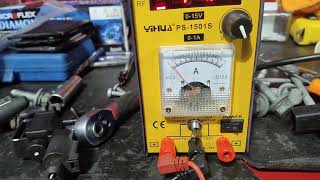
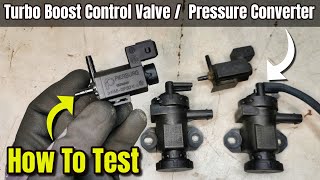
How to confirm: Disconnect the solenoid's electrical connector. Use a multimeter to check for continuity to ground and to measure the internal resistance between its pins. A near-zero resistance reading indicates an internal short. A healthy solenoid should have a resistance of approximately 25-35 Ohms.
Typical fix: Replace the faulty solenoid valve. It is a small, externally mounted part, typically located on the rear of the passenger-side air filter housing.
Est. part cost: $30-$60 - Wiring Harness Short to Positive 🟡 Medium Probability The engine bay wiring is exposed to high temperatures, oil, and vibration. Over time, insulation can become brittle and crack, or it can rub through on a metal bracket or the engine block. This can cause the signal wire for the N335 solenoid to make contact with a 12V power source, resulting in a 'short to positive' fault.
How to confirm: Visually inspect the wiring harness leading to the N335 solenoid for any signs of damage, melting, or chafing. With the solenoid disconnected and the key in the 'On' position (engine off), use a multimeter to test for voltage on the signal wire at the connector. If you detect battery voltage on the signal wire (the wire that is not the main power supply), there is a short to positive in the harness.
Typical fix: Isolate the damaged section of the wire, repair it using solder and heat-shrink tubing, and secure the harness away from heat sources or sharp edges to prevent future damage.
Est. part cost: $5-$20
Rare But Worth Checking
- Stuck Intake Manifold Flaps Causing Solenoid Overload: While P1066 is an electrical code, it's possible that mechanically stuck runner flaps (due to heavy carbon buildup, a known issue on FSI engines) could cause the solenoid to be energized for extended periods, leading to overheating and eventual electrical failure (a short). If you replace the solenoid and it fails again quickly, investigate the mechanical condition of the intake manifold flaps by removing the intake manifold for inspection. 🎬 Watch: Audi V8 intake manifold disassembly and cleaning
- Faulty Engine Control Module (ECM): This is extremely rare, but the driver circuit within the ECM that controls the solenoid could fail. This is more common in cases of water damage to the ECM, which can happen on models like the Q7 where the ECM is in a vulnerable position. This should only be considered after all other possibilities, including the solenoid and wiring, have been definitively ruled out.
Diagnosis Steps
- Verify the presence of code P1066 using an OBD-II scanner. A VAG-specific tool like VCDS is recommended.
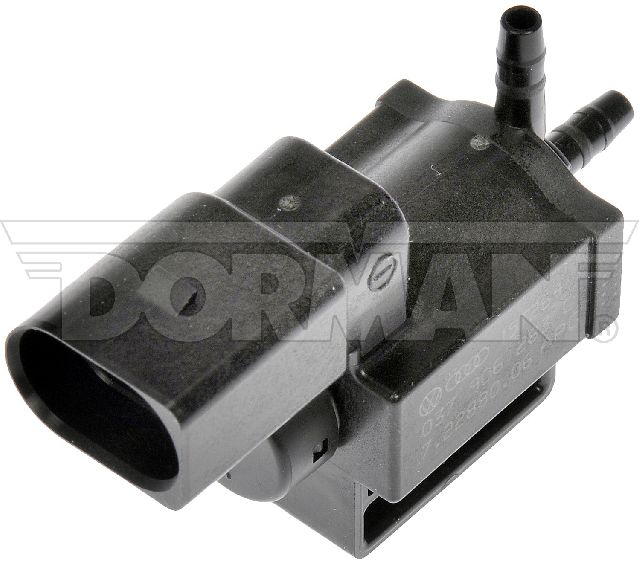
- Locate the Intake Air Changeover Valve (Solenoid N335). On the 4.2L FSI engine in the A6/S5/Q7, it is typically a small black solenoid with a 2-pin electrical connector and two vacuum hose connections, mounted on a bracket on the back of the passenger-side (US) air filter housing.
- Carefully inspect the electrical connector and the visible portion of the wiring harness for any obvious signs of damage, melting, corrosion, or oil contamination.
- Disconnect the electrical connector from the solenoid.
- Turn the ignition to the 'On' position (engine off). Use a multimeter to check for voltage at the connector's pins. One pin should have battery voltage (power supply), and the other is the signal wire which should not have voltage at this time. If the signal wire shows battery voltage, the harness is shorted to power.
- With the connector still disconnected, turn the ignition off. Switch the multimeter to measure resistance (Ohms). Measure the resistance across the two pins on the solenoid itself. A healthy solenoid should read between 25-35 Ohms. 🎬 See: Step-by-step guide to testing solenoid valves A reading of near zero Ohms indicates a shorted solenoid. An 'OL' or infinite reading would indicate an open circuit (P1068).
- If the solenoid tests bad, replace it. If the solenoid tests good but the wiring is shorted, repair the wiring harness.
- After repairs, clear the fault code and perform a test drive, cycling through various RPM ranges to ensure the intake flaps are actuating and the code does not return.
Parts You'll Likely Need
- Intake Air Changeover Valve (Solenoid N335)
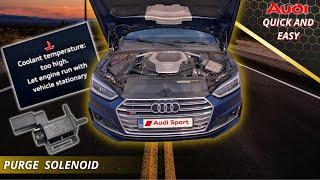
(OEM #037906283C)— This solenoid is the most common component to fail and cause the P1066 electrical fault code. Its internal windings can short out from age and heat. This part is used across a wide variety of VW/Audi vehicles for different functions, including as a purge valve.
Trusted brands: Genuine VW/Audi, Pierburg (often the OEM supplier, part # 7.22880.01.0 or similar), Bosch, Febi Bilstein
OEM price range: $50-$80
Aftermarket price range: $25-$50
Related Codes That Often Appear With This One
- P1067 — This code is for 'Intake Air Changeover Valve-N335: Short to Ground'. Seeing it intermittently with P1066 could indicate a severe wiring issue where the wire is alternately shorting to power and ground.
- P1068 — This code is for 'Intake Air Changeover Valve-N335: Open Circuit'. A damaged wire or failing solenoid could present as an open circuit at times and a short at other times. An unplugged connector is a very common cause for P1068.
- P2006 / P2007 — These codes indicate 'Intake Manifold Runner Control Stuck Closed'. While P1066 is an electrical fault, if the solenoid fails, the flaps may get stuck in one position, leading to these codes being triggered as a secondary effect. These can also be caused by cracked vacuum lines.
Technical Service Bulletins (TSBs) & Recalls
- While no TSB was found specifically for P1066 on this platform, TSB 2019485/3 addresses related codes P2006, P2007, and P2070 caused by cracked vacuum lines in the intake manifold control system, highlighting the sensitivity of the vacuum circuit controlled by the N335 solenoid.
Platform-Specific Known Issues
- Solenoid Location and Service: The N335 solenoid is located on the back of the passenger-side air filter housing. Its position makes it easy to forget to reconnect or to damage the connector during routine service like an air filter change. While this more commonly causes an 'open circuit' code (P1068), damaged wiring from such service can also lead to a short.
- Carbon Buildup as a Root Cause: The 4.2L FSI engine is a direct-injection design, which is known for significant carbon buildup on the intake valves and ports. This buildup can restrict flap movement inside the intake manifold, causing the control solenoid to work harder, overheat, and eventually fail electrically. Owners report dramatic performance improvements after a manual 'walnut blasting' cleaning service, which is recommended every 40,000-60,000 miles.
Mechanic-Grade Diagnostic Values
- N335 Solenoid Connector Power Pin Voltage — expected: Approximately 12V (Battery Voltage) with ignition on, engine off.. Failure: 0V indicates a break in the power supply wire or a blown fuse.
- N335 Solenoid Connector Signal Pin Voltage (harness side) — expected: 0V with solenoid disconnected and ignition on, engine off.. Failure: Reading battery voltage on this pin indicates a short to power in the wiring harness, which is the direct cause of a P1066 code.
- N335 Solenoid Internal Resistance — expected: 25-35 Ohms.. Failure: A reading near 0 Ohms indicates an internal short. An infinite ('OL') reading indicates an open circuit (P1068).
Scan Tool Commands That Help
- VCDS (VAG-COM): Engine -> Output Tests -> Sequential Test — This function cycles through all testable engine components, including the 'Intake Manifold Runner Control Valve (N335)'. The technician can listen for the solenoid to click when it is activated, providing a quick functional check without needing to access the component directly. The sequence is controlled by the ECU, so you must wait for the N335 test to begin.
- VCDS (VAG-COM): Engine -> Selective Output Tests — On newer control modules (UDS protocol), this may be available to directly command the N335 solenoid on and off. This is more direct than the sequential test and is the preferred method if available for the specific vehicle's control module.
Wiring & Ground Locations
- N335 Connector Pin 1 — On the 2-pin connector for the Intake Air Changeover Valve solenoid.. This pin is the 12V power supply from the Engine Control Module (ECM) via a relay. It should have battery voltage with the key on.
- N335 Connector Pin 2 — On the 2-pin connector for the Intake Air Changeover Valve solenoid.. This is the signal wire that the ECM grounds to activate the solenoid. Testing for voltage on this pin (with the solenoid unplugged) is the definitive test for a 'short to positive' in the harness. It should read 0V; if it reads 12V, the wire is shorted.
- Ground Point 639 — In the engine compartment, on the left-side longitudinal member.. This is a primary ground connection for the engine wiring harness. While a bad ground here would likely cause many other codes, verifying it is clean and tight is a good practice when diagnosing any electrical fault in the engine bay.
- OBD-II Diagnostic Port — Under the driver's side dashboard, above the pedals, typically a purple connector.. This is the connection point for the scan tool (like VCDS) needed to read the P1066 fault code and perform bidirectional tests.
Real Owner Repair Stories
- Ross-Tech Forums user (2009 Audi S5 (4.2L V8, platform mate)) — Check Engine Light with code P2004 'Intake Manifold Runner Stuck Open Bank 1'.
❌ Tried (didn't work) Initially suspected carbon buildup, but regular de-carbon services made it unlikely., Considered replacing intake runner motors or the entire manifold, but wanted to test first.
✅ What actually fixed it The user ran a VCDS Output Test which cycled the intake runner motors and linkages. This test demonstrated that the motors, vacuum solenoid (N335), and mechanical flaps were all functioning correctly. The test proved the electrical and mechanical parts were good, isolating the fault to the intake runner position sensor itself, which was then replaced to fix the issue. This story highlights the value of using VCDS Output Tests to avoid replacing expensive components unnecessarily.
OEM Part Supersession History
037906283C→No direct supersession found, but this part number is widely used.— N/A
Heads up: This part number is used for various solenoid functions across the VW/Audi lineup, including EVAP purge valves and intake runner control. While physically identical, ensure the part is specified for the 'Intake Air Changeover Valve' function for your vehicle, although they are often interchangeable. The OEM supplier is often Pierburg, with part number 7.22880.01.0 or similar.
Model Year Variations Within This Range
- 2006-2010: The BVJ version of the 4.2L FSI V8 was produced from 2006 to 2010 and used in the A6 (C6) and A8 (D3) platforms. Earlier C6 A6 models (2004-2005) used a different, non-FSI 4.2L V8 (BAT engine code) which has a different intake manifold design and control system. This P1066 article is specific to the FSI BVJ engine.
Diagnostic Flowchart
Other Known Issues on This Vehicle
Issues unrelated to this code that are worth knowing about as an owner of this generation:
- Timing Chain Tensioner & Guide Wear 🔴 High — Becomes a concern after 80,000-125,000 miles. Symptoms include a metallic rattle on cold starts. The chains are at the rear of the engine, requiring engine removal for service.
- Intake Valve Carbon Buildup 🟠 Medium — A universal issue for FSI (direct injection) engines. Causes rough idle, misfires, and loss of power. Manual cleaning (walnut blasting) is recommended every 40,000-60,000 miles for optimal performance.
- Excessive Oil Consumption 🟠 Medium — Many owners report needing to add oil between changes. Consumption up to 1 quart per 1,200-2,500 miles is sometimes considered 'normal' by dealers, but can be caused by worn piston rings, valve seals, or a faulty PCV system.
- Suspension Control Arm Bushing Wear 🟠 Medium — The front multi-link suspension's control arm bushings wear out, leading to clunking noises, loose steering feel, and uneven tire wear. This is a common maintenance item, especially on higher mileage cars.
- Steering Column Lock Module (J518) Failure 🔴 High — The module that recognizes the key and unlocks the steering column can fail, preventing the car from starting. It's an expensive repair as the module is often sold with the entire steering column.
- Thermostat and Water Pump Failure 🟠 Medium — The thermostat can stick and the water pump can leak prematurely (under 60,000 miles in some cases), leading to overheating or failure to reach operating temperature.
Used vs. New Parts: Buying Guide for This Vehicle
When a used part is the smart pick: A used solenoid is a reasonable choice for this repair if sourced from a reputable auto recycler. The part is not complex, is external to the engine, and failure is typically electrical rather than from mechanical wear. Given the low cost of a new aftermarket part, a used part is only a smart choice if it is significantly cheaper or more readily available.
Donor-vehicle mileage cap: roughly under 80000 miles for the part to have meaningful remaining life.
What to inspect on the donor part:
- Check the plastic housing for cracks or signs of heat damage.
- Ensure the electrical connector pins are straight and free of corrosion.
- Ask the seller if the part has been tested. You can test it yourself with a multimeter (should be 25-35 ohms) and a 12V source (should click audibly).
- Avoid parts from vehicles with known front-end damage or engine fires.
OEM-only on this vehicle (don't cheap out):
- Engine Control Module (ECM)
Aftermarket brands forum-validated for this vehicle:
- Pierburg (often the original OEM supplier)
- Bosch
- Febi Bilstein
Brands owners have reported issues with on this vehicle:
- Unbranded, no-name parts from online marketplaces may have questionable quality control and use inferior internal components, potentially leading to premature failure.
Real Owner Stories
Aggregated from forums and TSBs cited above. Mileages and costs reflect what owners reported in those sources.
2007 Audi Q7 4.2L FSI
Symptoms: A wide array of electrical codes, including low circuit faults, EPC light, and MMI issues.
What fixed it: The discussion points toward addressing circuit low faults in the engine management system, which shares the BVJ engine platform with the A6.
Source hint: AudiWorld Forums: 'Various "circuit low" codes, EPC, and MMI on 4.2L Q7'
Related OBD-II Codes
Frequently Asked Questions
Where is the N335 solenoid located on my Audi A6 4.2L V8?
Does TSB 2019485/3 apply to the P1066 code on my Audi?
Can carbon buildup cause the P1066 code on my 4.2L FSI engine?
What should the resistance be for a healthy N335 solenoid on an Audi A6?
Is it possible to damage the N335 solenoid during a routine air filter change?
How often should I perform 'walnut blasting' to prevent intake-related issues on my A6?
Helpful Videos
We Have This Part in Stock

The information in this article is provided for general reference and educational purposes only. Vehicle specifications, procedures, and part compatibility can vary by production date, trim level, and region. Always consult your vehicle's factory service manual and verify part numbers before purchasing or performing repairs. Safety-critical components such as airbags, seat belts, and braking systems should be installed by a qualified professional.
- Audi A6:
- 🎬 Helpful Videos
- 🛍️ Shop This Part
- What's Unique About the 2004-2011 Audi A6
- Symptoms You May Notice
- Most Likely Causes
- Rare But Worth Checking
- Diagnosis Steps
- Parts You'll Likely Need
- Related Codes That Often Appear With This One
- Technical Service Bulletins (TSBs) & Recalls
- Platform-Specific Known Issues
- Mechanic-Grade Diagnostic Values
- Scan Tool Commands That Help
- Wiring & Ground Locations
- Real Owner Repair Stories
- OEM Part Supersession History
- Model Year Variations Within This Range
- Diagnostic Flowchart
- Other Known Issues on This Vehicle
- Used vs. New Parts: Buying Guide for This Vehicle
- Real Owner Stories
- 2007 Audi Q7 4.2L FSI
- Related OBD-II Codes
- Frequently Asked Questions
- 🎟️ Get 5% Off