

P1048 on 2014-2016 Dodge Dart 1.4L Turbo: Cylinder 2 Solenoid Overcurrent Causes and Fixes
P1048 means the cylinder 2 valve control solenoid has an electrical short. Before replacing the expensive MultiAir actuator (the 'brick'), check for a blown 10A fuse (F87) and verify with a dealer if TSB 18-009-15 (a software update) has been performed, as this is a very common and much cheaper fix. If multiple P104x codes are present (e.g., P1046, P104A), the issue is almost certainly the software or a fuse, not multiple failed solenoids.
- P1048 on a 1.4L Dart is an electrical fault in the cylinder 2 valve control solenoid.
- ALWAYS check if TSB 18-009-15 (a software update) has been performed before buying parts. This is a very common and inexpensive fix.
- If you have codes for all four cylinders, the problem is almost certainly the 10A F87 fuse or the PCM software, not the actuator itself.
- If hardware replacement is necessary, the entire MultiAir actuator ('brick') must be replaced, which is an expensive part.
- Using the correct 5W-40 full synthetic oil is critical for the long-term health of the MultiAir system.
What's Unique About the 2014-2016 Dodge Dart
The 1.4L MultiAir engine in the Dodge Dart is a Fiat-Chrysler design that does not use a traditional intake camshaft. Instead, it uses engine oil pressure, modulated by electric solenoids, to open the intake valves. This technology is sensitive to oil type and condition. For this specific code, Chrysler released a Technical Service Bulletin (TSB 18-009-15) because the original PCM software was overly sensitive and could set false overcurrent codes. Therefore, checking the software version is a critical first step that is unique to this platform before condemning the expensive actuator. The TSB addresses P1048 directly, along with the equivalent codes for other cylinders.
Symptoms You May Notice
- Check Engine Light (MIL) illuminated
- Rough or unstable idle
- Engine stumbling or hesitating during acceleration
- Noticeable loss of power
- Engine may be difficult to restart
- Misfire sensation from the engine
- Metallic ticking or knocking noise from the top of the engine that may change with RPM
- Replacing the spark plug or ignition coil for cylinder 2. While a P0302 misfire code is often present, the root cause is the P1048 valve control issue, not the ignition system.
Most Likely Causes
- Outdated Powertrain Control Module (PCM) Software 🔴 High Probability The original factory software was overly sensitive and could falsely trigger overcurrent codes. Chrysler issued TSB 18-009-15 to correct this known issue. This is especially likely if codes for all four cylinders (P1046, P1048, P104A, P104C) appear simultaneously.
How to confirm: Contact a Dodge dealer or a qualified shop with your VIN. They can check their system to see if TSB 18-009-15 or its later revisions (up to Rev. F or later) have been performed on your vehicle.
Typical fix: Reprogramming (flashing) the PCM with the updated software. This must be done by a dealer or a shop with a wiTECH scan tool.
Est. part cost: $0 - Failed MultiAir Actuator Assembly ('Brick') 🟡 Medium Probability The oil supply solenoids are integrated into this single, non-serviceable unit, which is a known failure point. An 'overcurrent' fault strongly points to an internal short circuit within the solenoid coil for cylinder 2.
How to confirm: If the PCM software is up-to-date and the fuse/wiring are good, the actuator is the presumed cause. A technician can test the resistance of the solenoid at the actuator's connector pins; a reading near 0 ohms indicates a dead short. Swapping electrical connectors with an adjacent cylinder (e.g., cylinder 1) and seeing if the code changes from P1048 to P1046 would also confirm the fault is in the actuator's electronics.
Typical fix: Replace the entire MultiAir actuator assembly. The individual solenoids cannot be replaced.
Est. part cost: $500-$1600 - Blown Fuse 🟡 Medium Probability An electrical short circuit in the actuator or wiring will cause the protective fuse to blow. This is especially likely if you have codes for all four cylinders (P1046, P1048, P104A, P104C).
How to confirm: Check the 10A mini fuse in slot F87 of the under-hood fuse box (Power Distribution Center), located near the battery.
Typical fix: Replace the fuse. If it blows again immediately, you must diagnose the underlying short circuit (in the wiring or the actuator).
Est. part cost: $1-$5 - Incorrect, Low, or Dirty Engine Oil ⚪ Low Probability The MultiAir system relies on clean, correct-spec oil to function. While less likely to cause an 'overcurrent' code (which is electrical), poor oil quality can lead to sludge, clog small passages, and cause solenoid and actuator failure over time.
How to confirm: Check the oil level and condition on the dipstick. Verify that the oil used meets the manufacturer's specification (full synthetic 5W-40 meeting Chrysler MS-12991).
Typical fix: Perform an oil and filter change with the correct, high-quality oil.
Est. part cost: $50-$90
Rare But Worth Checking
- Damaged Wiring Harness: Although less common than actuator failure, the wiring harness leading to the MultiAir brick can become chafed or melted from contact with hot engine components or sharp brackets, causing a short to ground. This should be inspected before replacing the expensive actuator.
- Failed Powertrain Control Module (PCM): In very rare cases, the fault can be internal to the PCM itself, specifically the driver circuit for the solenoid. This should only be considered after all other possibilities, including wiring, have been exhaustively ruled out.
Diagnosis Steps
- Scan the PCM for all stored trouble codes. Note if P1048 appears alone or with other P104x solenoid codes. The presence of all four codes strongly suggests a software or fuse issue.
- Contact a Dodge dealer with your VIN to determine if TSB 18-009-15 (or a later revision like 18-009-15 Rev. F) is open for your vehicle. If it is, have the PCM software updated first, as this is the most common and cheapest fix.
- Inspect the 10A mini fuse in position F87 in the under-hood fuse box (Power Distribution Center). If it's blown, replace it. If it blows again, an active short circuit exists.
- Check the engine oil level and condition. Ensure it is full, clean, and the correct type (5W-40 full synthetic meeting MS-12991).
- Visually inspect the wiring harness that connects to the MultiAir actuator. Look for any signs of chafing, melting, or corrosion, especially where it might rub against engine brackets.
- If the fuse, software, and wiring are good, perform a resistance test on the MultiAir actuator. Disconnect the harness and use a multimeter to measure the resistance between the two pins for the cylinder 2 solenoid on the actuator side. A healthy solenoid should read between 0.5 and 1.0 Ohms; a reading near zero confirms an internal short.
- If a short is confirmed in the actuator, the MultiAir actuator ('brick') requires replacement.
Parts You'll Likely Need
- MultiAir Actuator Assembly
(OEM #68463929AA)— This is the complete unit that houses the failed solenoid. The solenoids are not sold separately, so the entire 'brick' must be replaced if it has an internal short. This part number supersedes many previous versions including 4892697AA, 4892697AG, and 4893099AD.
Trusted brands: Mopar
OEM price range: $1100-$1600
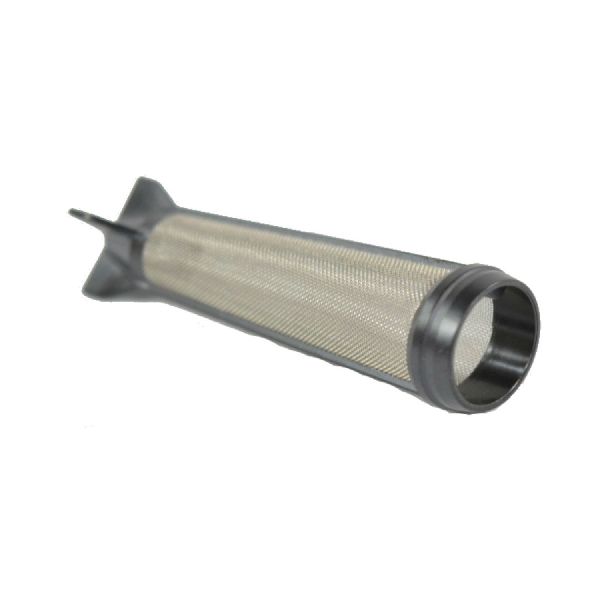
Aftermarket price range: $500-$900 - MultiAir Actuator Oil Supply Filter
(OEM #68189847AA)— It is highly recommended to replace this small filter screen when replacing the MultiAir actuator to ensure clean oil supply to the new unit. Clogging of this filter is a contributing factor to actuator failure.
Trusted brands: Mopar
OEM price range: $15-$30
Aftermarket price range: $10-$20 - 10 Amp Mini Fuse — This fuse (located in slot F87) will blow to protect the circuit if there is a hard short, which is the definition of an 'overcurrent' code.
Trusted brands: Bussmann, Littlefuse
OEM price range: $1-$5
Aftermarket price range: $1-$5
Related Codes That Often Appear With This One
- P0302 — This code indicates a misfire on cylinder 2. Since P1048 means the intake valves on cylinder 2 are not being controlled correctly, a misfire is a direct and expected symptom.
- P1046, P104A, P104C — These are the identical 'overcurrent' codes for cylinders 1, 3, and 4. Finding them all together almost guarantees the problem is systemic, such as a blown F87 fuse or the PCM software glitch, not four separate failed solenoids.
- P061A — This 'Internal Control Module Torque Performance' code is often listed in the same TSBs (18-009-15) as the P104x codes, further pointing to a PCM software issue as the root cause.
Technical Service Bulletins (TSBs) & Recalls
- 18-009-15 (Revisions A-F): Involves reprogramming the PCM to address various drivability issues, specifically including the P1046, P1048, P104A, and P104C overcurrent codes.
- 18-010-15 (Rev. D): A similar TSB for the Fiat 500 with the same 1.4L MultiAir engine, also listing the P104x overcurrent codes as a primary symptom fixed by a software flash.
Platform-Specific Known Issues
- Chrysler issued Technical Service Bulletin (TSB) 18-009-15 and its subsequent revisions (e.g., Rev. F) to address false P104x overcurrent codes by updating the PCM software. This should always be the first check.
- A Reddit user on r/dodgedart detailed their experience replacing the actuator without the expensive special service tool by carefully loosening the bolts in sequence to release the spring pressure evenly.
Mechanic-Grade Diagnostic Values
- MultiAir Solenoid Internal Resistance — expected: While no official spec is published, forum and repair data suggest a healthy solenoid should have a low resistance. One source suggests 0.25 - 0.30 Ohms. Another suggests a functional range of 8-12 Ohms for similar Fiat applications, but this is likely for a different component test. The most consistent test is comparing the reading between all four solenoids.. Failure: A reading of less than 1.0 Ohm, especially near 0 Ohms, indicates a short circuit, which is the direct cause of an 'overcurrent' code.
- MultiAir Solenoid Connector Voltage (Key On, Engine Off) — expected: One pin in the connector should show battery voltage (approximately 12V).. Failure: No voltage indicates a problem with the power supply, likely the F87 fuse or the wiring from the fuse box.
Scan Tool Commands That Help
- wiTECH (or equivalent high-level bidirectional scanner): Active Test: Cylinder 2 VVT Solenoid — This command allows a technician to manually activate and deactivate the cylinder 2 solenoid. An audible click should be heard from the actuator. This confirms if the PCM can command the circuit and if the solenoid is mechanically responsive. If activating the solenoid immediately blows the F87 fuse, it confirms a dead short in the actuator or wiring.
- wiTECH: Reprogram PCM — This function is used to perform the software update outlined in TSB 18-009-15. It flashes the PCM with revised logic that is less sensitive to transient current spikes, which was the cause of many false P104x codes.
- wiTECH: Cam/Crank Variation Relearn — This procedure must be performed after replacing the MultiAir actuator or any other major valvetrain component. It allows the PCM to learn the new mechanical tolerances and positions of the camshaft and crankshaft for accurate timing and misfire detection.
Wiring & Ground Locations
- MultiAir Actuator Connector — On the back side of the engine, on top of the cylinder head, where the main engine harness connects to the MultiAir 'brick'.. This is the primary connector where resistance and voltage tests for the cylinder 2 solenoid circuit are performed. Pins should be inspected for corrosion, damage, or being pushed out.
- G103 — A key ground point located on the left side of the engine compartment.. While a poor ground is unlikely to cause a specific overcurrent code, verifying major engine grounds is a crucial step in any electrical diagnosis to rule out system-wide voltage issues that could cause erratic module behavior.
- Powertrain Control Module (PCM) — Located at the right rear corner of the engine compartment.. The PCM contains the driver circuit that sends the signal to the solenoid and, more importantly, detects the overcurrent condition. The wiring between this module and the actuator connector is a potential point of failure.
Real Owner Repair Stories
- Reddit user on r/dodgedart (Dodge Dart 1.4L Turbo (year not specified)) — Stumbling during driving, completely dead cylinder at times, rough running. Code P1067 (valve actuation fault) was present, which is related to P1048.
❌ Tried (didn't work) Initial diagnosis pointed to the expensive MultiAir actuator.
✅ What actually fixed it The user acquired a used cylinder head with the MultiAir actuator from a donor vehicle with a blown bottom-end for about $350. They successfully replaced the actuator themselves without the special spring compression tool by carefully and evenly loosening the bolts to release spring pressure. The car ran correctly after the replacement.
Model Year Variations Within This Range
- 2014-2015: TSB 18-009-15 Rev. F applies to vehicles built on or before July 28, 2015 (MDH 0728XX). The software update for these years explicitly lists P1046, P1048, P104A, and P104C as addressed DTCs.
- 2016: TSB 18-009-15 Rev. F applies to vehicles built between July 28, 2015 (MDH 0728XX) and August 21, 2015 (MDH 0821XX). However, the list of addressed DTCs in this specific TSB revision for the 2016 model does not explicitly mention the P104x overcurrent codes, focusing on other symptoms like a no-compression crank. This implies the software issue was either resolved in production for later 2016 models or is covered under a different TSB.
Diagnostic Flowchart
Other Known Issues on This Vehicle
Issues unrelated to this code that are worth knowing about as an owner of this generation:
- Manual Transmission Clutch Pedal Failure 🔴 High — Common issue where the clutch pedal may stick to the floor due to a failing clutch master or slave cylinder. (Ref: Multiple owner complaints, no specific recall found.)
- Faulty Bluetooth/Uconnect Module 🟡 Low — Very common for the hands-free module to fail, causing the radio to get stuck on 'loading' and draining the battery.
- Engine Stalling / Electrical Gremlins 🟠 Medium — Widespread reports of the engine stalling while driving, often linked to low oil, battery issues, or poor grounding.
- Thermostat Failure 🟠 Medium — Common failure causing a P0128 code. The thermostat housing may also leak coolant.
- Excessive Oil Consumption (2.4L Engine) 🔴 High — The 2.4L Tigershark MultiAir engine is known for consuming excessive amounts of oil, which can lead to engine damage if not monitored closely.
- Shifter Cable Bushing Failure 🔴 High — A recall was issued for the shifter cable bushing, which could detach and prevent the driver from shifting the transmission into the intended gear. (Ref: Recall R42 (NHTSA 15V-462))
Used vs. New Parts: Buying Guide for This Vehicle
When a used part is the smart pick: A used MultiAir actuator ('brick') can be a cost-effective option, potentially saving over $1000 compared to a new OEM part. This makes sense if the budget for a new part is prohibitive and the owner accepts the risk of the used part having a limited lifespan. Other used parts like a wiring harness or fuse box are generally safe bets.
Donor-vehicle mileage cap: roughly under 70000 miles for the part to have meaningful remaining life.
What to inspect on the donor part:
- Source a part from a vehicle with a known history, ideally one taken out of service due to a collision or a non-engine-related failure (e.g., bottom-end failure).
- Ask for a short warranty (e.g., 30 days) from the seller/junkyard to protect against a dead-on-arrival part.
- Visually inspect the unit for any physical damage, cracks, or signs of severe oil leaks.
- If possible, perform a resistance check on the solenoids of the donor unit before purchase.
OEM-only on this vehicle (don't cheap out):
- MultiAir Actuator Assembly: While used OEM is a viable budget option, new aftermarket units have a mixed reputation. Given the complexity and critical function of this part, a new Mopar unit is the most reliable, albeit expensive, choice.
Brands owners have reported issues with on this vehicle:
- Unbranded/generic actuators from online marketplaces should be treated with extreme caution. There is little long-term reliability data, and failure can cause significant engine issues.
Related OBD-II Codes
Frequently Asked Questions
My Dart is showing codes P1046, P1048, P104A, and P104C all at once. What's the most likely cause?
How do I know if my 2015 Dodge Dart needs the software update mentioned in TSB 18-009-15?
Can I just replace the single bad solenoid for cylinder 2, or do I have to buy the whole MultiAir 'brick'?
What specific engine oil should I use in my 1.4L MultiAir Turbo to prevent problems?
My mechanic says the MultiAir actuator failed. Is this problem common on other cars?
Where is the fuse for the MultiAir system located on my Dart?
Used OEM Parts in Stock


New Aftermarket Parts Available


The information in this article is provided for general reference and educational purposes only. Vehicle specifications, procedures, and part compatibility can vary by production date, trim level, and region. Always consult your vehicle's factory service manual and verify part numbers before purchasing or performing repairs. Safety-critical components such as airbags, seat belts, and braking systems should be installed by a qualified professional.
- Dodge Dart:
- 🛍️ Shop This Part
- What's Unique About the 2014-2016 Dodge Dart
- Symptoms You May Notice
- Most Likely Causes
- Rare But Worth Checking
- Diagnosis Steps
- Parts You'll Likely Need
- Related Codes That Often Appear With This One
- Technical Service Bulletins (TSBs) & Recalls
- Platform-Specific Known Issues
- Mechanic-Grade Diagnostic Values
- Scan Tool Commands That Help
- Wiring & Ground Locations
- Real Owner Repair Stories
- Model Year Variations Within This Range
- Diagnostic Flowchart
- Other Known Issues on This Vehicle
- Used vs. New Parts: Buying Guide for This Vehicle
- Related OBD-II Codes
- Frequently Asked Questions
- 🎟️ Get 5% Off