

P1048 on 2013-2016 Dodge Dart 2.4L: Cylinder 2 Oil Solenoid Overcurrent Causes and Fixes
On a 2013-2016 Dodge Dart with the 2.4L engine, P1048 almost always means the MultiAir actuator assembly (the 'brick') has failed. This is an expensive part, often costing $800-$1600, and requires several hours of labor to replace. Before replacement, verify the PCM software is updated per TSB #18-009-15 REV G, as outdated software can also trigger this code.
- P1048 on a 2.4L Dart is an electrical fault code for the cylinder 2 valve control solenoid.
- The most probable cause is a failed MultiAir actuator assembly (the 'brick'), which must be replaced as a whole unit.
- This is a serious and expensive repair; it is not a simple DIY fix for most people.
- Always use the OEM-specified engine oil (SAE 0W-20) and maintain strict oil change intervals to prolong the life of the MultiAir system.
- Before replacing the expensive actuator, check for relevant software updates (TSB #18-009-15 REV G) and inspect the wiring harness for damage.
What's Unique About the 2013-2016 Dodge Dart
The 2.4L 'Tigershark' engine in the Dodge Dart uses Fiat's MultiAir technology, which replaces a traditional intake camshaft with electro-hydraulic actuators. These actuators, housed in a single unit often called the 'MultiAir brick', are a widely documented failure point across multiple FCA platforms. While oil quality is critical for their operation, the P1048 code specifically points to an electrical failure inside the brick, making replacement of the entire unit the most common, and often only, solution.
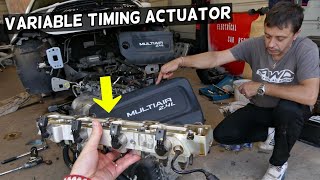
🎬 Watch: A complete walkthrough of the MultiAir brick replacement process.Symptoms You May Notice
- Check Engine Light is on
- Rough idle or engine vibration
- Engine misfire, especially on cylinder 2 (may be accompanied by P0302).
- Noticeable loss of power and poor acceleration
- Engine may stall at low speeds.
- Increased fuel consumption
- Engine may sound like it's knocking at idle, with the noise disappearing off-idle.
- Replacing only the spark plugs or ignition coils. While a misfire is a common symptom, P1048 indicates the root cause is in the valvetrain control system, not the ignition system. The misfire is the effect, not the cause.
- Replacing the MultiAir actuator without first checking for and applying required PCM software updates. The TSB for software updates was released specifically because the original software could falsely trigger these codes.
Most Likely Causes
- Failed MultiAir Actuator Assembly ('Brick') 🔴 High Probability The oil supply solenoids are integrated into this single, non-serviceable unit, which is a known failure point on MultiAir engines. An 'overcurrent' fault strongly points to an internal short circuit within the solenoid coil for cylinder 2. These units are sensitive and failures are common across the platform.
How to confirm: After verifying the wiring harness is intact and has no visible damage or short circuits, and confirming the PCM software is up-to-date, the most definitive test is to replace the actuator. A technician with an advanced scan tool (like wiTECH) may be able to command the solenoid and monitor its electrical response, but often the failure is conclusive enough to warrant replacement based on the code alone.
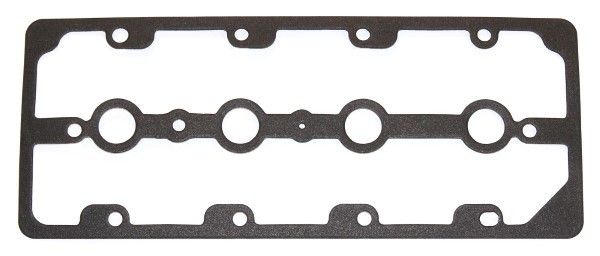
Typical fix: Replacement of the entire MultiAir actuator assembly and the associated valve cover gaskets.
Est. part cost: $800-$1600 - Incorrect or Degraded Engine Oil 🟡 Medium Probability The MultiAir system is extremely sensitive to oil viscosity, cleanliness, and level. The 2.4L MultiAir engine specifies SAE 0W-20 oil. Using the wrong oil, or extending oil change intervals, can cause sludge and varnish, leading to solenoid and actuator failure. Low oil levels can also cause MultiAir system faults.
How to confirm: Check oil level and service records. If the oil is low, dirty, or the wrong specification (must be SAE 0W-20 meeting Chrysler MS-6395), this is a likely contributing factor. An oil change is a necessary first step before replacing parts.
Typical fix: Perform an oil and filter change using the exact OEM-specified oil (SAE 0W-20). This may not fix an existing short circuit but is critical for preventing repeat failures and for the health of the new part.
Est. part cost: $50-$100 - Outdated PCM Software 🟡 Medium Probability FCA released multiple versions of a Technical Service Bulletin (TSB #18-009-15) to address this and other MultiAir solenoid overcurrent codes (P1046, P104A, P104C). The original software was often too sensitive and could erroneously flag a fault.
How to confirm: A Dodge dealer or a well-equipped independent shop with a wiTECH scan tool can check the vehicle's current software calibration ID against the latest available version and determine if the TSB update is applicable and has been performed.
Typical fix: Reprogramming (flashing) the Powertrain Control Module (PCM) with the updated software. This should be done before replacing the expensive MultiAir actuator.
Est. part cost: $0 (if under warranty) - $200 (dealer labor)
Rare But Worth Checking
- Wiring Harness Damage: Check the wiring harness connector at the MultiAir brick for damage, corrosion, or oil contamination. A short circuit in the harness could mimic an internal solenoid failure. Pay close attention to the wiring loom for any signs of chafing or melting.
- Powertrain Control Module (PCM) Failure: In very rare cases, the fault may lie with the PCM driver circuit that controls the solenoid. This should only be considered after the actuator, software, and wiring have been definitively ruled out.
Diagnosis Steps
- Verify the code with a quality OBD-II scanner. Note any other codes present, especially other P104x codes or misfire codes like P0302.
- Check the engine oil level and condition. If low, dirty, or overdue for a change, correct this first using SAE 0W-20 oil.
- Check for Technical Service Bulletins (TSBs). Contact a dealer with your VIN to verify if TSB #18-009-15 REV G or a later version has been performed. If not, a PCM software update is the next recommended step.
- Inspect the wiring harness and connector going to the MultiAir actuator. Look for any signs of damage, melting, corrosion, or oil saturation.
- If the oil and wiring are good, and all software updates have been performed, the next logical step is to replace the MultiAir actuator assembly.
- When replacing the actuator, it is critical to also replace the valve cover gaskets.
- After replacement, clear all codes and perform a test drive to ensure the issue is resolved.
Parts You'll Likely Need
- MultiAir Actuator Assembly
(OEM #5047980AE (supercedes 5047980AA, 5047980AB, 5047980AC, 5047980AD))— This is the primary failure point for a P1048 code, as the faulty solenoid is integrated into this assembly.
Trusted brands: Mopar
OEM price range: $1100-$1600
Aftermarket price range: $500-$800 - Valve Cover Gasket Set — Required for the replacement of the MultiAir actuator, as the valve cover must be removed to access it.
Trusted brands: Mopar, Fel-Pro
OEM price range: $40-$70
Aftermarket price range: $25-$50
Related Codes That Often Appear With This One
- P0302 — P0302 indicates a misfire on cylinder 2. Since P1048 means the intake valves on cylinder 2 are not being controlled properly, a misfire is a direct and expected consequence.
- P1046, P104A, P104C — These are the identical 'Overcurrent' codes for cylinders 1, 3, and 4. Seeing multiple of these codes together strongly suggests a widespread issue like a PCM software problem, a major wiring harness fault, or severe oil contamination affecting the entire MultiAir brick.
Technical Service Bulletins (TSBs) & Recalls
- TSB #18-009-15 REV G: Addresses various drivability improvements and lists P1048 as a potential code that can be resolved with a PCM software update. This applies to 2014-2016 Darts (with the 1.4L, but the issue is similar for the 2.4L). It is a critical first diagnostic step.
Platform-Specific Known Issues
- The MultiAir actuator is a widely documented weak point on the 2.4L engine used in the Dodge Dart and other FCA vehicles.
- Failure to use the correct specification engine oil (SAE 0W-20) and maintain regular oil change intervals is known to accelerate the failure of the MultiAir actuator.
- A PCM software update (TSB 18-009-15 REV G) was issued to correct overly sensitive fault detection for this code and should be checked before replacing hardware.
Mechanic-Grade Diagnostic Values
- MultiAir Solenoid Coil Resistance — expected: A specific value for this part is not published, but a generic VVT solenoid is often between 8-12 Ohms.. Failure: A reading of near-zero Ohms indicates a direct short circuit, which is consistent with an 'overcurrent' fault code.
- Solenoid Control Wire to Ground — expected: Infinite resistance (Open Line - O.L.).. Failure: Any continuity or low resistance reading indicates a short to ground in the wiring harness.
Scan Tool Commands That Help
- wiTECH or equivalent advanced scan tool: Active Test: Cylinder 1-4 VVT Solenoid Actuation — This is a primary diagnostic step to confirm solenoid failure. The command attempts to activate each solenoid individually. The technician should listen for an audible 'click' from the engine as each solenoid is commanded on and off. If the solenoid for cylinder 2 does not click, it strongly suggests a failed solenoid within the MultiAir brick, assuming the wiring is intact.
Wiring & Ground Locations
- Powertrain Control Module (PCM) — Located at the left front of the engine compartment for the 2.4L engine.. This is the source of the command signal and power for the MultiAir solenoids. The wiring harness runs from here to the actuator.
- G100 / G102 / G105 — Main engine compartment grounds located at the left front of the engine compartment.. A poor engine ground can cause a wide range of erratic electrical issues and fault codes, including sensor and actuator problems. Ensuring these grounds are clean and tight is a crucial step in diagnosing any electrical fault.
- G109 — Ground point located on the left side of the engine compartment on the wheel well.. This is another critical chassis ground for components in the engine bay. A poor connection here can affect the PCM and its related circuits.
Real Owner Repair Stories
- Reddit user on r/dodgedart (Dodge Dart (1.4L engine, but same MultiAir brick principle)) — Stumbling during driving, completely dead cylinder, rough running. Code P1067 (actuator valve failure).
❌ Tried (didn't work) The user went straight for the actuator replacement after diagnosis.
✅ What actually fixed it Replaced the MultiAir actuator with a used unit from a scrapyard for around $300. Critically, the user noted that the expensive special service tool (SST #10259A) was not necessary; they were able to remove and install the brick by carefully loosening the final two bolts to control its ascent from the head. They also confirmed no reprogramming was required after installation.
OEM Part Supersession History
5047980AA, 5047980AB, 5047980AC, 5047980AD→5047980AE— Revisions by the manufacturer to improve reliability and address failure modes.
Diagnostic Flowchart
Other Known Issues on This Vehicle
Issues unrelated to this code that are worth knowing about as an owner of this generation:
- Excessive Oil Consumption 🔴 High — Very common across all model years with the 2.4L engine. Owners report consuming 1-2 quarts of oil every 1,000-2,000 miles. This has led to class-action lawsuits. (Ref: A PCM software update was developed as a customer satisfaction notification to help reduce oil consumption under certain conditions.)
- Transmission Failure (DDCT and Automatic) 🔴 High — The 1.4L's Dual Dry Clutch Transmission (DDCT) is notoriously unreliable, with high failure rates. The 6-speed automatic also has issues, leading to a recall for the shifter cable bushing. (Ref: Recall V34 for 2013-2016 Darts with automatic transmission to replace the shifter cable bushing.)
- Engine Stalling 🔴 High — Particularly common on 2013 and 2014 models. Engines can stall unexpectedly while driving, creating a significant safety hazard. Often linked to low oil pressure from oil consumption or other sensor/wiring issues.
- Manual Transmission Clutch Failure 🟠 Medium — Affects 2013-2015 models with the Fiat C635 manual transmission. The clutch pedal can lose pressure and stick to the floor, preventing shifting. This was the subject of a class-action lawsuit. (Ref: TSBs were issued to dealers, and an extended warranty was created for the clutch master cylinder and reservoir hose.)
- Faulty Thermostat (Code P0128) 🟡 Low — A common cause for the Check Engine Light, especially in colder weather. The thermostat fails, leading to code P0128.
Used vs. New Parts: Buying Guide for This Vehicle
When a used part is the smart pick: A used MultiAir actuator can be a cost-effective option if the budget for a new OEM part (over $1100) is not feasible. There are documented cases of successful repairs using used parts from scrapyards for a fraction of the cost (~$300). However, this is a high-risk, high-reward strategy.
Donor-vehicle mileage cap: roughly under 60000 miles for the part to have meaningful remaining life.
What to inspect on the donor part:
- If possible, get the VIN of the donor car to check for any reported service history.
- Avoid parts from vehicles that show signs of front-end collision damage or engine fires.
- Visually inspect the part for any cracks, damage to the connectors, or signs of being tampered with.
- Ask the seller about the mileage of the donor vehicle; lower mileage is strongly preferred.
- Given the part's sensitivity to oil, a part from a car with documented, regular oil changes is ideal, though this is often impossible to verify.
OEM-only on this vehicle (don't cheap out):
- MultiAir Actuator Assembly
Aftermarket brands forum-validated for this vehicle:
- No aftermarket brands have established a strong reputation for reliability for this specific, complex component. The consensus points towards using OEM (Mopar) parts for the highest chance of success.
Brands owners have reported issues with on this vehicle:
- Unbranded or 'white-box' actuators from online marketplaces should be avoided due to the high complexity of the part and the critical role it plays in engine function. While Dorman is a known aftermarket brand, specific positive reviews for their MultiAir brick are not prevalent, making it a risky choice.
Real Owner Stories
Aggregated from forums and TSBs cited above. Mileages and costs reflect what owners reported in those sources.
2013-2016 Dodge Dart 2.4L
Symptoms: Check Engine Light on with P104x codes, sometimes accompanied by rough running or poor acceleration.
What fixed it: Replacement of the entire MultiAir actuator assembly, often referred to as the 'brick'.
Source hint: dodge-dart.org
Dodge Dart
Symptoms: Excessive oil consumption.
What fixed it: A PCM software update for a similar issue eliminated the oil consumption, suggesting the software plays a key role in the MultiAir system's behavior.
Source hint: dodge-dart.org
Dodge Dart 2.4L
Symptoms: General issues with the 2.4L MultiAir system leading to actuator failure.
What fixed it: Discussions confirm that actuator failure is a common problem requiring replacement of the unit.
Source hint: Reddit r/dodgedart
Related OBD-II Codes
Frequently Asked Questions
What is the first thing I should check on my 2014 Dart before replacing the expensive MultiAir 'brick' for a P1048 code?
What specific engine oil does my 2.4L Dodge Dart require to prevent MultiAir problems?
I have a P1048 code and a P0302 misfire code at the same time. Are these related on my Dart?
My mechanic says the MultiAir actuator needs to be replaced. How much does that part typically cost?
Is this P1048 issue common on other vehicles besides the Dodge Dart?
Does the software update mentioned in TSB 18-009-15 apply to the 2.4L engine?
Helpful Videos
Used OEM Parts in Stock
New Aftermarket Parts Available




The information in this article is provided for general reference and educational purposes only. Vehicle specifications, procedures, and part compatibility can vary by production date, trim level, and region. Always consult your vehicle's factory service manual and verify part numbers before purchasing or performing repairs. Safety-critical components such as airbags, seat belts, and braking systems should be installed by a qualified professional.
- Dodge Dart:
- 🎬 Helpful Videos
- 🛍️ Shop This Part
- What's Unique About the 2013-2016 Dodge Dart
- Symptoms You May Notice
- Most Likely Causes
- Rare But Worth Checking
- Diagnosis Steps
- Parts You'll Likely Need
- Related Codes That Often Appear With This One
- Technical Service Bulletins (TSBs) & Recalls
- Platform-Specific Known Issues
- Mechanic-Grade Diagnostic Values
- Scan Tool Commands That Help
- Wiring & Ground Locations
- Real Owner Repair Stories
- OEM Part Supersession History
- Diagnostic Flowchart
- Other Known Issues on This Vehicle
- Used vs. New Parts: Buying Guide for This Vehicle
- Real Owner Stories
- 2013-2016 Dodge Dart 2.4L
- Dodge Dart
- Dodge Dart 2.4L
- Related OBD-II Codes
- Frequently Asked Questions
- 🎟️ Get 5% Off