

P1026 on 2016-2018 Lincoln MKX 2.7L: Coolant Temp Mismatch Causes and Fixes
On a 2016-2018 Lincoln MKX with the 2.7L engine, code P1026 is almost always caused by a faulty wiring harness or connector for the Engine Coolant Temperature (ECT) sensor. Before buying parts, inspect the wiring at the back of the engine, specifically between connectors C1016 and C1168. The official fix per Ford TSBs often involves replacing both the ECT and knock sensors as a single harness assembly.
- P1026 on the 2.7L MKX is almost always a wiring or connector issue, not necessarily a bad sensor.
- Before buying parts, always inspect the wiring and connectors at the back of the engine first.
- This code is specific to the 2.7L V6 engine; the 3.7L V6 has a different engine design and different common issues.
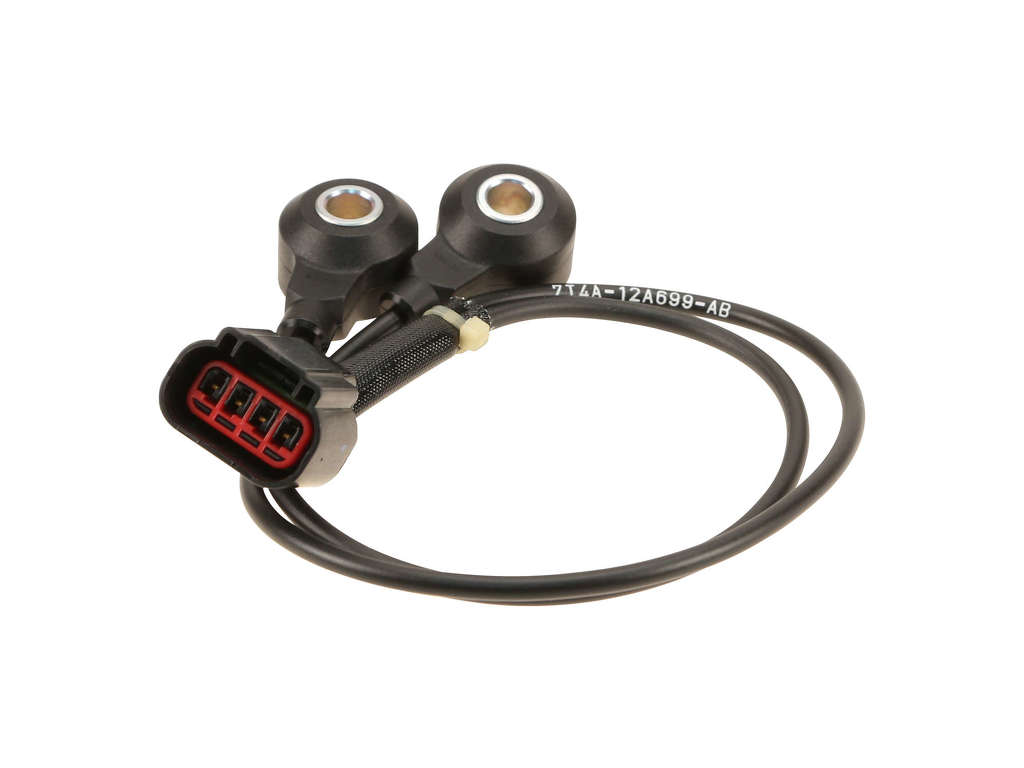
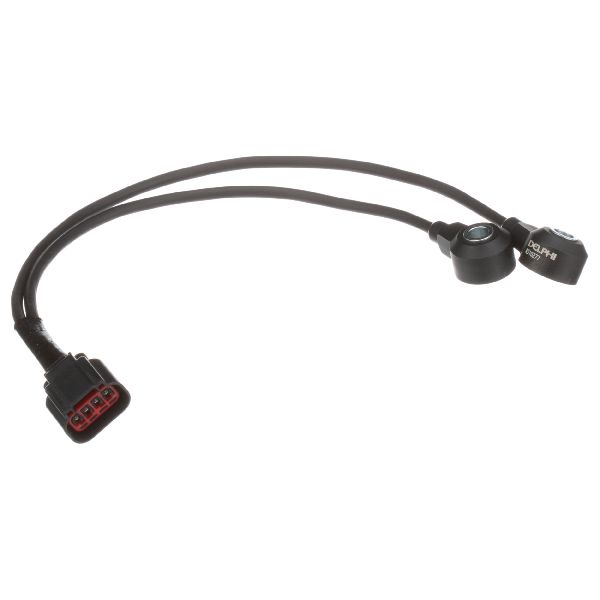
- The official Ford-recommended repair may involve replacing both the ECT and knock sensors as a unit due to their shared harness.
- Ignoring this code can lead to the engine fans running constantly and incorrect fuel mixture, wasting gas.
What's Unique About the 2016-2018 Lincoln MKX
This issue is highly specific to the 2.7L EcoBoost engine in the Lincoln MKX and other Ford products like the Edge and F-150. Ford has issued multiple Technical Service Bulletins (TSBs) acknowledging that the wiring harness for the ECT and knock sensors is a common failure point. TSB SSM 47791 specifically notes that on the MKX and its platform mates, wiring can be damaged between connectors C1016 and C1168. Unlike issues on other engines where the sensor itself is the sole culprit, the problem on the 2.7L is most often the external wiring or connectors, which can chafe, become loose, or fail internally within the harness. The ECT sensor itself is often located in a difficult-to-access position under the intake manifold, making a thorough wiring diagnosis critical before attempting replacement.
Diagnostic Flowchart
Tap your situation to follow the diagnostic path that matches what you're seeing on this vehicle.
Symptoms You May Notice
- Check Engine Light (Malfunction Indicator Lamp, MIL) is on
- Wrench light may be illuminated
- Engine cooling fans running on high speed constantly
- "Engine Coolant Over Temperature" warning on the dash, even if the engine isn't actually overheating
- Temperature gauge suddenly pegging to hot
- Reduced fuel economy
- Rough idle
- 'Rumble strip' or shuddering sensation as the engine enters a protective limp mode
- Replacing only the ECT or CHT sensor without inspecting the wiring. A forum user with a 2.7L F-150 reported replacing the CHT sensor multiple times for recurring P1026 and P1299 codes, when the root cause was likely the wiring harness issue described in the TSBs.
- Assuming a blown head gasket or major engine failure due to the dramatic (but false) overheating warnings and limp mode symptoms, without first investigating the much more common and inexpensive ECT sensor circuit fault.
Most Likely Causes
- Damaged or Poorly Seated ECT/Knock Sensor Wiring Harness 🔴 High Probability This is a well-documented issue acknowledged by Ford in multiple TSBs (SSM 48991, SSM 47791, SSM 46906). The harness can be damaged, connectors may not be fully seated, or the wiring can fail internally. TSB SSM 47791 specifically calls out the wiring between connectors C1016 and C1168 on the MKX as a potential fault location.
How to confirm: Visually inspect the wiring harness and electrical connectors for the ECT and knock sensors, located on the back of the 2.7L engine. Look for chafing, breaks, or connectors that are not fully clicked into place. Pay special attention to the harness routing between connectors C1016 and C1168. Use a scan tool to monitor the ECT PID while wiggling the harness to see if the reading suddenly drops out.
Typical fix: Repair the damaged section of the wire or replace the connector pigtail. In many cases, simply unplugging and securely re-seating the connector can resolve the issue. If the harness itself is faulty, TSB SSM 48991 recommends replacing the ECT and knock sensor as a complete assembly.
Est. part cost: $15-$50 for a connector pigtail - Faulty Engine Coolant Temperature (ECT) Sensor 🟡 Medium Probability While wiring is the most common culprit, the sensor itself can fail. TSB SSM 48991 advises replacing the ECT sensor along with the knock sensor to fully address the harness issue, suggesting the components are best serviced as a unit.
How to confirm: After confirming the wiring is intact, use a scan tool to monitor the ECT sensor data. Look for erratic readings or values that don't change as the engine warms up. You can also test the sensor's resistance with a multimeter; at room temperature (~68°F/20°C), it should be between 2,000 and 3,000 ohms.
Typical fix: Replace the Engine Coolant Temperature sensor. Per TSB SSM 48991, it is recommended to replace the knock sensor and its connecting harness at the same time.
Est. part cost: $25-$50
Rare But Worth Checking
- Faulty Knock Sensor: TSB SSM 48991 recommends replacing the knock sensor (causal part 12A699) along with the ECT sensor, as they share a harness and a fault in one can affect the other. The P1026 code is for the ECT circuit, but the root cause can be the shared wiring.
- Low Engine Coolant or Air in System: If the coolant level is low, air pockets can pass over the ECT sensor, causing sudden, erratic temperature readings that the PCM might interpret as a circuit fault.
- Faulty Powertrain Control Module (PCM): This is extremely rare. All other possibilities, especially wiring and sensors, should be exhaustively ruled out before considering a PCM failure.
Diagnosis Steps
- Check for other stored DTCs. Codes like P0117, P0118, and P0330 strongly point to the ECT/Knock sensor harness.
- Check engine coolant level and condition. Ensure the system is full and free of air pockets.
- Using a scan tool (like Ford IDS or FORScan), monitor the live data for both the Engine Coolant Temperature (ECT) and Cylinder Head Temperature (CHT) PIDs. Compare the readings when the engine is cold and as it warms up. A significant, illogical difference points to the fault.
- Gain access to the rear of the engine to visually inspect the electrical connectors and wiring for both the ECT and knock sensors.
- Carefully check for any signs of chafing, melting, or corrosion on the wires and pins.
- Inspect the wiring harness between connectors C1016 and C1168, which TSB SSM 47791 identifies as a specific area prone to damage on the MKX.
- Disconnect and reconnect the sensor connectors to ensure they are fully seated. A faint 'click' should be heard.
- If no visible wiring damage is found, test the ECT sensor's internal resistance with a multimeter. At ~68°F (20°C), it should be 2,000-3,000 Ω. Compare to a resistance/temperature chart if available.
- If the sensor tests good but the problem persists, the fault is likely in the wiring harness itself. At this point, follow TSB SSM 48991 and replace both the ECT sensor and the knock sensor, which are serviced with the connecting harness section.
- After the repair, clear the codes and perform a 'Reset KAM (Keep Alive Memory)' function with a capable scan tool to force the PCM to relearn values.
Parts You'll Likely Need
- Engine Coolant Temperature (ECT) Sensor
(OEM #FT4Z-12A648-B)— This sensor provides the primary reading for the code. TSB SSM 48991 recommends its replacement as part of a complete harness and sensor assembly fix.
Trusted brands: Motorcraft
OEM price range: $30-$45
Aftermarket price range: $15-$30 - Knock Sensor
(OEM #FT4Z-12A699-C)— Shares a wiring harness with the ECT sensor. TSB SSM 48991 recommends replacing it along with the ECT sensor as a complete repair, listing it as the causal part.
Trusted brands: Motorcraft
OEM price range: $40-$60
Aftermarket price range: $25-$45 - ECT Sensor Connector Pigtail
(OEM #Motorcraft WPT-989 (example, verify fitment))— If the electrical connector itself is damaged, replacing the pigtail is the proper repair instead of replacing the entire harness. WPT-989 is cited for this repair on the F-150 with the same engine.
Trusted brands: Motorcraft, Dorman
OEM price range: $25-$40
Aftermarket price range: $15-$25
Related Codes That Often Appear With This One
- P0116 — Indicates an ECT Sensor Circuit Range/Performance problem, directly related to P1026.
- P0117 — Indicates ECT Sensor Circuit Low Input, often caused by the same wiring faults.
- P0118 — Indicates ECT Sensor Circuit High Input, also caused by the same wiring faults.
- P1299 — Indicates Cylinder Head Overtemperature Protection is active. This is often a false alarm triggered by the faulty sensor signal from the P1026 condition.
- P0330 — Indicates a Knock Sensor circuit malfunction. This code often appears with P1026 because the ECT and knock sensors share a wiring harness on the 2.7L engine, and a fault in the shared circuit can trigger both codes.
Technical Service Bulletins (TSBs) & Recalls
- SSM 48991: Illuminated MIL and/or Engine Coolant Over Temperature warning with various DTCs including P1026, due to ECT or knock sensor wiring harness. Recommends replacing both sensors and their harness together.
- SSM 47791: MIL and/or wrench lamp with DTCs including P1026, due to an ECT sensor connector which is not fully seated or has damaged wiring between connectors C1016 and C1168.
- SSM 46906: Similar to SSM 47791, pointing to a poorly seated ECT connector or damaged wiring as the cause for P1026.
Platform-Specific Known Issues
- TSB SSM 48991: Recommends replacing both the ECT sensor (base part 12A648) and knock sensor (causal part 12A699) as a complete harness assembly to correct this condition on 2.7L engines in the MKX and other models.
- TSB SSM 47791 / 46906: Explicitly state that P1026 on the 2.7L MKX can be due to an ECT sensor connector that is not fully seated or has damaged wiring, specifically between connectors C1016 and C1168.
Mechanic-Grade Diagnostic Values
- ECT Sensor Resistance — expected: ~2,000 - 3,000 Ω at 68°F (20°C). A detailed chart shows approx. 58,750 Ω at 50°F (10°C) and 1,180 Ω at 212°F (100°C).. Failure: Infinite resistance (open circuit), near-zero resistance (short circuit), or a value that does not change with temperature.
- ECT Sensor Signal Voltage (at PCM or connector) — expected: High voltage when cold (approx. 3.5V), dropping to low voltage when hot (approx. 0.28V - 0.5V).. Failure: A voltage reading greater than ~4.6V indicates an open circuit (triggers P0118). A voltage reading less than ~0.2V indicates a short circuit (triggers P0117).
- Scan Tool ECT PID (Live Data) — expected: Should reflect ambient temperature when cold and rise smoothly to operating temperature (~195-220°F).. Failure: A reading stuck at -40°F indicates an open circuit. A reading stuck at maximum temperature (>250°F) indicates a short circuit. Sudden spikes or dropouts during a wiggle test point to a wiring issue.
Scan Tool Commands That Help
- Ford IDS or FORScan: Datalogger / Live Data Graphing — Use this to graph the ECT and CHT sensor PIDs simultaneously. An intermittent wiring fault will appear as a sudden, vertical drop or spike in the ECT reading that is not physically possible, confirming an electrical issue.
- Ford IDS or FORScan: Wiggle Test — While monitoring the live ECT PID, physically wiggle the wiring harness between connectors C1016 and C1168. If the temperature reading on the scan tool fluctuates wildly or drops out, you have found the location of the wiring fault.
- Ford IDS or FORScan: Reset KAM (Keep Alive Memory) — After replacing a sensor or repairing the wiring, this function should be used to clear the PCM's learned adaptive values. This forces the computer to re-learn sensor inputs immediately with the corrected components, preventing lingering performance issues.
Wiring & Ground Locations
- C1016 — The electrical connector at the Engine Coolant Temperature (ECT) sensor itself, located on the back of the 2.7L engine, often under the intake manifold.. This is the starting point of the circuit. TSBs SSM 47791 and 46906 identify it as a primary failure point for not being fully seated. Pin 2 (GY-VT wire) is the signal wire to the PCM.
- C1168 — A harness-to-harness inline connector located between the ECT sensor (C1016) and the PCM.. TSB SSM 47791 specifically calls out the wiring *between* C1016 and C1168 as a common location for chafing and damage that causes code P1026.
- G104 — A major chassis ground point located on the left front of the engine compartment.. While not exclusively for the ECT circuit, a poor or corroded connection at this primary ground can introduce electrical noise and voltage issues that affect various sensors, including the ECT. It is good practice to check major grounds when diagnosing any electrical fault.
Real Owner Repair Stories
- F150Forum.com user report (2019 Ford F-150 2.7L EcoBoost) — Check engine light, engine goes into limp mode, and temperature gauge pegs on hot. Codes P1026 and P1299 would appear intermittently, roughly every 800-1,000 miles.
❌ Tried (didn't work) Dealer replaced the Cylinder Head Temperature (CHT) sensor under warranty., Owner replaced the CHT sensor a second time himself., Clearing the codes would temporarily fix the issue, but it would always return.
✅ What actually fixed it The user did not post a final resolution, but the pattern of replacing the sensor multiple times without fixing the intermittent P1026 code is a classic example of misdiagnosing the issue. Other forum members correctly pointed the owner towards the TSBs that identify the wiring harness as the true root cause, not the sensor itself.
OEM Part Supersession History
FT4Z-12A648-A (also DY-1298)→FT4Z-12A648-B— Standard part revision by manufacturer.FT4Z-12A699-B, FT4Z-12A699-C, FT4Z-12A699-D→FT4Z-12A699-F— Standard part revision for the knock sensor/harness assembly, which is the causal part listed in TSB 48991.
Model Year Variations Within This Range
- 2016-2018: On the 2.7L EcoBoost platform, the ECT sensor is often located in a difficult-to-access position under the intake manifold. This makes diagnosis of the wiring harness critical, as replacing the sensor is a labor-intensive job (3-4+ hours). For some F-150 models (2018-2020), Ford later issued a TSB with a kit to relocate the sensor to a more accessible heater hose, confirming the difficulty of servicing the original part. While not an official fix for the MKX, it highlights the importance of confirming the wiring fault before committing to sensor replacement.
Helpful Videos

Used OEM Parts in Stock


New Aftermarket Parts Available


The information in this article is provided for general reference and educational purposes only. Vehicle specifications, procedures, and part compatibility can vary by production date, trim level, and region. Always consult your vehicle's factory service manual and verify part numbers before purchasing or performing repairs. Safety-critical components such as airbags, seat belts, and braking systems should be installed by a qualified professional.
- Lincoln MKX:
- 🎬 Helpful Videos
- 🛍️ Shop This Part
- What's Unique About the 2016-2018 Lincoln MKX
- Diagnostic Flowchart
- Symptoms You May Notice
- Most Likely Causes
- Rare But Worth Checking
- Diagnosis Steps
- Parts You'll Likely Need
- Related Codes That Often Appear With This One
- Technical Service Bulletins (TSBs) & Recalls
- Platform-Specific Known Issues
- Mechanic-Grade Diagnostic Values
- Scan Tool Commands That Help
- Wiring & Ground Locations
- Real Owner Repair Stories
- OEM Part Supersession History
- Model Year Variations Within This Range
- 🎟️ Get 5% Off