

P0965 on 2010-2014 Subaru Outback: Pressure Control Solenoid 'B' Causes and Fixes
On a 2010-2014 Outback with the 2.5L engine and TR690 CVT, code P0965 almost always means the transmission valve body has failed. This is a very common and well-documented issue. Subaru does not sell individual solenoids for the CVT, so the standard fix is a complete valve body replacement. Expect to pay $800-$1,500 for the OEM part alone, with total repair costs often exceeding $2,000.
- For the 2.5L Outback with a CVT, P0965 almost certainly means you need a new transmission valve body.
- Do not continue to drive the vehicle, as you risk severe and much more expensive transmission damage.
- This is not a simple DIY job. It requires specialized knowledge, tools, and a clean working environment to avoid transmission contamination.
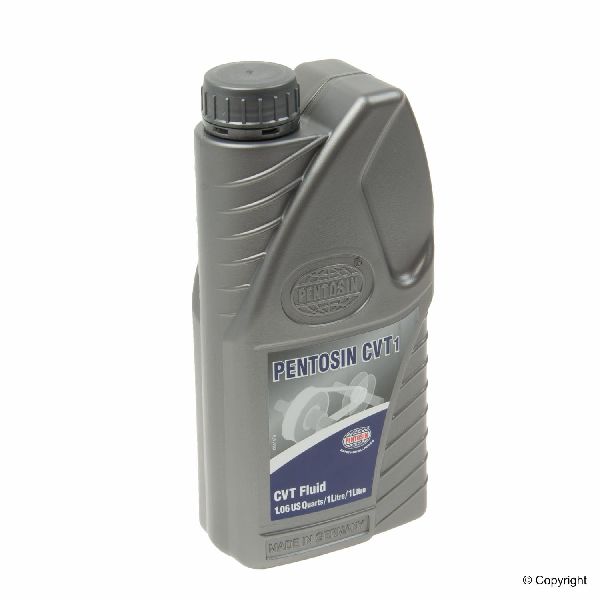
- Always use the correct Subaru-branded CVT fluid when refilling the transmission.
- The 3.6R model with its 5-speed automatic is a different transmission; while the code means a similar fault, the specific part and repair process are not the same.
What's Unique About the 2010-2014 Subaru Outback

The 2010-2014 Outback uses two main automatic transmissions, and the cause of P0965 is platform-specific. The 2.5L models use a Lineartronic CVT (TR690), where this code is a very common indicator of internal valve body failure. For these CVTs, Subaru's official and only repair is to replace the entire valve body assembly, as individual solenoids are not sold as service parts. The 3.6R models use a more traditional and robust 5-speed automatic (5EAT), where the code is less common but would point to a similar solenoid or wiring failure within that specific transmission design. The P0965 issue is overwhelmingly associated with the 2.5L CVT models.
Symptoms You May Notice
- Check Engine Light is on
- Flashing 'AT OIL TEMP' light on the dashboard
- Transmission enters 'limp mode', often stuck in one gear
- Harsh, clunky, or delayed shifting
- Vehicle shuddering or vibrating, especially during acceleration
- Transmission slipping between gears
- Reduced fuel economy
- Inability to shift out of Park
- Replacing the entire transmission when only the valve body is needed.
- Replacing the TCM before verifying the solenoid and wiring are good.
- Assuming it's a mechanical failure without first diagnosing the electrical circuit fault indicated by the code.
- Replacing the torque converter, which can cause shuddering issues but is not typically related to a P0965 electrical code.
Most Likely Causes

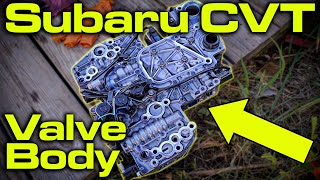
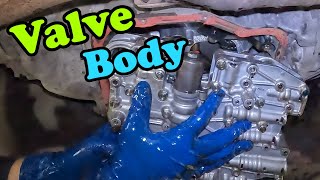
- Failed Transmission Valve Body (2.5L CVT Models) 🔴 High Probability The solenoids are integrated into the valve body on the TR690 CVT and are a widely-known failure point. Heat and electrical cycles cause the internal coil windings of the solenoid to short out. Subaru's repair procedure is to replace the entire assembly rather than individual components. 🎬 See how to replace individual solenoids on the valve body.
How to confirm: A mechanic will use a multimeter to test the resistance of the Pressure Control Solenoid 'B' circuit at the transmission connector. A reading that is out of specification (e.g., shorted to ground, showing very low resistance, typically under 5 ohms) confirms an electrical failure in the solenoid. The diagnostic procedure is also outlined in Subaru TSB 16-102-16R, though this TSB is for a different code (P0841), the electrical testing steps are similar.
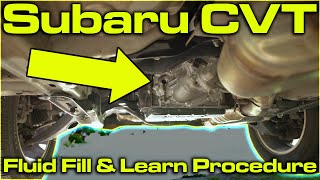
Typical fix: Replace the entire CVT valve body assembly. After installation, the transmission fluid must be refilled to the correct level with Subaru High-Torque CVT Fluid (CVTF-II), and a TCM 'Clear AT Learning Data' procedure must be performed with a compatible scan tool.
Est. part cost: $800 - $1500 - Faulty Pressure Control Solenoid 'B' (3.6R 5EAT Models) ⚪ Low Probability While less documented than the CVT issue, solenoids are a common failure point in any modern automatic transmission due to heat and constant electrical cycling. The 5EAT is generally considered more durable than the CVT of this era.
How to confirm: Similar to the CVT, diagnosis involves testing the solenoid's circuit for proper resistance. The specific solenoid and its location on the 5EAT valve body must be identified using a service manual. The valve body part number for the 5EAT is different from the CVT version.
Typical fix: Replace the faulty solenoid. If individual solenoids are not available from Subaru for the 5EAT, the entire valve body may need to be replaced.
Est. part cost: $100 - $1800 - Damaged Wiring or Corroded Connector ⚪ Low Probability
How to confirm: Visually inspect the transmission wiring harness and the main connector for any signs of damage, corrosion, or loose pins. Perform a continuity test from the TCM to the transmission connector to rule out an open or short in the wiring. A 'wiggle test' on the harness while monitoring live data can sometimes reveal intermittent connection issues.
Typical fix: Repair the damaged section of the wiring harness or clean/replace the corroded connector.
Est. part cost: $10 - $200
Rare But Worth Checking
- Faulty Transmission Control Module (TCM): This is very rare. The TCM should only be considered a cause after the valve body/solenoid and wiring have been thoroughly tested and confirmed to be in good working order. A faulty TCM is the least likely cause.
- Low or Contaminated Transmission Fluid: While unlikely to be the direct cause of an electrical circuit code, extremely low or contaminated fluid can cause solenoids to malfunction, overheat, and fail electrically over time. Subaru recommends CVT fluid service, despite some schedules suggesting it is a 'lifetime' fluid.
Diagnosis Steps

- Check and confirm the transmission fluid level and condition. The fluid should be at the correct level and not appear burnt or full of debris.
- Use a professional scan tool to confirm P0965 and check for any other related transmission codes, such as P0700.
- Inspect the transmission's main electrical connector and wiring harness for any visible damage, corrosion, or loose connections.
- Using a service manual, identify the pins for the Pressure Control Solenoid 'B' circuit on the transmission connector.
- With the connector unplugged, use a multimeter to measure the resistance of the solenoid circuit. Compare the reading to the manufacturer's specification (typically 10-15 ohms for a healthy solenoid). A reading far outside the spec (e.g., under 5 ohms) indicates a shorted solenoid, confirming a failed valve body.
- If the solenoid resistance is within spec, test the wiring harness for continuity and shorts between the TCM and the transmission connector.
- If the solenoid circuit is confirmed to be faulty via resistance check, the valve body (on CVT models) or the specific solenoid (on 5EAT models) is the confirmed cause.
Parts You'll Likely Need

- Transmission Valve Body Assembly (for 2.5L CVT)
(OEM #31825AA052 (This is a commonly cited updated part number, superseding older versions. Verify with VIN.))— This is the most common failure for P0965 on the 2.5L Outback. The assembly includes all new solenoids, which are not sold separately by Subaru. Using a remanufactured unit is a viable, lower-cost alternative.
Trusted brands: Subaru (OEM), ROSTRA (Aftermarket Solenoids - for professional rebuilders), Various Remanufacturers (e.g., on eBay, RockAuto)
OEM price range: $800 - $1500
Aftermarket price range: $400 - $800 (Remanufactured) - Subaru High-Torque CVT Fluid CVTF-II
(OEM #SOA427V1660 (supersedes SOA427V1650))— The correct type and amount of fluid is required when replacing the valve body. Using non-OEM fluid is not recommended. A drain and fill requires 6-8 quarts.
Trusted brands: Subaru (OEM)
OEM price range: $20 - $30 per quart - Transmission Pan Gasket — The pan must be removed to access the valve body, and the gasket should be replaced to prevent leaks.
Trusted brands: Subaru (OEM), Fel-Pro, Mahle
OEM price range: $25 - $40
Aftermarket price range: $15 - $30
Related Codes That Often Appear With This One
- P0700 — P0700 is a generic code that simply means the Transmission Control Module (TCM) has stored a fault code. It will almost always be present alongside a specific transmission code like P0965.
- P2764 — This code points to an issue with the Torque Converter Clutch Pressure Control Solenoid Circuit. It is common to see multiple solenoid circuit codes appear together when the valve body is failing.
- P2762 — Similar to P2764, this code also relates to the Torque Converter Clutch Pressure Control Solenoid circuit performance and often accompanies other valve body codes.
Technical Service Bulletins (TSBs) & Recalls
- 16-107-17R: Details the CVT warranty extension to 10 years/100,000 miles, which covered failures like this. It lists other related TSBs for specific CVT issues like torque converter shudder (16-90-13R) and fluid seepage (16-103-16R).
- 16-102-16R: Provides a detailed diagnostic flow chart for troubleshooting DTC P0841 (Secondary Oil Pressure Sensor Performance), which involves similar electrical checks to those needed for P0965.
- 16-119-19: Announces a redesigned valve body for TR580/TR690 CVTs to prevent a different code (P0841), but shows that the part has been updated by the manufacturer.
Platform-Specific Known Issues
- The TR690 CVT used in 2.5L models has a known history of valve body failures leading to various trouble codes, including P0965.
- Subaru issued a CVT warranty extension (TSB 16-107-17R) to 10 years / 100,000 miles for many vehicles, including the 2010-2014 Outback. Owners should check with a Subaru dealer using their VIN to see if any coverage applies, though many of these vehicles are now outside the coverage window.
Mechanic-Grade Diagnostic Values
- Resistance of Lock Up Duty Solenoid (TR690/TR580) — expected: 10-13.5 ohms. Failure: A reading significantly outside this range, especially a low reading under 5 ohms, indicates a shorted solenoid.
- Resistance of AWD Solenoid (TR690/TR580) — expected: 3.2 ohms. Failure: A reading outside this specification indicates a faulty AWD solenoid, which can sometimes be misdiagnosed.
- Resistance of TCC Lock-Up Solenoid (TR580/TR690) — expected: 12.2–13.2Ω (secondary coil), 3.2–3.7Ω (primary coil). Failure: Readings outside these specific ranges confirm a faulty solenoid.
- ATF Temperature for CVT Relearn Procedure — expected: 40 - 65°C (104 - 149°F). Failure: Performing the relearn outside this temperature window may result in the procedure failing or not completing correctly.
Scan Tool Commands That Help

- Subaru Select Monitor (SSM3/SSM4) or compatible aftermarket (e.g., OTOFIX, Gearwrench Pro): Clear AT Learning Value — This function must be performed first, before the relearn. It erases the TCU's previously learned adaptive values that were compensating for the failing valve body.
- Subaru Select Monitor (SSM4) or compatible aftermarket: Compulsory learning mode / AT Learning Mode — This is the main function used to initiate the transmission relearn process after replacing the valve body or clearing the learning values. The tool guides the technician through the steps of warming the fluid, shifting, and holding RPMs to allow the TCU to learn the characteristics of the new solenoids.
Wiring & Ground Locations
- Transmission Main Connector (Bulkhead Connector) — On the top or side of the transmission case, where the main vehicle harness connects to the transmission.. This is the primary external test point for checking the resistance of the internal solenoids without removing the transmission pan. A technician can unplug this connector and use a multimeter on the appropriate pins to diagnose the solenoid circuit.
- Valve Body Bolts — Inside the transmission, securing the valve body. On the TR690, there are typically 12 bolts.. One specific bolt is longer than the others and is often a different color (e.g., silver). It's critical to note the location of this unique bolt during removal to ensure correct reassembly. Incorrect bolt placement can damage the valve body or transmission case.
Real Owner Repair Stories
- Reddit user in r/SubaruForester (2015 Subaru Forester Limited, ~60k miles) — Dashboard 'Christmas lights', DTC P0971 (Transfer Solenoid Circuit High).
❌ Tried (didn't work) Initially told CVT fluid was 'lifetime' and did not service it.
✅ What actually fixed it Owner replaced only the faulty AWD solenoid ($55 part) instead of the entire valve body. They then had a shop perform a CVT fluid drain/fill and performed the CVT relearn themselves using a GearWrench Pro Bluetooth dongle, which successfully resolved the issue. - YouTube channel 'Valley Mobile Automotive' (2015 Subaru Forester with solenoid codes) — Codes for bad solenoids.
❌ Tried (didn't work) Replacing individual solenoids with aftermarket parts., Installing a remanufactured valve body from an online source.
✅ What actually fixed it After two failed remanufactured units and failed aftermarket solenoids, the problem was only resolved by installing a brand new, genuine Subaru OEM valve body. The mechanic strongly advised against using non-OEM or remanufactured units, stating they fail quickly. - Reddit user in r/AskMechanics (Unknown year Subaru) — Car lurching and then stopping forward movement. Codes P0700, P0965, P0841.
❌ Tried (didn't work) A new OEM valve body and a new pressure sensor were installed.
✅ What actually fixed it The issue returned one week after the repair. The user's story highlights a case where a new OEM valve body did *not* provide a permanent fix, suggesting a deeper underlying issue or a rare failure of a new part. The final resolution was not posted.
When the Usual Fixes Don't Work
- While the overwhelming consensus is that a P0965 code on a TR690 CVT requires a full valve body replacement, some DIY repairs have been successful by replacing only the specific failed solenoid. One owner with a P0971 code (another solenoid circuit fault) successfully replaced only the AWD solenoid for $55 and performed a CVT relearn at home, resolving the issue. This suggests that for out-of-warranty vehicles, attempting a single solenoid replacement can be a cost-effective, albeit risky, first step before committing to an expensive full valve body replacement.
OEM Part Supersession History
31825AA050, 31825AA051→31825AA052— Updated design to improve reliability and address common failure modes of the integrated solenoids.
Heads up: While later part numbers like 31825AA055 exist, they are for newer models and may not be compatible. It is critical to verify the correct part number for the vehicle's VIN, as there are variations.
Model Year Variations Within This Range
- 2010-2012: These models were subject to Subaru TSB 16-90-13R, which addressed a faulty torque converter design that could cause stalling when stopping. A countermeasure torque converter with a needle bearing instead of a bushing was introduced into production on October 1, 2013. While not directly causing P0965, a failing torque converter can create symptoms that overlap with valve body issues.
- 2013-2014: These models used the FB25B engine instead of the earlier EJ253. While both were paired with the TR690 CVT, there can be slight variations in part numbers for the valve body and other transmission components. Always confirm parts with the vehicle's VIN.
Diagnostic Flowchart
Other Known Issues on This Vehicle
Issues unrelated to this code that are worth knowing about as an owner of this generation:
- Excessive Oil Consumption (2.5L FB25B Engine) 🔴 High — Common on 2013-2014 models with the FB25B engine. Can start early in the vehicle's life. Less of an issue on the 2010-2012 EJ253 engine. (Ref: Subaru TSB 02-157-14R addresses this issue and an associated class-action lawsuit led to warranty extensions for some owners.)
- Head Gasket Failure (2.5L EJ253 Engine) 🔴 High — A notorious issue for the EJ253 engine used in 2010-2012 models. Typically occurs at higher mileage (80,000-150,000 miles) and can present as external oil leaks or internal coolant leaks.
- Premature Wheel Bearing Failure 🟠 Medium — Common across many Subaru models of this era, including the Outback. Bearings, particularly rear ones, can become noisy and fail prematurely, often before 100,000 miles. (Ref: Subaru has issued multiple TSBs for updated wheel bearing/hub parts over the years for various models (e.g., 03-58-08, 03-96-25), indicating an acknowledged design weakness.)
- Torque Converter Lock-Up Shudder/Stall 🟠 Medium — Affects 2010-2012 models with the CVT. Can cause a shudder during light acceleration or a feeling like the engine is about to stall when coming to a stop. (Ref: Subaru TSB 16-90-13R was issued to address this with an updated torque converter design.)
- Frequently Burnt-Out Headlights 🟡 Low — Very common complaint for this generation. Owners report replacing low-beam headlight bulbs far more often than expected. Accessing the bulbs through the wheel well is also notoriously difficult.
- Steering Wheel Vibration / 'Shimmy' 🟡 Low — Reported on 2010-2011 models, a vibration or 'shimmy' felt in the steering wheel at highway speeds. (Ref: TSB 05-48-10 was released to address this, involving modifications to steering and suspension components.)
Used vs. New Parts: Buying Guide for This Vehicle
When a used part is the smart pick: A used valve body is highly discouraged for this repair. The failure rate of this part is extremely high, and a used unit from a salvage yard carries a significant risk of failing shortly after installation. It only makes sense if the donor vehicle has exceptionally low mileage (e.g., under 50,000 miles) and a verifiable history of no transmission issues.
Donor-vehicle mileage cap: roughly under 50000 miles for the part to have meaningful remaining life.
What to inspect on the donor part:
- Verify the donor vehicle's VIN to confirm part number compatibility.
- Check the donor vehicle's history for any reported accidents or transmission repairs.
- Inspect the fluid from the donor transmission if possible; it should be clean and not smell burnt.
- Purchase from a reputable salvage yard that offers a warranty, even if it's only 30-90 days.
OEM-only on this vehicle (don't cheap out):
- Transmission Valve Body Assembly
- Subaru High-Torque CVT Fluid (CVTF-II)
Aftermarket brands forum-validated for this vehicle:
- While some rebuilders use ROSTRA solenoids, multiple professional sources strongly advise against any aftermarket or remanufactured valve body assemblies due to high rates of premature failure.
Brands owners have reported issues with on this vehicle:
- Any unbranded or 'white box' remanufactured valve bodies from online marketplaces like eBay or Amazon. Mechanics report these often fail within weeks or months, leading to a repeat of the original problem.
Real Owner Stories
Aggregated from forums and TSBs cited above. Mileages and costs reflect what owners reported in those sources.
2011 Subaru Outback 2.5i
Symptoms: Check Engine Light on, flashing 'AT OIL TEMP' light, and other classic symptoms of limp mode.
What fixed it: Replacement of the entire transmission valve body at the dealer.
Cost: $2000-$2200
Source hint: subaruoutback.org - Thread Title: 'P0965 Pressure Control Solenoid B... and P0700'
2011 Subaru Outback — 140000 miles
Symptoms: Flashing AT OIL TEMP light and Check Engine Light (CEL).
What fixed it: An independent shop diagnosed and replaced the bad valve body.
Cost: $2100-$2300
Source hint: subaruoutback.org - Thread Title: '2011 Outback - P0965, P2764, P0700'
2015 Subaru Forester
Symptoms: Check Engine Light on with code P0965 and other codes.
What fixed it: The online community suggested the cause was the common valve body failure, as this model shares the CVT platform.
Source hint: Reddit r/subaru
Related OBD-II Codes
Frequently Asked Questions
My 2012 Outback has a P0965 code. Is the repair covered by Subaru's CVT warranty extension?
For my 2.5L Outback with the CVT, do I have to replace the whole valve body for a P0965 code?
Is the P0965 fix the same for the 3.6R Outback as it is for the 2.5L model?
How does a mechanic confirm the valve body has failed and it's not just a wiring issue?
What transmission fluid is required after replacing the valve body on my 2.5L CVT Outback?
I saw TSB 16-102-16R mentioned. Is that for my P0965 code?
Helpful Videos
We Have This Part in Stock

The information in this article is provided for general reference and educational purposes only. Vehicle specifications, procedures, and part compatibility can vary by production date, trim level, and region. Always consult your vehicle's factory service manual and verify part numbers before purchasing or performing repairs. Safety-critical components such as airbags, seat belts, and braking systems should be installed by a qualified professional.
- Subaru Outback:
- 🎬 Helpful Videos
- 🛍️ Shop This Part
- What's Unique About the 2010-2014 Subaru Outback
- Symptoms You May Notice
- Most Likely Causes
- Rare But Worth Checking
- Diagnosis Steps
- Parts You'll Likely Need
- Related Codes That Often Appear With This One
- Technical Service Bulletins (TSBs) & Recalls
- Platform-Specific Known Issues
- Mechanic-Grade Diagnostic Values
- Scan Tool Commands That Help
- Wiring & Ground Locations
- Real Owner Repair Stories
- When the Usual Fixes Don't Work
- OEM Part Supersession History
- Model Year Variations Within This Range
- Diagnostic Flowchart
- Other Known Issues on This Vehicle
- Used vs. New Parts: Buying Guide for This Vehicle
- Real Owner Stories
- 2011 Subaru Outback 2.5i
- 2011 Subaru Outback — 140000 miles
- 2015 Subaru Forester
- Related OBD-II Codes
- Frequently Asked Questions
- 🎟️ Get 5% Off