

P0868 on 2009-2020 Nissan Murano: Low CVT Fluid Pressure Causes and Fixes
This code indicates dangerously low hydraulic pressure in your Nissan Murano's CVT transmission. It's often caused by low fluid, a faulty valve body, or a sticking flow control valve in the oil pump. This is a critical issue that can lead to complete transmission failure and should be addressed immediately. In some documented cases, a cracked air intake hose can falsely trigger this code.
- P0868 on a Nissan Murano is a critical code indicating low CVT hydraulic pressure that requires immediate attention to prevent catastrophic transmission failure.
- Always start diagnosis by checking the CVT fluid level and condition, and inspect the engine air intake hose for cracks before assuming a major internal failure.
- Common mechanical failures for this code include a faulty valve body or a sticking flow control valve within the oil pump.
- This is not a DIY-friendly repair. Accurate diagnosis and service require professional-level scan tools and a deep understanding of CVT operation.
- Always use the specified Nissan Genuine CVT Fluid (NS-2 or NS-3) for your vehicle's year.
What's Unique About the 2009-2020 Nissan Murano

The Nissan Murano across these years uses a Jatco-supplied CVT, which is known for having specific failure points that can trigger a P0868 code. The Z51 generation (2009-2014) uses the JF010E (RE0F09A/B) CVT, while the Z52 (2015-2020) uses the heavier-duty, chain-driven JF017E (RE0F10J) CVT. On both, this code often points to deeper mechanical or hydraulic issues, such as a sticking flow control valve in the oil pump or a failing valve body, rather than a simple sensor failure. In a strange but documented case, a cracked engine air intake hose has also been found to cause this code on a Murano by disrupting engine load calculations, leading to potential misdiagnosis of a bad transmission.
Generation note: This range covers the second generation (Z51, 2009-2014) and third generation (Z52, 2015-2020) Murano. Both generations use a CVT and are susceptible to this code. The Z51 uses the Jatco JF010E (RE0F09A/B) with Nissan NS-2 fluid, while the Z52 uses the Jatco JF017E (RE0F10J) with Nissan NS-3 fluid. While the specific CVT models differ, the underlying causes like low fluid, valve body issues, and pump problems are common to both.
Symptoms You May Notice
- Check Engine Light is on
- Vehicle enters 'limp mode' or 'failsafe mode' with severely reduced power and acceleration.
- Hesitation, shuddering, or chattering when accelerating from a stop.
- Whining or grinding noise from the transmission area.
- Harsh or delayed gear engagement into Drive or Reverse.
- Transmission slipping or engine RPMs flaring without an increase in speed.
- Loss of 'overdrive' or inability to maintain highway speeds.
- Immediately replacing the entire CVT assembly without first checking the fluid level/condition, inspecting for a cracked air intake hose, or diagnosing the valve body and oil pump flow control valve. A full replacement may not be necessary if the fault is a less expensive component.
Most Likely Causes


- Low or Dirty CVT Fluid 🔴 High Probability CVTs are very sensitive to fluid level and condition. Leaks from seals or the external cooler can lower the level, while fluid breakdown over time degrades its hydraulic properties. These CVTs have no traditional dipstick, making checks less straightforward.
How to confirm: Check the CVT fluid level using the overflow plug procedure, which requires the vehicle to be level and the fluid at a specific temperature (typically 40°C / 104°F). The fluid should be translucent green (NS-2 for Z51, NS-3 for Z52) and not smell burnt. Dark, burnt fluid indicates a severe problem.
Typical fix: If low, top off with the correct Nissan CVT fluid (NS-2 for 2009-2014, NS-3 for 2015-2020) and inspect for leaks. If dirty or burnt, perform a fluid drain and fill. A full flush may be needed if debris is present. Replace external filters if applicable.
Est. part cost: $20-$80 per quart for fluid - Sticking Flow Control Valve in Oil Pump 🟡 Medium Probability Debris in the fluid can cause this critical valve within the CVT's oil pump to stick in its bore, preventing proper pressure regulation. This is a widely documented failure on these Jatco CVTs.
How to confirm: This is typically diagnosed after ruling out fluid issues. Symptoms include a distinct shudder on takeoff. Confirmation requires transmission disassembly to access the oil pump and inspect the valve for free movement. The valve bore itself may be worn.
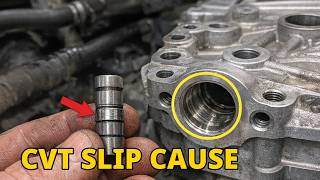
Typical fix: The oil pump is removed, and the flow control valve is freed or replaced. Aftermarket kits, such as from Transgo or Sonnax, are available to repair a worn valve bore 🎬 See this complete walkthrough of the flow control valve repair without replacing the entire pump.
Est. part cost: $50-$200 for a repair kit - Faulty CVT Valve Body or Solenoids 🟡 Medium Probability The valve body is the hydraulic brain of the CVT. Wear in the valve bores or failure of a pressure control solenoid can directly cause a loss of secondary pressure. This is a common failure point addressed by Nissan TSBs.
How to confirm: A professional technician will use a scan tool to monitor commanded vs. actual pressure readings. If a significant discrepancy exists and the pump is deemed healthy, the valve body is the likely culprit. Physical inspection may reveal scoring on the valves.
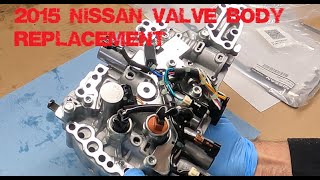
Typical fix: Replacement of the entire valve body assembly is the most common repair, as individual solenoids are often not the root cause. The new valve body must be programmed to the vehicle using a Nissan CONSULT scan tool. 🎬 Watch: 2015 Murano CVT valve body replacement guide
Est. part cost: $800-$1500 for a valve body - Clogged CVT Fluid Filter(s) or Cooler ⚪ Low Probability Internal wear creates metallic debris that can clog the internal pan filter (strainer), the external cartridge filter, or the transmission cooler, restricting flow and causing a pressure drop.
How to confirm: Inspect the external filter (if equipped) for debris. Checking the internal strainer requires removing the transmission oil pan. A clogged cooler can be diagnosed by checking for a significant temperature difference between the inlet and outlet lines or by flow testing it.
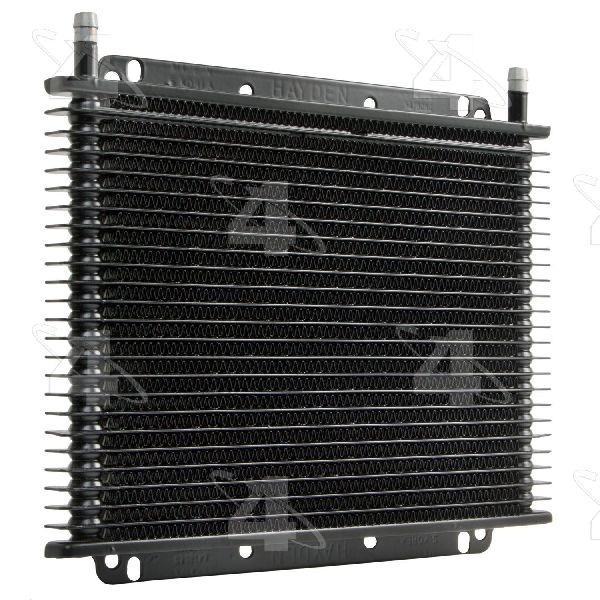
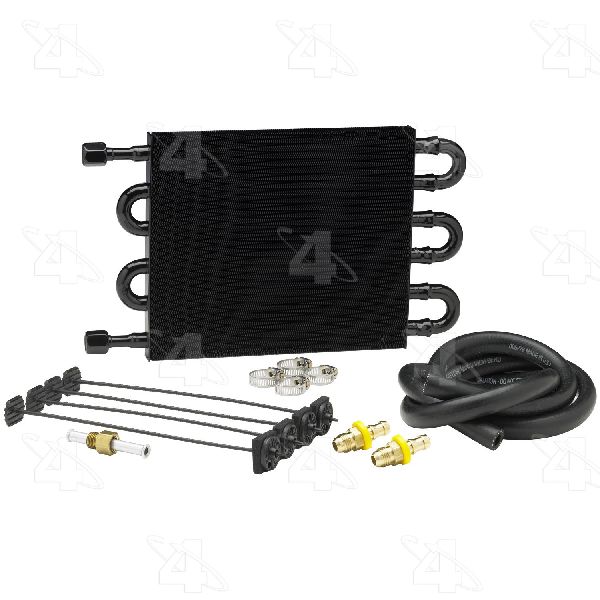
Typical fix: Replace the clogged filter(s) and perform a fluid service. If the cooler is internally clogged with debris, it must be replaced to prevent contamination of the new/repaired transmission.
Est. part cost: $20-$150 for filters and cooler
Rare But Worth Checking
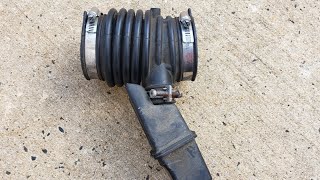
- Cracked Air Intake Hose: A technician at Certified Transmission reported fixing a 2012 Murano with P0868 by replacing a cracked air intake hose. The unmetered air entering the engine confuses the TCM's load calculations, causing it to misinterpret transmission pressures and set the code. Always inspect the large rubber intake duct (Part # 16576-1AA1A, 696-039) between the air filter box and the throttle body 🎬 Watch: How to replace a cracked intake hose for cracks before condemning the transmission.
- Failing CVT Oil Pump: While the flow control valve is a more common failure point within the pump, the pump gears themselves can wear out or shatter, leading to a complete inability to generate sufficient pressure. This usually results in a total loss of movement and requires a transmission rebuild or replacement.
- Faulty Transmission Fluid Pressure Sensor: The sensor that reports secondary pressure to the TCM can fail, sending an inaccurate low reading. On these CVTs, the pressure sensors are typically integrated into the valve body assembly, meaning the entire valve body must be replaced. This is less common than an actual pressure loss but should be considered.
Diagnosis Steps
- Scan the TCM for all stored trouble codes. Note if P0868 is present with other codes like P0746.
- Visually inspect the engine air intake duct between the air filter and the throttle body for any cracks or loose connections. This is a known, simple fix that can be easily overlooked.
- Check the CVT fluid level and condition using the proper procedure (overflow plug at a specific temperature). Ensure the fluid is the correct type (NS-2 for Z51, NS-3 for Z52).
- If fluid level is low, top off and inspect for leaks at the pan gasket, cooler lines, and axle seals.
- If the fluid is dirty or a service is due, drop the transmission pan. Inspect the magnets for debris. A fine grey paste is normal wear; shiny metallic shards indicate catastrophic internal damage and the transmission is likely not salvageable.
- Replace the external cartridge filter (if equipped) and the internal pan strainer during the fluid service.
- Using an advanced scan tool, monitor the 'Secondary Pressure' and 'Commanded Secondary Pressure' PIDs while driving. A significant discrepancy where actual pressure is much lower than commanded pressure confirms a real pressure loss.
- If a pressure loss is confirmed and the pan was clean of heavy debris, the issue is likely the valve body or the oil pump's flow control valve.
- A transmission specialist will then need to inspect the valve body for issues or remove the oil pump to inspect the flow control valve for sticking or bore wear.
- Based on the findings, replace the valve body, repair the oil pump, or if catastrophic damage is found (heavy metal in pan), replace the entire CVT assembly and cooler.
Parts You'll Likely Need
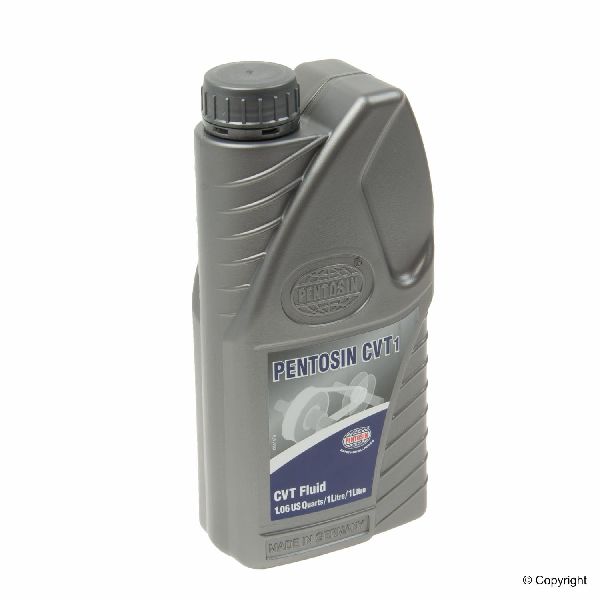
- Nissan Genuine CVT Fluid (NS-2 or NS-3) — The CVT is extremely sensitive to fluid type. Using the correct OEM fluid is critical for proper hydraulic function and longevity. The required type (NS-2 for older models, NS-3 for newer) depends on the vehicle year.
Trusted brands: Nissan
OEM price range: $20-$30 per quart
Aftermarket price range: $15-$25 per quart - CVT Valve Body — The valve body is a frequent cause of hydraulic pressure issues leading to P0868. It contains the solenoids and valves that direct fluid flow.
Trusted brands: Hitachi (OEM supplier), Rostra
OEM price range: $1200-$1800
Aftermarket price range: $700-$1200 - CVT Oil Pump Flow Control Valve Repair Kit — A sticking flow control valve is a specific, known issue that causes pressure loss and shudder. This kit can repair a worn valve bore without replacing the entire pump.
Trusted brands: TransGo, Sonnax
OEM price range: N/A
Aftermarket price range: $50-$150 - Engine Air Intake Hose — In rare cases, a crack in this hose can trigger P0868 by providing incorrect load information to the engine and transmission computers.
Trusted brands: Nissan OEM
OEM price range: $80-$150
Aftermarket price range: $40-$90
Related Codes That Often Appear With This One
- P0746 — This code for 'Pressure Control Solenoid A Performance' is frequently found with P0868. It does not typically mean the solenoid itself is bad, but rather that the system is mechanically unable to achieve the pressure the solenoid is commanding. Both codes together strongly point to a major hydraulic issue like a stuck flow control valve or a failing valve body.
Technical Service Bulletins (TSBs) & Recalls
- NTB12-103d: Addresses CVT judder for 2009-2012 Murano by reprogramming the TCM and, if needed, replacing the valve body or transmission.
- NTB15-083a: For 2015 Murano, this TSB provides a diagnostic and repair procedure for CVT judder, which can involve TCM reprogramming or valve body replacement.
- NTB05-084a: An older TSB for the first-gen Murano but relevant, linking P0868 with 'lack of power on take off' and prescribing a valve body replacement and TCM reprogram.
- NTB14-057: Details the service procedure for repairing fluid leaks from the transfer assembly on 2009-2014 AWD Muranos.
Platform-Specific Known Issues
- Nissan's CVTs from this era had their reliability questioned, and several models were subject to warranty extensions. While not a formal recall for this specific code, the prevalence of CVT issues makes codes like P0868 a significant concern for owners.
- The flow control valve inside the oil pump is a known weak point that can stick or wear its bore, directly causing the symptoms and codes of P0868 and P0746.
- NHTSA ODI #10434048 describes a case where a Murano leaked transmission fluid from the transfer housing case, resulting in code P0868 and symptoms where the vehicle would speed up, slow down, and rev over 5,000 RPMs without power.
Mechanic-Grade Diagnostic Values
- Difference between commanded and actual secondary pressure (at speeds ≤ 9 mph) — expected: < 0.25 MPa (36 psi). Failure: Exceeding 0.25 MPa (36 psi) for 1.5 seconds or more.
- Difference between commanded and actual secondary pressure (at speeds > 9 mph) — expected: < 2.0 MPa (290 psi). Failure: Exceeding 2.0 MPa (290 psi) for any duration.
- Transmission Fluid Pressure Sensor Voltage — expected: 0.5V - 4.5V (General Reference). Failure: Voltage outside of this range, or not changing with pressure.
Hidden / Shadow Codes Worth Checking
- History Code 113: This appears to be a manufacturer-specific code counter or history flag that is stored alongside the primary DTCs (P0868, P0746). It likely indicates the number of drive cycles the fault has been present. (see via Visible on a professional or dealer-level scan tool like Nissan CONSULT.)
Scan Tool Commands That Help

- Nissan CONSULT-II / CONSULT-III: TCM Calibration Data Write — This function is mandatory after replacing the complete CVT assembly, the valve body, or the TCM. It writes the specific calibration file to the new component.
- Nissan CONSULT-II / CONSULT-III: Clutch Point Learning — Must be performed after a Calibration Data Write. Failure to perform this procedure correctly can result in a no-move condition after the repair.
- Nissan CONSULT-II / CONSULT-III: Select Learning (Drive / Reverse Learning) — A post-repair procedure to help the TCM adapt to the new components or calibration. It involves a specific sequence of shifting between N, D, and R.
Real Owner Repair Stories
- Certified Transmission, Lead Diagnostician Chris Adams (2012 Nissan Quest 3.5L (RE0F09B CVT, shared with Murano)) — Check Engine Light on, loss of power, shudder or chatter on acceleration from a stop. Codes P0868, P0746, and P1700 were present.
❌ Tried (didn't work) Initial diagnosis pointed towards a complete CVT replacement, but further inspection was performed.
✅ What actually fixed it A split in the air intake hose was discovered. Replacing the hose resolved all symptoms and codes. The unmetered air was believed to affect engine load calculations, which in turn caused the TCM to command incorrect line pressures, triggering the transmission codes without setting any engine-related (e.g., MAF or lean) codes. - YouTube Channel 'THIS IS YOUR TRANSMISSION' (Nissan Murano with JF010E CVT) — Codes P0746 and P0868, chattering/stuttering on takeoff, delayed engagement in forward gear.
❌ Tried (didn't work) A previous repair involving replacing internal variators did not solve the chattering issue.
✅ What actually fixed it The flow control valve inside the CVT oil pump was found to be stuck. The technician freed the valve and replaced it with a Transgo aftermarket valve kit (part number not specified, but likely from their JF010E series). This resolved the pressure issue and the associated symptoms. - NHTSA ODI #11421591: An owner reported that their vehicle would not shift and sounded like gears were failing. Diagnostic scans revealed a cluster of codes including P1700, P0868, P1778, and P0746.
"I Checked Everything" — The Actual Cause

- The most notable example is a cracked air intake hose triggering P0868. A technician focused only on the transmission would miss this. Standard diagnostic procedure for a P0868 code does not typically include a smoke test of the engine intake system, as no engine codes are usually present. The unmetered air alters the engine's load value, which the TCM uses to calculate desired line pressure, leading to a mismatch and the fault code.
OEM Part Supersession History
16576-1AA0A→16576-1AA1A— Standard part revision, likely for improved material durability to prevent cracking.
Heads up: The parts are interchangeable for the specified model years (approx. 2009-2014 Murano).31705-29X0E→31705-29X0C— Revision to the valve body assembly for the Z52 Murano (2015+). Nissan has issued multiple revisions for these valve bodies, indicating ongoing efforts to improve reliability.
Heads up: When replacing a valve body, it is critical to use the latest superseded part number specified by Nissan for the vehicle's VIN. Programming with a CONSULT tool is required.
Model Year Variations Within This Range
- 2015-2020: The Z52 Murano uses the Jatco JF017E (RE0F10J) CVT. This is a significant design change from the earlier JF010E. It uses a chain instead of a belt and eliminated the stepper motor for ratio control, relying on direct hydraulic pressure control via solenoids. It also added an input speed sensor for more precise control logic.
Diagnostic Flowchart
Other Known Issues on This Vehicle
Issues unrelated to this code that are worth knowing about as an owner of this generation:
- AWD Transfer Case Fluid Leaks / Failure 🔴 High — Common on Z51 (2009-2014) AWD models, often noticed around 80,000+ miles. A leaking seal can lead to fluid starvation and complete transfer case failure. (Ref: NTB14-057)
- Power Steering Hose Leak (Fire Risk) 🔴 High — Affects 2013-2014 models. A hose clamp may be insufficient, allowing the power steering hose to detach, leak fluid onto hot engine components, and cause a fire. (Ref: Recall 17V184000)
- CVT Judder / Shudder on Acceleration 🟠 Medium — Widespread across both generations. Often starts as a vibration or shudder when accelerating from a stop. Can be a precursor to codes like P0868. (Ref: NTB15-083a (for Z52), NTB12-103d (for Z51))
- Failing Engine Mounts 🟠 Medium — Common on the Z51 generation (2009-2014), causing excessive engine vibration and clunking noises, particularly the rear mount.
- Sunroof Exploding or Rattling 🟠 Medium — A notable number of complaints for the Z52 generation (2015-2020) involve the panoramic sunroof spontaneously shattering or developing significant rattles.
- Brake Master Cylinder / ABS Actuator Failure 🔴 High — Particularly noted on the 2009 model year, where a soft brake pedal can be caused by a failing ABS actuator, which was subject to a recall. (Ref: Recall 18V-915)
Used vs. New Parts: Buying Guide for This Vehicle
When a used part is the smart pick: For purely mechanical external parts like the Air Intake Hose, a used part from a reputable salvage yard is a very smart and cost-effective choice. There are no electronics or calibration concerns.
Donor-vehicle mileage cap: roughly under 100000 miles for the part to have meaningful remaining life.
What to inspect on the donor part:
- For an air intake hose, inspect thoroughly for any signs of cracking, brittleness, or oil saturation. Squeeze the accordion sections to check for hidden splits.
- For a complete used CVT assembly, check the donor vehicle's history if possible, and inspect the fluid for color and smell (should not be black or burnt). This is still a high-risk purchase.
OEM-only on this vehicle (don't cheap out):
- CVT Valve Body Assembly
- Transmission Control Module (TCM)
Aftermarket brands forum-validated for this vehicle:
- Transgo (for flow control valve repair kits)
- Sonnax (for various valve body and pump repair solutions)
Brands owners have reported issues with on this vehicle:
- Unnamed, low-cost complete valve body assemblies from online marketplaces are extremely high-risk due to potential for incorrect calibration and poor quality solenoids.
Real Owner Stories
Aggregated from forums and TSBs cited above. Mileages and costs reflect what owners reported in those sources.
2012 Nissan Murano
Symptoms: Check Engine Light on with codes P0868 and P0746.
What fixed it: Replacing a cracked air intake hose.
Source hint: The Transletter blog titled 'P0868 / P0746 CODES ON NISSAN QUEST, NISSAN MURANO'
Nissan Murano with JF010E CVT
Symptoms: Chattering and stuttering when accelerating from a stop.
What fixed it: Repairing a stuck flow control valve in the oil pump using a Transgo kit.
Source hint: YouTube video titled 'NISSAN MURANO CVT TIP (FLOW CONTROL VALVE FIX) RE0F9A, JF010E, P0746'
2010 Nissan Murano
Symptoms: A fluid leak from the transfer case seal, which led to grinding noises.
What fixed it: Repair of the fluid leak from the transfer assembly, as detailed in TSB NTB14-057, is the required fix to prevent low fluid levels that can cause P0868.
Source hint: CarsGuide Forum thread titled 'Broken transfer case in Murano'
2015 Nissan Murano
Symptoms: Jerking and incorrect gear selection at low speeds, even without a Check Engine Light.
What fixed it: Replacement of the transmission valve body.
Source hint: YouTube video titled '2015 Nissan Murano transmission valve body replacement.'
Documented NHTSA Reports
An owner reported in NHTSA ODI #11497967 that the P0868 code appeared intermittently during a dealership diagnostic check, noting the code specifically refers to "Fluid pressure low." Another report, NHTSA ODI #11140288, describes a Murano losing power while driving on a highway with no warning lights, where a subsequent check revealed code P0868. In a more severe instance, NHTSA ODI #10434048 details a vehicle leaking transmission fluid from the transfer housing case, triggering P0868 and causing the engine to rev over 5,000 RPMs without providing pulling power.
Related OBD-II Codes
Frequently Asked Questions
My 2011 Murano is shuddering on acceleration. Is there a Nissan TSB for this?
What kind of CVT fluid does my 2017 Nissan Murano need if I'm servicing it for a P0868 code?
I heard a cracked air intake hose can cause P0868 on these Muranos. Is that a real possibility?
My mechanic says the flow control valve in the oil pump is a common failure point. Is this a known issue on the Murano?
If the valve body needs to be replaced on my Murano, does it require special programming?
My mechanic found shiny metal shards in the transmission pan of my Murano. What does this mean for a P0868 diagnosis?
Helpful Videos


Used OEM Parts in Stock

New Aftermarket Parts Available

The information in this article is provided for general reference and educational purposes only. Vehicle specifications, procedures, and part compatibility can vary by production date, trim level, and region. Always consult your vehicle's factory service manual and verify part numbers before purchasing or performing repairs. Safety-critical components such as airbags, seat belts, and braking systems should be installed by a qualified professional.
- Nissan Murano:
- 🎬 Helpful Videos
- 🛍️ Shop This Part
- What's Unique About the 2009-2020 Nissan Murano
- Symptoms You May Notice
- Most Likely Causes
- Rare But Worth Checking
- Diagnosis Steps
- Parts You'll Likely Need
- Related Codes That Often Appear With This One
- Technical Service Bulletins (TSBs) & Recalls
- Platform-Specific Known Issues
- Mechanic-Grade Diagnostic Values
- Hidden / Shadow Codes Worth Checking
- Scan Tool Commands That Help
- Real Owner Repair Stories
- "I Checked Everything" — The Actual Cause
- OEM Part Supersession History
- Model Year Variations Within This Range
- Diagnostic Flowchart
- Other Known Issues on This Vehicle
- Used vs. New Parts: Buying Guide for This Vehicle
- Real Owner Stories
- 2012 Nissan Murano
- Nissan Murano with JF010E CVT
- 2010 Nissan Murano
- 2015 Nissan Murano
- Documented NHTSA Reports
- Related OBD-II Codes
- Frequently Asked Questions
- 🎟️ Get 5% Off