

P0868 on 2007-2018 Nissan Altima: CVT Fluid Pressure Low Causes and Fixes
On a 2007-2018 Nissan Altima, P0868 almost always indicates a serious internal CVT issue, not just low fluid. The most common cause, especially on 2013-2018 models with the CVT8 (JF016E/JF017E), is a worn flow control valve in the oil pump, leading to pressure loss. This is a known design flaw. A full CVT replacement can cost $3,500-$5,000, while specialized repair of the pump using an oversized valve kit may be a less expensive option if the transmission has not suffered major internal damage.
- P0868 on a Nissan Altima is a critical code indicating a severe internal transmission problem, not just a sensor fault.
- Do not drive the vehicle. Driving with low hydraulic pressure will quickly cause catastrophic failure of the CVT.
- The first and most important diagnostic step is to drop the transmission pan and inspect the magnets for metal debris. Shiny metal flakes mean the transmission must be replaced.
- The most likely cause, especially on 2013+ models, is a worn flow control valve inside the oil pump, which requires specialized repair or replacement of the pump/transmission.
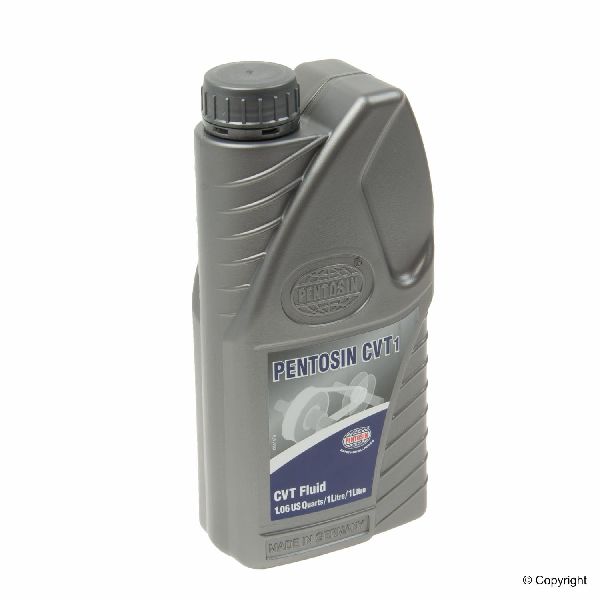
- Always use the specified Nissan NS-2 or NS-3 CVT fluid. Using the wrong fluid can cause or accelerate damage.
What's Unique About the 2007-2018 Nissan Altima

Nissan Altimas in this year range use a Jatco CVT that is highly susceptible to this code. The issue is rarely as simple as a bad sensor or low fluid. For the 5th generation (2013-2018) with the CVT8 (Jatco model JF016E/RE0F10D for the 2.5L engine), the primary cause is a well-documented design flaw where a steel flow control valve wears out its softer aluminum bore within the transmission's oil pump. This internal, mechanical wear causes a permanent loss of hydraulic pressure that a simple fluid change cannot fix. Early diagnosis by inspecting the transmission pan for metal debris is critical to determine if the transmission is salvageable or requires a full replacement.
Generation note: This range covers the 4th generation (2007-2012, L32) and the 5th generation (2013-2018, L33). The 4th gen typically uses the Jatco JF011E CVT, while the 5th gen uses the more failure-prone CVT8 (JF016E/JF017E). While the code can appear on both, it is a more frequent and well-documented problem on the 5th generation's Jatco CVT8 transmission due to the flow control valve issue.
Symptoms You May Notice
- Check Engine Light is on
- Hesitation, shuddering, or a "rubber-banding" feeling during acceleration, especially from a stop.
- Vehicle enters a fail-safe or "limp mode" with severely reduced power.
- Sluggish acceleration and lack of power.
- Delayed engagement when shifting into Drive or Reverse, sometimes taking 3-5 seconds.
- Whining or grinding noises from the transmission.
- A burning smell from overheated transmission fluid.
- Engine RPMs are high but vehicle speed increases slowly.
- Replacing only the transmission fluid pressure sensor without checking for mechanical wear.
- Replacing the valve body when the actual fault is in the oil pump's flow control valve bore.
- Performing only a fluid and filter change when the P0868 code is already persistent, which usually indicates mechanical wear has already begun.
Most Likely Causes

- Worn Flow Control Valve in Oil Pump 🔴 High Probability This is the most common failure, especially on 2013-2018 models with the CVT8. The steel valve wears its soft aluminum housing in the pump, causing it to stick and bleed off hydraulic pressure.
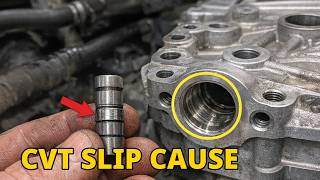
How to confirm: This is a difficult diagnosis. It's strongly suspected if code P0746 is also present. 🎬 Watch: See how this flow control valve causes slipping and codes. Confirmation requires transmission disassembly to inspect the valve and its bore. A key initial step is dropping the pan to check for metal debris.
Typical fix: A transmission specialist may be able to install an oversized valve kit (e.g., from Sonnax or TransGo), which involves reaming the pump housing. Often, the entire oil pump or the complete CVT assembly is replaced.
Est. part cost: $40-$100 for a valve kit, $400-$800 for a pump, $3000+ for a transmission. - Low or Degraded CVT Fluid 🟡 Medium Probability CVTs are very sensitive to fluid level and quality. Using the wrong fluid (non-NS-2/NS-3) or running on old, degraded fluid can cause pressure issues. However, this is often a symptom of a larger problem (like overheating from a failing pump) rather than the root cause.
How to confirm: Check the CVT fluid level with the vehicle warm and running (if a dipstick is present). The fluid should be translucent green (NS-3) or blue (NS-2) and not smell burnt. Many models require a scan tool to verify level. A fluid change alone rarely fixes a persistent P0868.
Typical fix: Perform a CVT fluid drain and fill with the correct OEM fluid (Nissan NS-2 for 4th gen, NS-3 for 5th gen). This is often too late to solve the problem if mechanical wear has already started.
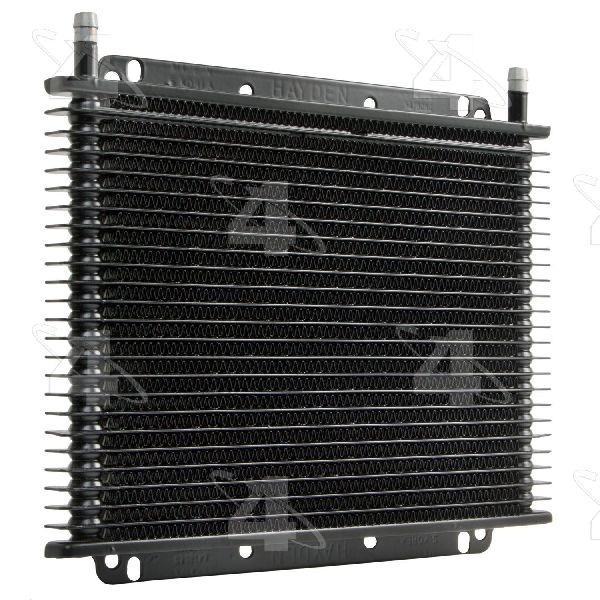
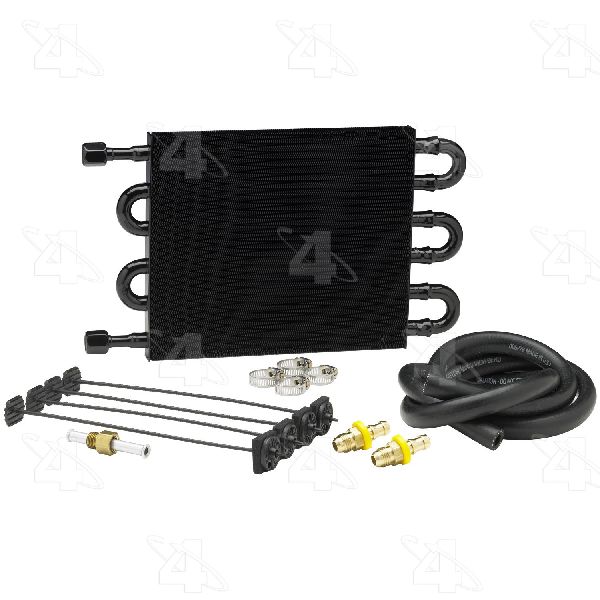
Est. part cost: $100-$200 for fluid. A dealer service can cost $200-$350. - Clogged CVT Filters or Strainer 🟡 Medium Probability Metal debris from normal (or abnormal) wear can clog the pan strainer, the external cartridge filter, and the small filter in the fluid cooler, restricting flow and causing a pressure drop.
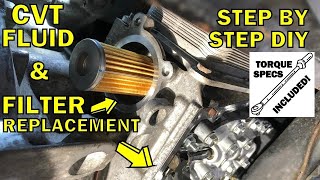
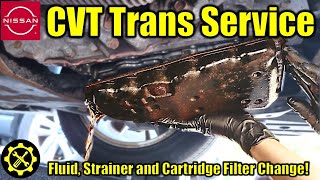
How to confirm: Drop the transmission pan to inspect the strainer. The external cartridge filter and cooler filter 🎬 Watch: Step-by-step guide to changing your CVT fluid and filters. must also be removed for inspection.
Typical fix: Replace the pan strainer/filter and the external cartridge filter during a fluid service. This is preventative maintenance but may not solve an existing P0868 if the pump is already worn.
Est. part cost: $50-$100 for filters and gaskets. - Failing CVT Assembly (Catastrophic Failure) ⚪ Low Probability If the low pressure condition is ignored, the drive belt will slip and grind against the pulleys, destroying them and sending metal shards throughout the system.
How to confirm: Drop the transmission pan and inspect the magnets. If you find shiny silver metal shards or chunks (not just fine grey paste), the transmission has suffered catastrophic damage.
Typical fix: The only solution is to replace the entire CVT assembly with a new or remanufactured unit. It is highly advised not to use a junkyard/used CVT, as it likely has the same inherent flaws.
Est. part cost: $3,000-$5,000+
Rare But Worth Checking
- Faulty Transmission Fluid Pressure Sensor: While possible, this is rarely the root cause on this platform. It's more likely that the sensor is accurately reporting a real pressure problem. Replacing the sensor without addressing the mechanical cause will not fix the issue.
- Faulty Valve Body: A malfunctioning valve body can cause pressure issues, but it is often misdiagnosed. The flow control valve in the pump is a more common point of failure for these symptoms. Some owners have had success replacing the valve body, but it requires programming that is best done at a dealership.
Diagnosis Steps

- Check and verify the CVT fluid level and condition. Ensure the correct Nissan-specific fluid (NS-2 or NS-3) is being used.
- Scan the TCM for any other stored codes, paying close attention to P0746 or P17F-series codes.
- CRITICAL: Drain the fluid, remove the transmission pan, and carefully inspect the magnets.
- If only a fine, grey, greasy paste is on the magnets, the transmission may be salvageable. Proceed with further diagnosis.
- If shiny, sharp metal flakes or chunks are found on the magnets, the CVT has failed internally and must be replaced. Stop diagnosis.
- If the pan is clean, inspect and replace the fluid filters (pan strainer, cartridge filter, cooler filter).
- If the problem persists, the issue is likely the flow control valve/oil pump or the valve body. This requires professional diagnosis, likely involving pressure tests and partial disassembly.
- Consider having a sample of the old CVT fluid analyzed by a lab to check for high concentrations of wear metals.
Parts You'll Likely Need

- CVT Assembly (Remanufactured) — This is the most common fix when metal debris is found in the pan, indicating the original unit is beyond repair.
Trusted brands: Nissan (OEM Remanufactured), Jatco (OEM)
OEM price range: $3500-$5000
Aftermarket price range: $2800-$4000 - CVT Fluid (NS-2 or NS-3)
(OEM #NS-2: 999MP-NS200P, NS-3: 999MP-NS300P)— The correct fluid is required for any service. NS-2 is for 4th gen (approx. pre-2013) and NS-3 for 5th gen. Check your owner's manual.
Trusted brands: Nissan OEM
OEM price range: $20-$25 per quart
Aftermarket price range: $15-$20 per quart - Oversized Flow Control Valve Kit — If the transmission is deemed salvageable, a specialist can use this kit to repair the worn oil pump bore. This is a specialized repair, not a simple part swap.
Trusted brands: Sonnax, TransGo (P/N: JF011E-FC)
Aftermarket price range: $40-$100
Related Codes That Often Appear With This One
- P0746 — Stands for 'Pressure Control Solenoid A Performance'. When seen with P0868, it strongly indicates a mechanical failure related to the oil pump and flow control valve, not just an electrical solenoid issue. It is sometimes called a 'CVT death code' by technicians.
- P17F0, P17F1 — These are manufacturer-specific codes related to CVT judder and belt slip. They indicate the underlying mechanical stress that eventually leads to the low pressure condition of P0868.
Technical Service Bulletins (TSBs) & Recalls
- NTB15-083c: This TSB addresses CVT judder and provides a diagnostic flowchart that often leads to CVT replacement if certain codes, including those related to pressure, are present.
Platform-Specific Known Issues
- Owner Experience: Temporary Fix by Restarting: Multiple owners on forums report that when the car enters limp mode due to P0868, turning the vehicle off and on again can temporarily restore normal operation. This is a misleading 'fix' as it simply resets the computer's error state, but the underlying low pressure problem remains and will cause further damage.
- Repair Story: Fluid Change Not a Solution: An owner of a 2008 Altima on Reddit reported having codes P0746 and P0868. A shop performed a drain and fill, which only cleared the P0746 code temporarily. The P0868 code returned immediately, and the hesitation symptoms persisted, demonstrating that a fluid change alone is insufficient once mechanical wear has begun.
Documented NHTSA Reports
- NHTSA ODI #11403260: An owner reported that their vehicle displayed codes P0746, P0826, P1778, and P0868. Despite these transmission issues, the owner was able to drive the car for three hours to return home.
- NHTSA ODI #11498614: A report describes a vehicle that could not exceed 30 mph. Upon inspection, technicians found codes P1778 and P0868, concluding that the transmission had no oil pressure due to an internal mechanical problem requiring replacement.
Mechanic-Grade Diagnostic Values
- Secondary Pressure Sensor (SEC PRESS) Live Data — expected: Pressure should rise and fall corresponding to commanded pressure from the TCM during acceleration.. Failure: If the actual pressure ('SEC PRESS') is significantly lower than the commanded pressure, it confirms a hydraulic leak or pump issue.
- CVT Fluid Temperature Sensor Voltage — expected: 1.0 - 2.0 V during the DTC confirmation procedure.. Failure: If the voltage is out of range, the pressure test results may not be valid. The fluid must be at operating temperature.
- Manual Line Pressure Test (at Stall Speed, 'D' position) — expected: Approximately 1,600 kPa (230 psi) for a similar Jatco CVT.. Failure: Pressure significantly below the specified value indicates a major issue with the pump, regulator valve, or internal leaks.
Scan Tool Commands That Help
- Nissan CONSULT-II / CONSULT-III: DATA MONITOR > TRANSMISSION > MAIN SIGNALS — This is the primary function to diagnose P0868. It allows the technician to monitor 'SEC PRESS' (Secondary Pressure) in real-time to see if it's actually low compared to the commanded pressure.
- Nissan CONSULT-III Plus: Work Support > Write IP CHARA - REPLACEMENT AT/CVT — This is required after replacing the valve body or the entire CVT assembly. It writes the unique calibration data from the new part to the TCM. Failure to do this will often cause judder codes (P17F0, P17F1) and prevent the system from operating correctly.
- Launch / Autel Scanners: Special Functions > CVT > Erase Calibration Data / Clear CVT Learned Value — After a fluid change or minor repair (not valve body replacement), this function can be used to reset the fluid degradation counter and adaptive learn-in values. This may temporarily improve shifting but will not fix a mechanical pressure loss from P0868.
Wiring & Ground Locations
- TCM Ground — For the L33 (2013-2018) Altima, the TCM is part of the valve body assembly inside the transmission. Its ground is internal. For the L32 (2007-2012), the TCM is a separate module located in the engine compartment, typically near the front left, and shares a ground point (e.g., F25) with other components on the inner fender or chassis.. A poor ground on earlier models with an external TCM could potentially cause incorrect sensor readings or solenoid operation, though it's a very rare cause for P0868 compared to mechanical failures.
- Main Transmission Harness Connector — On the top or side of the CVT case. For a 2016 Altima, this is a large multi-pin connector where the external vehicle harness connects to the internal transmission harness leading to the valve body, sensors, and solenoids.. Corrosion or damage to the pins for the pressure sensor signal, sensor power supply, or solenoid control circuits could theoretically cause pressure-related codes. A visual inspection of this connector is a valid, though unlikely, diagnostic step.
Real Owner Repair Stories
- Reddit user on r/altima (2008 Nissan Altima Coupe CVT) — Jerky shifting between P, R, D. Initially had codes P0746 and P0868.
❌ Tried (didn't work) A transmission fluid drain and fill was performed by a shop. This cleared the P0746 code, but P0868 returned immediately after driving.
✅ What actually fixed it The final fix was not completed by the owner, but a former Nissan technician with 13 years of experience commented that the combination of P0746 and P0868 is a 'CVT death code' indicating a pressure control solenoid failure within the valve body. The recommended and only reliable solution is to replace the entire CVT with a new or factory-remanufactured unit, not a used one.
Model Year Variations Within This Range
- 2007-2012 (JF011E CVT): The Jatco JF011E transmission used in the 4th generation Altima has two different oil pan designs: one with 19 bolts and one with 18 bolts. When ordering a pan gasket and filter, it is critical to count the bolts to ensure the correct parts are purchased.
- 2013-2018 (CVT8 - JF016E/JF017E): These models use a valve body that requires a specific calibration file ('IP Characteristic') to be written to the TCM upon replacement. You cannot simply swap a valve body (new or used) without using a Nissan CONSULT or equivalent high-end scan tool to perform this programming. The older JF011E used a removable ROM chip on the valve body that could sometimes be swapped, but the CVT8 integrates this data electronically.
Diagnostic Flowchart
Other Known Issues on This Vehicle
Issues unrelated to this code that are worth knowing about as an owner of this generation:
- Electronic Steering Column Lock (ESCL) Failure 🔴 High — Common on 2009-2010 models, leading to a no-start condition. The module fails, preventing the key from being recognized. (Ref: Nissan issued a voluntary service campaign (PC516) to replace the ESCL on affected 2009-10 models.)
- Melting / Sticky Dashboard 🟠 Medium — Widespread on 2007-2009 models, especially in hot climates. The dashboard material degrades, becoming sticky and creating a dangerous, reflective glare on the windshield. (Ref: A class-action lawsuit resulted in a settlement for owners in Florida, but the problem is reported nationwide.)
- Rear Lower Control Arm Corrosion 🔴 High — Affects 2013-2018 models, particularly in 'salt belt' states. The control arms can corrode and fracture, leading to a loss of vehicle control. (Ref: NHTSA investigated (PE18013) and Nissan initiated a service campaign and extended the warranty rather than a full recall.)
- Premature Catalytic Converter Failure 🟠 Medium — Common on 4th generation (2007-2012) models with the 2.5L engine. Often linked to engine issues like excessive oil consumption.
- Faulty Fuel Pump 🟠 Medium — Reported across many model years (2001-2015), causing stalling, hard starting, and a stuttering sensation due to fuel starvation. (Ref: Recalls were issued for various years, including some within this generation.)
Used vs. New Parts: Buying Guide for This Vehicle
When a used part is the smart pick: For this specific repair (P0868), a used CVT assembly from a junkyard is almost never a smart choice. The failure is due to a well-known design flaw, meaning a used unit from a similar vehicle is highly likely to have the same wear or will fail soon. The only potential exception is for external components like brackets or sensors if they can be sourced separately, but not for the transmission itself.
Donor-vehicle mileage cap: roughly under 80000 miles for the part to have meaningful remaining life.
What to inspect on the donor part:
- Must have verifiable service records showing CVT fluid changes with genuine Nissan NS-2/NS-3 fluid.
- Donor vehicle should be from a non-accident, running vehicle with no prior transmission complaints.
- Avoid units from northern/salt-belt states where corrosion of connectors and coolers is more common.
- Ask the seller explicitly if the donor car was slipping, shuddering, or had any warning lights before being dismantled. If yes, do not buy.
OEM-only on this vehicle (don't cheap out):
- CVT Assembly: A factory-remanufactured unit from Nissan/Jatco is the most reliable option, as it will contain updated parts that address original design flaws.
- CVT Fluid: Only use Nissan OEM NS-2 or NS-3 fluid as specified for the model year. Using universal or incorrect fluid is a primary cause of failure.
Aftermarket brands forum-validated for this vehicle:
- Sonnax (for oversized valve kits, professional repair only)
- TransGo (for drop-in valve kits, professional repair only)
Brands owners have reported issues with on this vehicle:
- Any 'rebuilt' CVT from a non-specialist shop. Rebuilding these CVTs requires special tools and knowledge that most general transmission shops lack.
- Any universal CVT fluid that claims to be compatible with NS-2/NS-3. The risk of premature failure is too high.
Real Owner Stories
Aggregated from forums and TSBs cited above. Mileages and costs reflect what owners reported in those sources.
2008 Altima Coupe
Symptoms: Owner reported codes P0746 and P0868 along with hesitation symptoms.
What fixed it: A fluid drain and fill was performed, but it was not a solution. The P0868 code returned immediately and the hesitation persisted, demonstrating the fluid change was insufficient.
Source hint: Reddit r/altima - '08 Coupe with CVT
2008 Nissan Altima
Symptoms: The vehicle would intermittently enter limp mode and set the P0868 code.
What fixed it: The owner found that turning the vehicle off and then on again would temporarily restore normal operation, but this did not fix the underlying low pressure problem.
Source hint: Reddit r/MechanicAdvice - 2008 Nissan Altima Limp mode p0868
2012 Altima — 156000 miles
Symptoms: The P0868 code was stored in the computer.
What fixed it: The owner was advised that a fluid and filter change should be the first step, but it was acknowledged that the root cause could be a failing pump, which would not be solved by the service.
Source hint: BobIsTheOilGuy.com Forums - P0868 on 2012 Altima
NHTSA Reported Pressure Loss
Symptoms: An owner reported that their vehicle displayed codes P0746, P0826, P1778, and P0868 after a technician hooked up a diagnostic machine.
What fixed it: While the owner was able to drive the car home, the presence of multiple pressure and step motor codes typically points toward internal mechanical failure. (Ref: NHTSA ODI #11403260)
NHTSA Reported Limp Mode
Symptoms: A vehicle was unable to exceed 30 mph. A shop inspection revealed codes P1778 and P0868.
What fixed it: Technicians informed the owner that the transmission had no oil pressure due to a mechanical problem inside the unit and required a full replacement. (Ref: NHTSA ODI #11498614)
Related OBD-II Codes
Frequently Asked Questions
My Altima went into 'limp mode' with a P0868 code, but it drives fine after I restart it. Is the problem gone?
Will a simple CVT fluid and filter change fix the P0868 code on my 2007-2018 Altima?
What is the correct type of CVT fluid for my Nissan Altima?
I dropped my transmission pan and found shiny metal flakes on the magnets. Can the transmission be saved?
My mechanic mentioned a worn flow control valve. Is this a common failure on these Altimas?
Does Nissan TSB NTB15-083c provide a specific repair for code P0868?
Helpful Videos

We Have This Part in Stock

The information in this article is provided for general reference and educational purposes only. Vehicle specifications, procedures, and part compatibility can vary by production date, trim level, and region. Always consult your vehicle's factory service manual and verify part numbers before purchasing or performing repairs. Safety-critical components such as airbags, seat belts, and braking systems should be installed by a qualified professional.
- Nissan Altima:
- 🎬 Helpful Videos
- 🛍️ Shop This Part
- What's Unique About the 2007-2018 Nissan Altima
- Symptoms You May Notice
- Most Likely Causes
- Rare But Worth Checking
- Diagnosis Steps
- Parts You'll Likely Need
- Related Codes That Often Appear With This One
- Technical Service Bulletins (TSBs) & Recalls
- Platform-Specific Known Issues
- Documented NHTSA Reports
- Mechanic-Grade Diagnostic Values
- Scan Tool Commands That Help
- Wiring & Ground Locations
- Real Owner Repair Stories
- Model Year Variations Within This Range
- Diagnostic Flowchart
- Other Known Issues on This Vehicle
- Used vs. New Parts: Buying Guide for This Vehicle
- Real Owner Stories
- 2008 Altima Coupe
- 2008 Nissan Altima
- 2012 Altima — 156000 miles
- NHTSA Reported Pressure Loss
- NHTSA Reported Limp Mode
- Related OBD-II Codes
- Frequently Asked Questions
- 🎟️ Get 5% Off