

P0848 on 2012-2013 Mazda MAZDA3: Transmission Pressure Sensor 'B' Circuit High Causes & Fixes
On a 2012-2013 Mazda3, P0848 almost always points to an internal transmission issue, specifically a faulty control valve body. A Mazda Technical Service Bulletin (TSB) confirms this problem. Expect a professional repair costing $1,500-$2,500, as the entire valve body assembly typically requires replacement and programming.
- P0848 on a 2012-2013 Mazda3 is a serious code that points directly to a known issue with the transmission valve body.
- Mazda has issued service bulletins confirming that the correct repair is to replace the entire control valve body, not just a single sensor.
- This is an expensive repair that should be performed by a professional dealership or transmission specialist due to the need for special tools and software programming.
- Always check the transmission fluid level and condition first, but be prepared for the valve body to be the ultimate cause.
- Do not ignore this code, as it can lead to severe drivability issues and potentially more extensive transmission damage.
What's Unique About the 2012-2013 Mazda MAZDA3
The 2012-2013 Mazda3 was one of the first models to feature the new SKYACTIV-Drive automatic transmission (specifically the FW6A-EL model). These early units were susceptible to internal issues. Mazda issued a Technical Service Bulletin (TSB #05-003-14-2898A) that directly links P0848 and a host of other transmission codes to a problem requiring the replacement of the entire programmed valve body, not just a single sensor. This indicates a known manufacturing or design issue where contamination in the fluid causes internal pressure switches to stick, leading to the fault code.
Diagnostic Flowchart
Tap your situation to follow the diagnostic path that matches what you're seeing on this vehicle.
Symptoms You May Notice
- Check Engine Light and/or AT (Automatic Transaxle) warning light is on.
- Harsh, erratic, or delayed gear shifts.
- Transmission may get stuck in a single gear (limp mode), often 3rd gear.
- Increased fuel consumption.
- Transmission slipping (engine revs higher without corresponding acceleration).
- Hesitation or jerking when pulling away from a stop.
- Slow to engage when shifting from Reverse to Drive.
- Replacing only an external speed sensor when the issue is internal to the transmission.
- Assuming the transmission needs a full rebuild when only the valve body is faulty.
- Using the wrong type of transmission fluid, which can cause shifting problems and damage.
- Replacing only the individual pressure switch without addressing the underlying fluid contamination issue, leading to repeat failures.
Most Likely Causes
- Faulty Control Valve Body Assembly 🔴 High Probability A Mazda TSB (#05-003-14-2898A) explicitly states that for a list of codes including P0848 on vehicles produced before September 28, 2012, the official fix is a 'new programmed valve body'. Other related TSBs mention that contamination can cause internal pressure switches on the valve body to stick. The pressure sensor is often integrated into this assembly and not sold separately for this specific repair.
How to confirm: A technician will use a professional scan tool to monitor transmission data. If the pressure reading for circuit 'B' is stuck high and doesn't change with engine speed or gear, and wiring is confirmed to be good, the valve body is the culprit. The presence of multiple related transmission codes (like P0847, P1738) further points to this issue.
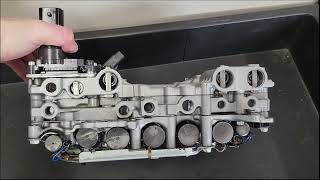
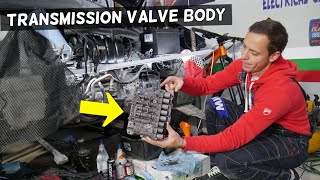
Typical fix: Replace the entire control valve body assembly with a new, pre-programmed unit from Mazda 🎬 See this walkthrough of the valve body removal and replacement. (Part No. PEY0-21-C00). The transmission's initial learning procedure must be performed after installation.
Est. part cost: $1100-$1800 - Low or Contaminated Transmission Fluid 🟡 Medium Probability The TSBs identify contamination as the root cause of the pressure switches sticking. The SKYACTIV-Drive transmission is sensitive to fluid condition and requires the specific Mazda ATF FZ. 🎬 Watch: Step-by-step guide to changing your Skyactiv transmission fluid. Using incorrect fluid can exacerbate issues.
How to confirm: Check the transmission fluid level and condition. The fluid should be at the correct level, bright red, and not smell burnt. Dark, dirty, or burnt-smelling fluid indicates a problem and confirms the presence of contamination that the TSBs warn about.
Typical fix: Perform a transmission fluid drain and fill using the correct Mazda-specific ATF (SKYACTIV-Drive FZ). If the fluid is heavily contaminated, a flush may be recommended, but this will not fix a switch that is already permanently stuck or damaged.
Est. part cost: $75-$200 - Wiring Harness or Connector Issue ⚪ Low Probability
How to confirm: Visually inspect the wiring harness leading to the transmission for any signs of damage, corrosion, or loose connections. A technician can test the sensor circuit for a short to power, which would cause a constant high voltage reading.
Typical fix: Repair or replace the damaged section of the wiring harness or clean/replace the corroded connector.
Est. part cost: $20-$300
Rare But Worth Checking
- Faulty Transmission Control Module (TCM): While possible, a faulty TCM is much less common than the valve body issue. The TCM is often diagnosed only after all other possibilities, including the valve body and wiring, have been ruled out. In some cases, a TCM software update is part of the repair procedure after replacing hardware.
- Faulty Individual Pressure Switch 'B': While the TSBs call for replacing the entire valve body, the individual pressure switch 'B' (Part No. FZ01-21-2J0) is available. Some independent shops or DIYers may attempt to replace only the switch. However, if widespread contamination is the root cause, this may not be a long-term solution as other switches or solenoids in the valve body could fail later.
Diagnosis Steps
- Check the transmission fluid level and condition. Ensure it is clean, at the proper level, and does not smell burnt. Use only Mazda ATF FZ.
- Use an OBD-II scanner to check for any other transmission-related codes. Note all codes present, especially P0842, P0847, P0780, and P1738.
- Consult Mazda TSB #05-003-14-2898A and its superseding bulletins (like 05-005/14 and 05-002/15) which specifically address this code on this vehicle.
- Inspect the transmission's main electrical connector and wiring harness for any visible damage, corrosion, or fluid contamination.
- With a professional scan tool, monitor the live data for Transmission Fluid Pressure Sensor 'B'. The voltage should fluctuate with gear changes and RPM. A static high voltage reading (e.g., near 5V) points to a circuit high fault.
- If wiring is confirmed to be intact, the diagnosis, heavily supported by Mazda's own TSBs, points to a required replacement of the control valve body assembly.
Parts You'll Likely Need
- Transmission Control Valve Body
(OEM #PEY0-21-C00)— This is the most common failure part for P0848 on this vehicle, as documented by Mazda's own service bulletins. The pressure sensors are integrated into this unit.
Trusted brands: Mazda (OEM)
OEM price range: $1100-$1800
Aftermarket price range: N/A - Mazda SKYACTIV-Drive ATF FZ
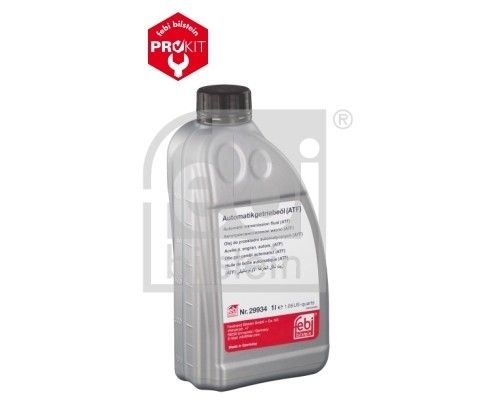
(OEM #0000-FZ-113E-01)— The correct transmission fluid is required when replacing the valve body or servicing the transmission.
Trusted brands: Mazda (OEM)
OEM price range: $20-$30 per quart
Aftermarket price range: $15-$25 per quart - Transmission Oil Filter (Strainer)
(OEM #FZ01-21-500)— Should be replaced when the oil pan is removed for valve body service, especially since contamination is the root cause of the issue.
Trusted brands: Mazda (OEM)
OEM price range: $40-$60
Aftermarket price range: $20-$40
Related Codes That Often Appear With This One
- P0842 — Relates to Transmission Fluid Pressure Sensor/Switch 'A' Circuit Low. Both codes appearing together strongly suggests a fault within the valve body where both sensor circuits reside.
- P0843 — Relates to Transmission Fluid Pressure Sensor/Switch 'A' Circuit High. Like P0842, its presence points to a general valve body or electrical fault.
- P0847 — Relates to Transmission Fluid Pressure Sensor/Switch 'B' Circuit Low. Seeing opposite codes (High and Low) for the same circuit can indicate an intermittent wiring short or a failing sensor/valve body.
- P1738 — This is a Mazda-specific code for an 'Automatic Transaxle Internal Malfunction'. It is frequently cited alongside P0848 in Mazda TSBs as a primary indicator of the valve body problem.
- P0780 — A generic code for 'Shift Malfunction'. This is another code frequently listed in the Mazda TSBs along with P0848 and P1738, confirming a general shifting problem caused by the internal failure.
Technical Service Bulletins (TSBs) & Recalls
- 05-003-14-2898A: The primary TSB that lists P0848 among many codes requiring a new programmed valve body to correct the problem for vehicles built before late 2012.
- 05-005/14: Superseded bulletin that also lists P0847 (a related
Platform-Specific Known Issues
- Mazda issued multiple Technical Service Bulletins (including 05-003-14-2898A, 05-005/14, and 05-002/15) for the 2012-2013 Mazda3 with the SKYACTIV 6-speed automatic transmission. These bulletins state that codes like P0848 are caused by internal pressure switches sticking due to contamination and that the definitive repair is to replace the control valve body with a new, programmed unit. The issue was prevalent enough that the TSBs apply to vehicles with VINs lower than JM1BL**733728 (produced before September 28, 2012).
Mechanic-Grade Diagnostic Values
- Transmission Fluid Temperature (TFT) before diagnosis — expected: 60–110 °C {140–230 °F}. Failure: N/A - this is a prerequisite condition for accurate testing.
- Voltage at Pressure Sensor 'B' connector (unplugged) — expected: Approx. 5V reference from PCM (Key On, Engine Off). Failure: No voltage suggests an open in the wiring from the PCM; voltage significantly different from 5V could indicate a PCM issue.
Hidden / Shadow Codes Worth Checking
- P1738:00: Automatic Transmission Internal Malfunction. This is a Mazda-specific code. (see via Standard OBD-II scanner. Its presence alongside P0848 is a very strong indicator that the valve body failure described in Mazda's TSBs has occurred. The official diagnostic procedure may instruct the technician to address P1738 first.)
Scan Tool Commands That Help
- Mazda M-MDS (or equivalent professional scan tool): Initial Learning Procedure — This is a mandatory procedure after replacing the control valve body or individual pressure switches. Failure to perform this procedure will result in poor shifting and may cause the P0848 code to return. The procedure involves specific steps including warming the ATF, depressing the brake pedal forcefully, and shifting the lever in a prescribed sequence to allow the TCM to learn the new hydraulic characteristics.
- Mazda M-MDS: Retrieve/Clear CMDTCs — Used as part of the Initial Learning Procedure. Clearing the codes at a specific step in the process is required to initiate the learning mode in the TCM.
Wiring & Ground Locations
- Pressure Sensor 'B' Connector — Inside the transmission, on the valve body assembly. The sensor is part of the pressure switch manifold.. This is the component generating the fault. It has a two-pin connector with red and white wires that connect to the TCM via the internal transmission harness. Knowing the wire colors can help in the unlikely event of needing to test continuity within the valve body harness itself.
- TCM (Transmission Control Module) — For the 2012-2013 SKYACTIV models, the TCM is not a separate unit on the transmission case. Its functions are integrated into the main Powertrain Control Module (PCM), which is located attached to the battery box under the hood.. Technicians accustomed to older models might search for a separate TCM on the transmission. Knowing it's part of the PCM is critical for correctly diagnosing any circuit issues that trace back to the control module.
Real Owner Repair Stories
- Mazda Technical Service Bulletin #05-003-14-2898A and related bulletins (2012-2013 Mazda3 with SKYACTIV 6-speed AT (FW6A-EL), specifically VINs lower than JM1BL**733728) — Check Engine Light and/or AT light on, harsh shifting, hesitation, various transmission codes including P0848, P0847, P1738.
❌ Tried (didn't work) Replacing individual sensors without addressing the root cause of contamination., Performing a simple fluid drain and fill without fixing the stuck internal switch., Chasing external wiring faults when the issue is internal to the transmission.
✅ What actually fixed it Replacement of the entire control valve body with a new, pre-programmed unit (Part No. PEY0-21-C00), followed by performing the 'Initial Learning Procedure' with the Mazda M-MDS tool. This is the official, manufacturer-documented final fix for the pattern failure.
"I Checked Everything" — The Actual Cause
- For this code, the equivalent pattern is 'fluid level is correct, fluid condition is okay, and external wiring checks out, but the P0848 code persists.' The actual cause, as documented extensively by Mazda TSBs, is internal contamination causing the pressure switch to stick mechanically inside the valve body. A technician can waste significant time on external checks when the problem is a known internal mechanical/hydraulic failure mode that won't show up on a wiring test.
OEM Part Supersession History
Various (undocumented)→PEY0-21-C00 (and subsequent revisions)— To correct the issue of internal pressure switches sticking due to contamination. The new part is a revised and pre-programmed assembly.
Heads up: The TSB applies to vehicles built before September 28, 2012, implying that vehicles built after this date received an updated valve body from the factory. Using a non-programmed or incorrect revision of the valve body will result in failure.
Model Year Variations Within This Range
- 2012-2013: The key variation is the introduction of the SKYACTIV-G engine and FW6A-EL transmission in 2012. Non-SKYACTIV Mazda3s from these years use a different, less problematic transmission. Furthermore, Mazda's TSB specifies a VIN cutoff for affected vehicles (produced before Sept 28, 2012), indicating that later 2013 models likely have a factory-installed updated valve body, making them less susceptible to this specific P0848 cause.
Helpful Videos

Used OEM Parts in Stock

New Aftermarket Parts Available



The information in this article is provided for general reference and educational purposes only. Vehicle specifications, procedures, and part compatibility can vary by production date, trim level, and region. Always consult your vehicle's factory service manual and verify part numbers before purchasing or performing repairs. Safety-critical components such as airbags, seat belts, and braking systems should be installed by a qualified professional.
- Mazda MAZDA3:
- 🎬 Helpful Videos
- 🛍️ Shop This Part
- What's Unique About the 2012-2013 Mazda MAZDA3
- Diagnostic Flowchart
- Symptoms You May Notice
- Most Likely Causes
- Rare But Worth Checking
- Diagnosis Steps
- Parts You'll Likely Need
- Related Codes That Often Appear With This One
- Technical Service Bulletins (TSBs) & Recalls
- Platform-Specific Known Issues
- Mechanic-Grade Diagnostic Values
- Hidden / Shadow Codes Worth Checking
- Scan Tool Commands That Help
- Wiring & Ground Locations
- Real Owner Repair Stories
- "I Checked Everything" — The Actual Cause
- OEM Part Supersession History
- Model Year Variations Within This Range
- 🎟️ Get 5% Off