

P0846 on 2008-2015 Mitsubishi Lancer Evolution: TC-SST Clutch 2 Pressure Sensor Faults and Fixes
On a Lancer Evolution X, code P0846 almost always indicates a fault within the complex TC-SST dual-clutch transmission, typically a failed pressure sensor inside the mechatronics unit. This is not a DIY job and usually requires a specialist to replace or rebuild the entire mechatronics assembly, which can be a very expensive repair.
- P0846 on an Evo X is a serious transmission code pointing to a fault with the even-numbered gear pressure sensor.
- The most likely cause is a failure inside the Mechatronic unit, which is the transmission's control center.
- This is not a DIY repair. It requires expensive parts and specialized programming by a Mitsubishi dealer or a TC-SST specialist.
- Always use the correct DiaQueen SSTF-I fluid; incorrect fluid can cause or worsen transmission problems.
- Addressing this issue promptly is critical to avoid catastrophic transmission failure.
What's Unique About the 2008-2015 Mitsubishi Lancer Evolution
The Lancer Evolution X uses a sophisticated Getrag-made Dual-Clutch Sportronic Shift Transmission (TC-SST), also known as the DCT470. Unlike conventional automatics, the pressure sensors for this transmission are not simple, externally accessible parts. They are integrated directly into the Mechatronic assembly, which is a complex unit combining the valve body and the Transmission Control Module (TCM). Because of this integrated design, Mitsubishi does not sell the pressure sensors separately. A P0846 code almost always leads to the diagnosis of a faulty Mechatronic unit, requiring a complete assembly replacement or a specialized rebuild, rather than a simple sensor swap.
Symptoms You May Notice
- "Transmission Service Required" message on the dashboard
- Vehicle enters limp mode (fail-safe mode), limiting engine power and gear selection
- Harsh, erratic, or delayed shifting
- Slipping between gears or engine revving without acceleration
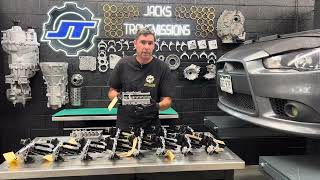
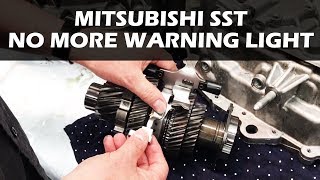
- Inability to select certain gears 🎬 Watch a teardown fix for SST transmission gear selection faults (e.g., only having 1, 3, 5 or only 2, 4, 6)
- Inability to select Reverse, sometimes with a blinking "R" indicator on the gear display
- Jerking or jolting when coming to a stop or moving from a standstill
- Simply changing the transmission fluid and filter without diagnosing the Mechatronic unit. If the pressure sensor has failed internally, a fluid change will not fix the problem and the code will return, as reported by many owners in forums.
Most Likely Causes
- Failing Mechatronic Unit / Internal Pressure Sensor 🔴 High Probability The pressure sensors are integrated into the Mechatronic unit, which is a known failure point on the TC-SST transmission due to its complexity and thermal sensitivity. Heat soak from the engine and transmission can degrade the electronic components over time.
How to confirm: Requires an advanced scan tool to monitor live data from the 'Clutch 2 pressure sensor'. If readings are erratic, non-responsive, or incorrect for the given gear state, it points to an internal fault within the mechatronic unit.
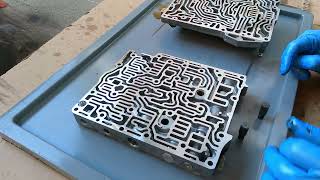
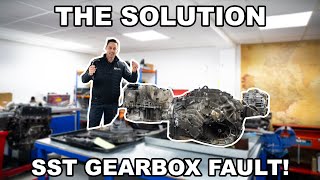
Typical fix: Replacement of the entire Mechatronic assembly with a new or remanufactured unit, followed by TCM programming and a 'teach-in' procedure. Alternatively, sending the unit to a specialized shop like Kozmic Motorsports for a rebuild 🎬 Watch this overview of a complete TC-SST mechatronic valve body rebuild is a common and often preferred solution in the owner community.
Est. part cost: $1500-$4000+ - Low, Incorrect, or Contaminated Transmission Fluid 🟡 Medium Probability The TC-SST is extremely sensitive to fluid type, level, and condition. The correct fluid is Mitsubishi DiaQueen SSTF-I or an exact, high-quality equivalent. Old fluid breaks down and gets contaminated with clutch material, which can clog solenoids and affect hydraulic pressure.
How to confirm: Check the transmission fluid level and condition using the specific, and somewhat complex, factory procedure. The fluid should be clean and at the correct level. If the fluid is dark, burnt, or low, it must be addressed. A fluid change is a good first step, but often does not resolve an existing P0846 code.
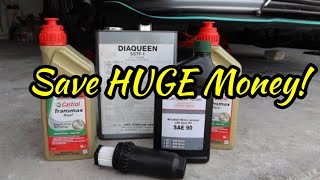
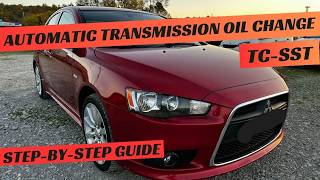
Typical fix: Perform a complete fluid and filter change 🎬 See how to change the SST transmission fluid and filter using only the specified TC-SST fluid. This is a good first step, but may not resolve the code if a hardware fault already exists.
Est. part cost: $200-$400 - Damaged Wiring or Connectors ⚪ Low Probability Wiring to the transmission is exposed to road debris and significant heat from the engine and exhaust, which can cause insulation to become brittle and connections to corrode over time.
How to confirm: Visually inspect the main wiring harness and the large circular connector going to the transmission for any signs of corrosion, damage, or loose pins. Perform a continuity test on the sensor circuit if a wiring diagram is available.
Typical fix: Repair or replace the damaged section of the wiring harness or the connector.
Est. part cost: $50-$300
Rare But Worth Checking
- Failing Shift Fork Magnet: In some cases, the magnets mounted on the shift forks can come loose or fall off entirely. This confuses the transmission's position sensors, leading to erratic shifting and various fault codes, which could potentially be related to pressure issues. This also requires transmission disassembly to fix.
- Isolated Transmission Control Module (TCM) Failure: While the TCM is part of the Mechatronic assembly, in rare cases, it can be the sole point of failure. However, diagnosis is complex and replacement still involves the entire Mechatronic unit as they are permanently attached.
Diagnosis Steps
- Connect a high-level scan tool (like the dealer MUT-III) capable of reading Mitsubishi-specific transmission codes and live data.
- Check for any other related transmission DTCs, especially P0847 or P0848, which would point more directly to an electrical vs. performance fault.
- Carefully check the TC-SST fluid level and condition. Ensure the correct fluid type (DiaQueen SSTF-I or equivalent) is being used. The level check procedure is specific and must be followed exactly.
- If the fluid is low or dirty, perform a full fluid and filter service according to the factory procedure. Clear codes and re-test. Many owners attempt this first, but the code often returns if the sensor is faulty.
- Thoroughly inspect the main transmission wiring harness and the large round connector for any visible damage, corrosion, or loose pins.
- Using the scan tool, monitor the live data for the 'Clutch 2 Pressure Sensor'. Observe the voltage or pressure readings while the car is in different states (idle in Park, in gear, during shifts). Erratic, stuck, or illogical readings strongly suggest an internal Mechatronic fault.
- If the sensor data is confirmed to be faulty, the diagnosis will point to replacing or rebuilding the Mechatronic assembly as per Mitsubishi TSB-14-22-003 or TSB-16-22-003.
Parts You'll Likely Need
- TC-SST Mechatronic Assembly
(OEM #2500A225 (Note: This part number has been superseded by newer versions like 2500A333 or others. Always verify with VIN))— This assembly contains the failing pressure sensor, solenoids, and TCM. It is the most common point of failure for this code and is typically replaced as a single unit by dealers.
Trusted brands: Mitsubishi (OEM), Kozmic Motorsports (Rebuilder), Jacks Transmissions (Rebuilder)
OEM price range: $2500-$4000
Aftermarket price range: $1500-$2500 (for rebuild service) - TC-SST Transmission Fluid and Filter Kit
(OEM #Fluid: C0002610, Filter: 2513A040)— Required for any repair involving the Mechatronic unit, and a critical maintenance item. Using the correct fluid (DiaQueen SSTF-I) is mandatory for transmission health.
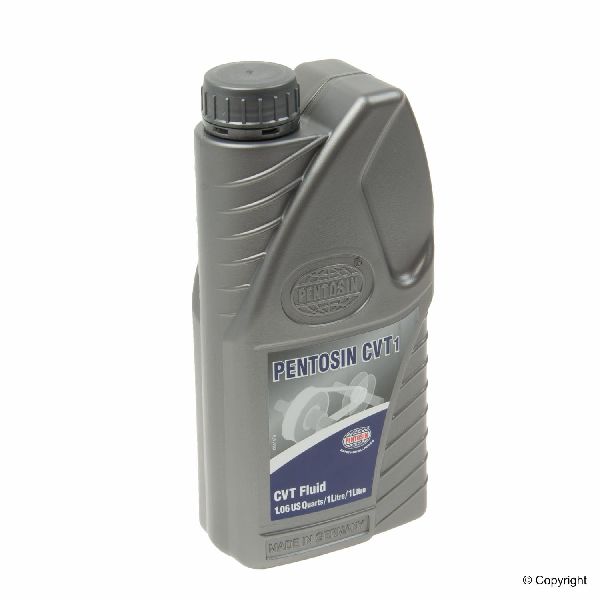
Trusted brands: Mitsubishi (OEM), Pentosin FFL-2, Motul High-Torque DCTF
OEM price range: $250-$400
Aftermarket price range: $200-$350
Related Codes That Often Appear With This One
- P0847 — This code is for 'Transmission Fluid Pressure Sensor/Switch 'B' Circuit Low', indicating a specific electrical fault (short to ground) in the same sensor circuit as P0846.
- P0848 — This code is for 'Transmission Fluid Pressure Sensor/Switch 'B' Circuit High', indicating a specific electrical fault (short to power) in the same sensor circuit as P0846.
- P181D — This code relates to 'Clutch 2 Pressure High' and often appears with P0846 as they both point to pressure regulation issues in the even-gear clutch pack.
Technical Service Bulletins (TSBs) & Recalls
- TSB-14-22-003 / TSB-16-22-003: These technical service bulletins supersede earlier versions and provide the official dealer procedure for diagnosing and replacing the TC-SST Mechatronic assembly for various DTCs, including pressure sensor faults like P0846.
Platform-Specific Known Issues
- The pressure sensors are integral to the Mechatronic unit and are not sold separately by Mitsubishi, making repairs expensive.
- Replacement of the Mechatronic unit requires programming with dealer-level software (MUT-III) and a 'teach-in' procedure to calibrate the clutches and shift forks.
- The TC-SST transmission is highly sensitive to overheating, which can accelerate the failure of electronic components within the Mechatronic unit.
- Specialty shops like Kozmic Motorsports are highly regarded in the community for being able to reliably rebuild these complex units, often with upgraded components, providing an alternative to expensive dealer replacement.
Mechanic-Grade Diagnostic Values
- TC-SST Fluid Temperature for Teach-In Procedure — expected: 40°C to 80°C (104°F to 176°F). Failure: The MUT-III scan tool will not allow the teach-in procedure to start or complete if the fluid is outside this temperature range.
- DTC P0846 Judgment Criteria (Live Data) — expected: The calculated torque value (Clutch 2 Permit Torque minus Engine Torque) should not remain at 200 N·m (148 ft-lb) or more for over 4 seconds.. Failure: If the calculated torque difference exceeds 200 N·m for 4 seconds, the ECU determines a performance fault and sets the code.
- DTC Set Condition: Battery Voltage — expected: 8.0 V to 16.5 V. Failure: Diagnosis may not run or may be inaccurate if system voltage is outside this range.
Hidden / Shadow Codes Worth Checking
- P181E: Clutch 2 (Pressure low range out). This is a related pressure code that is often checked by the TCM as part of the diagnostic logic for P0846. (see via Mitsubishi MUT-III or equivalent advanced scan tool.)
- P181F: Clutch 2 (Pressure high range out). Similar to P181E, this code indicates a pressure reading outside the expected maximum range for the same clutch. (see via Mitsubishi MUT-III or equivalent advanced scan tool.)
Scan Tool Commands That Help
- Mitsubishi MUT-III: Coding Information & Copy ('Copy Coding') — This function must be used BEFORE removing the old Mechatronic unit. It saves the vehicle-specific coding data from the old TCM to be written to the new unit.
- Mitsubishi MUT-III: VIN Writing — This is required after installing a new Mechatronic assembly to pair the new TCM to the vehicle's VIN.
- Mitsubishi MUT-III: On Vehicle Coding — After installing the new Mechatronic unit, this function writes the saved data from the old unit (via 'Copy Coding') to the new TCM.
- Mitsubishi MUT-III: Teach-In Procedure — This is the final and mandatory calibration sequence after replacing the Mechatronic or clutch assembly. It must be performed in a specific order: 1. Plausibility Check, 2. Clutch Ventilation, 3. Shift Fork Teach-In, 4. Stroke Teach-In, 5. Boost Teach-In, 6. Reset Clutch Gain.
Wiring & Ground Locations
- Mechatronic Main Connector — Inside the transmission, accessible after removing the oil pan and side cover. It is a large, circular connector that attaches the main vehicle harness to the Mechatronic unit.. This is the primary electrical interface for the entire Mechatronic assembly, including the internal pressure sensors. While a rare cause, damage or corrosion at this connector could cause various transmission codes, including P0846.
Real Owner Repair Stories
- EvolutionM.net user 'yodizzle' (2009 Lancer Ralliart, 103,300 miles) — Blinking 'R' on the gear display, car would not go into reverse. Restarting the car would temporarily fix the issue. Codes P0846 and P1637 were present.
❌ Tried (didn't work) A complete transmission fluid flush (7.5 quarts of DiaQueen SSTF-I) and new filter.
✅ What actually fixed it The user did not post the final repair, but multiple experienced members immediately diagnosed the issue as a failing Mechatronic unit or a dislodged shift fork magnet, confirming that a fluid change alone is insufficient and the unit requires specialist repair or replacement.
OEM Part Supersession History
2500A225 (and others)→2800A135 (as of TSB-14-22-003), and other newer numbers— Revisions and updates to the Mechatronic assembly to improve reliability.
Heads up: While physical fitment may be the same, different model years require specific software versions. For some 2008 models, a temporary software update must be flashed to perform the 'Teach-In', after which the original software is flashed back. Always confirm the correct part number and software procedure for the vehicle's VIN.
Model Year Variations Within This Range
- 2008: The 2008 Lancer Evolution has unique procedures for TCM programming and may require a temporary software flash to enable the full 'Teach-In' procedure, after which the original software is re-installed.
- Pre-'0002' Diag. Version ECUs: Older TC-SST ECUs with a diagnostic version of '0001' or '0000' do not support or display the 'Reset Clutch Gain' function during the Teach-In procedure.
Diagnostic Flowchart
Other Known Issues on This Vehicle
Issues unrelated to this code that are worth knowing about as an owner of this generation:
- ACD/AYC Pump Failure 🔴 High — Very common, especially in regions with road salt. Failure can occur at various mileages. Mitsubishi extended the warranty to 10 years/100,000 miles due to the high failure rate from corrosion. (Ref: Warranty Extension (WB 2015-007), TSB-15-22-001)
- Timing Chain Stretch (Primarily 2008-2011 models) 🔴 High — Common on earlier models, often appearing around 50,000-80,000 miles. An updated, more robust chain was introduced in later model years.
- Fuel Pump Relay Failure 🟠 Medium — A well-known issue on early models where the original grey relay overheats, causing stalling or no-start conditions. An upgraded blue relay (P/N 8627A024) is the standard fix.
- Clear Coat Peeling 🟡 Low — Frequently reported by owners, particularly on the roof and spoiler. It is a cosmetic issue but widespread.
- Stock Connecting Rod Weakness (Under Heavy Modification) 🔴 High — Not an issue for stock or lightly modified cars, but the stock connecting rods are a known weak point when boost levels are significantly increased, leading to catastrophic engine failure.
Used vs. New Parts: Buying Guide for This Vehicle
When a used part is the smart pick: Purchasing a used Mechatronic unit is highly discouraged due to the commonality of this failure. A used complete transmission assembly is a significant gamble unless the donor vehicle's history is impeccable. The most sensible and community-recommended path is having the original Mechatronic unit rebuilt by a reputable specialist.
Donor-vehicle mileage cap: roughly under 50000 miles for the part to have meaningful remaining life.
What to inspect on the donor part:
- For a complete transmission, ask for video of the donor car running and driving if possible.
- Check the fluid condition if the pan can be dropped; look for excessive metal shavings or a burnt smell.
- There are no reliable external cues to validate the health of a used Mechatronic unit itself.
OEM-only on this vehicle (don't cheap out):
- Mechatronic / Valve Body Assembly (This is an OEM Getrag/Mitsubishi part, though it can be rebuilt).
Aftermarket brands forum-validated for this vehicle:
- Kozmic Motorsports (for Mechatronic/Transmission rebuilding)
- Jacks Transmissions (for Mechatronic/Transmission rebuilding)
Brands owners have reported issues with on this vehicle:
- Unknown or unverified transmission shops offering low-cost Mechatronic rebuilds without a proven track record in the Evo/Ralliart community.
Real Owner Stories
Aggregated from forums and TSBs cited above. Mileages and costs reflect what owners reported in those sources.
2009 Mitsubishi Lancer Ralliart 4B11T
Symptoms: Blinking 'R' indicator on the gear display, unable to select Reverse, and the car would only work correctly for a few minutes after a restart before the issue returned.
What fixed it: The owner identified codes P0846 and P1637; while the context notes fluid changes are often attempted, the definitive fix for internal sensor failure is Mechatronic replacement or rebuild.
Source hint: EvolutionM.net: Blinking Reverse, restart car and all is well for a few minutes, p0846, p1637
Related OBD-II Codes
Frequently Asked Questions
Is there an official Mitsubishi procedure for diagnosing the P0846 code on my TC-SST transmission?
Can I just replace the 'Clutch 2 pressure sensor' itself to fix this code?
What specific transmission fluid should I use for my Evo MR to avoid pressure sensor issues?
Is there a way to fix the Mechatronic unit without buying a brand new one from the dealer?
Why does my Evo enter 'limp mode' when the P0846 code triggers?
Does the Lancer Ralliart suffer from the same P0846 issues as the Evolution MR?
Helpful Videos
We Have This Part in Stock

The information in this article is provided for general reference and educational purposes only. Vehicle specifications, procedures, and part compatibility can vary by production date, trim level, and region. Always consult your vehicle's factory service manual and verify part numbers before purchasing or performing repairs. Safety-critical components such as airbags, seat belts, and braking systems should be installed by a qualified professional.
- Mitsubishi Lancer Evolution:
- 🎬 Helpful Videos
- 🛍️ Shop This Part
- What's Unique About the 2008-2015 Mitsubishi Lancer Evolution
- Symptoms You May Notice
- Most Likely Causes
- Rare But Worth Checking
- Diagnosis Steps
- Parts You'll Likely Need
- Related Codes That Often Appear With This One
- Technical Service Bulletins (TSBs) & Recalls
- Platform-Specific Known Issues
- Mechanic-Grade Diagnostic Values
- Hidden / Shadow Codes Worth Checking
- Scan Tool Commands That Help
- Wiring & Ground Locations
- Real Owner Repair Stories
- OEM Part Supersession History
- Model Year Variations Within This Range
- Diagnostic Flowchart
- Other Known Issues on This Vehicle
- Used vs. New Parts: Buying Guide for This Vehicle
- Real Owner Stories
- 2009 Mitsubishi Lancer Ralliart 4B11T
- Related OBD-II Codes
- Frequently Asked Questions
- 🎟️ Get 5% Off