

P0843 on 2015-2020 Honda Fit: Transmission Pressure Switch 'A' Circuit High Causes and Fixes
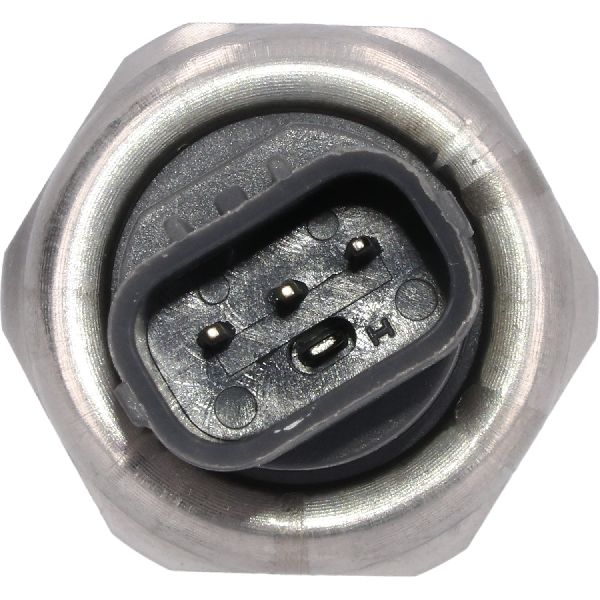
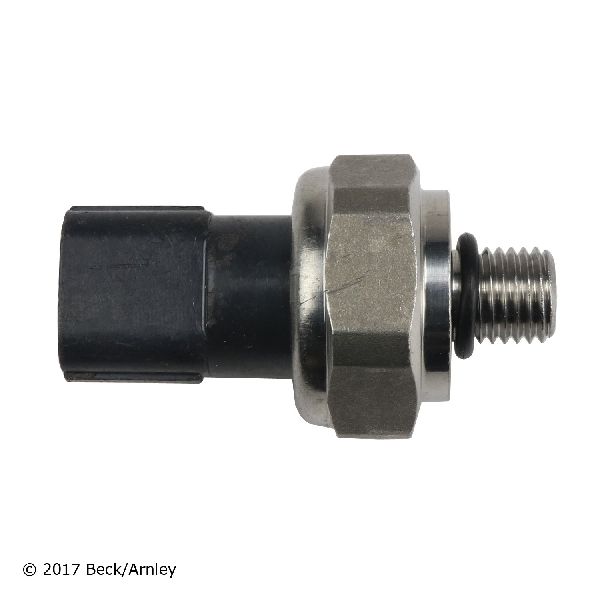
On a 2015-2020 Honda Fit with a CVT, code P0843 is almost always caused by a failed 2nd clutch transmission fluid pressure switch. This is an inexpensive external sensor that is relatively easy to replace, often resolving harsh shifting, a flashing 'D' light, and preventing the transmission from shifting properly.
- P0843 on a 2015-2020 Fit indicates an electrical fault with the 2nd clutch pressure switch, not a major mechanical failure.
- The most common symptoms are a flashing 'D' light, a Check Engine Light, and harsh or improper shifting.
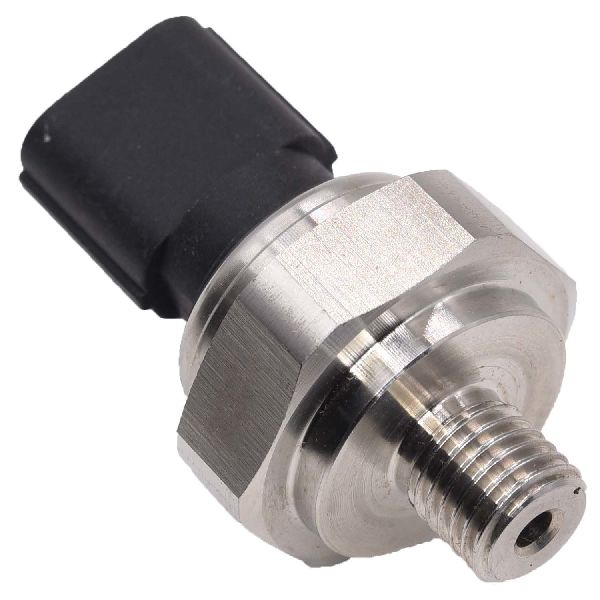
- The most probable fix is replacing the external AT Oil Pressure Switch (Part No. 28600-R94-004) and its washer.
- The switch is located under the air filter box and has a blue connector.
- Before replacing parts, always check the transmission fluid and inspect the sensor's wiring and connector for damage, especially from rodents.
- This repair is considered DIY-friendly for those with basic tools, requiring about an hour of work.
What's Unique About the 2015-2020 Honda Fit
For many Honda models, including the Fit and its platform-mate the HR-V, the P0843 code is a well-documented and extremely common issue tied to the failure of a simple, externally-mounted pressure switch. While symptoms like harsh shifting and a flashing 'D' light can seem alarming, the root cause is rarely a catastrophic 🎬 See this P0843 repair walkthrough on a similar Honda platform. internal transmission failure. The fix is often a straightforward replacement of this single sensor, a job many owners perform themselves by accessing the switch from the top of the engine bay after removing the air cleaner box.
Symptoms You May Notice
- Flashing 'D' (Drive) indicator light on the instrument cluster. 🎬 Watch: How to diagnose and fix a flashing D light.
- Check Engine Light is illuminated.
- Harsh, jerky, or delayed gear shifts.
- Vehicle may enter 'limp mode,' getting stuck in a single gear (e.g., won't shift past 3rd gear).
- Poor or sluggish acceleration.
- Replacing the entire transmission or valve body. The code P0843 is almost always an external electrical fault, not a major internal mechanical failure.
Most Likely Causes
- Failed 2nd Clutch Transmission Fluid Pressure Switch 🔴 High Probability This specific external sensor has a high rate of internal electrical failure on many Honda models using this style of transmission. It can become stuck in the 'OFF' or 'ON' position, leading to the 'Circuit High' fault.
How to confirm: After confirming wiring is intact, replacing the sensor is the most direct way to confirm. If the new sensor resolves the code and symptoms, the old one was faulty. A mechanic can also monitor the switch's state on a diagnostic tool while driving to confirm it's not changing as expected.
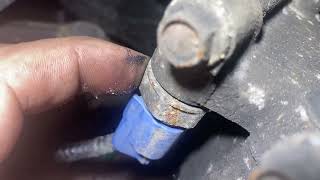
Typical fix: Replace the AT Oil Pressure Switch and the associated crush washer. The switch is located on the top of the transmission and is accessible after removing the air filter housing. It has a blue electrical connector. Use a 22mm deep well socket for removal 🎬 Watch: Step-by-step guide to replacing the 2nd clutch pressure switch. and installation.
Est. part cost: $40-$90 - Wiring or Connector Issue 🟡 Medium Probability Wiring in the engine bay is exposed to heat and vibration. Rodent damage is also a common possibility, with animals chewing through wires right at the connector.
How to confirm: Visually inspect the wiring harness leading to the pressure switch (blue connector) for breaks, chafing, or signs of rodent damage. Check that the connector is clean, free of corrosion, and securely plugged in. Test for a 5-volt reference signal at the harness connector with the key on.
Typical fix: Repair the damaged section of wire or clean/replace the electrical connector. Apply dielectric grease to the new connector to prevent moisture intrusion.
Est. part cost: $5-$30 - Low or Degraded Transmission Fluid ⚪ Low Probability
How to confirm: Check the transmission fluid level and condition according to the owner's manual procedure. The fluid should be at the correct level and pink/red in color, not brown or burnt-smelling.
Typical fix: Perform a transmission fluid drain and fill using only Honda HCF-2 Continuously Variable Transmission Fluid. This code is electrical, so this is highly unlikely to be the direct cause but is critical for overall transmission health and can cause other shifting problems.
Est. part cost: $40-$60
Rare But Worth Checking
- Faulty Powertrain Control Module (PCM) or Transmission Control Module (TCM): This is extremely rare. The PCM/TCM should only be considered as the cause after the sensor and all wiring have been definitively ruled out by a professional. Usually, a faulty module will present with multiple other error codes.
Diagnosis Steps
- Read the code with an OBD-II scanner to confirm P0843 is present.
- Check the transmission fluid level and condition. Ensure it is clean and filled to the proper level with Honda HCF-2 fluid.
- Locate the 2nd clutch pressure switch. On the 2015-2020 Fit, this requires removing the air cleaner assembly for access. The switch is on top of the transmission and has a distinct blue electrical connector.
- Inspect the electrical connector and wiring harness for any signs of damage, corrosion, or loose connections. Pay close attention to the area where the wires enter the connector, a common spot for rodent damage.
- Disconnect the sensor. With the ignition key in the 'ON' position (engine off), use a multimeter to test for a 5-volt reference signal at the harness connector.
- If 5 volts are present, the wiring and PCM are likely good. The pressure switch itself is the most probable cause of the failure.
- If 5 volts are not present, there is a fault in the wiring between the PCM and the sensor (an open or short), or a rare internal PCM fault.
- If the switch is deemed faulty, replace it using a 22mm deep socket. Always use a new crush washer to prevent leaks.
- Apply a small amount of dielectric grease to the connector pins before reconnecting to protect against moisture.
- Reassemble the air cleaner housing, reconnect the battery if it was disconnected, and clear the trouble code with the scanner.
- Perform a test drive, shifting through all gears to ensure the symptoms (harsh shifting, flashing 'D' light) are gone and the code does not return.
Parts You'll Likely Need
- AT Oil Pressure Switch (2nd Clutch)
(OEM #28600-R94-004)— This is the component that fails most frequently, causing the P0843 code on this vehicle. This part number is widely used across many Honda/Acura models.
Trusted brands: Honda (Genuine OEM), NTK, Standard Motor Products
OEM price range: $60-$95
Aftermarket price range: $40-$70 - AT Oil Pressure Switch Gasket / Washer
(OEM #90471-PW7-A00)— This is a one-time-use crush washer that should always be replaced with the sensor to ensure a proper seal and prevent transmission fluid leaks.
Trusted brands: Honda (Genuine OEM)
OEM price range: $2-$5
Aftermarket price range: $1-$3
Platform-Specific Known Issues
- source — A user on the FitFreak.net forums posted about getting the P0843 code and flashing 'D' light. While the thread didn't conclude with a confirmed fix from the original poster, it highlights the commonality of the issue within the 3rd generation Fit community.
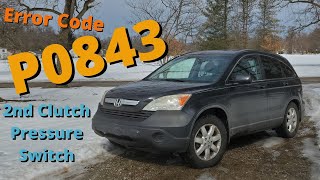
- source — A detailed YouTube video by 'Scrap Daddy's Garage' shows the entire replacement process on a 2009 Honda CR-V. The location on top of the transmission, the need to remove the airbox, the blue connector, and the 22mm socket required are all highly relevant to the 2015-2020 Fit repair.
- source — On a FitFreak.net thread for an older Fit, a user notes having to replace two different pressure switches a year apart, demonstrating that these components are a common failure point across Honda models and generations.
Mechanic-Grade Diagnostic Values
- CVT Driven Pulley Pressure Sensor / Switch 'A' Signal Voltage (HDS Live Data) — expected: Should vary based on driving conditions. Not a fixed value.. Failure: Voltage is stuck high, at or above 4.84 Volts, confirming a 'Circuit High' condition.
- Sensor Signal Wire Voltage at Connector (harness side) — expected: Approximately 5 Volts with key on, engine off, sensor disconnected.. Failure: No voltage or significantly lower voltage indicates an open/short in the wiring from the PCM or a PCM fault.
- Pressure Switch Internal Resistance to Ground — expected: Above 10 megaohms.. Failure: Resistance reading below the 10 megaohm specification indicates the switch is internally shorted to ground.
Scan Tool Commands That Help
- Honda Diagnostic System (HDS): A/T Data List > 2nd Pressure Switch or Driven Pulley Pressure Sensor — Used to monitor the live voltage or ON/OFF status of the pressure switch. A technician would watch this data during a test drive or while manually shifting to see if the value changes as expected. A stuck value confirms a fault.
- Honda Diagnostic System (HDS): Clear DTCs — Used after the repair is complete to erase the fault code from the PCM/TCM memory. This is a required step before the final verification test drive.
- Honda Diagnostic System (HDS): OBD STATUS check for P0843 — After a specific test drive procedure (e.g., driving in 2nd gear for at least 2 seconds), this function is used to see if the system's internal test for P0843 'PASSED' or 'FAILED'. This confirms if the repair was successful.
Wiring & Ground Locations
- Transmission Ground Cable (G3) — A ground strap connecting the transmission case to the vehicle's chassis/frame. On a 3rd Gen Fit, this may require removing the battery and air intake assembly for access.. A poor or corroded transmission ground can cause erratic behavior in transmission sensors, leading to incorrect voltage readings and fault codes. Ensuring this ground is clean and tight is a critical step in diagnosing any electrical fault related to the transmission.
- PCM Connector A & B — The Powertrain Control Module (PCM) is located in the engine bay, often near the firewall or fuse box.. The wires for the pressure switch run directly to the PCM. A 2017 Fit PCM pinout guide can be used to test for continuity and voltage directly at the module, which is essential for differentiating a wiring problem from a rare PCM failure.
- Interior Ground Point — A metal frame point under the driver's side dashboard, near the interior fuse box.. While not a primary ground for the transmission, knowing the location of clean interior grounds is useful for general electrical testing, such as verifying a multimeter's connection when testing circuits inside the cabin.
OEM Part Supersession History
28600-R90-003, 28600-R90-013→28600-R94-004— Part revision and consolidation by the manufacturer.
Heads up: While the connector on the 28600-R94-004 is often described as blue, some OEM parts catalogs list it as green. The color may vary by supplier or revision, but the part number is the critical identifier.
Model Year Variations Within This Range
- 2015-2020: While the failing part and code are consistent for this generation, the physical access route may vary slightly. Most guides recommend removing the air intake assembly from the top. However, on similar Honda platforms like the CR-V, access through the driver's side wheel well is also an option, which may be applicable to the Fit as well.
Diagnostic Flowchart
Other Known Issues on This Vehicle
Issues unrelated to this code that are worth knowing about as an owner of this generation:
- Faulty Fuel Injectors 🔴 High — Very common, especially on 2015-2016 models. Can cause misfires (P0300-P0304) and even a false catalytic converter code (P0420). (Ref: TSB A18-027; Honda offered a warranty extension to 10 years/150,000 miles for this issue on some 2015-16 models.)
- Failing Starter Motor / Start Button 🟠 Medium — Common issue where the car fails to crank or start, particularly on models with push-button start.
- VTC Actuator Rattle on Cold Start 🟠 Medium — A loud rattling or grinding noise from the engine for a few seconds on a cold start. (Ref: Honda Service Bulletin 16-088 addresses this issue.)
- Carbon Buildup on Intake Valves 🟠 Medium — As a direct-injection engine, the intake valves are prone to carbon buildup over time, which can lead to misfires and poor performance. (Ref: Honda Service Bulletin 21-007 describes the cleaning process.)
- General CVT Drivability Issues 🟡 Low — Some owners report shuddering, hesitation, or jerking during acceleration, which can sometimes be improved with a CVT fluid change using genuine Honda HCF-2 fluid. (Ref: A 2015 recall was issued for CVT control software on 2014-15 Civics and 2015 Fits.)
Used vs. New Parts: Buying Guide for This Vehicle
When a used part is the smart pick: For this specific repair, using a used part is strongly discouraged. The pressure switch is a known high-failure-rate electronic component. The cost of a new part is low enough that the labor involved in potentially having to do the job twice outweighs any savings from a used part.
What to inspect on the donor part:
- Not applicable as used parts are not recommended.
OEM-only on this vehicle (don't cheap out):
- While not strictly 'OEM-only', using a Genuine Honda (28600-R94-004) or a reputable OEM-supplier brand like NTK is highly recommended for reliability and to avoid premature failure.
Aftermarket brands forum-validated for this vehicle:
- Honda (Genuine OEM)
- NTK
- Standard Motor Products (SMP)
Brands owners have reported issues with on this vehicle:
- Unnamed, no-brand parts from online marketplaces should be avoided, as their quality control and longevity are questionable for this known failure point.
Real Owner Stories
Aggregated from forums and TSBs cited above. Mileages and costs reflect what owners reported in those sources.
2015-2020 Honda Fit (3rd Generation)
Symptoms: Owner reported getting the P0843 code and a flashing 'D' light on the instrument cluster.
What fixed it: The forum thread did not conclude with a confirmed fix from the original poster, but highlighted the commonality of the issue.
Source hint: vehicle_specific_issues: DIY Repair with Photos on FitFreak.net
Honda Fit (1st Generation)
Symptoms: Owner reported getting code P0843.
What fixed it: The owner had to replace two different transmission pressure switches a year apart, demonstrating they are a common failure point.
Source hint: vehicle_specific_issues: Owner Experience with Multiple Switch Failures on FitFreak.net
Honda Odyssey (Cross-Model Reference)
Symptoms: An owner reported the check engine light was illuminated and the vehicle was diagnosed with a cylinder 3 misfire and an oil leak.
What fixed it: During diagnosis, DTC: P0843 was retrieved alongside the misfire code (NHTSA ODI #11698241).
Source hint: NHTSA ODI #11698241
Related OBD-II Codes
Frequently Asked Questions
Where is the 2nd clutch pressure switch that causes code P0843 on my 2015-2020 Honda Fit?
What specific tool do I need to replace the transmission pressure switch on my Fit?
I have a P0843 code. What is the correct transmission fluid for my 2015 Honda Fit?
Could rodent damage be the cause of the P0843 code on my Honda Fit?
How can I test the wiring for the P0843 pressure switch to rule it out?
My Honda HR-V has code P0843. Is the diagnosis and repair the same as for the Fit?
Helpful Videos

We Have This Part in Stock

The information in this article is provided for general reference and educational purposes only. Vehicle specifications, procedures, and part compatibility can vary by production date, trim level, and region. Always consult your vehicle's factory service manual and verify part numbers before purchasing or performing repairs. Safety-critical components such as airbags, seat belts, and braking systems should be installed by a qualified professional.
- Honda Fit:
- 🎬 Helpful Videos
- 🛍️ Shop This Part
- What's Unique About the 2015-2020 Honda Fit
- Symptoms You May Notice
- Most Likely Causes
- Rare But Worth Checking
- Diagnosis Steps
- Parts You'll Likely Need
- Platform-Specific Known Issues
- Mechanic-Grade Diagnostic Values
- Scan Tool Commands That Help
- Wiring & Ground Locations
- OEM Part Supersession History
- Model Year Variations Within This Range
- Diagnostic Flowchart
- Other Known Issues on This Vehicle
- Used vs. New Parts: Buying Guide for This Vehicle
- Real Owner Stories
- 2015-2020 Honda Fit (3rd Generation)
- Honda Fit (1st Generation)
- Honda Odyssey (Cross-Model Reference)
- Related OBD-II Codes
- Frequently Asked Questions
- 🎟️ Get 5% Off