

P0841 on 2015-2021 Subaru WRX: CVT Pressure Fault Causes & Fixes
On a 2015-2021 Subaru WRX, code P0841 is almost always caused by a faulty CVT control valve body, not the sensor itself. This is a known issue addressed by Subaru in TSB #16-119-19. The fix is a new, redesigned valve body, which is a complex and expensive repair often costing over $2,200. Before repair, owners should verify if their vehicle is covered under Subaru's 10-year/100,000-mile CVT warranty extension.
- P0841 on a 2015-2021 WRX is a known issue, most often caused by a faulty CVT valve body, not the sensor itself.
- Subaru has issued service bulletins (TSB #16-119-19 and #16-102-16R) acknowledging the problem and providing a fix.
- This is not a simple DIY repair. Due to its complexity, professional service is strongly recommended.
- Before paying for a costly repair, check with a Subaru dealer to see if your vehicle is covered by the 10-year/100,000-mile CVT warranty extension.
- Do not let a mechanic replace only the pressure sensor without first ruling out the valve body per Subaru's diagnostic procedure.
What's Unique About the 2015-2021 Subaru WRX

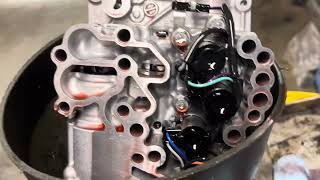
This code is a well-documented problem on Subaru models with the TR580 and TR690 CVT transmissions, including the 2015-2017 WRX. The issue is so common that Subaru issued a Technical Service Bulletin (TSB #16-119-19) acknowledging a design flaw in the original control valve assembly (valve body). Testing revealed that air bubbles could form in the transmission fluid within certain hydraulic circuits, causing incorrect pressure readings and falsely triggering the P0841 code. The official fix is an updated valve body with redesigned internal passages to prevent this fluid aeration.
Diagnostic Flowchart

Tap your situation to follow the diagnostic path that matches what you're seeing on this vehicle.
Symptoms You May Notice
- Check Engine Light illuminated
- Flashing AT OIL TEMP light
- Harsh or erratic shifting
- Vehicle entering 'limp mode' with reduced power
- Poor acceleration from a stop
- Transmission slipping
- Shuddering or chattering sound, especially in turns
- Abrupt increase in engine speed
- Replacing the secondary oil pressure sensor when the actual fault lies within the valve body assembly. The TSB from Subaru makes it clear that the valve body itself is the most common root cause due to the aeration issue.
Most Likely Causes

- Faulty CVT Control Valve Assembly (Valve Body) 🔴 High Probability Subaru issued TSB #16-119-19 for a known design issue where aerated fluid in the original valve body causes false P0841 detection. An updated part was released to fix this. Forum discussions among Subaru technicians confirm P0841 is the most common code pointing to a mandatory valve body replacement.
How to confirm: A technician will follow the diagnostic flowchart in TSB #16-102-16R. This involves checking fluid, wiring, and comparing live sensor data to mechanical pressure gauge readings. If all other tests pass, the valve body is the confirmed cause.
Typical fix: Replacement of the entire CVT valve body assembly with the new, redesigned OEM part, fresh CVT fluid, and performing the 'Clear AT Learning Data' procedure.
Est. part cost: $800-$1200 - Low or Contaminated CVT Fluid 🟡 Medium Probability Incorrect fluid level or fluid that is old, broken down, or contaminated can cause aeration and pressure issues, leading to this code. However, this is often a symptom of a larger issue rather than the root cause if P0841 is the only code present.
How to confirm: Check the CVT fluid level and condition according to the manufacturer's procedure. This often requires a technician as many models lack a dipstick. The fluid should be at the correct level and not smell burnt or contain excessive metal particles.
Typical fix: Perform a CVT fluid drain and fill or flush using the correct Subaru High Torque CVT fluid. This is often done as a first step but may not solve the problem if the valve body is faulty.
Est. part cost: $100-$250 - Wiring or Connector Issues ⚪ Low Probability
How to confirm: Visually inspect the wiring harness and connector going to the secondary pressure sensor for damage, corrosion, or loose connections. TSB #16-102-16R recommends 'wiggle-testing' the harness while monitoring sensor voltage to find intermittent faults. A technician can also check for 4.6-5.4V at the TCU connector with the ignition on.
Typical fix: Repair or replace the damaged section of the wiring harness or clean/replace the connector. A YouTube video showed a case where simply securing a loose connector pin resolved the P0841 code.
Est. part cost: $10-$100 - Faulty Secondary Oil Pressure Sensor ⚪ Low Probability
How to confirm: The sensor's resistance and voltage output can be tested with a multimeter and compared to specifications in the service manual. However, this is a very common misdiagnosis when the valve body is the true cause.
Typical fix: Replace the secondary oil pressure sensor. On many Subaru models, this sensor is integrated into the valve body assembly and not sold separately. Even if it is, replacing it alone often fails to fix the code.
Est. part cost: $150 if available separately
Rare But Worth Checking
- Faulty Transmission Control Module (TCM): This is very rare. The TCM should only be considered after all other possibilities, including the valve body, have been ruled out through proper diagnostics. In some cases for other models, a TCM software update (reflash) was issued to help the system better handle fluid contamination and prevent the code.
Diagnosis Steps
- Check for and document any other stored trouble codes, paying special attention to P0700, which indicates a transmission-specific fault.
- Verify the CVT fluid level and condition. The fluid should be clean, at the proper level, and not smell burnt. This must be done per Subaru's procedure as there is no dipstick.
- Inspect the wiring and connector for the secondary oil pressure sensor for any signs of damage, corrosion, or loose pins. Perform a 'wiggle-test' on the harness while monitoring live data.
- Follow the diagnostic procedure outlined in Subaru's TSB #16-102-16R, which provides a specific flowchart for troubleshooting P0841. This may include comparing mechanical pressure gauge readings to the sensor's electronic output.
- Use a scan tool that can read live transmission data to monitor the secondary pressure sensor's voltage. With the ignition on and engine off, the voltage should be between 4.6-5.4V.
- If the fluid, wiring, and sensor circuit test good, the most likely cause is the control valve assembly (valve body), as per TSB #16-119-19.
- Before authorizing any repairs, check with a Subaru dealer to see if your vehicle's VIN is covered under the CVT warranty extension (typically 10 years / 100,000 miles), which could cover the repair cost entirely.
Parts You'll Likely Need
- CVT Control Valve Assembly (Valve Body)
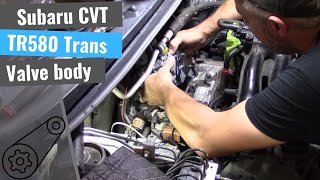
(OEM #31706AA033 (or superseding part numbers like 31706AA034))— This is the most common cause of P0841 on this vehicle due to a design flaw in the original part, as acknowledged by Subaru in TSB #16-119-19. Part numbers may supersede, so always verify with a dealer. 🎬 Watch: Why a technician recommends avoiding aftermarket or rebuilt valve bodies.
Trusted brands: Subaru (OEM)
OEM price range: $900-$1200
Aftermarket price range: $600-$900 - Subaru High Torque CVT Fluid (HT-CVTF)
(OEM #SOA427V1660)— The correct fluid is required any time the transmission is serviced, especially when replacing the valve body. Using incorrect fluid can cause severe damage.
Trusted brands: Subaru (OEM)
OEM price range: $20-$30 per quart
Related Codes That Often Appear With This One
- P0700: This is a generic code that means the Transmission Control Module (TCM) has stored a fault code. It will almost always be present alongside P0841.
Technical Service Bulletins (TSBs) & Recalls

- 16-119-19: Announcing a new control valve assembly (valve body) designed to prevent false detection of DTC P0841 due to aerated fluid. The TSB states the shape of internal circuits was changed to prevent this.
- 16-102-16R: Provides a new flow chart and additional diagnostic tools to assist technicians with troubleshooting DTC P0841.
- 16-107-17 & 16-115-18: Details the CVT warranty extension program, extending coverage to 10 years or 100,000 miles for applicable vehicles, including the 2015 WRX.
Platform-Specific Known Issues
- Subaru issued TSB #16-119-19 announcing a redesigned control valve assembly (valve body) to prevent false P0841 codes caused by aerated fluid.
- Subaru also released TSB #16-102-16R to provide technicians with an updated, more accurate diagnostic flowchart for troubleshooting this specific code.
- Due to the prevalence of CVT issues, Subaru extended the CVT warranty for many vehicles, including the 2015 WRX, to 10 years or 100,000 miles. Owners should always check with a dealer to see if their specific vehicle is covered before paying for repairs.
Mechanic-Grade Diagnostic Values
- Secondary Oil Pressure Sensor Power Supply Voltage — expected: 4.6 - 5.4 Volts. Failure: Voltage outside this range points to a wiring or TCM power supply issue.
- Secondary Oil Pressure Sensor Signal Voltage (Scan Tool, KOEO) — expected: 0.39 - 0.61 Volts. Failure: Voltage outside this range, or erratic readings while wiggling the harness, suggests a faulty sensor or wiring.
- Secondary Oil Pressure (Scan Tool, P range at 3,000 RPM) — expected: 1.5 - 2.5 MPa. Failure: Pressure below this range after warming up the fluid can indicate a mechanical issue or faulty valve body.
- Secondary Line Pressure Control Solenoid Resistance — expected: 5.0 - 7.0 Ohms. Failure: Resistance outside this range indicates a failed solenoid within the valve body.
- AWD Solenoid Resistance — expected: 2.0 - 4.5 Ohms. Failure: Resistance outside this range indicates a failed solenoid within the valve body.
Scan Tool Commands That Help
- Subaru Select Monitor (SSM) or equivalent: Clear AT Learning Data — This is mandatory after replacing the CVT valve body. It erases the old adaptive pressure and shift characteristics stored by the TCM.
- Subaru Select Monitor (SSM) or equivalent: Confirmation of 'Clear AT Learning Data' — After running the clear command, turn the ignition OFF for at least 30 seconds, then ON. The AT Temp light should flash 4 times in 2 seconds to confirm the procedure was successful. If it does not, the procedure must be repeated.
- Subaru Select Monitor (SSM) or equivalent: Compulsory Learning Mode / AT Learning Control — This is a mandatory calibration procedure performed immediately after 'Clear AT Learning Data'. It forces the TCM to learn the hydraulic characteristics of the new valve body. This is typically done with the vehicle lifted and following on-screen prompts.
Wiring & Ground Locations
- T4 / B11 Connector (Grey) — On top of the transmission case, one of two main electrical connections.. This specific connector contains the wiring for the secondary pressure sensor, multiple solenoids, and the temperature sensor. Testing can be performed at this connector without removing the transmission pan or valve body.
- Secondary Pressure Sensor Pins (at T4 Connector) — Within the grey T4/B11 connector. Pin 17 is the 5V power supply, and Pin 18 is the signal wire.. These are the exact pins a technician needs to probe with a multimeter to verify power and signal integrity as part of the TSB diagnostic procedure.
- Valve Body Internal Ground Wire — Inside the transmission, connected to the valve body assembly.. Subaru CVTs are sensitive to ground quality. A broken or corroded internal ground wire on the valve body can cause various transmission codes and drivability issues, even if all external wiring and components test good.
Real Owner Repair Stories
- Reddit user on r/Subaru_Outback (2013 Subaru Outback (platform mate with similar CVT)) — Shuddering, flashing dash lights, and P0841 code.
❌ Tried (didn't work) A new OEM valve body was installed, but the code and symptoms returned 9 months later.
✅ What actually fixed it The original repair shop diagnosed a potential transmission pump failure. As a resolution, the shop sourced a used CVT, transferred the 9-month-old valve body onto it, and installed the complete used unit at a significantly reduced cost to the customer.
OEM Part Supersession History
31706AA030, 31706AA031, 31706AA032→31706AA033, then 31706AA034, and most recently 31706AA331— Revisions to address the fluid aeration issue described in TSB #16-119-19 and other potential reliability improvements.
Heads up: Always verify the latest part number with a dealer using the vehicle's VIN. While later parts are generally backward compatible, using an older, unrevised part will likely lead to a repeat failure.
Model Year Variations Within This Range
- 2015-2017: These earlier models of the generation were more likely to have the original, fault-prone valve body from the factory. Forum and TSB data suggest these years had more documented complaints leading to the warranty extension and updated parts.
- 2018-2021: These later models benefited from a mid-cycle refresh which included cosmetic and feature updates. While still susceptible to the P0841 issue if the valve body fails, they may have been fitted with revised parts from the factory, potentially reducing the failure rate compared to earlier years.
Helpful Videos
Used OEM Parts in Stock


New Aftermarket Parts Available




The information in this article is provided for general reference and educational purposes only. Vehicle specifications, procedures, and part compatibility can vary by production date, trim level, and region. Always consult your vehicle's factory service manual and verify part numbers before purchasing or performing repairs. Safety-critical components such as airbags, seat belts, and braking systems should be installed by a qualified professional.
- Subaru WRX:
- 🎬 Helpful Videos
- 🛍️ Shop This Part
- What's Unique About the 2015-2021 Subaru WRX
- Diagnostic Flowchart
- Symptoms You May Notice
- Most Likely Causes
- Rare But Worth Checking
- Diagnosis Steps
- Parts You'll Likely Need
- Related Codes That Often Appear With This One
- Technical Service Bulletins (TSBs) & Recalls
- Platform-Specific Known Issues
- Mechanic-Grade Diagnostic Values
- Scan Tool Commands That Help
- Wiring & Ground Locations
- Real Owner Repair Stories
- OEM Part Supersession History
- Model Year Variations Within This Range
- 🎟️ Get 5% Off