

P0841 on 2016-2019 Subaru Crosstrek: CVT Pressure Sensor and Valve Body Guide
On a 2016-2019 Crosstrek, P0841 almost always points to an internal issue with the TR580 CVT, not just a bad sensor. The most common fix is replacing the entire CVT valve body, a costly repair. Before any major work, a dealer should check for crucial TCM software updates per TSB #16-111-18R, which can sometimes resolve the issue. Owners must check if their vehicle is covered by Subaru's 10-year/100,000-mile CVT warranty extension, which could cover the repair for free.
- P0841 on a 2016-2019 Crosstrek is a serious transmission code, often indicating a problem with the CVT valve body.
- Before agreeing to expensive repairs, ask a Subaru dealer to check for and apply any available TCM software updates, as this can sometimes be the fix.
- The most common hardware repair is a full replacement of the CVT valve body, which is an expensive job that should be done by a professional.
- Do not simply replace the pressure sensor; it is rarely the actual point of failure.
- Check if your vehicle falls under Subaru's extended CVT warranty (10 years/100,000 miles), as this repair may be covered.
What's Unique About the 2016-2019 Subaru CROSSTREK

The 2016-2019 Subaru Crosstrek uses the TR580 CVT, which is known to be sensitive to this specific fault. Subaru has acknowledged the issue through multiple Technical Service Bulletins (TSBs). The problem often isn't the sensor itself, but rather internal issues. TSB #16-119-19 explicitly states that air bubbles (aerated fluid) can enter pressure circuits in the original valve body, causing incorrect pressure calculations and triggering the P0841 code. This makes diagnosis more complex than a simple sensor replacement and points directly to a known design flaw in the valve body.
Diagnostic Flowchart
Tap your situation to follow the diagnostic path that matches what you're seeing on this vehicle.
Generation note: The 2016-2017 Crosstrek is the first generation (GP) and the 2018-2019 is the second generation (GT). Both generations in this range use the TR580 CVT, and the TSBs issued by Subaru cover models from both, indicating the P0841 issue is related to the transmission model rather than a specific vehicle generation.
Symptoms You May Notice
- Check Engine Light is on
- AT OIL TEMP light is flashing
- Cruise control indicator may flash and become disabled
- Vehicle may enter 'limp mode' with reduced power.
- Shuddering or jerking during acceleration.
- Harsh or erratic shifting
- ABS, traction control, and hill holder lights may also illuminate. 🎬 Learn why your AT Oil Temp light is flashing.
- Replacing only the pressure sensor without investigating the valve body or checking for TCM updates. The sensor is often just reporting the problem, not causing it, and is typically not sold separately from the valve body.
Most Likely Causes

- Faulty CVT Control Valve Body 🔴 High Probability A known issue acknowledged by Subaru in TSB #16-119-19, which states that air bubbles in the fluid can cause false detection of P0841. A redesigned valve body was released to address this by changing the shape of internal fluid passages. Owner forums confirm this is the most common repair.
How to confirm: Diagnosis requires a Subaru-specific scan tool to monitor transmission parameters. If software updates (TSB #16-111-18R) and fluid checks don't resolve the code, and electrical tests from TSB #16-102-16R pass, the valve body is the primary suspect.
Typical fix: Replacement of the entire CVT control valve body assembly with the updated part.
Est. part cost: $800-$1200 - Outdated Transmission Control Module (TCM) Software 🟡 Medium Probability Subaru released a software update under TSB #16-111-18R to change the control logic. The new logic helps the solenoids operate in a way that can discharge internal contamination, preventing the code from setting.
How to confirm: A Subaru dealer or a qualified shop with access to Subaru's technical information can check the current TCM software version against the latest available updates by VIN.
Typical fix: Reprogramming the TCM with the updated software.
Est. part cost: $0 (if performed at a dealer, often part of diagnosis) - Low, Dirty, or Contaminated CVT Fluid 🟡 Medium Probability The TR580 CVT is sensitive to fluid condition. Contamination can cause solenoids to stick or pressure readings to be incorrect, as noted in TSB #16-111-18R. Some experts recommend fluid changes more frequently (e.g., every 30,000-40,000 miles) than the official schedule to prevent issues.
How to confirm: Check the CVT fluid level and condition. The fluid should be at the correct level and not appear dark, burnt, or contain excessive debris. Note: Checking CVT fluid is often more complex than a standard automatic and may not have a dipstick.
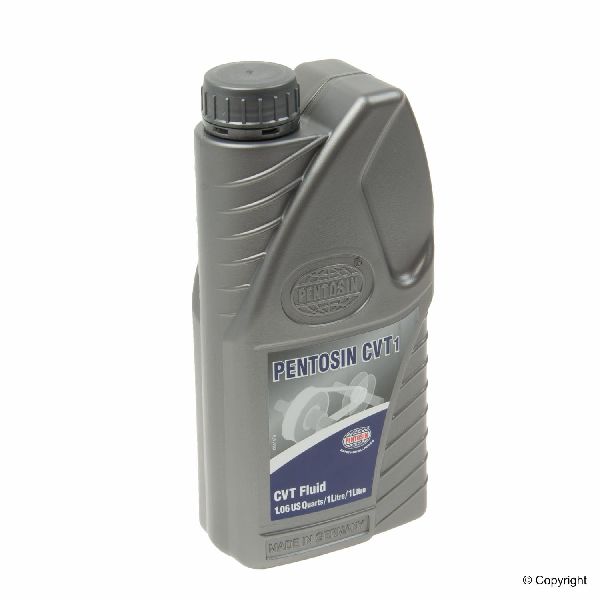
Typical fix: Perform a CVT fluid drain and fill or flush using only the specified Subaru High Torque CVT fluid (SOA748V0200).
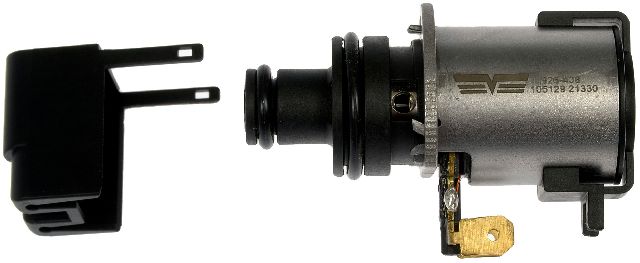
Est. part cost: $100-$250 - Faulty Transmission Fluid Pressure Sensor ⚪ Low Probability While the code points to the sensor circuit, the sensor itself is less commonly the root cause compared to the valve body or software issues. Subaru does not sell the individual sensors separately from the valve body assembly for this transmission, making isolated replacement difficult. TSB #16-102-16R provides a detailed diagnostic flow chart for testing the sensor and its circuit.
How to confirm: Follow the diagnostic procedure in TSB #16-102-16R, which involves checking voltages and resistance of the sensor and wiring harness.
Typical fix: Replacement of the entire valve body assembly, as the sensor is integrated.
Est. part cost: $800-$1200
Rare But Worth Checking
- Internal CVT Mechanical Failure: In some cases, especially if accompanied by whining or grinding noises, the code can indicate a severe internal failure like a failing oil pump or damage to the variator pulleys and chain. This is a worst-case scenario and usually requires complete transmission replacement.
- Wiring Harness or Connector Issue: A loose connection or damaged wire between the TCM and the valve body/pressure sensor can cause intermittent and incorrect signals, triggering the code. This should be checked thoroughly before replacing expensive components, especially for rodent damage.
Diagnosis Steps
- Check for eligibility under Subaru's CVT Warranty Extension (10 years / 100,000 miles) with a dealer using your VIN. This should be the absolute first step.
- Check for any available Technical Service Bulletins (TSBs) related to P0841 for your specific vehicle. Pay close attention to TSBs #16-111-18R, #16-102-16R, and #16-119-19.
- Verify if a TCM software update is available (per TSB #16-111-18R) and perform it if necessary. This is often the first step recommended by Subaru.
- Inspect the CVT fluid level and condition. Ensure it is clean, at the proper level, and is the correct type (Subaru HT-CVT fluid).
- Using a capable scan tool (like the Subaru Select Monitor), monitor the secondary oil pressure sensor data to see if it is erratic or out of range.
- Follow the detailed electrical diagnostic flowchart provided in TSB #16-102-16R to test the sensor, wiring harness, and connectors for opens, shorts, or poor connections.
- If electrical tests pass and the fluid is good, the most likely cause is the control valve body assembly.
- In rare cases with accompanying noises, perform a hydraulic pressure test with a mechanical gauge to check for internal pump or mechanical failure.
Parts You'll Likely Need

- CVT Control Valve Body Assembly
(OEM #31825AA055)— This is the most frequent hardware failure for this code, as acknowledged by Subaru's TSB #16-119-19 which announced this redesigned part to prevent false codes. This part number supersedes previous versions like 31825AA050, 31825AA051, 31825AA052, 31825AA053, and 31825AA054. Always confirm the latest part number with a dealer using your VIN.
Trusted brands: Subaru (OEM)
OEM price range: $900-$1200
Aftermarket price range: N/A - Subaru High-Torque (HT) CVT Fluid
(OEM #SOA748V0200)— The correct fluid is required any time the transmission is serviced, including a valve body replacement or a fluid change. Using incorrect fluid can cause severe damage.
Trusted brands: Subaru (OEM)
OEM price range: $20-$30 per quart
Aftermarket price range: $15-$25 per quart
Related Codes That Often Appear With This One
- P0700 — P0700 is a generic code that means the Transmission Control Module (TCM) has stored a fault code. It's an informational code that tells you to check the TCM for more specific codes, like P0841.
- C1431 — This is a Vehicle Dynamics Control (VDC) code indicating an abnormal signal from the transmission. The VDC system relies on transmission data, so a fault like P0841 will often disable VDC and trigger this code.
Technical Service Bulletins (TSBs) & Recalls
- 16-111-18R: Announces a TCM software update to help discharge contamination causing P0841.
- 16-102-16R: Provides an updated diagnostic flow chart for troubleshooting P0841.
- 16-119-19: Announces a new, redesigned control valve assembly (valve body) to prevent false detection of P0841 due to aerated fluid.
- 16-115-18: Details the CVT warranty extension to 10 years/100,000 miles for 2016-17 models.
- 16-122-19: Details the CVT warranty extension for certain 2019 models.
Platform-Specific Known Issues
- CVT Warranty Extension: Subaru extended the CVT warranty for many 2016-2017 models to 10 years / 100,000 miles, per TSB 16-115-18. Some 2019 models are also covered per TSB 16-122-19. Owners must check with a dealer by VIN to see if their vehicle is covered, as a valve body replacement could be performed at no cost.
- Redesigned Valve Body: TSB #16-119-19 announces a redesigned control valve assembly specifically to prevent false P0841 codes caused by aerated fluid, confirming a known design issue with the original part.
- Software Update Fix: TSB #16-111-18R provides a software update to help clear internal contamination that can cause P0841, which should be attempted before hardware replacement.
Mechanic-Grade Diagnostic Values
- Secondary Pressure Sensor Power Supply Voltage — expected: 4.6 - 5.4 V. Failure: Voltage outside this range indicates a wiring or TCM issue.
- Secondary Pressure (Live Data on Subaru Select Monitor) — expected: 1.5 - 2.5 MPa (at 3,000 RPM in Park). Failure: Readings outside this range can indicate a stuck sensor or a hydraulic issue within the valve body.
- Wiring Harness Continuity — expected: < 1.0 Ω. Failure: Higher resistance indicates a break or corrosion in the wire between the TCM and the sensor connector.
- Wiring Harness Insulation Resistance — expected: > 1 MΩ. Failure: Lower resistance to ground or between wires indicates a short circuit.
Scan Tool Commands That Help

- Subaru Select Monitor (SSM) or equivalent: TCM Learned Value Reset / T/M Learning Procedure — This is mandatory after replacing the valve body or transmission. The TCM must relearn clutch points and hydraulic characteristics. Failure to perform this can result in poor shifting or damage to the new components.
- Subaru Select Monitor (SSM) or equivalent: TCM Reprogramming / Flashing — Used to apply software updates as specified in TSBs like #16-111-18R. This should be done as a first step before component replacement, as new logic can resolve the fault.
Wiring & Ground Locations
- Transmission Control Module (TCM) — Typically located on the left side of the dashboard, accessible from under the driver's side.. This module receives the signal from the pressure sensor. All circuit tests for voltage and resistance will terminate at the TCM's connector pins.
- T4 Connector — An external electrical connector on the transmission case.. This is a key junction for the internal transmission wiring harness, which includes the circuit for the secondary pressure sensor. A loose pin or corrosion here can cause P0841.
- Valve Body Connector — Located inside the transmission, on top of the valve body itself. Accessible only after removing the top cover of the transmission (on top-loaded TR580s).. This is the direct connection to the pressure sensor and solenoids. It must be securely connected when a new valve body is installed.
Real Owner Repair Stories
- YouTube channel 'THIS IS YOUR TRANSMISSION' (2012 Subaru Outback (uses related TR580/TR690 family CVT)) — Check Engine Light with codes P0841 and P0842.
❌ Tried (didn't work) Changing the transmission fluid., Replacing the pressure switch with a used one.
✅ What actually fixed it The root cause was a loose pin within the main transmission connector on top of the transmission. Pushing on the connector caused the pressure reading to change on the scan tool. Securing the connector pin resolved the codes without replacing any major parts. - Reddit user in r/AskMechanics (2013 Subaru Outback) — Shuddering, flashing dash lights, and P0841 code.
❌ Tried (didn't work) A new OEM valve body was installed, but the code and symptoms returned 9 months later.
✅ What actually fixed it The shop suspected a failing transmission oil pump was causing low hydraulic pressure that the new valve body couldn't fix. The final resolution was to install a used CVT assembly while transferring the 9-month-old valve body onto it.
"I Checked Everything" — The Actual Cause
- In one documented case involving P0841 and P0842, standard diagnostics on the sensor and fluid would have passed, but the actual cause was a loose pin in the main external transmission connector. An intermittent connection here mimicked a component failure, but the fix was simply securing the pin, highlighting the need to 'wiggle-test' connectors and harnesses as suggested in Subaru's TSBs.
OEM Part Supersession History
31825AA050, 31825AA051, 31825AA052, 31825AA053, 31825AA054→31825AA055— The original valve body design was susceptible to creating aerated fluid (air bubbles) in certain pressure circuits, leading to false P0841 codes. The updated part (#31825AA055) is a redesigned assembly meant to prevent this issue, as announced in TSB #16-119-19.
Model Year Variations Within This Range
- 2018-2019: The 2018 model year marked the start of the second-generation Crosstrek (GT), which was a significant redesign. While it continued to use the TR580 CVT, Subaru described it as a 'revised' version. Though the fundamental P0841 flaw persists across the 2016-2019 range (as evidenced by TSBs), there may be subtle differences in the transmission or control software in the 2018+ models compared to the 2016-2017 first-generation (GP) models.
Helpful Videos




Used OEM Parts in Stock


New Aftermarket Parts Available



The information in this article is provided for general reference and educational purposes only. Vehicle specifications, procedures, and part compatibility can vary by production date, trim level, and region. Always consult your vehicle's factory service manual and verify part numbers before purchasing or performing repairs. Safety-critical components such as airbags, seat belts, and braking systems should be installed by a qualified professional.
- Subaru CROSSTREK:
- 🎬 Helpful Videos
- 🛍️ Shop This Part
- What's Unique About the 2016-2019 Subaru CROSSTREK
- Diagnostic Flowchart
- Symptoms You May Notice
- Most Likely Causes
- Rare But Worth Checking
- Diagnosis Steps
- Parts You'll Likely Need
- Related Codes That Often Appear With This One
- Technical Service Bulletins (TSBs) & Recalls
- Platform-Specific Known Issues
- Mechanic-Grade Diagnostic Values
- Scan Tool Commands That Help
- Wiring & Ground Locations
- Real Owner Repair Stories
- "I Checked Everything" — The Actual Cause
- OEM Part Supersession History
- Model Year Variations Within This Range
- 🎟️ Get 5% Off