

P0841 on 2013-2019 Nissan Sentra: CVT Pressure Sensor Fault Causes and Fixes
On a 2013-2019 Sentra, P0841 almost always means the CVT's control valve body has failed. The pressure sensor is built into it and isn't sold separately. This is a complex, professional repair costing $800-$2,000 for a valve body replacement, or much more if the entire transmission is damaged. Check for eligibility under Nissan's CVT warranty extension program.
- P0841 on a 2013-2019 Sentra is a serious code that almost always indicates a failed CVT valve body, not just a simple sensor.
- Do not ignore this code. Driving with it can lead to complete transmission failure, a much more expensive repair.
- This is not a DIY job. The repair must be done by a professional shop experienced with Nissan CVTs.
- Always check for other transmission codes; P17F0, P17F1, and P0776 are common companions that confirm the diagnosis.
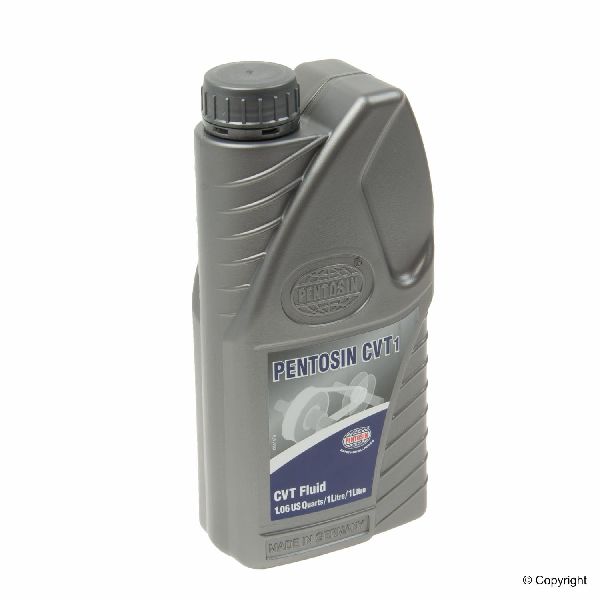
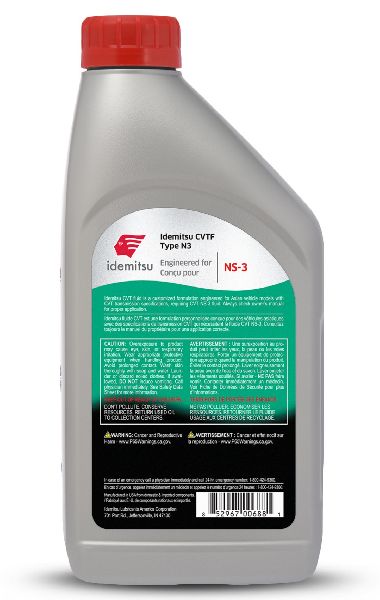
- Ensure only Nissan NS-3 CVT fluid is used for any service.
What's Unique About the 2013-2019 Nissan Sentra
The 2013-2019 Nissan Sentra (B17 generation) uses a Jatco RE0F11A (also known as JF015E) CVT, which is known for having issues with its control valve body. Unlike many other vehicles where a pressure sensor is a simple, separate part, on this transmission the sensor ('A') is integrated into the valve body assembly. As a result, a P0841 code on this Sentra is very rarely a simple sensor swap; it almost always points to a more complex and expensive failure of the entire valve body, a known weak point acknowledged in multiple Nissan Technical Service Bulletins (TSBs).
Symptoms You May Notice
- Check Engine Light is on
- Vehicle hesitation or stumbling on acceleration
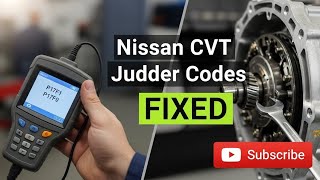
- Jerking or shuddering during acceleration (CVT judder) 🎬 See how a mechanic diagnoses and fixes these judder codes.
- Reduced engine power or vehicle entering 'limp mode'
- Harsh or erratic shifting sensations
- Whining or clunking noises from the transmission
- Inability to accelerate from a stop or sudden loss of power
- Engine RPMs revving high without corresponding acceleration
- Replacing only the transmission fluid. While low or dirty fluid can cause issues, it's usually not the root cause for P0841 on this specific vehicle. The problem often returns quickly if the underlying valve body issue isn't addressed.
- Assuming it is a simple, separate pressure sensor. On this CVT, the sensor is integrated into the valve body, and attempts to replace just the sensor are not supported by the manufacturer and are unlikely to succeed.
Most Likely Causes
- Faulty CVT Control Valve Body 🔴 High Probability The Jatco JF015E CVT used in this Sentra has a documented history of valve body failures. The pressure sensor is integrated into this assembly, making it the primary point of failure for this code. Fine metal particles from the break-in period can cause premature wear and sticking in the valve body bores.
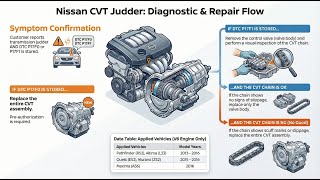
How to confirm: A professional technician will follow the diagnostic procedure outlined in Nissan TSBs like NTB19-040E. This involves checking for a specific group of codes, then removing the valve body to inspect the CVT belt for damage using a borescope. If the belt is undamaged, the valve body is confirmed as the fault.
Typical fix: Replace the entire CVT control valve body assembly. After replacement, the transmission must be refilled with Nissan NS-3 fluid and a 'Drive/Reverse Learning' procedure must be performed with a compatible scan tool.
Est. part cost: $500-$1200 - Low or Degraded CVT Fluid ⚪ Low Probability While possible, this is more often a symptom of a larger problem (like overheating from a failing valve body) than the root cause on this platform. Forum users who have meticulously maintained their fluid still report this failure.
How to confirm: Check the CVT fluid level and condition. The fluid should be at the correct level, translucent, and not smell burnt. Note that these transmissions do not have a dipstick, requiring a specific service procedure to check the level.
Typical fix: Perform a CVT fluid drain and fill using only the specified Nissan NS-3 fluid. If the fluid is very dark or contains metal particles, it indicates a more severe internal problem requiring pan removal for inspection.
Est. part cost: $100-$250
Rare But Worth Checking
- Internal CVT Damage (Belt/Pulley Failure): This is the worst-case scenario. If the valve body fails to maintain correct pressure, the CVT's internal belt can slip and damage the pulleys. If a technician finds evidence of belt slippage (scuffing, scoring) during the borescope inspection, the entire transmission must be replaced per Nissan's TSBs.
- Wiring Harness or Connector Issue: Damage to the wiring leading to the transmission could theoretically cause this code, but it is far less common than the valve body failure. A visual inspection of the harness for corrosion or damage is a standard diagnostic step, but rarely the final culprit for this specific code on this platform.
- Faulty Transmission Control Module (TCM): TCM failure is very rare but possible. All other potential causes, especially the valve body, should be ruled out before considering the TCM. Sometimes a TCM software update from a Nissan dealer can resolve related issues, but it is unlikely to fix a persistent P0841.
Diagnosis Steps
- Scan the TCM for all stored trouble codes. Note if P0841 is present with other common codes like P17F0, P17F1, or P0776, as this strongly indicates the known CVT failure pattern.
- Check the CVT fluid level and condition. This must be done following the correct service procedure for a transmission without a dipstick. Use only Nissan NS-3 CVT fluid.
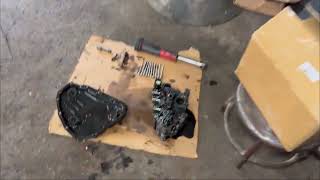
- If fluid is correct, the next step per Nissan TSB NTB19-040E is to drain the fluid, drop the transmission pan, and remove the control valve body.
- Inspect the CVT belt and pulleys for any signs of scoring or damage using a borescope through the valve body opening.
- If the belt and pulleys are in good condition (no scuffing), the valve body is faulty and must be replaced.
- If the belt or pulleys show any signs of damage, the entire CVT assembly must be replaced.
- After installing the new part (valve body or transmission), install a new pan gasket, refill with the correct Nissan NS-3 fluid, and perform the mandatory TCM programming or relearn procedures using a Nissan-compatible scan tool.
Parts You'll Likely Need
- CVT Control Valve Body
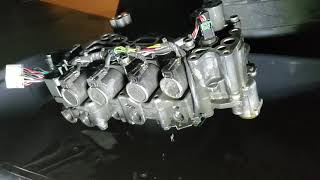
(OEM #31705-X428E (Note: Multiple superseded part numbers exist, e.g., 31705-X428C, 31705-X429C, 31705-3XX0B. Verify with VIN). 🎬 Watch: A close-up look at the Sentra CVT valve body assembly.)— This is the most common failure point for code P0841 on this vehicle, as it contains the integrated pressure sensor that triggers the code.
Trusted brands: Hitachi (OEM), Nissan OE, Sonnax (remanufactured kits), Rostra (remanufactured solenoids)
OEM price range: $900-$1400
Aftermarket price range: $500-$800 (Remanufactured) - Nissan NS-3 CVT Fluid
(OEM #999MP-NS300P)— This is the mandatory fluid required for refilling the transmission after the repair. Using any other type of fluid can cause severe damage.
Trusted brands: Nissan, Idemitsu N3, ENEOS ECO CVT
OEM price range: $20-$25 per quart
Aftermarket price range: $15-$20 per quart - Transmission Pan Gasket — The gasket must be replaced when the transmission pan is removed to access the valve body.
Trusted brands: Nissan OE, Fel-Pro
OEM price range: $25-$40
Aftermarket price range: $15-$30
Related Codes That Often Appear With This One
- P17F0 / P17F1 — These codes indicate 'CVT Judder' and are part of the same known failure pattern. Their presence alongside P0841 strongly points to a valve body or internal CVT issue per Nissan TSBs.
- P0776 — This code relates to 'Pressure Control Solenoid B'. Since this solenoid is also part of the valve body assembly, seeing P0776 and P0841 together makes a faulty valve body the almost certain diagnosis.
- P0868 — This code means 'Transmission Fluid Pressure Low'. It can appear with P0841 if the valve body is failing to regulate pressure correctly or if the fluid level is critically low.
Technical Service Bulletins (TSBs) & Recalls
- NTB16-110P: Addresses DTCs P17F0, P17F1, P0776, P1715, and/or P0841 on 2013-2017 models, pointing to a known CVT judder/hesitation issue and outlining the valve body/CVT replacement procedure.
- NTB19-040E: A key bulletin that covers a wide range of CVT codes including P0841. It provides the critical diagnostic flowchart that requires a borescope inspection of the CVT belt to decide between valve body or full transmission replacement.
- NTB19-076C: Similar to other TSBs, it includes P0841 in a group of codes that indicate a serious internal CVT fault requiring inspection and likely replacement of the valve body or transmission.
Platform-Specific Known Issues
- The Jatco RE0F11A CVT in these Sentras is subject to multiple TSBs and a class-action lawsuit settlement related to premature failures, often manifesting with codes like P0841.
- The pressure sensor ('A') is not available as a separate part from Nissan, forcing the replacement of the entire valve body assembly.
- Nissan issued a CVT warranty extension for many 2013-2017 Sentras, extending coverage to 7 years or 84,000 miles. Owners experiencing this issue should check with a dealer to see if their VIN is covered.
Mechanic-Grade Diagnostic Values
- Transmission Fluid Pressure Sensor 'A' Voltage — expected: Varies between approximately 0.5V (low pressure) and 4.5V (high pressure) depending on demand.. Failure: A signal that is stuck, erratic, or does not correlate with the transmission's current state.
- CVT Fluid Temperature for Diagnostics — expected: Many diagnostic and relearn procedures require the fluid to be at a specific temperature, such as over 122°F (50°C), which must be confirmed with a scan tool.. Failure: Performing procedures at the wrong temperature can lead to incorrect adaptations or failed programming.
Scan Tool Commands That Help
- Nissan CONSULT-III plus: Erase/Write Calibration Data — This is mandatory when the valve body or entire CVT assembly is replaced. A calibration file from a CD or QR code supplied with the new part must be written to the TCM to ensure it has the correct operational parameters.
- Nissan CONSULT-III plus: CONFORM CVTF DETERIORTN (Reset CVT Fluid Degradation Data) — After replacing the CVT fluid, this function must be used to reset the fluid life monitor. The scan tool will show a high value before the reset and a value near zero after.
- Nissan CONSULT-III plus: Clutch Point Learning — Required after a valve body replacement (but not a full CVT replacement). This procedure adapts the TCM to the engagement points of the new components. Failure to perform this can result in a no-move condition.
- Nissan CONSULT-III plus: Select Learning (Drive / Reverse Learning) — Required after either a valve body or full CVT replacement. It involves a specific sequence of shifting between N, D, and R to teach the TCM the gear engagement characteristics.
Wiring & Ground Locations
- Transmission Harness Connector — The primary pressure sensor 'A' and its immediate wiring are located inside the transmission oil pan, as part of the valve body assembly. The main external connector is on the transmission case.. While external harness damage is rare for this code, the internal location means the sensor cannot be accessed or tested without removing the transmission pan and valve body.
Real Owner Repair Stories
- Reddit user /u/Instant_Smoke (2015 Nissan Sentra) — Sudden transmission failure.
❌ Tried (didn't work) Not specified, but the failure was immediate and catastrophic.
✅ What actually fixed it The transmission was 'done' at 85,000 miles, requiring a full replacement costing $4800. The replacement transmission was also showing signs of failure at 120,000 miles. - Reddit user [deleted] (2014 Nissan Sentra) — Runs like crap, constant slipping.
❌ Tried (didn't work) Changing the transmission fluid.
✅ What actually fixed it The user reported the issue persisted after a fluid change, with failure progressing from 81k to 96k miles. This highlights that a fluid change alone does not fix the underlying mechanical/electrical fault causing P0841.
Documented NHTSA Reports
- An owner of a similar Nissan platform reported in NHTSA ODI #11427183 that while driving on the highway, the vehicle began bucking and triggered code P0841. Despite requesting a fluid and filter change at a dealership, the issue persisted after driving less than 100 miles.
- NHTSA ODI #11431184 describes a case where a dealership confirmed extreme hesitation when entering or changing gears, accompanied by codes P0841 (Fluid Pressure Sensor/Switch A) and P17F0 (CVT Judder).
- In NHTSA ODI #11219151, a driver reported that the check engine light came on, the car became extremely loud, and they experienced trouble accelerating due to code P0841.
- A report in NHTSA ODI #11426234 notes that after the check engine light appeared with codes P0841 and P0776, the owner attempted to clear the codes and change the transmission oil and filter, but the light remained on.
- NHTSA ODI #11119525 describes a dangerous situation where a vehicle began to jerk and shift while driving, nearly causing a rear-end collision; the diagnostic scan revealed code P0841.
OEM Part Supersession History
e.g., 31705-X428B, 31705-X429B→31705-X428C, 31705-X428E, 3170E-X427E— Revisions by the manufacturer to address failure points or manufacturing changes.
Heads up: It is critical to verify the correct part number using the vehicle's VIN. Some parts may look identical but have different programming or hydraulic calibrations.
Model Year Variations Within This Range
- 2013-2019: Some parts suppliers note a difference between pre-2016 and 2016+ JF015E valve bodies, stating they are not interchangeable. While the vehicle range is 2013-2019, a mid-cycle change in the valve body design may exist. Always confirm the part with the vehicle's VIN.
Diagnostic Flowchart
Other Known Issues on This Vehicle
Issues unrelated to this code that are worth knowing about as an owner of this generation:
- A/C Compressor Failure 🟠 Medium — Commonly reported, with symptoms including intermittent cooling, blowing warm air on hot days, or complete failure, often occurring at relatively low mileage (e.g., 60k miles).
- Faulty Brake Pedal Switch 🟡 Low — A common issue where the car fails to recognize the brake pedal is depressed, preventing the push-to-start system from engaging. This is a frequent cause of no-start conditions.
- Mass Airflow (MAF) Sensor Faults 🟠 Medium — Can cause stalling, rough idling, and poor engine performance. Sometimes related to a dirty air filter or may require a PCM reflash at the dealer. (Ref: A PCM update may be available from Nissan to address some MAF-related issues.)
- Premature Front Strut Failure 🟠 Medium — Owners report banging noises over bumps or visible fluid leaks from the front struts, leading to poor ride quality.
Used vs. New Parts: Buying Guide for This Vehicle
When a used part is the smart pick: For this specific repair, purchasing a used valve body from a junkyard is strongly discouraged. The failure is due to inherent design and wear issues, meaning a used part is highly likely to have the same problem or fail shortly after installation.
Donor-vehicle mileage cap: roughly under 40000 miles for the part to have meaningful remaining life.
What to inspect on the donor part:
- If considering a used part against advice, source it from a vehicle with the lowest possible mileage.
- Avoid parts from vehicles that show signs of front-end collision damage, which could have shocked the transmission.
- Ask for the VIN of the donor car to check its service history if possible.
OEM-only on this vehicle (don't cheap out):
- Nissan NS-3 CVT Fluid: Using non-specified fluid is a primary cause of CVT failure and will void any warranties on replacement parts.
Aftermarket brands forum-validated for this vehicle:
- Sonnax: Sells valve body repair kits that address known wear points, such as the secondary pulley pressure regulator valve bore. These are for professional rebuilders, not a complete assembly.
- Street Smart Transmission (Remanufactured): Offers fully remanufactured and tested valve bodies that correct common failure points.
- Sunbelt Valve Body Builders (Remanufactured): Sells complete, tested, remanufactured valve bodies.
Brands owners have reported issues with on this vehicle:
- Unknown/unbranded sellers on platforms like eBay or AliExpress can be risky. While some may be legitimate, many sell used parts advertised as 'remanufactured' with minimal testing, leading to high failure rates.
Real Owner Stories
Aggregated from forums and TSBs cited above. Mileages and costs reflect what owners reported in those sources.
2018 Nissan Qashqai — 65865 miles
Symptoms: Vehicle was jerking, RPMs were jumping, and the check engine light was on with code P0841.
What fixed it: The dealership diagnosed a Nissan-specific code in addition to P0841 and determined the entire transmission needed to be replaced. The repair was performed under a short-term warranty.
Cost: $9000
Source hint: Reddit r/MechanicAdvice
Related OBD-II Codes
Frequently Asked Questions
Is the transmission pressure sensor for code P0841 sold separately for my 2014 Sentra?
My 2016 Sentra has P0841. Is this repair covered under any special warranty?
My mechanic says my whole transmission needs to be replaced for P0841. Is this always necessary?
I have codes P0841, P17F0, and P0776 all at once. What does this mean?
Can I just do a CVT fluid change to fix code P0841?
What is the correct type of transmission fluid for my 2013-2019 Sentra?
Helpful Videos
We Have This Part in Stock

The information in this article is provided for general reference and educational purposes only. Vehicle specifications, procedures, and part compatibility can vary by production date, trim level, and region. Always consult your vehicle's factory service manual and verify part numbers before purchasing or performing repairs. Safety-critical components such as airbags, seat belts, and braking systems should be installed by a qualified professional.
- Nissan Sentra:
- 🎬 Helpful Videos
- 🛍️ Shop This Part
- What's Unique About the 2013-2019 Nissan Sentra
- Symptoms You May Notice
- Most Likely Causes
- Rare But Worth Checking
- Diagnosis Steps
- Parts You'll Likely Need
- Related Codes That Often Appear With This One
- Technical Service Bulletins (TSBs) & Recalls
- Platform-Specific Known Issues
- Mechanic-Grade Diagnostic Values
- Scan Tool Commands That Help
- Wiring & Ground Locations
- Real Owner Repair Stories
- Documented NHTSA Reports
- OEM Part Supersession History
- Model Year Variations Within This Range
- Diagnostic Flowchart
- Other Known Issues on This Vehicle
- Used vs. New Parts: Buying Guide for This Vehicle
- Real Owner Stories
- 2018 Nissan Qashqai — 65865 miles
- Related OBD-II Codes
- Frequently Asked Questions
- 🎟️ Get 5% Off