

P0796 on 2020-2021 GMC Canyon: Transmission Solenoid Causes and Fixes
On a 2020-2021 GMC Canyon, P0796 almost always points to a faulty transmission valve body. A GM Technical Service Bulletin advises replacing the entire valve body assembly as the primary fix, a repair that can cost between $800 and $2,000 at a shop. This is a known issue also affecting the Chevrolet Colorado and other GM vehicles with the 8-speed automatic transmission.
- P0796 on a 2020-2021 Canyon is a serious code that points to a known issue with the 8-speed transmission.
- The most likely fix, according to GM's own service bulletin, is the replacement of the entire transmission valve body.
- Do not continue to drive the vehicle, as you risk severe and much more expensive internal transmission damage.
- This repair is not complete without special electronic reprogramming of the transmission control module, making it a job for a professional shop with the right tools.
What's Unique About the 2020-2021 Gmc CANYON

For the 2020-2021 GMC Canyon with the 8-speed automatic transmission (RPO M5T), this code is the subject of specific manufacturer bulletins. Unlike a generic solenoid failure, GM has identified a high failure rate of the entire control valve body assembly. Technicians are specifically instructed by TSB #PIP5771B to replace the valve body even if the transmission fluid is clean and free of debris, indicating a known component issue rather than a problem caused by poor maintenance or fluid quality.
Diagnostic Flowchart

Tap your situation to follow the diagnostic path that matches what you're seeing on this vehicle.
Symptoms You May Notice
- Check Engine Light is on
- Transmission not shifting properly, slipping, or has defaulted to only one gear.
- Harsh, jerky, or delayed shifts, sometimes feeling like the vehicle 'slams' into gear.
- Vehicle enters 'limp mode,' getting stuck in a single gear (often 2nd or 3rd).
- Loss of power and poor acceleration.
- Bucking or kicking sensation on takeoff or slowdown.
- Replacing only a single solenoid. On this platform, the solenoids are part of the valve body assembly, and GM's repair procedure calls for replacing the entire unit.
- Performing a simple fluid flush. While a fluid change is part of the repair, TSB #PIP5771B indicates the valve body is the likely culprit even with clean fluid, so a flush alone will not solve the problem.
- Replacing the high-pressure transmission pump when the fault lies with the valve body's solenoids or electronics.
Most Likely Causes

- Faulty Transmission Control Valve Body 🔴 High Probability A known issue acknowledged by GM in Technical Service Bulletin #PIP5771B. The solenoids are integrated into the valve body, and the entire unit is the specified replacement part due to an internal design or manufacturing flaw.
How to confirm: A technician will follow TSB #PIP5771B: drop the transmission pan and inspect for debris. If the pan is clean with little to no debris, the valve body is the presumed cause and must be replaced.
Typical fix: Replacement of the complete control valve body assembly, followed by a mandatory TCM reprogramming and relearn procedure.
Est. part cost: $600-$1000 for an OEM part. - Internal Transmission Failure (Clutch Pack, Torque Converter) 🟡 Medium Probability If the valve body issue is ignored, erratic pressures can cause premature wear and failure of clutch packs. Some GM 8-speed transmissions have also had issues with torque converters failing and sending debris through the system, which can clog the valve body and cause this code.
How to confirm: The technician will find significant metallic debris, clutch material, or other metal shavings in the transmission oil pan during inspection. This indicates a failure beyond just the valve body.
Typical fix: Requires a full transmission teardown for inspection and repair, or a complete transmission replacement. The valve body will also be replaced as part of this more extensive repair.
Est. part cost: $2500-$5500+ - Low or Contaminated Transmission Fluid ⚪ Low Probability While always a possibility for transmission codes, it's less likely to be the root cause here given the specific TSBs pointing to a hardware failure even with clean fluid. However, fluid level is a critical first check.
How to confirm: Checking the transmission fluid level and condition. The fluid would be visibly low, dark, or smell burnt. This vehicle does not have a traditional dipstick, so checking it requires a specific procedure on a vehicle lift.
Typical fix: Perform a transmission fluid and filter change. However, this is unlikely to be a permanent fix for this specific code on this vehicle if the valve body is at fault.
Est. part cost: $150-$300
Rare But Worth Checking
- Wiring Harness Issues:
Diagnosis Steps
- Verify the Check Engine Light is on and retrieve codes with an OBD-II scanner, confirming P0796 is present.
- Check the transmission fluid level and condition. This requires lifting the vehicle and following the OEM procedure as there is no dipstick. Note any burnt smell or discoloration.
- Follow the diagnostic path outlined in GM TSB #PIP5771B.
- Lift the vehicle and remove the transmission oil pan.
- Carefully inspect the fluid in the pan and the pan magnet for any signs of metal shavings or clutch friction material.
- If the pan is clean with little to no debris, the cause is the valve body. Proceed with replacing the control valve body assembly.
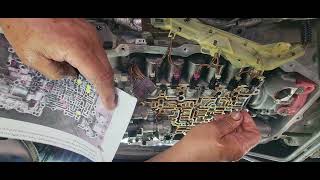
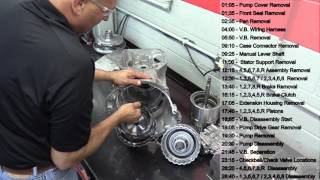
- If there is significant debris in the pan, a more extensive internal transmission inspection is required, likely leading to a rebuild or replacement. 🎬 See this professional teardown of the 8L45 transmission for internal damage.
- After installing the new valve body, install a new pan gasket and fill with the correct OEM-spec transmission fluid (ACDelco DEXRON ULV).
- Using a GM-compatible scan tool (like GDS2), perform the 'Solenoid Valve Characterization Reprogramming' by connecting to GM's TIS2Web service and inputting the Part Unique Number (PUN) from the new valve body.
- After characterization, perform the 'Transmission Service Fast Learn' procedure with the scan tool to allow the TCM to learn the new clutch apply pressures. 🎬 Watch: Troubleshooting tips if the vehicle won't move after valve body replacement.
- Perform a final road test to verify smooth shifting through all gears.
Parts You'll Likely Need
- Transmission Control Valve Body Assembly
(OEM #24042437)— This is the most common failure and the specific part GM recommends replacing per TSB #PIP5771B to resolve the P0796 code on this vehicle.
Trusted brands: ACDelco (Genuine GM)
OEM price range: $700-$1000
Aftermarket price range: $500-$800 - Automatic Transmission Fluid
(OEM #19417577 (ACDelco DEXRON ULV))— Required to refill the transmission after replacing the valve body. The 8L45 transmission requires this specific Ultra Low Viscosity fluid.
Trusted brands: ACDelco DEXRON ULV
OEM price range: $15-$25 per quart
Aftermarket price range: $12-$20 per quart - Transmission Oil Pan Gasket — A new gasket is required to prevent leaks when reinstalling the transmission pan.
Trusted brands: ACDelco, Fel-Pro
OEM price range: $30-$50
Aftermarket price range: $20-$40
Related Codes That Often Appear With This One
- P2714 — This code is for 'Pressure Control Solenoid 'D' Performance/Stuck Off'. GM TSB #PIE0645 lists P0796 and P2714 together, as the underlying valve body issue can affect multiple solenoids simultaneously.
Technical Service Bulletins (TSBs) & Recalls
- PIP5771B: Instructs technicians to replace the control valve body on 8-speed transmissions (M5T, MQE) setting DTC P0796 if no debris is found in the transmission fluid pan. It explicitly states that if the pan is clean, the valve body is the cause.
- PIE0645: An engineering bulletin investigating P0796 and P2714, mentioning symptoms like slipping, improper shifting, and the possibility of a solenoid being stuck by sediment.
Platform-Specific Known Issues
- A known issue with the 8-speed (M5T/8L45) transmission's valve body is documented in GM TSB #PIP5771B, which directly applies to the 2020-2021 GMC Canyon and code P0796.
- GM also issued bulletin #PIE0645 to investigate if the solenoid could be stuck by sediment, further acknowledging issues with this system.
- The repair is not just mechanical; it requires mandatory electronic programming (Solenoid Characterization and Fast Learn) using dealer-level tools to match the new valve body to the vehicle's Transmission Control Module (TCM).
Mechanic-Grade Diagnostic Values
- Pressure Control Solenoid Resistance — expected: 4.5 - 5.5 Ohms. Failure: A reading of infinite Ohms indicates an open circuit, while near-zero Ohms indicates a short. A reading outside the specified range suggests a faulty solenoid coil.
- Solenoid Supply Voltage — expected: Approximately 12 Volts (with key on, engine off). Failure: Absence of voltage points to a problem with the wiring or the Transmission Control Module (TCM) output.
- Ground Circuit Continuity — expected: ≤ 0.2 Ohms. Failure: A higher resistance reading indicates a poor ground connection, which can cause erratic solenoid operation.
Scan Tool Commands That Help
- GDS2 (or other GM-compatible scan tool): Solenoid Valve Characterization Reprogramming — This is a mandatory procedure after replacing the transmission valve body or the entire transmission. It uses the Part Unique Number (PUN) from the new valve body to download specific performance data from GM's TIS2Web server, ensuring the TCM can control the new solenoids correctly.
- GDS2 (or other GM-compatible scan tool): Transmission Service Fast Learn — This procedure must be performed after the characterization reprogramming. It clears old adaptive values and allows the TCM to learn the apply pressures for the clutches with the new components. Failure to perform this step can result in poor shift quality.
- High-end bidirectional scanner: Solenoid Actuation Test — During diagnosis, a technician can command the solenoid on and off to listen for an audible 'click' from the valve body. This helps confirm if the solenoid is mechanically stuck or if the issue is purely electrical, without having to first remove the part.
Wiring & Ground Locations
- Transmission Main Connector — On the side of the transmission case. It is a large, 20-pin connector.. This is the primary connection point between the vehicle's main wiring harness (and the remote TCM) and the internal transmission harness that goes to the valve body. Corrosion or damage here can interrupt signals to any solenoid.
- Passenger Footwell Harness — In the area of the passenger side kick panel and fuse box.. On related GM platforms (Chevy Colorado), a wiring harness in this area has been found to chafe through and short out CAN bus wires. A CAN bus fault can disrupt communication between modules, including the TCM, potentially leading to various transmission error codes like P0796. This is an often-overlooked area when diagnosing transmission-specific codes.
- Transmission Control Module (TCM) — Remote-mounted away from the transmission, unlike some older GM models where it was inside (TEHCM).. Since the TCM is not integrated with the valve body, the wiring between the TCM and the transmission's 20-pin connector is a potential point of failure that must be checked for continuity and shorts.
OEM Part Supersession History
24282678, 24288269, 24288588, 24290950, 24292116, 24296896, 24297635→24042437— Part has been updated multiple times by the manufacturer, likely to improve reliability and address the known failure patterns.
Heads up: Using an older, superseded part number is not recommended as it may carry the original design flaw. The latest part, 24042437, should be used for all repairs.
Model Year Variations Within This Range
- 2020-2021: TSB #PIP5771 was initially released for 2020 models and later updated on March 2, 2021, to officially include the 2021 model year GMC Canyon and its platform mate, the Chevrolet Colorado, with the M5T transmission. This confirms the issue is present across both years.
Helpful Videos
Used OEM Parts in Stock


New Aftermarket Parts Available





The information in this article is provided for general reference and educational purposes only. Vehicle specifications, procedures, and part compatibility can vary by production date, trim level, and region. Always consult your vehicle's factory service manual and verify part numbers before purchasing or performing repairs. Safety-critical components such as airbags, seat belts, and braking systems should be installed by a qualified professional.
- Gmc CANYON:
- 🎬 Helpful Videos
- 🛍️ Shop This Part
- What's Unique About the 2020-2021 Gmc CANYON
- Diagnostic Flowchart
- Symptoms You May Notice
- Most Likely Causes
- Rare But Worth Checking
- Diagnosis Steps
- Parts You'll Likely Need
- Related Codes That Often Appear With This One
- Technical Service Bulletins (TSBs) & Recalls
- Platform-Specific Known Issues
- Mechanic-Grade Diagnostic Values
- Scan Tool Commands That Help
- Wiring & Ground Locations
- OEM Part Supersession History
- Model Year Variations Within This Range
- 🎟️ Get 5% Off