

P0776 on 2013-2020 Nissan Rogue: CVT Pressure Solenoid 'B' Failure Causes and Fixes
P0776 on a Nissan Rogue almost always points to a problem inside the CVT automatic transmission, specifically with the Pressure Control Solenoid 'B'. This often requires replacing the entire valve body assembly. In many cases, this is a symptom of a larger internal transmission failure (belt/pulley damage), leading to a recommendation for a full CVT replacement. Diagnosis is not complete without a borescope inspection of the CVT belt as per Nissan's own service bulletins.
- P0776 on a 2013-2020 Rogue is a serious transmission code that should be addressed immediately to prevent further damage.
- The most common fix is replacing the CVT valve body, but only if the internal CVT belt is undamaged.
- Due to known issues with these CVTs, this code often indicates the beginning of a total transmission failure, which requires a complete replacement.
- Diagnosis and repair are not DIY-friendly. This job requires special tools, procedures, and programming best performed by a professional.
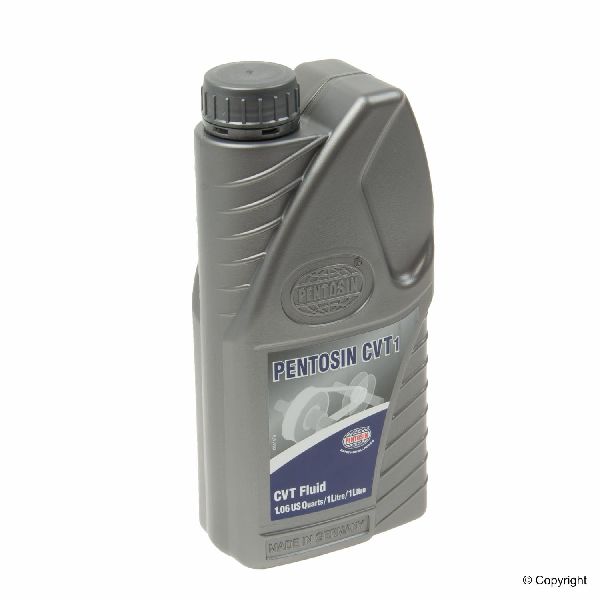
- Always use the specified Nissan NS-3 CVT fluid; using the wrong fluid can cause severe damage.
What's Unique About the 2013-2020 Nissan ROGUE

The 2013-2020 Nissan Rogue uses a Jatco JF016E (also known as RE0F10D) CVT, a transmission with a well-documented history of issues, including premature failure. Code P0776 is particularly common and often serves as a major indicator of the transmission's health. Unlike many other vehicles where a solenoid issue might be an isolated electrical fault, on the Rogue, it frequently signals deeper mechanical problems. The failure of the solenoid to regulate pressure can cause the CVT's steel belt to slip against the pulleys, creating metal debris that contaminates the fluid and damages the valve body. Because this failure pattern is so common, Nissan issued multiple Technical Service Bulletins (e.g., NTB15-086c, NTB16-110i) that mandate a specific diagnostic procedure: a technician must use a borescope to inspect the CVT belt for damage before authorizing a valve body replacement, as the solenoid failure is often a symptom, not the root cause.
Diagnostic Flowchart

Tap your situation to follow the diagnostic path that matches what you're seeing on this vehicle.
Generation note: This range covers the end of the first-generation Rogue (2013) and the entire second-generation (T32 chassis, 2014-2020). Both generations use a Jatco CVT and are known to experience this issue. A specific Nissan TSB (NTB15-086c) applies directly to the 2014-2016 second-generation Rogue but explicitly excludes the 'Rogue Select' (a carryover first-gen model). However, subsequent TSBs like NTB16-110 series and owner complaints confirm the problem is prevalent across the entire 2013-2020 range and its platform mates. A class-action lawsuit alleges the 2019-2020 models use the same or a substantially similar transmission to the earlier, problematic 2014-2018 models.
Symptoms You May Notice

- Check Engine Light is on
- Vehicle hesitates or has trouble accelerating.
- Jerking, shuddering, or single/multiple bumps during acceleration.
- Car gets stuck in a low gear and won't 'shift' (RPMs rev high with little speed increase).
- Delayed engagement when pressing the gas pedal from a stop.
- Transmission enters 'limp mode' with severely reduced power.
- Complete loss of forward movement.
- Randomly slow acceleration from a stop light.
- Replacing only the transmission fluid. While low or dirty fluid can contribute, it rarely fixes a P0776 code on its own. An owner complaint noted that changing the transmission oil and filter did not resolve the issue. Multiple forum threads confirm that a fluid change is a low-probability fix.
- Replacing the valve body without inspecting the CVT belt/pulleys. If the root cause is mechanical wear creating debris, the new valve body will quickly become contaminated and fail, causing the code to return.
Most Likely Causes
- Failed CVT Valve Body / Pressure Control Solenoid 'B' 🔴 High Probability The solenoids are integrated into the valve body, and Nissan service procedures require replacing the entire assembly. These components are under constant stress managing hydraulic pressure. Forum discussions suggest that early valve bodies in this generation had material defects, making them a common failure point even without other internal CVT damage.
How to confirm: A technician will use a professional scan tool to monitor solenoid command vs. performance. The definitive diagnosis, per Nissan TSBs, is to first perform a borescope inspection of the CVT belt. If the belt is undamaged, the valve body is condemned.
Typical fix: Replace the entire CVT control valve assembly (valve body). After installation, the new valve body's calibration data (from a QR code or CD with the part) must be programmed into the TCM using Nissan's CONSULT software.
Est. part cost: $300-$800 - Internal CVT Failure (e.g., Belt/Chain Slippage and Pulley Damage) 🟡 Medium Probability The steel belt (or chain) and pulley system in the Jatco CVT can wear or be damaged when incorrect hydraulic pressure from a failing valve body allows slippage. This slippage creates metal shavings that contaminate the fluid and destroy sensitive components, creating a cascading failure. This is a widely documented failure pattern for this transmission.
How to confirm: The official procedure is outlined in Nissan TSB NTB15-086c: after removing the valve body, a technician must use a borescope to inspect the sides of the CVT belt for scoring, gouges, and damage. Finding significant metal shavings on the transmission pan magnets is also a strong indicator of terminal failure.
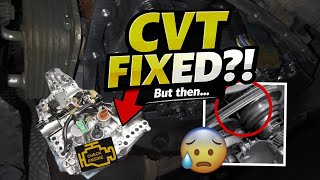
Typical fix: If belt damage is found, the entire CVT assembly must be replaced. 🎬 Watch: A complete walkthrough of the Rogue transmission replacement process. This is often the final recommendation from dealerships, as seen in multiple owner complaints and repair videos.
Est. part cost: $3500-$5000 - Low or Contaminated Transmission Fluid ⚪ Low Probability While low or degraded fluid can cause incorrect pressure and trigger the code, it is almost never the root cause on a Rogue with P0776. It is far more likely a symptom of a leak or a sign that the fluid has been broken down by excessive heat and contaminated with metal debris from an ongoing internal failure.
How to confirm: Check the level and condition of the CVT fluid. The fluid should be a light green/blue (NS-3) and not dark, burnt, or full of metallic particles. This transmission does not have a traditional dipstick and requires a specific procedure to check the fluid level via an overflow plug. 🎬 See the specific procedure for a Rogue CVT fluid change.
Typical fix: Perform a CVT fluid drain and fill using only Nissan NS-3 CVT fluid. However, if the code returns, it confirms a mechanical failure. A fluid change on a high-mileage, failing CVT is a gamble and rarely a permanent solution.
Est. part cost: $150-$300
Diagnosis Steps
- Verify the code with a reliable OBD-II scanner capable of reading TCM codes.
- Check for any other related transmission codes, such as P0965, P0841, P1715, or P17F0/P17F1.
- Check the CVT fluid level and condition following the specific Nissan procedure (no dipstick). Look for dark, burnt fluid or metallic sheen.
- Follow the diagnostic flowchart in the applicable Nissan TSB (NTB15-086c, NTB16-110 series).
- Drop the transmission pan and inspect the magnets for excessive metal debris. A small amount of fine paste is normal, but large shavings or chunks indicate severe internal wear.
- Remove the control valve (valve body). The bolts to be removed are marked with a '7' on the head.
- Using a borescope with a 90-degree mirror (Nissan tool J-51951), inspect the sides of the CVT belt that contact the pulleys for scoring, scratches, or gouges.
- DECISION POINT: If the belt is OK (smooth surfaces), the valve body is the confirmed culprit. If the belt is damaged, the entire CVT assembly must be replaced.
- After repair (either valve body or full CVT), the CVT cooler must be flushed, and the new component's calibration data must be written to the TCM.
Parts You'll Likely Need

- CVT Control Valve Assembly
(OEM #31705-28X2B)— This is the most common repair when the CVT belt is not damaged. The solenoids are part of this assembly, and it is replaced as a single unit. The part comes with a CD-R or QR code containing calibration data that must be programmed into the TCM.
Trusted brands: Nissan (OEM)
OEM price range: $700-$1200
Aftermarket price range: $300-$800 - CVT Assembly
(OEM #31020-70X9E)— This is required if inspection reveals damage to the internal CVT belt/chain or widespread metal contamination. This part number fits some Rogue Sport models and replaces 31020-3VX9E, 31020-3VX1A, and others. Always verify the correct part number for your specific vehicle's VIN.
Trusted brands: Nissan (OEM), Jatco (OEM Manufacturer)
OEM price range: $3500-$5000
Aftermarket price range: $2500-$4000
Related Codes That Often Appear With This One
- P0965 — This code is for the Pressure Control Solenoid 'B' circuit range/performance. It often appears with P0776, indicating a deeper electrical or component failure within the valve body. One NHTSA complaint logged both P0776 and P0965, pointing to a 'Nissan CVT solenoid failure'. A repair video also showed both codes present before a full transmission replacement.
- P0841 — This code relates to the Transmission Fluid Pressure Sensor/Switch 'A' Circuit. It can be triggered along with P0776 when the transmission's hydraulic system is compromised. TSB NTB16-110i groups P0776 and P0841 together as related codes pointing to the same diagnostic path.
- P1715 — This code for the Input Speed Sensor is frequently stored with P0776. It indicates the TCM is detecting a discrepancy between engine speed and transmission input speed, a classic sign of internal slippage. TSBs often mention to look for P1715 alongside P0776.
- P17F0 / P17F1 — These codes indicate 'CVT Judder' and are part of Nissan's enhanced diagnostics. While P0776 points to a specific solenoid, these codes confirm a mechanical judder (shaking/vibration) is occurring, often due to belt/pulley issues. TSB NTB16-110Q groups all these codes together as symptoms of the same core CVT problem.
Technical Service Bulletins (TSBs) & Recalls
- NTB15-086c: '2013-2016 ALTIMA AND 2014-2016 ROGUE; MIL ON WITH DTC P0776' - This is the primary TSB establishing the diagnostic flow: remove valve body, inspect belt with borescope, then replace either the valve body or the entire CVT.
- NTB16-110 series (c, g, i, Q): '4 CYLINDER WITH DTC P0776 AND/OR JUDDER...' - This series of bulletins expands on the original, covering more model years (up to 2017 Rogue) and grouping P0776 with other related codes like P17F0/P17F1 (Judder) and P0841, confirming they are all symptoms of the same underlying CVT issues.
- NTB18-077: '2017 ROGUE; MIL ON WITH DTC P0776, P1715...' - Specifically targets the 2017 Rogue, linking P0776 with hesitation, lack of power, and the P1715 input speed sensor code, reinforcing the diagnosis of internal slippage.
- PC490 (NTB16-121): 'TCM REPROGRAMMING' - A voluntary service campaign to reprogram the TCM on 2014-2016 Rogues. While not a direct fix for a mechanical P0776 fault, this update altered the diagnostic logic, sometimes leading to different codes (like P17F0) being stored for judder conditions.
Platform-Specific Known Issues
- NHTSA complaint #11536761 for a 2017 Rogue with P0776 resulted in a recommendation to 'replace CVT unit due to internal failure' at 109,422 miles.
- NHTSA complaint #11674233 for a 2017 Rogue reported P0776 and P0965, with the car unable to move, described as a 'Nissan CVT solenoid failure'.
- NHTSA complaint #11365667 on a 2017 Rogue described jerking and trouble accelerating with code P0776.
- Nissan issued TSB NTB15-086c specifically for the 2014-2016 Rogue to address DTC P0776, providing a detailed inspection flow chart that can lead to either a valve body or a full CVT replacement.
- A Reddit user with a 2017 Rogue at 130k miles reported being quoted $3-4k for a transmission replacement for code P0776, highlighting the significant financial impact on owners outside of warranty.
Mechanic-Grade Diagnostic Values
- Pressure Control Solenoid 'B' Coil Resistance — expected: 10-30 Ohms (This is a general value for transmission solenoids; vehicle-specific values for the Rogue are not published in service literature, as Nissan mandates replacing the entire valve body).. Failure: A reading that is open (infinite resistance) or significantly outside the typical range.
- Solenoid 'B' Command Voltage (Live Data) — expected: A Pulse-Width Modulated (PWM) signal that varies. The voltage should pulse between 0V (off) and ~12V (fully on) as the TCM commands pressure changes.. Failure: Absence of voltage or a static, unchanging voltage when the transmission should be shifting.
Scan Tool Commands That Help
- Nissan CONSULT-III plus: WRITE IP CHARA (Write Intelligent Performance Characteristic) — This is a mandatory procedure after replacing either the CVT control valve (valve body) or the entire CVT assembly. The new part is supplied with a CD or QR code containing unique calibration data that must be written to the Transmission Control Module (TCM) for the transmission to function correctly.
- Nissan CONSULT-III plus: Select Learning (Drive/Reverse Learning) — After replacing the valve body, this procedure is used to help the TCM learn the clutch engagement points. It involves starting the engine and shifting between Neutral, Drive, and Reverse a specified number of times (typically 10) while holding the brake.
Wiring & Ground Locations
- Transmission Harness Connector — On the front/top of the transmission assembly, visible from the engine bay.. This is the main external electrical connection to the transmission. Damage, corrosion, or a loose connection here can interrupt signals to all internal solenoids, including Pressure Control Solenoid 'B'. A visual inspection is warranted, especially if multiple transmission codes are present.
- Terminal Cord Assembly — Inside the transmission oil pan, connecting the external harness to the valve body solenoids.. This internal harness can be damaged by excessive heat or contaminated fluid. It is inspected and typically replaced along with the valve body.
Real Owner Repair Stories
- YouTube channel 'Video Service Information' (2016 Nissan Rogue, 75,000 miles) — RPMs fluctuating and going up without a corresponding increase in speed.
❌ Tried (didn't work) The diagnosis immediately pointed towards internal failure, so no other parts were tried.
✅ What actually fixed it The mechanic scanned the vehicle and found codes P1715, P0776, P0965, and P17F0 (CVT Judder). Upon dropping the transmission pan, he found significant metallic debris on the magnets and visible gouge marks on the pulleys. This confirmed the belt was slipping and damaging the pulleys. The final recommendation was a complete CVT assembly replacement due to the extensive internal mechanical damage. - Reddit user Senior_Law_3484 (Nissan Master Tech) (2017 Nissan Rogue) — User reported code P0776 and a delay when shifting from first to second gear when the car is hot.
✅ What actually fixed it The technician confirmed the official Nissan diagnostic path: "Proper diagnosis is to remove control valve from CVT and use a 90 degree borescope lense to inspect the sides of the chain for wear. There's a bulletin that has ok and no good examples of chain wear. If the chain is OK then replacement of the control valve body is the recommended repair. Calibration data will need to be programmed upon replacement and check for the latest TCM update." This confirms the TSB procedure is the real-world fix used by dealer technicians.
OEM Part Supersession History
31705-28X0B, 31705-28X0D, 31705-28X1C→31705-28X2A, 31705-28X2B— Revisions by the manufacturer to improve reliability or address known failure points.
Heads up: While newer parts may physically fit older models, the critical factor is programming. Any replacement valve body, regardless of part number, requires its unique calibration data (from an included CD or QR code) to be written to the TCM using Nissan's CONSULT software. A used valve body cannot be properly installed without its original matching calibration data.
Model Year Variations Within This Range
- 2013-2015: Some earlier TSBs for P0776 included a mandatory TCM reprogramming step for 2013-2015 models, in addition to any mechanical repairs. This suggests Nissan released software updates to change the transmission's operational logic, possibly to reduce stress on the components. This reprogramming step was not listed for later model years in the same bulletins.
- 2019-2020: While mechanically very similar, a class-action lawsuit specifically calls out the 2019-2020 Rogue models for having the 'same or substantially similar' defective transmissions as the 2014-2018 models from a prior lawsuit, indicating the failure pattern persists to the end of the generation.
Helpful Videos
Used OEM Parts in Stock

New Aftermarket Parts Available




The information in this article is provided for general reference and educational purposes only. Vehicle specifications, procedures, and part compatibility can vary by production date, trim level, and region. Always consult your vehicle's factory service manual and verify part numbers before purchasing or performing repairs. Safety-critical components such as airbags, seat belts, and braking systems should be installed by a qualified professional.
- Nissan ROGUE:
- 🎬 Helpful Videos
- 🛍️ Shop This Part
- What's Unique About the 2013-2020 Nissan ROGUE
- Diagnostic Flowchart
- Symptoms You May Notice
- Most Likely Causes
- Diagnosis Steps
- Parts You'll Likely Need
- Related Codes That Often Appear With This One
- Technical Service Bulletins (TSBs) & Recalls
- Platform-Specific Known Issues
- Mechanic-Grade Diagnostic Values
- Scan Tool Commands That Help
- Wiring & Ground Locations
- Real Owner Repair Stories
- OEM Part Supersession History
- Model Year Variations Within This Range
- 🎟️ Get 5% Off