

P0776 on 2016-2017 Mitsubishi Lancer: CVT Pressure Control Solenoid 'B' Failure Guide
P0776 on a 2016-2017 Lancer indicates a serious problem with the CVT's secondary pressure control. The code is set when the actual hydraulic pressure deviates from the target by 1.20 MPa (174 psi) or more. While it can be a faulty solenoid, it often signals internal damage from CVT belt slip creating metallic 'abrasion powder' that contaminates the system, requiring a complete transmission replacement. This is a costly repair, often running from $3,500 to $7,000, though some owners have had succ
- P0776 on a 2016-2017 Lancer is a critical code indicating a severe transmission problem.
- Do not continue to drive the vehicle, as you risk sudden power loss and catastrophic transmission damage.
- The root cause is frequently internal damage from CVT belt slip, not just a simple bad solenoid.
- Consult Mitsubishi TSB-17-23-002 (or its later revisions) for the official diagnostic path.
- Due to the high probability of needing a new CVT, expect a very expensive repair. A second opinion from a trusted transmission specialist is highly recommended.
What's Unique About the 2016-2017 Mitsubishi Lancer
The 2016-2017 Lancer uses a Jatco-sourced CVT-8 transmission (model JF016E, Mitsubishi designation F1CJC/W1CJC). These transmissions are known to be susceptible to issues that trigger code P0776. Mitsubishi has issued Technical Service Bulletins (TSBs), such as TSB-22-23-001R, acknowledging that conditions like shuddering or surging can lead to repeated CVT belt slippage. This slippage creates abrasive metal powder that contaminates the hydraulic circuit and valve body, causing pressure control problems and setting codes like P0776. The problem is so recognized that official diagnostic procedures for this code often lead to a full transmission replacement, a decision that must be approved by Mitsubishi's Techline service after inspection.
Symptoms You May Notice
- "Transmission Service Required" or "Slow Down" warning light on the dashboard
- Check Engine Light is on
- Vehicle enters 'limp mode' with reduced power and acceleration
- Hesitation, surging, or shuddering during acceleration
- Sensation of the transmission slipping, where engine RPMs rise without an increase in speed
- Engine RPMs fluctuate erratically while driving at a steady speed
- Inability to accelerate from a stop or delayed engagement into Drive or Reverse
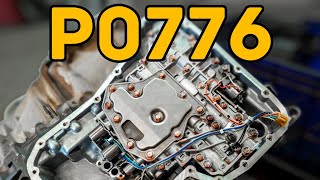
- Replacing only the pressure control solenoid when the entire CVT is damaged. 🎬 Watch a overview of what P0776 means for your solenoid Often, the solenoid failure is a symptom of widespread contamination from belt slip, and a new solenoid will soon fail or not fix the issue.
- Performing a fluid change and assuming the problem is fixed. As seen in owner forums, a fluid change may provide a temporary reprieve, but the code often returns if there is mechanical wear.
Most Likely Causes
- Internal CVT Assembly Failure 🔴 High Probability As documented in Mitsubishi TSB-22-23-001R, repeated belt slip generates metallic 'abrasion powder' that contaminates the valve body and scores the surfaces of the pulleys and belt, leading to a permanent loss of pressure control. This is the most common and severe failure pattern for this specific CVT-8 transmission.
How to confirm: A technician will follow TSB procedures, which involve using a borescope to inspect the belt and pulleys for scoring or damage after removing the valve body. Photos are typically sent to Mitsubishi's Techline service for a final determination.
Typical fix: Complete replacement of the CVT transmission assembly and flushing of the external transmission cooler. The replacement requires a specific ECU coding procedure to pair the new transmission to the vehicle.
Est. part cost: $3000-$5000 - Dirty, Degraded, or Low CVT Fluid 🟡 Medium Probability CVT fluid degrades and becomes contaminated with metal particles from the known belt-slip issue. Low or dirty fluid cannot maintain the required hydraulic pressure, leading to solenoid performance codes. Owners often report the code appearing after a period of the fluid level being low or the fluid being very old.
How to confirm: Check the CVT fluid level and condition per the service manual. Dark, burnt-smelling, or fluid with a glittery appearance (metal shavings) indicates a serious internal problem. A fluid change may temporarily resolve symptoms, but if the code returns, it points to underlying mechanical wear.
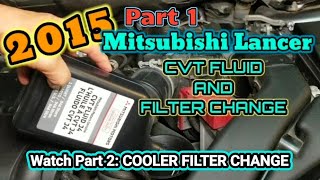
Typical fix: Perform a CVT fluid and filter change using only genuine Mitsubishi CVT Fluid J4 or an equivalent that meets the specification. 🎬 Watch this step-by-step fluid and filter replacement tutorial This is often attempted as a first step but frequently fails to resolve the issue long-term if internal damage has already occurred.
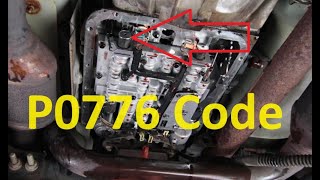
Est. part cost: $150-$250 - Failed Valve Body or Pressure Control Solenoid ⚪ Low Probability The solenoid itself can fail electrically, or the valve body it sits in can become clogged 🎬 See how a failed secondary pressure control solenoid leads to P0776 with debris from metal powder contamination, preventing proper operation. While possible, on this platform, a bad solenoid is often a symptom of the larger CVT contamination issue rather than the root cause. However, some owners have successfully resolved the code by replacing the valve body.
How to confirm: A technician can use a diagnostic tool to command the solenoid and monitor pressures. The solenoid's electrical circuit can be tested for resistance. In some cases, an independent mechanic may drop the pan and inspect the valve body for issues, finding success where a dealer might only recommend full replacement.
Typical fix: Replacement of the individual solenoid or the entire valve body assembly. This is a complex job that requires removing the transmission oil pan and subsequent ECU coding and initialization procedures.
Est. part cost: $400-$1200
Rare But Worth Checking
- Faulty Transmission Control Module (TCM): While rare, the TCM can fail and incorrectly report a solenoid issue. This is usually considered only after all other mechanical and electrical possibilities have been ruled out.
- Damaged Wiring or Connectors: A corroded connector or damaged wire between the TCM and the transmission can interrupt the signal to the solenoid, causing this code. This should be inspected before condemning mechanical parts.
Diagnosis Steps
- Scan for all diagnostic trouble codes (DTCs) in the TCM and other modules. Note any other codes present, especially P0868, P0730, or P0741, which are all cited in the relevant TSB.
- Check the CVT fluid level and condition. Ensure the level is correct and inspect the fluid for a burnt smell or metallic particles ('glitter'). If fluid is very dirty or contains debris, suspect severe internal wear.
- Review Mitsubishi Technical Service Bulletin TSB-22-23-001R. This bulletin provides the specific OEM diagnostic flow chart for P0776.
- Per the TSB, if P0776 is present, the next step is often a borescope inspection. The valve body is removed to allow a camera to inspect the CVT belt and pulleys for scoring and damage.
- The technician must create a 'Techline case' with Mitsubishi, submitting scan tool data and borescope photos. Mitsubishi's technical assistance service will then authorize the final repair, which could be a valve body replacement or a full CVT assembly replacement.
- Before condemning the transmission, inspect the wiring harness and connectors between the TCM and the transmission for any signs of damage or corrosion.
- If a new valve body or CVT assembly is installed, the technician must perform the 'CVT-ECU Coding Procedure' or 'Initialization Procedure' per manufacturer instructions to initialize the new hardware.
Parts You'll Likely Need
- CVT Assembly (Jatco JF016E / Mitsubishi F1CJC/W1CJC) — This is the most common official fix due to the high likelihood of internal mechanical damage (belt/pulley scoring) that accompanies code P0776 on this platform, as per Mitsubishi TSBs.
Trusted brands: Mitsubishi Genuine
OEM price range: $3000-$5000
Aftermarket price range: $2500-$4000 (Remanufactured) - CVT Valve Body — If inspection shows no damage to the belt or pulleys, the issue may be isolated to a contaminated or faulty valve body. It is often replaced as a complete unit and requires specific serial number coding to the TCM.
Trusted brands: Mitsubishi Genuine, Sonnax (rebuild kits)
OEM price range: $800-$1500
Aftermarket price range: $500-$1000 (Remanufactured) - CVT Fluid Filter Kit
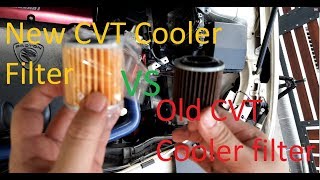
(OEM #2824A007 (Valve Body Filter), 2921A007 (Case/Cooler Filter))— Required when performing a fluid change or replacing any major transmission component. The system has multiple filters, including one on the valve body and an external cartridge filter, that get clogged with debris.
Trusted brands: Mitsubishi Genuine
OEM price range: $50-$100
Aftermarket price range: $30-$70
Related Codes That Often Appear With This One
- P0868 — Indicates secondary pressure is low, which is a direct consequence of the pressure control system (including the solenoid from P0776) failing to build or maintain pressure. This code is frequently seen alongside P0776 in owner complaints.
- P0730 — Incorrect Gear Ratio. This code often appears with P0776 because the incorrect hydraulic pressure from the failing solenoid causes the CVT belt to slip, leading to a mismatch between engine speed and output speed. It is listed as a related code in official TSBs.
- P0741 — Torque Converter Clutch Circuit Performance or Stuck Off. This can be triggered by the same hydraulic contamination and pressure issues that cause P0776 and is also listed in the same TSBs.
Technical Service Bulletins (TSBs) & Recalls
- TSB-17-23-002 / TSB-22-23-001R: Addresses potential transmission shudder/surge with possible DTCs, including P0776, for 2016-2017 Lancers. It outlines a diagnostic procedure that often concludes with replacing the CVT assembly.
Platform-Specific Known Issues
- NHTSA complaints for similar Mitsubishi models confirm that P0776 is often associated with catastrophic internal transmission failure, sometimes accompanied by codes like P0868. (NHTSA ODI #11636737)
- Owner complaints describe symptoms of CVT belt slippage and contamination leading to this code, reinforcing the TSB findings.
Mechanic-Grade Diagnostic Values
- Secondary Pressure Control Solenoid (SPCS) resistance — expected: 3-9 ohms. Failure: A reading outside this range indicates a faulty solenoid coil.
- TCM Fault Detection Threshold — expected: Difference between target and actual secondary pressure should be less than 1.20 MPa (174 psi).. Failure: If the pressure difference exceeds 1.20 MPa for 3-10 seconds, the TCM will set code P0776.
Scan Tool Commands That Help
- Mitsubishi M.U.T.-III: CAN bus diagnostics — This is the first step in the official diagnostic procedure to ensure the communication network is functioning before diagnosing the transmission itself.
- Mitsubishi M.U.T.-III or equivalent high-end scanner: CVT ECU Reprogramming / Initialization — This is mandatory after replacing the CVT assembly or the valve body. The procedure writes calibration data for the new components to the TCM. Failure to perform this step can lead to judder, shifting issues, and new trouble codes.
- Mitsubishi M.U.T.-III or equivalent high-end scanner: Clutch Point Learning — This procedure is required after a valve body replacement (but not a full CVT assembly replacement). It allows the TCM to learn the engagement points of the clutches with the new hardware. If not performed correctly, the vehicle may not move when put in gear.
Real Owner Repair Stories
- Reddit user on r/mechanicadvice (2012 Mitsubishi Lancer ES 2.0L (JF011E, but similar symptoms and codes)) — Vehicle struggled to move from a stop, requiring high RPMs to engage. "Service Engine Soon" light was on with codes P0776 and P0868.
❌ Tried (didn't work) A mechanic suggested a full transmission replacement after only checking codes and the dipstick., A simple drain and fill of the fluid provided a temporary fix for about a month and a half before codes returned.
✅ What actually fixed it A complete fluid service including replacing both the internal transmission filter and the external cooler filter, followed by a double drain-and-fill of the CVT fluid. The user noted they initially overfilled the fluid, causing a small leak, but the shifting problems and codes were resolved. - YouTube video by Gary Ferraro (Vehicle with Jatco JF016E / CVT8 transmission) — Chatter, delayed engagement, and performance codes (P0841 mentioned, related to pressure).
❌ Tried (didn't work) The valve body was replaced as a first attempt to fix the pressure-related codes, but the symptoms returned immediately.
✅ What actually fixed it A full transmission teardown revealed the root cause was a physically jammed flow control valve inside the CVT's oil pump. The valve was severely scored and stuck, causing low line pressure throughout the system. The ultimate fix was a transmission overhaul including a remanufactured oil pump and new pulley set.
OEM Part Supersession History
2824A026→2824A007— Part number update for the valve body fluid filter.
Diagnostic Flowchart
Other Known Issues on This Vehicle
Issues unrelated to this code that are worth knowing about as an owner of this generation:
- Front Subframe Corrosion/Rust 🔴 High — More common on older models and in regions that use road salt ('salt belt'). Can lead to structural failure. (Ref: A recall was issued for the 2008 model year, but the weakness is noted on subsequent generations.)
- Premature Wheel Bearing / Hub Failure 🟠 Medium — Some owners report needing to replace wheel bearings earlier than expected, causing humming or grinding noises at speed.
- Clear Coat / Paint Failure 🟡 Low — Common on many Japanese cars of this era, the clear coat on the roof and trunk may begin to peel or fade prematurely.
- Air Conditioning System Malfunctions 🟠 Medium — Complaints include AC compressors failing or the system not blowing cold, sometimes due to faulty relays or other electrical issues.
Used vs. New Parts: Buying Guide for This Vehicle
When a used part is the smart pick: Given the extremely high failure rate of the JF016E due to internal contamination, buying a used transmission assembly is a very high-risk option. A used part may only be viable for external components like wiring harnesses or sensors. A used valve body is also risky unless it comes from a verified low-mileage vehicle that did not suffer a contamination-related failure.
Donor-vehicle mileage cap: roughly under 60000 miles for the part to have meaningful remaining life.
What to inspect on the donor part:
- Demand verifiable service records showing on-time CVT fluid changes with the correct fluid type.
- Ask for the reason the donor vehicle was salvaged; avoid units from vehicles that had transmission-related complaints.
- If possible, have the seller drop the transmission pan. Inspect for excessive metallic debris ('glitter') in the fluid and on the magnets. Any significant amount is a major red flag.
- Ensure the Jatco stamp code on the top of the transmission matches the original unit.
OEM-only on this vehicle (don't cheap out):
- CVT Fluid (Mitsubishi Diamond Queen CVT J4 or exact equivalent)
- Complete CVT Assembly (Remanufactured OEM is preferable to used)
- Valve Body (Remanufactured OEM is the safest bet due to programming requirements)
Aftermarket brands forum-validated for this vehicle:
- Sonnax (for valve body rebuild kits and individual components)
Brands owners have reported issues with on this vehicle:
- Unbranded, low-cost valve bodies or solenoids from online marketplaces may lack proper calibration and can fail prematurely.
Real Owner Stories
Aggregated from forums and TSBs cited above. Mileages and costs reflect what owners reported in those sources.
2017 Mitsubishi Lancer
Symptoms: Owner was quoted for a full transmission replacement by a dealer but sought a second opinion.
What fixed it: An independent mechanic replaced faulty pressure sensors and a selector within the valve body using parts from a salvaged car.
Cost: $550-$550
Source hint: Reddit: 2017 lancer transmission quote from 5700 to 550 dollars.
2012 Mitsubishi Lancer ES 2.0L
Symptoms: Hesitation from a stop; fluid change only provided a temporary fix for six weeks before codes returned.
What fixed it: A fluid change was attempted but failed to solve the underlying mechanical issue long-term.
Source hint: Reddit: Mitsubishi Lancer 2012 ES 2.0L 4 cylinder p0776 and p0868 transmission codes
Related OBD-II Codes
Frequently Asked Questions
Does Mitsubishi TSB-22-23-001R apply to my 2016-2017 Lancer?
Can I just change the CVT fluid to fix the P0776 code on my Lancer?
What is the 'glitter' technicians look for in my Lancer's transmission fluid?
Why does the dealer want to use a borescope to diagnose my transmission?
Is there a specific coding procedure required if I replace the CVT in my 2017 Lancer?
Are there any other common non-transmission issues I should watch for on this Lancer generation?
Helpful Videos

We Have This Part in Stock

The information in this article is provided for general reference and educational purposes only. Vehicle specifications, procedures, and part compatibility can vary by production date, trim level, and region. Always consult your vehicle's factory service manual and verify part numbers before purchasing or performing repairs. Safety-critical components such as airbags, seat belts, and braking systems should be installed by a qualified professional.
- Mitsubishi Lancer:
- 🎬 Helpful Videos
- 🛍️ Shop This Part
- What's Unique About the 2016-2017 Mitsubishi Lancer
- Symptoms You May Notice
- Most Likely Causes
- Rare But Worth Checking
- Diagnosis Steps
- Parts You'll Likely Need
- Related Codes That Often Appear With This One
- Technical Service Bulletins (TSBs) & Recalls
- Platform-Specific Known Issues
- Mechanic-Grade Diagnostic Values
- Scan Tool Commands That Help
- Real Owner Repair Stories
- OEM Part Supersession History
- Diagnostic Flowchart
- Other Known Issues on This Vehicle
- Used vs. New Parts: Buying Guide for This Vehicle
- Real Owner Stories
- 2017 Mitsubishi Lancer
- 2012 Mitsubishi Lancer ES 2.0L
- Related OBD-II Codes
- Frequently Asked Questions
- 🎟️ Get 5% Off