

P0762 on 2010-2018 Nissan Altima: Shift Solenoid 'C' Stuck On Causes and Fixes
On a 2010-2018 Nissan Altima, code P0762 almost always points to a failure within the CVT's valve body. The most common fix is to replace the entire valve body assembly, as individual solenoids are rarely the root cause. Expect a repair cost of $800-$1500 at a shop.
- P0762 on a 2010-2018 Altima is a serious code that points to a problem inside the CVT, most likely the valve body.
- Do not simply replace a single solenoid; the correct and most durable repair is almost always replacing the entire valve body assembly.
- Checking the CVT fluid level and condition is a critical first step. Always use Nissan NS-3 fluid or a certified equivalent.
- This is not a beginner-friendly DIY repair. It requires dropping the transmission pan, handling delicate electronics, and using specific fluids, making professional service highly recommended.
- Before approving a costly repair, ensure the shop inspects the pan for heavy metal debris, which could signal the need for a complete CVT replacement instead of just a valve body.
What's Unique About the 2010-2018 Nissan Altima
The Nissan Altima from this period uses a JATCO Continuously Variable Transmission (CVT) that is known for specific failure patterns. Unlike traditional automatic transmissions where a single solenoid might be replaced, on this platform, solenoid codes like P0762 are overwhelmingly caused by a faulty valve body assembly. Metal debris from normal wear can contaminate the fluid and cause microscopic valves and solenoids to stick. Nissan has issued multiple Technical Service Bulletins (TSBs) for other solenoid codes (like NTB15-086c for P0776) that recommend a complete valve body replacement, indicating this is a systemic issue with the unit rather than just one component.
Generation note: This range covers the fourth generation (L32, 2010-2013) and fifth generation (L33, 2013-2018) Altima. Both generations use a JATCO CVT (e.g., RE0F10A and RE0F10D/JF016E respectively) and share the common failure pattern of the valve body causing solenoid-related fault codes.
Symptoms You May Notice
- Transmission hesitating or slipping during acceleration.
- Vehicle entering 'limp mode' with significantly reduced power.
- Harsh or jerky shifting sensations.
- Transmission getting stuck in a single gear ratio.
- Whining or buzzing noise from the transmission.
- Illuminated Check Engine Light.
- Delayed response when trying to accelerate.
- Replacing only a single solenoid. On these CVTs, the solenoids are part of the valve body assembly, and the issue is often debris or wear within the body itself, not just one electrical component.
- Assuming the entire transmission has failed immediately. While possible, a valve body replacement is a common repair that can often resolve the issue without needing a full, and much more expensive, CVT replacement.
- Replacing the Mass Airflow (MAF) sensor. Some limp mode conditions are caused by a faulty MAF, but if P0762 is present, the issue is almost certainly within the transmission.
Most Likely Causes
- Faulty CVT Valve Body 🔴 High Probability The valve bodies in these JATCO CVTs are highly susceptible to contamination from metallic wear particles in the fluid, causing solenoids and small valves to stick. It is the most common point of failure for electronic transmission codes on this platform.
How to confirm: A professional mechanic will use a scan tool to monitor solenoid command vs. actual state and check fluid pressure. Often diagnosed by ruling out fluid and wiring issues, and by the presence of related TSBs (like NTB15-086c) for similar codes pointing to this part. An active test with a bi-directional scanner can attempt to cycle the solenoid; if it fails to respond, a valve body or wiring issue is likely.
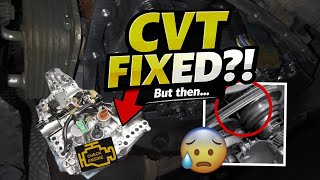
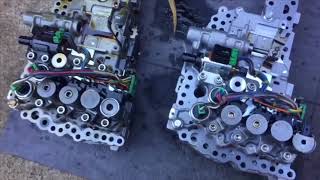
Typical fix: Replace the entire CVT valve body assembly. 🎬 Watch this step-by-step guide on replacing the CVT valve body. The solenoids are integrated and are not typically serviced separately. The new valve body must be programmed to the vehicle.
Est. part cost: $400-$900 - Low, Dirty, or Incorrect CVT Fluid 🟡 Medium Probability CVTs are extremely sensitive to fluid condition and type. Old, degraded fluid loses its hydraulic properties and can't protect against wear, leading to debris that causes sticking components.
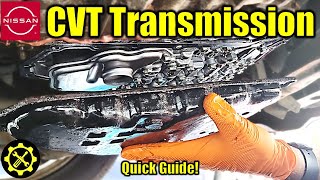
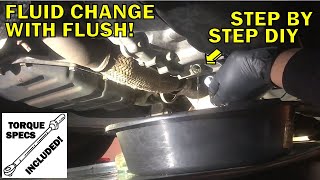
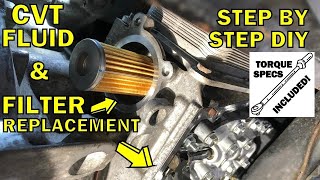
How to confirm: Check the CVT fluid level and condition via the dipstick tube (may require a special tool). The fluid should be a translucent green (for NS-3) and not dark, burnt, or full of particles. This is the first and most important check. 🎬 See how to properly change your CVT fluid and filters.
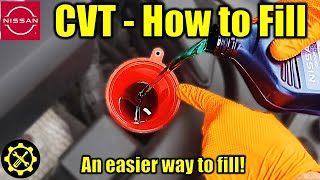
Typical fix: Perform a drain and fill with the correct Nissan NS-3 CVT fluid. A full fluid flush may be necessary if the fluid is heavily contaminated. Some owners report resolving shifting issues with just a fluid change.
Est. part cost: $80-$200 - Damaged Wiring or Connectors ⚪ Low Probability While less common, the wiring harness leading to the transmission can become damaged from heat or road debris, causing a short circuit that keeps a solenoid energized.
How to confirm: Visually inspect the wiring harness going to the transmission's main connector. A mechanic can test for continuity and shorts between the TCM and the transmission connector pins for solenoid 'C'.
Typical fix: Repair the damaged section of the wiring harness or replace the affected connector.
Est. part cost: $20-$150
Rare But Worth Checking
- Failing Transmission Control Module (TCM): A failure in the TCM's internal driver circuit could theoretically keep the solenoid energized. This is very rare and should only be considered after all other possibilities, especially the valve body, have been eliminated.
- Major Internal CVT Mechanical Failure: If the CVT's belt or pulleys are failing, they can generate excessive metal debris that quickly overwhelms and clogs the valve body. In this case, the P0762 code is a symptom of a much larger problem requiring a full transmission replacement.
Diagnosis Steps
- Check for other stored DTCs to see if other solenoid or sensor codes are present.
- Inspect the level and condition of the CVT fluid. Note any burnt smell or visible metal particles. This is the most critical first step.
- If the fluid is low or dirty, perform a drain and fill using only Nissan NS-3 CVT fluid or a compatible equivalent. Clear the codes and test drive to see if the problem returns.
- Inspect the transmission wiring harness and main connector for any signs of damage, corrosion, or loose connections.
- Using an advanced scan tool (like iCarsoft CR Max or Nissan CONSULT), monitor the live data for Solenoid 'C' to see if the commanded state matches the actual state.
- Perform an 'Active Test' with the scan tool to command the solenoid on and off. If it doesn't respond, the issue is likely the solenoid/valve body or its circuit.
- If the fluid and wiring are good but the code persists, the next logical step is to replace the CVT valve body assembly.
- During valve body replacement, inspect the transmission pan magnets for excessive metal shavings, which could indicate a more severe internal failure requiring a full CVT replacement.
- After replacing the valve body, the new unit's calibration data must be written to the TCM 🎬 Watch: How to perform a TCM relearn after your repair. using a compatible diagnostic tool.
Parts You'll Likely Need
- CVT Control Valve Body Assembly
(OEM #31705-29X0C (V6 models), 31705-3VX0A (4-cyl models). Note: The part number 31705-29X8C is for 2019+ models and is not correct for this generation.)— This is the most frequent failure point for solenoid-related codes on the Altima's CVT. It contains all the solenoids and is typically replaced as a complete unit to resolve the issue.
Trusted brands: Nissan (OEM), Hitachi, Rostra, JATCO
OEM price range: $700-$950
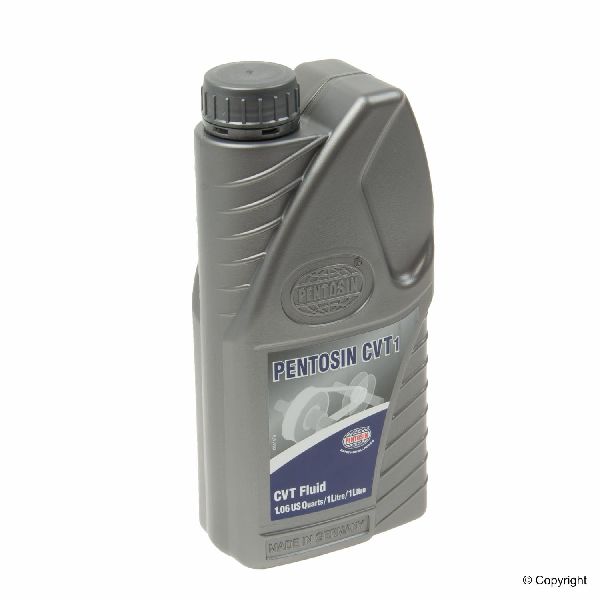
Aftermarket price range: $400-$650 - Nissan NS-3 CVT Fluid — This is the required fluid for this transmission. Using any other type of fluid can cause damage or shifting problems. A fluid change is required when replacing the valve body.
Trusted brands: Nissan (OEM), Idemitsu, ENEOS
OEM price range: $20-$25 per quart
Aftermarket price range: $15-$20 per quart - CVT Oil Pan Gasket
(OEM #31397-1XF0D)— The oil pan must be removed to access the valve body, and the gasket should be replaced to prevent leaks.
Trusted brands: Nissan (OEM), Fel-Pro, Mahle
OEM price range: $25-$40
Aftermarket price range: $15-$30
Related Codes That Often Appear With This One
- P0776 — This code is for 'Pressure Control Solenoid B Performance/Stuck Off'. It's another solenoid-related code that often points to the same root causes: a faulty valve body or contaminated fluid.
- P1715 — This is a Nissan-specific code for 'Input Speed Sensor'. Debris causing valve body issues can also affect the speed sensors, or a faulty valve body can cause erratic operation that the speed sensor flags as a problem.
- P0962 — This code for 'Pressure Control Solenoid A Circuit Range/Performance' is also listed alongside other solenoid codes in Nissan TSBs that recommend a valve body replacement.
Technical Service Bulletins (TSBs) & Recalls
- NTB15-087b: This TSB is for a range of DTCs on 2013-2016 Altimas (and other models) and instructs technicians to replace the valve body instead of the entire CVT assembly if specific codes are present. While P0762 is not explicitly listed, many other solenoid and pressure sensor codes are, establishing the precedent for this repair strategy.
- NTB17-039P: For CVT judder issues with codes P17F0 or P17F1, this TSB outlines a detailed inspection of the CVT chain and potential replacement of the valve body or sub-assembly.
- NTB12-103C / ITB13-055A: Referenced in parts listings, these TSBs contain the mandatory Calibration Data 'WRITE' procedure that must be performed with a CONSULT III+ tool after replacing a valve body.
Platform-Specific Known Issues
- Nissan extended the warranty on many CVT transmissions from this era due to high failure rates. The extension typically went from 60 months/60,000 miles to 84 months/84,000 miles. This extension covered the valve body. Owners should check with a Nissan dealer with their VIN to see if their specific vehicle is still covered.
- A Reddit user with a 2014 Altima experienced limp mode that was ultimately traced to a bad catalytic converter and damaged exhaust pipe after initially suspecting the transmission and replacing O2 and MAF sensors. This highlights the importance of a full diagnosis.
- Another Reddit thread discusses how some owners have had multiple CVT failures at low mileage (50-70k miles) despite regular fluid changes, while others have reached over 200k km with no issues, highlighting the variability in the transmission's lifespan.
Mechanic-Grade Diagnostic Values
- Shift/Pressure Control Solenoid Resistance (2010-2012 models with RE0F10A/JF011E CVT) — expected: 3.0 to 9.0 ohms for pressure control solenoids; 15.0 to 30.0 ohms for lockup select solenoid.. Failure: A reading outside of the specified range indicates a faulty solenoid coil.
- Shift/Pressure Control Solenoid Resistance (2013-2018 models with RE0F10D/JF016E CVT) — expected: Approximately 5.0 to 15.0 ohms (based on data for Solenoid 'B').. Failure: A reading significantly outside this range suggests an internal winding failure in the solenoid.
- TCM Command vs. Solenoid State (Live Data) — expected: The 'Solenoid C Status' PID on a scan tool should match the 'Solenoid C Command' PID. When commanded 'Off', the status should read 'Off'.. Failure: If the command is 'Off' but the status remains 'On' or voltage stays at 12V, it confirms a stuck-on condition.
Scan Tool Commands That Help
- Nissan CONSULT / Professional Bi-Directional Scanner: Active Test / Actuation Test for Shift Solenoid 'C' — This is used to command the solenoid on and off manually. If the solenoid clicks and hydraulic pressure changes, the wiring and solenoid are likely functional, pointing to a TCM or intermittent issue. If it fails to respond, it confirms a fault in the solenoid or its circuit.
- Nissan CONSULT: Write IP Characteristics — This is a mandatory step after replacing the valve body on 2013+ models (RE0F10D). The new valve body comes with a CD-R or QR code containing calibration data that must be programmed into the TCM to ensure correct hydraulic pressures and operation. Failure to perform this step will result in poor performance or new fault codes.
Wiring & Ground Locations
- Main Ground Cable (OEM #24080-JA10A for L32) — Connects from the negative battery terminal, to a bolt on the vehicle's chassis/frame near the battery, and then to a bolt on the top of the transmission case.. A corroded or loose ground connection at the transmission case can cause erratic behavior and fault codes for electronically controlled components like solenoids.
- TCM Ground Pins (L33) — Pins 41 and 42 on the Transmission Control Module (TCM) connector are dedicated ground circuits.. An internal TCM fault or a problem with these ground paths could lead to incorrect solenoid operation. Verifying continuity to ground at these pins is an advanced diagnostic step.
- Engine Ground Strap — An additional ground strap is often found running from the exhaust side of the cylinder head to the firewall.. While not the primary transmission ground, ensuring all engine-to-chassis grounds are clean and tight is crucial for overall electrical system stability, which supports the TCM and its functions.
Real Owner Repair Stories
- Nissan Technical Service Bulletin NTB15-086c (2013-2016 Nissan Altima & Rogue) — MIL ON with DTC P0776 (Pressure Control Solenoid 'B' Stuck Off), vehicle may hesitate and/or lack power.
❌ Tried (didn't work) This TSB provides the official diagnostic path, superseding guesswork.
✅ What actually fixed it The official Nissan procedure is to first remove the valve body and inspect the CVT belt for slippage (indicated by scoring or damage on the pulley surfaces). If the belt is OK, the fix is to replace the valve body assembly. If the belt is damaged, the entire CVT assembly must be replaced. This diagnostic flow is directly applicable to other solenoid codes like P0762. - YouTube video by 'Fix It All' (2014 Nissan Altima 2.5L) — Hesitation going into reverse and drive, delayed engagement, inconsistent shifting, and two solenoid fault codes.
❌ Tried (didn't work) The owner went straight for the most likely cause.
✅ What actually fixed it Replacing the CVT valve body resolved the solenoid codes and shifting hesitation. However, after the repair, the owner discovered the CVT belt was also slipping, indicating a more severe internal issue was present. This highlights the importance of inspecting the pan and belt condition during the valve body replacement, as recommended by Nissan TSBs.
Model Year Variations Within This Range
- 2010-2012 (L32 Generation): These models typically use the JATCO RE0F10A (CVT2) transmission. The valve body in this version uses a stepper motor for ratio control and has a separate ROM chip that contains calibration data. Early versions may have two pressure sensors on the valve body, while later ones have one, making part selection critical.
- 2013-2018 (L33 Generation): These models use the newer JATCO RE0F10D/JF016E (CVT8) transmission. This design eliminates the stepper motor and ROM chip, using linear solenoids for control instead. The solenoids and valve body are not interchangeable with the earlier generation. Post-repair, the new valve body's calibration data must be written to the TCM using a Nissan CONSULT tool.
Diagnostic Flowchart
Other Known Issues on This Vehicle
Issues unrelated to this code that are worth knowing about as an owner of this generation:
- Premature CVT Failure 🔴 High — Very common, often occurring before 100,000 miles. Affects 2013-2016 models most severely. (Ref: Multiple warranty extensions issued (e.g., from 60k to 84k miles), not a recall.)
- Excessive Oil Consumption 🟠 Medium — Common in 2013-2016 models, often attributed to faulty piston rings.
- Premature Rear Suspension Component Wear 🟠 Medium — Lower control arms and bushings can fail prematurely, sometimes as early as 20,000 miles.
- Faulty Camshaft/Crankshaft Position Sensors 🟠 Medium — A widely reported issue across many model years, causing stalling or no-start conditions. (Ref: Recalls were issued for some earlier generations, but the problem persists in this one.)
- Cracking Headlight Housing 🟡 Low — The clear plastic on headlight assemblies can develop small cracks over time. (Ref: NTB17-045C advises on proper cleaning methods to avoid damage.)
- Failing Fuel Pump 🔴 High — A common complaint leading to stalling or no-start conditions, affecting models up to 2015. (Ref: Recalls were issued for many model years within this range.)
Used vs. New Parts: Buying Guide for This Vehicle
When a used part is the smart pick: For this specific repair, a used valve body is almost never a smart choice. These parts fail due to internal wear and contamination, and a used unit from a junkyard is highly likely to have the same issues as the part being replaced.
Donor-vehicle mileage cap: roughly under 60000 miles for the part to have meaningful remaining life.
What to inspect on the donor part:
- If considering used is unavoidable, source from a vehicle with the lowest possible mileage.
- Ask for the donor vehicle's VIN to check its service history for any transmission-related complaints.
- Inspect the fluid color from the donor transmission if possible; it should not be dark, black, or have a burnt smell.
- Avoid parts from vehicles that were in a severe front-end collision, which could have damaged the transmission or its cooler.
OEM-only on this vehicle (don't cheap out):
- CVT Control Valve Body Assembly: While some aftermarket options exist, OEM or a high-quality remanufactured unit from a reputable rebuilder (that corrects original flaws) is strongly recommended for reliability.
- CVT Fluid: Only use Nissan NS-3 fluid or a fully-compatible, high-quality equivalent from a known brand like Idemitsu or ENEOS. Using generic multi-vehicle ATF will cause damage.
Aftermarket brands forum-validated for this vehicle:
- Rostra (For solenoids/valve bodies)
- Hitachi (OEM supplier)
- Idemitsu (Often the OEM supplier for fluid)
Brands owners have reported issues with on this vehicle:
- Unbranded, low-cost valve bodies from online marketplaces like eBay or Amazon are extremely high-risk. Users report receiving faulty or incorrect parts.
Real Owner Stories
Aggregated from forums and TSBs cited above. Mileages and costs reflect what owners reported in those sources.
2014 Nissan Altima
Symptoms: Vehicle was entering limp mode with significantly reduced power.
What fixed it: The issue was ultimately traced to a bad catalytic converter and damaged exhaust pipe after the owner had already replaced the O2 and MAF sensors, initially suspecting a transmission or engine sensor problem.
Source hint: Reddit r/altima
2013 Nissan Altima
Symptoms: Vehicle was stuck in limp mode.
What fixed it: The owner had replaced the MAF sensor, but this did not resolve the limp mode, illustrating a common misdiagnosis path for this symptom.
Source hint: Reddit r/AskMechanics
Nissan Altima — ~60000 miles
Symptoms: CVT failure despite regular fluid changes.
What fixed it: The context notes that multiple CVT failures occurred at low mileage (50-70k miles), highlighting the variability in the transmission's lifespan, but does not specify a final repair for this specific report.
Source hint: Reddit thread cited in vehicle_specific_issues
Related OBD-II Codes
Frequently Asked Questions
My 2014 Altima has a P0762 code. Is the valve body repair covered under a warranty extension?
I want to change the transmission fluid on my 2015 Altima to fix P0762. What type of fluid is required?
If I replace the valve body myself, is any special programming needed?
My mechanic says I need a whole new transmission for code P0762. Is this always the case?
My Altima is in limp mode. Is it definitely a transmission problem?
Are other Nissan models like the Rogue or Sentra known for this same P0762 issue?
Helpful Videos
We Have This Part in Stock

The information in this article is provided for general reference and educational purposes only. Vehicle specifications, procedures, and part compatibility can vary by production date, trim level, and region. Always consult your vehicle's factory service manual and verify part numbers before purchasing or performing repairs. Safety-critical components such as airbags, seat belts, and braking systems should be installed by a qualified professional.
- Nissan Altima:
- 🎬 Helpful Videos
- 🛍️ Shop This Part
- What's Unique About the 2010-2018 Nissan Altima
- Symptoms You May Notice
- Most Likely Causes
- Rare But Worth Checking
- Diagnosis Steps
- Parts You'll Likely Need
- Related Codes That Often Appear With This One
- Technical Service Bulletins (TSBs) & Recalls
- Platform-Specific Known Issues
- Mechanic-Grade Diagnostic Values
- Scan Tool Commands That Help
- Wiring & Ground Locations
- Real Owner Repair Stories
- Model Year Variations Within This Range
- Diagnostic Flowchart
- Other Known Issues on This Vehicle
- Used vs. New Parts: Buying Guide for This Vehicle
- Real Owner Stories
- 2014 Nissan Altima
- 2013 Nissan Altima
- Nissan Altima — ~60000 miles
- Related OBD-II Codes
- Frequently Asked Questions
- 🎟️ Get 5% Off