

P0757 on 2020-2024 Ford TRANSIT: Causes for Shift Solenoid 'B' Stuck On
On a 2020-2024 Ford Transit, code P0757 often indicates a serious internal transmission problem, not just a bad solenoid. A Ford Technical Service Bulletin (TSB 26-2112) points to a damaged one-way clutch (OWC) as a primary cause, which is a major repair requiring transmission removal. Other significant mechanical failures in the 10R80 transmission, like a failed C-D-F drum or valve body, are also common culprits.
- P0757 on a 2020-2024 Transit is a critical code that should be addressed immediately.
- Do not assume the problem is just a bad solenoid. Ford has issued a TSB (26-2112) pointing to a major mechanical failure (damaged one-way clutch) as a likely cause.
- Symptoms include being stuck in a low gear, harsh shifting, and a lit Check Engine Light.
- Repair is not a DIY job. It requires professional diagnosis and likely involves removing and disassembling the transmission.
- The cost of repair can be high, potentially requiring a partial or full transmission rebuild.
What's Unique About the 2020-2024 Ford TRANSIT
The Ford Transit in this year range uses the 10-speed 10R80 automatic transmission, which is known for specific mechanical failure points that can trigger this code. While P0757 points to a solenoid, Ford has issued TSBs indicating the root cause is often more severe. TSB 26-2112 specifically links P0757 to a damaged one-way clutch (OWC), a major mechanical component. Other common 10R80 issues, like failures in the C-D-F drum assembly or valve body cross-leaks, can also lead to the hydraulic faults that set this code. TSB 22-2428, TSB 24-2254, and others acknowledge that a wide range of solenoid and gear ratio codes, including P0757, can stem from a sleeve moving within the C-D-F clutch cylinder, causing internal hydraulic leaks.
Diagnostic Flowchart
Tap your situation to follow the diagnostic path that matches what you're seeing on this vehicle.
Symptoms You May Notice
- No upshift past second or third gear. [TSB 26-2112]
- Harsh, jerky, or delayed shifts, particularly 1-2 and 3-4 upshifts. [TSB 22-2428, TSB 26-2046, 14]
- Loud clunking noise during upshifts or downshifts.
- Delayed engagement when shifting into Drive or Reverse. [TSB 24-2254, 2, 9]
- Illuminated Malfunction Indicator Lamp (Check Engine Light). [TSB 26-2112, TSB 22-2428, TSB 26-2046, TSB 24-2254, TSB 24-2176]
- Vehicle enters 'limp mode,' limiting available gears.
- Transmission slipping, where engine RPMs rise without an increase in vehicle speed.
- Replacing only the 'B' shift solenoid without investigating further. The solenoid is often not the root cause; the problem is frequently a mechanical failure (OWC, C-D-F Drum) causing a hydraulic fault that the solenoid is flagged for.
- Performing a fluid flush or change without dropping the pan to inspect for debris. Clean fluid will not fix a mechanical failure, and missing the evidence of metal in the pan can lead to a repeat failure.
Most Likely Causes
- Damaged One-Way Clutch (OWC) 🔴 High Probability Ford TSB 26-2112 explicitly identifies a damaged OWC as the cause for P0757, especially when accompanied by code P2701 and an inability to shift past second gear. This is a known mechanical weak point.
How to confirm: This requires transmission disassembly and inspection by a professional technician. It cannot be confirmed externally. Debris in the transmission pan is a strong indicator.
Typical fix: The transmission must be removed from the vehicle, disassembled, and the one-way clutch assembly must be replaced. This is effectively a partial or full transmission rebuild.
Est. part cost: $200-$500 for the clutch assembly, but this does not include other necessary rebuild components like seals and gaskets. - Damaged C-D-F Drum Assembly 🔴 High Probability A well-documented design flaw in the 10R80 where a bushing/sleeve inside the C-D-F drum can 'walk' or migrate out of position. This uncovers fluid passages, causing a massive internal pressure leak that can trigger numerous shift-related codes, including P0757. Ford has released updated parts with a machined lip to prevent the sleeve from moving.
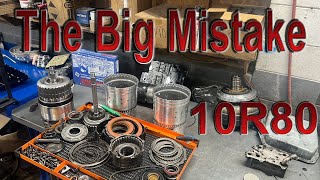
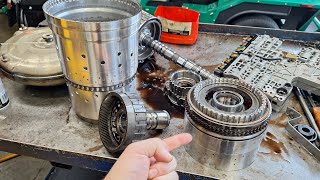
How to confirm: Requires transmission teardown to visually inspect the C-D-F drum 🎬 Watch: Full 10R80 teardown showing the CDF drum bushing failure. for a migrated sleeve. A technician may suspect this based on the combination of DTCs and symptoms.
Typical fix: Replace the C-D-F drum with the updated OEM part (current part number JL3Z-7H351-B). This is a major repair requiring transmission removal and disassembly.
Est. part cost: $250-$400 for the drum assembly. - Faulty Transmission Valve Body 🟡 Medium Probability The 10R80 transmission is known for issues with sticking valves and cross-leaks within the valve body, which can cause erratic hydraulic pressure and trigger solenoid codes. TSB 20-2226 specifically addresses harsh engagements on the 2020 Transit due to sticking valves in the main control.
How to confirm: A technician can perform pressure tests and inspect the valve body for wear and sticking valves after removing the transmission pan. Sometimes a specific break-in procedure can resolve minor sticking.
Typical fix: Replacement of the entire main control valve body assembly. 🎬 See this walkthrough on replacing the 10R80 valve body. Sometimes individual solenoids can be replaced, but often the issue is with the body itself or requires a specialized cleaning and break-in procedure.
Est. part cost: $700-$1500 - Low or Contaminated Transmission Fluid ⚪ Low Probability While a possible cause for any transmission, it's less likely to be the primary cause on this specific platform given the known mechanical issues. However, low or degraded fluid (which must be Motorcraft MERCON ULV) can cause and exacerbate shifting problems and solenoid faults.
How to confirm: Check the transmission fluid level and condition according to the manufacturer's procedure. The fluid should be red and clear, not brown, black, or smelling burnt. Significant metal debris ('glitter') in the fluid points to a severe internal failure like the OWC or C-D-F drum.
Typical fix: Perform a transmission fluid and filter change using the correct Motorcraft ULV fluid. If the fluid contains significant metal debris, it indicates a severe internal failure is the root cause and a fluid change alone will not fix it.
Est. part cost: $150-$250 for fluid and a filter. - Failed Shift Solenoid 'B' ⚪ Low Probability While the code directly names the solenoid, it's often a symptom of a larger hydraulic or mechanical issue rather than the root cause. The solenoid itself can fail, but it should be tested before being replaced.
How to confirm: A technician can test the solenoid's resistance with a multimeter (typically 4-7 Ω) and command it on and off with a high-level scan tool to check its operation.
Typical fix: Replace the individual shift solenoid, which is located inside the transmission on the valve body.
Est. part cost: $50-$150
Rare But Worth Checking
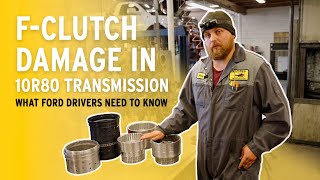
- Damaged 'F' Clutch Pack / Outer Shell: Another known 10R80 issue where the splines in the outer shell (or 'trash can') that hold the F-clutch pack can wear down, causing the clutches to move excessively and create grooves. This leads to erratic shifting and can, in extreme cases, cause the shell to fracture.
- Wiring Harness Issue: Damage to the wiring between the TCM and the transmission can cause a short or open circuit, leading to the code. This is less common than internal mechanical failure but should be checked, especially for corrosion or chafing.
- Faulty Transmission Control Module (TCM): A failure of the control module itself is rare. The TCM should only be considered after all mechanical and electrical possibilities have been thoroughly exhausted.
Diagnosis Steps
- Check and record all stored DTCs. Note if P0757 appears with P2701 or other solenoid/gear ratio codes, as this points to a mechanical vs. electrical issue.
- Check the transmission fluid level and condition. The fluid must be the correct Motorcraft MERCON ULV type.
- Drop the transmission pan and inspect for excessive metal shavings or clutch material. 'Glitter' in the pan is a tell-tale sign of major internal damage.
- Review Ford Technical Service Bulletins (TSBs) for the specific vehicle and symptoms. TSB 26-2112, TSB 22-2428, and TSB 24-2254 are highly relevant.
- With a professional scan tool, monitor the commanded state and actual state of Shift Solenoid 'B' to see if there is a discrepancy.
- Test the resistance of the 'B' solenoid (typically 4-7 Ω) and check the internal wiring harness for continuity and shorts.
- If solenoids and wiring test good, the focus shifts to internal mechanical components like the valve body, the C-D-F drum, and the one-way clutch, which requires professional teardown.
Parts You'll Likely Need
- C-D-F Clutch Cylinder (Drum)
(OEM #JL3Z-7H351-B)— This is the updated part from Ford designed to fix the common issue of the internal sleeve migrating, which causes a major hydraulic leak and triggers various shift codes. - Main Control Valve Body Assembly — Often replaced as a complete unit to resolve issues with sticking valves or internal cross-leaks that cause erratic shifting and solenoid codes.
- One-Way Clutch (OWC) Assembly — Specifically cited in TSB 26-2112 as a cause for P0757 when accompanied by P2701. Requires a full transmission teardown to replace.
- Transmission Fluid (Motorcraft MERCON ULV) and Filter Kit — Necessary for any internal transmission repair. Using the correct ULV fluid is critical for 10R80 operation.
Related Codes That Often Appear With This One
- P2701 — TSB 26-2112 explicitly pairs P0757 with P2701 (Transmission Friction Element 'B' Apply Time Range/Performance), pointing directly to a damaged one-way clutch.
- P0751, P0756, P0761, etc. — Multiple other shift solenoid codes appearing with P0757 strongly suggest a widespread hydraulic issue, such as a failing valve body, C-D-F drum, or low fluid, rather than a single bad solenoid. [TSB 22-2428, TSB 26-2046, 5]
Technical Service Bulletins (TSBs) & Recalls
- TSB 26-2112
- TSB 22-2428
- TSB 26-2046
- TSB 24-2254
- TSB 20-2226
Platform-Specific Known Issues
- TSB 26-2112: States that a no-upshift condition past second gear with DTCs P0757 and P2701 may be due to a damaged one-way clutch (OWC).
- TSB 22-2428: A broad TSB covering many 10R80-equipped vehicles, including the Transit, for harsh/delayed shifts and numerous DTCs (including P0757). It identifies potential causes as PCM/TCM software, sticking valves in the main control body, and/or axial movement of the C-D-F clutch cylinder sleeve.
- TSB 24-2254: Specifically mentions the 2020-2023 Transit and links a long list of DTCs, including P0757, to axial movement of the C-D-F clutch cylinder sleeve causing hydraulic leaks.
- Owner Experience (F-150 platform mate): An owner on an F-150 forum with 145k miles experienced 'crazy shift problems' including the truck trying to shift into first gear at high speed. After failed attempts with a transmission relearn and valve body replacement, the issue was traced to the C-D-F drum sleeve failure described in TSB 22-2428.
Mechanic-Grade Diagnostic Values
- Shift Solenoid (A-F) Coil Resistance — expected: 4-7 Ω. Failure: A reading outside this range indicates a failed solenoid coil.
- Torque Converter Clutch (TCC) Solenoid Current — expected: Proportional operation: Low current (~50 mA) results in low pressure; high current (~850 mA) results in high pressure.. Failure: Inability to command pressure changes with varying current.
- Line Pressure Control (LPC) Solenoid Current — expected: Inversely proportional operation: Low current (~50 mA) results in full pressure; high current (~850 mA) results in low pressure.. Failure: Pressure does not respond correctly to current changes.
Hidden / Shadow Codes Worth Checking
- P0757 (Blinking Gear Indicator): When the PCM detects the P0757 fault, it may cause the shift position indicator on the dashboard to blink, while the main Malfunction Indicator Lamp (Check Engine Light) remains off. This serves as an early warning before the MIL is triggered. (see via Visual inspection of the instrument cluster during the fault condition.)
- P163E: This code, "Transmission Control Module (TCM) Programming Error," can appear after replacing the main control valve body. It indicates a software incompatibility between the new valve body's solenoid strategy file and the existing TCM software, often because the 12-digit solenoid body ID was entered instead of just the 13-digit strategy number. (see via Standard OBD-II scan tool after valve body replacement and programming attempt.)
Scan Tool Commands That Help
- Ford IDS, FORScan, or equivalent J2534 tool: Clear Transmission Adaptive Tables — This must be performed after any major transmission repair, especially valve body or full transmission replacement. It erases the TCM's learned values for clutch apply times, forcing it to start a new learning process with the new components.
- Ford IDS, FORScan, or equivalent J2534 tool: Transmission Characterization / Solenoid Body Strategy Download — This is mandatory when the valve body is replaced. The technician must enter the 13-digit solenoid body strategy number from the tag on the new valve body. The scan tool then downloads the correct calibration file from Ford's servers. Failure to do this will result in harsh shifting and potential DTCs like P163E.
- N/A - a specific driving procedure: Adaptive Learning Drive Cycle — After clearing adaptive tables or programming a new solenoid strategy, a specific drive cycle is required for the TCM to relearn shift characteristics. The procedure involves a series of gentle accelerations through the gears (1-10) and controlled stops to allow the TCM to measure and adapt to the new hardware.
Real Owner Repair Stories
- Reddit user on r/f150 (Ford F-150 with 10R80 (year not specified, but within warranty)) — Initially harsh upshifts/downshifts. Later developed a 2-3 second delay when shifting from Park to Drive/Reverse.
❌ Tried (didn't work) A PCM reflash and replacement of some parts per a TSB did not provide a long-term solution.
✅ What actually fixed it The C-D-F drum was replaced, which resolved the engagement delay and shifting issues. - Reddit user on r/f150 (2018 Ford F-150 EcoBoost with 145,000 miles) — Extremely erratic shifting, described as "CRAZY shift problems," including floating between gears and then slamming into another.
❌ Tried (didn't work) Transmission relearn procedure., Valve body replacement.
✅ What actually fixed it The user found TSB 22-2428, which helped diagnose the root cause as the failed C-D-F drum due to the known sleeve migration issue.
"I Checked Everything" — The Actual Cause
- A common scenario for P0757 is that the shift solenoid 'B' itself will pass all electrical tests (resistance check, scan tool command). Technicians may replace the solenoid assuming it's an intermittent electrical fault, only for the code to return. The actual cause is often a major internal hydraulic leak, most commonly from the C-D-F drum's migrated sleeve. The TCM cannot distinguish between a solenoid that is mechanically stuck open and a massive fluid pressure loss elsewhere in the circuit that prevents the expected pressure drop when the solenoid is commanded off. The pressure sensor reading remains high due to the cross-leak, leading the TCM to incorrectly flag the solenoid as 'Stuck On'.
OEM Part Supersession History
HL3Z-7H351-A, JL3Z-7H351-A→JL3Z-7H351-B— The original C-D-F drum designs allowed an internal bushing/sleeve to migrate, uncovering oil passages and causing a severe loss of hydraulic pressure. The updated JL3Z-7H351-B part has a machined lip that physically prevents the sleeve from moving, providing a permanent fix.
Model Year Variations Within This Range
- 2020 - Late 2022: Vehicles produced before approximately December 23, 2022, were likely built with the original, failure-prone C-D-F drum design. Vehicles produced after this date are more likely to have the updated drum (part JL3Z-7H351-B) from the factory, reducing the probability of this specific failure.
Helpful Videos
Used OEM Parts in Stock

New Aftermarket Parts Available


The information in this article is provided for general reference and educational purposes only. Vehicle specifications, procedures, and part compatibility can vary by production date, trim level, and region. Always consult your vehicle's factory service manual and verify part numbers before purchasing or performing repairs. Safety-critical components such as airbags, seat belts, and braking systems should be installed by a qualified professional.
- Ford TRANSIT:
- 🎬 Helpful Videos
- 🛍️ Shop This Part
- What's Unique About the 2020-2024 Ford TRANSIT
- Diagnostic Flowchart
- Symptoms You May Notice
- Most Likely Causes
- Rare But Worth Checking
- Diagnosis Steps
- Parts You'll Likely Need
- Related Codes That Often Appear With This One
- Technical Service Bulletins (TSBs) & Recalls
- Platform-Specific Known Issues
- Mechanic-Grade Diagnostic Values
- Hidden / Shadow Codes Worth Checking
- Scan Tool Commands That Help
- Real Owner Repair Stories
- "I Checked Everything" — The Actual Cause
- OEM Part Supersession History
- Model Year Variations Within This Range
- 🎟️ Get 5% Off