

P0751 on 2006-2015 Mazda 5: Shift Solenoid 'A' Fault and Likely TCM Failure Guide
On a 2006-2015 Mazda 5, code P0751 almost always points to a failed Transmission Control Module (TCM), not the solenoid itself. The TCM overheats due to its location on the transmission. The fix is a rebuilt or new TCM, costing $400-$800 for the part, and professional installation is strongly recommended. Relocating the new module is a common practice to prevent repeat failure.
- P0751 on a 2006-2015 Mazda 5 is most likely caused by a failed Transmission Control Module (TCM), not the shift solenoid itself.
- The failure is due to the TCM's location on the hot transmission; the fix involves replacing the TCM and ideally relocating it to a cooler spot.
- Do not drive the vehicle. It can enter a 'limp mode' or lose power completely, which is unsafe.
- Look for accompanying codes like U0100 or U0101, which are strong indicators of a TCM failure.
- This is not a DIY-friendly repair. Professional diagnosis and service are highly recommended to avoid misdiagnosis and unnecessary expense.
What's Unique About the 2006-2015 Mazda 5
For the 2006-2015 Mazda 5 and its sibling the Mazda 3 (which share the FN4A-EL/4F27E transmission), this code is rarely about the solenoid itself. The root cause is a well-documented design flaw where the Transmission Control Module (TCM) is mounted directly on top of the hot automatic transmission. Over years of heat cycles and vibration, the internal solder connections within the TCM crack, leading to erratic behavior, faulty commands, and communication loss that often triggers solenoid performance codes like P0751.
Generation note: This vehicle range covers the first generation (2006-2010) and second generation (2012-2015) Mazda 5. The primary cause of this code, the heat-related failure of the Transmission Control Module (TCM), is a known issue that affects models across both generations using the 4-speed (FN4A-EL) and 5-speed (FS5A-EL/FNR5) automatic transmissions.
Symptoms You May Notice
- Check Engine Light and AT (Automatic Transmission) warning light are illuminated.
- Harsh, abrupt, or clunking shifts between gears, sometimes feeling like a hard kick.
- Transmission gets stuck in 3rd gear (limp mode).
- Vehicle hesitates, has no power, or feels like it's in neutral when it should be in gear. [ODI #11596026]
- Sudden, hard downshifts while driving at speed.
- Inability to shift into certain gears.
- Transmission may overheat.
- Vehicle may enter limp mode, severely limiting speed.
- Replacing only the Shift Solenoid 'A' without diagnosing the Transmission Control Module (TCM). On this specific vehicle, the TCM is the far more likely point of failure, and replacing the solenoid will not fix the problem.
- Replacing the vehicle speed sensor. An owner on a forum reported replacing this part, but the U0101 code and symptoms returned, ultimately pointing to the TCM as the root cause.
Most Likely Causes
- Failing Transmission Control Module (TCM) 🔴 High Probability The TCM is mounted directly to the transmission, where constant exposure to high heat and vibration causes internal solder joints to fail over time. This is a widely acknowledged design flaw for this platform.
How to confirm: Scan for other codes, especially U0100 or U0101 ('Lost Communication with TCM'). Their presence is a very strong confirmation that the TCM itself has failed. Even without U-codes, if symptoms appear or worsen after the car has warmed up, the TCM is the prime suspect. A professional diagnosis can confirm the fault lies with the module.
Typical fix: Replace the TCM with a new or professionally rebuilt unit. It is highly recommended to relocate the new module away from the transmission housing (e.g., to the firewall or brake lines) to prevent a repeat failure.
Est. part cost: $400-$800 - Low or Dirty Transmission Fluid 🟡 Medium Probability
How to confirm: Check the transmission fluid level and condition. The fluid should be at the correct level and be reddish/pink (or the OEM specified color) and not smell burnt or contain debris. The dipstick is marked "M V".
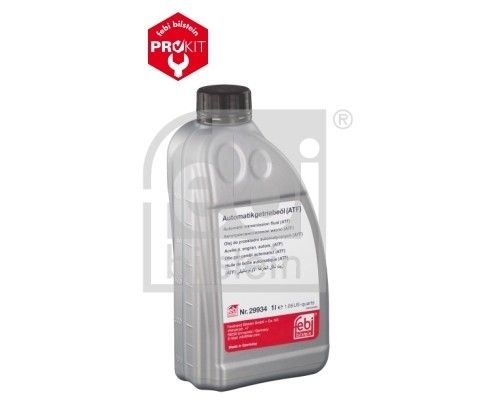
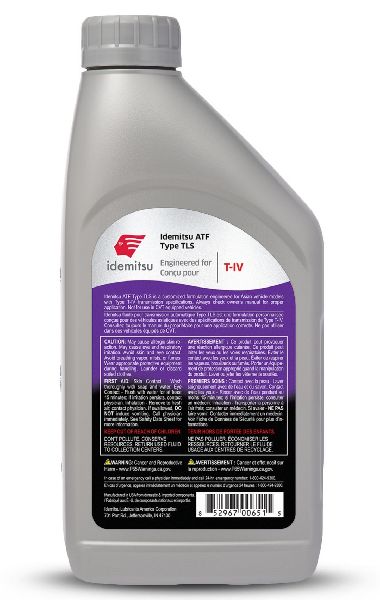
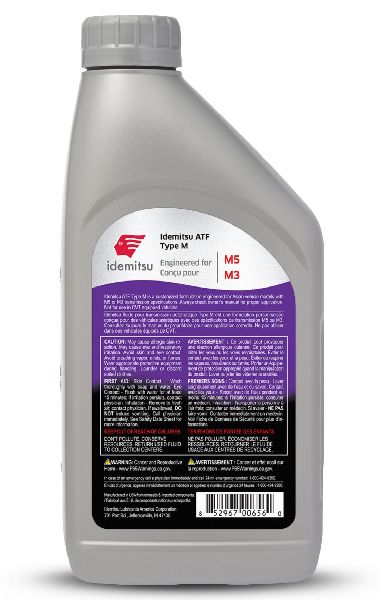
Typical fix: Perform a transmission fluid drain-and-fill or flush using the correct specification fluid (Mazda M-V, Part No. 0000-77-112E-01, or a compatible equivalent like Idemitsu Type-M). Replace the transmission filter at the same time.
Est. part cost: $50-$150 - Faulty Shift Solenoid 'A' ⚪ Low Probability
How to confirm: After confirming the TCM and wiring are good, a technician can test the solenoid's resistance with a multimeter or command it with a bi-directional scan tool. This requires removing the transmission oil pan to access the valve body where the solenoids are located.
Typical fix: Replace the shift solenoid 'A' inside the transmission valve body. This is often misdiagnosed as the primary cause when the TCM is the real culprit. In some cases, owners have replaced the entire valve body assembly to resolve persistent solenoid codes.
Est. part cost: $70-$150 - Wiring or Connector Issues ⚪ Low Probability
How to confirm: Visually inspect the wiring harness between the TCM and the transmission main connector for any signs of damage, corrosion, or loose pins. A multimeter can be used to check for continuity from the TCM connector to the solenoid connector.
Typical fix: Repair the damaged section of wiring or clean/replace the corroded connector.
Est. part cost: $10-$100
Diagnosis Steps
- Check the transmission fluid level and condition. If it is low, dark, or smells burnt, address this first. The correct fluid is Mazda M-V or a compatible equivalent.
- Use an OBD-II scanner to check for any other stored codes. Pay close attention to U0100/U0101 or other P07xx codes, as these strongly point to a failed TCM.
- Note when the symptoms occur. If shifting problems and warning lights appear primarily after the vehicle has been running for 15-20 minutes and warmed up, this strongly points to a heat-induced TCM failure.
- Inspect the wiring harness and connectors between the TCM (located under the battery and battery tray) and the transmission for any visible damage or corrosion.
- If the TCM is suspected, consult a professional for advanced diagnostics. They can test the module's outputs and confirm if it needs replacement. Alternatively, given the high failure rate, many owners proceed with replacing the TCM as the most probable fix.
- Do not replace Shift Solenoid 'A' unless the TCM and wiring have been definitively ruled out as the cause. This is rarely the root problem on this platform.
Parts You'll Likely Need
- Transmission Control Module (TCM)
(OEM #L39C189E1E)— This is the most common point of failure for this code on the Mazda 5 due to a design flaw related to its mounting location and resulting heat damage. The part number L39C189E1E is an updated version that supersedes earlier versions like L39C189E1B, L39C189E1C, and L39C189E1D.
Trusted brands: Mazda (OEM), UpFix (Rebuild Service), Circuit Board Medics (Rebuild Service), Module Repair Pro (Rebuild Service)
OEM price range: $600-$800
Aftermarket price range: $245-$500 (for a rebuild service) - Automatic Transmission Fluid (Mazda M-V or compatible)
(OEM #0000-77-112E-01)— Required when servicing any internal transmission components or if the existing fluid is found to be low or degraded. Mazda TSB 0500116 specifies that Mazda M-V fluid (Type-M) is required, not Mercon V.
Trusted brands: Mazda, Idemitsu (Type-M), Valvoline (MaxLife Multi-Vehicle)
OEM price range: $15-$25 (per quart)
Aftermarket price range: $8-$15 (per quart)
Related Codes That Often Appear With This One
- U0100 / U0101 — These codes indicate 'Lost Communication with TCM'. Their presence is a very strong confirmation that the TCM itself has failed due to internal heat damage.
- P0753, P0758, P0763 — These are codes for other shift solenoids (A, B, C electrical malfunction). When multiple solenoid codes appear together, it is more likely that the component controlling them (the TCM) is at fault rather than all solenoids failing simultaneously.
- P0780 — This code indicates a 'Shift Malfunction'. It appeared alongside P0751 in an owner complaint, indicating a general failure of the transmission to shift correctly. [ODI #11596026]
Technical Service Bulletins (TSBs) & Recalls
- Bulletin #05-003-14-2898A / #05-003-14-2898: While for a Mazda3, this TSB lists P0751 among a large group of codes related to 'AUTOMATIC TRANSAXLE INTERNAL MALFUNCTION', supporting the conclusion that this code is part of a known cluster of transmission issues.
Platform-Specific Known Issues
- The Transmission Control Module (TCM) has an extremely high failure rate due to its mounting location directly on the transmission, which exposes it to excessive heat and vibration, causing internal solder joints to crack.
- Repair services and forum users strongly recommend relocating the replacement TCM to a cooler location, such as zip-tying it to the firewall or brake lines in the engine bay, to prevent the same failure from happening again.
- A Reddit user with a 2009 Mazda 5 shared their experience of first replacing a remanufactured TCM to fix a P0753 code, which worked temporarily. When multiple solenoid codes returned (P0753, P0757, P0763), they ultimately had to replace the entire transmission valve body to resolve the issue, highlighting that while the TCM is the most common culprit, deeper internal issues can sometimes be the cause.
Mechanic-Grade Diagnostic Values
- Shift Solenoid 'A'/'B' Resistance — expected: 10.9 to 26.2 Ohms. Failure: A reading outside this range, or an open circuit (infinite resistance), indicates a failed solenoid coil.
- Voltage at Shift Solenoid 'A' Connector — expected: Approximately 12.6V (Battery Voltage) with Key On, Engine Off.. Failure: Voltage significantly lower than battery voltage (a drop of more than 0.5V) points to high resistance in the wiring or a problem with the TCM's power supply.
Scan Tool Commands That Help
- Professional Bi-Directional Scan Tool: Solenoid Active Test — With the engine off, command the solenoid on and off. A technician should be able to hear a faint 'click' from the transmission oil pan area, confirming the solenoid is mechanically actuating. Lack of a click suggests a dead solenoid or a wiring issue.
- Mazda M-MDS or FORScan: Initial Learning Procedure / TCM Relearn — This procedure is mandatory after replacing the transmission valve body or, in some cases, the TCM. It allows the control module to learn the hydraulic and mechanical characteristics of the new components to ensure proper shift quality.
Wiring & Ground Locations
- Main Transmission Ground — A primary ground cable runs from the negative battery terminal to a bracket bolted on top of the transmission housing.. A loose or corroded main ground can cause a host of erratic electronic issues, including faulty sensor readings and incorrect commands from the TCM, potentially triggering false solenoid codes. Ensuring this ground is clean and tight is a critical first step in any electrical diagnosis.
- TCM/Solenoid Connector — The main harness connector is located on the transmission case. Detailed pinouts and wire color codes for testing specific circuits, like the one for Shift Solenoid 'A', can be found in official service manuals or specialized wiring diagram resources.. To definitively rule out a wiring issue, a technician must test for continuity and correct voltage at the specific pin for Shift Solenoid 'A' at both the TCM connector and the transmission connector.
OEM Part Supersession History
L39C189E1B, L39C189E1C, L39C189E1D→L39C189E1E— Revisions by the manufacturer to improve reliability and address the heat-soak failure mode.
Heads up: The L39C series TCM is for the 2008-2010 Mazda 5 with the 2.3L engine and is often described as 'Plug N Play' with no reprogramming needed. However, some vendors note these are 'Dual Chip' modules and are not compatible with 'Single Chip' systems, a detail a professional installer should verify.
Model Year Variations Within This Range
- 2008-2010 (2.3L Engine): These models typically use the L39C-18-9E1x series Transmission Control Module.
- 2012-2015 (2.5L Engine): These later models use a different TCM, with part numbers such as L5E4189E1A, indicating a different control system that is not interchangeable with the earlier 2.3L models.
Diagnostic Flowchart
Other Known Issues on This Vehicle
Issues unrelated to this code that are worth knowing about as an owner of this generation:
- Defective Passenger-Side Engine Mount 🟠 Medium — Very common. Causes excessive vibration and noise at idle or during acceleration. Often fails around 60,000-100,000 miles. (Ref: TSB 01-021/12, TSB 03-001/06)
- Broken Rear Upper Shock Mounts 🟠 Medium — Common failure, especially in regions with corrosion. The original aluminum mount corrodes and breaks, causing a loud clunking or rattling from the rear suspension.
- Worn Rear Stabilizer Bar Links 🟡 Low — Frequently reported cause of rattling noises from the rear suspension over bumps.
- Sliding Door Cable Breakage 🟠 Medium — Extremely common issue where the steel cables for the sliding doors fray and break, making the door inoperable. Affects both manual and power doors.
- Rust and Corrosion (2006-2010 models) 🔴 High — First-generation models are prone to significant rust, particularly in the rear wheel arches, rocker panels, and subframes, especially in salt-belt states.
- Stuck Open Thermostat 🟡 Low — A common cause for the Check Engine Light with codes P0126 or P0128, indicating the engine is not reaching operating temperature.
Used vs. New Parts: Buying Guide for This Vehicle
When a used part is the smart pick: For the primary failure part, the Transmission Control Module (TCM), a used part from a salvage yard is NOT recommended. The failure is due to a design flaw (heat exposure), meaning a used part has the same inherent defect and an unknown amount of heat-cycle fatigue. A professionally remanufactured/rebuilt TCM with a warranty is the smarter, more durable choice over a used one.
What to inspect on the donor part:
- For a remanufactured TCM, verify it comes with a warranty (1 year or more is common).
- Ensure the rebuilder is a reputable company (e.g., UpFix, Circuit Board Medics) that specializes in module repair.
- Confirm the part number and compatibility with your vehicle's year and engine (e.g., L39C for 2.3L, L5E4 for 2.5L).
OEM-only on this vehicle (don't cheap out):
- While the TCM can be sourced from rebuilders, the Automatic Transmission Fluid (ATF) should strictly be Mazda M-V (Type M) or a fully compatible, high-quality equivalent. Using the wrong fluid can cause shifting problems and damage.
- Internal transmission hard parts, if needed, are best sourced from OEM.
Aftermarket brands forum-validated for this vehicle:
- UpFix (TCM Rebuild Service)
- Circuit Board Medics (TCM Rebuild Service)
- Module Repair Pro (TCM Rebuild Service)
- Idemitsu (Type-M ATF is a known compatible fluid)
Brands owners have reported issues with on this vehicle:
- Avoid unbranded, no-warranty TCMs from online marketplaces. The risk of receiving a non-functional or soon-to-fail part is extremely high.
Real Owner Stories
Aggregated from forums and TSBs cited above. Mileages and costs reflect what owners reported in those sources.
2008 Mazda 5
Symptoms: Vehicle entered limp mode and the owner found code U0101 stored.
What fixed it: Replacing the TCM (upgrading from part L39C189E1B to L39C189E1E).
Source hint: Mazdas247.com thread titled 'Mazda 5 , PCM or TCM failing'
2009 Mazda 5
Symptoms: Initially had a P0753 code. After replacing the TCM with a remanufactured unit, the car worked for months until codes P0753, P0757, and P0763 appeared.
What fixed it: Replacing the entire transmission valve body assembly.
Source hint: Reddit r/mazda3 thread titled 'Mazda 5 Transmission Story (Mazda 3 Drivetrain, please halp)'
Mazda 5
Symptoms: After relocating the TCM to the firewall, the owner experienced a persistent hard shift into second gear and an intermittently flashing AT light without hard codes.
What fixed it: The TCM relocation solved most issues, but underlying mechanical/hydraulic issues remained.
Source hint: Mazdas247.com thread titled 'Mazda 5 , PCM or TCM failing'
Mazda 5
Symptoms: Vehicle hesitates, has no power, or feels like it's in neutral when it should be in gear.
What fixed it: Diagnosis of the Transmission Control Module (TCM) which is prone to internal solder joint failure from heat.
Source hint: ODI #11596026
Related OBD-II Codes
Frequently Asked Questions
Does TSB #05-003-14-2898 apply to my Mazda 5 if I have code P0751?
What specific transmission fluid should I use for my Mazda 5 to avoid P0751 issues?
My Mazda 5 is stuck in 3rd gear and the AT light is on. Is this a common issue?
Where is the TCM located on the 2006-2015 Mazda 5?
Should I replace Shift Solenoid 'A' first to fix P0751?
Is there a way to prevent the TCM from failing again after I replace it?
We Have This Part in Stock


The information in this article is provided for general reference and educational purposes only. Vehicle specifications, procedures, and part compatibility can vary by production date, trim level, and region. Always consult your vehicle's factory service manual and verify part numbers before purchasing or performing repairs. Safety-critical components such as airbags, seat belts, and braking systems should be installed by a qualified professional.
- Mazda 5:
- 🛍️ Shop This Part
- What's Unique About the 2006-2015 Mazda 5
- Symptoms You May Notice
- Most Likely Causes
- Diagnosis Steps
- Parts You'll Likely Need
- Related Codes That Often Appear With This One
- Technical Service Bulletins (TSBs) & Recalls
- Platform-Specific Known Issues
- Mechanic-Grade Diagnostic Values
- Scan Tool Commands That Help
- Wiring & Ground Locations
- OEM Part Supersession History
- Model Year Variations Within This Range
- Diagnostic Flowchart
- Other Known Issues on This Vehicle
- Used vs. New Parts: Buying Guide for This Vehicle
- Real Owner Stories
- 2008 Mazda 5
- 2009 Mazda 5
- Mazda 5
- Mazda 5
- Related OBD-II Codes
- Frequently Asked Questions
- 🎟️ Get 5% Off