

P0751 on 2015-2019 GMC Canyon: Shift Solenoid 'A' Performance/Stuck Off Explained
On a 2015-2019 GMC Canyon, code P0751 almost always points to a sticking 'Clutch Select Solenoid Valve 2' inside the transmission. This is a known issue confirmed by GM. The fix requires dropping the transmission pan to replace the solenoid or, more commonly, the entire lower valve body if the valve's bore is scratched. The vehicle may feel like it's starting in 4th gear.
- P0751 on a 2015-2019 GMC Canyon is very likely caused by a specific, known issue with the 'Clutch Select Solenoid Valve 2' sticking inside the transmission.
- Symptoms include poor acceleration from a stop (a '4th gear start'), slipping, and potentially harsh shifts.
- GM has issued TSB PI1344C which is the primary source for diagnosis and repair.
- The official GM fix is to replace the entire lower valve body if the valve is found to have any scratches, not just the solenoid itself.
- Checking transmission fluid level and condition is a valid first step, but the root cause is typically the mechanical failure of the valve/valve body.
What's Unique About the 2015-2019 Gmc CANYON
The 2015-2019 GMC Canyon, equipped with the 6L50 automatic transmission, has a well-documented history with this specific code. General Motors has issued Technical Service Bulletins (TSBs), namely PI1344B and PI1344C, that directly address this issue. The bulletins state that the 'Clutch Select Solenoid Valve 2' is prone to sticking in its bore, which causes the P0751 code and symptoms like poor acceleration from a stop. This makes the diagnosis more direct than on other vehicles, as it points to a known mechanical fault with a specific part, often requiring the replacement of the entire lower valve body if any scratches are found on the valve.
Diagnostic Flowchart
Tap your situation to follow the diagnostic path that matches what you're seeing on this vehicle.
Symptoms You May Notice
- Reduced acceleration at low speed, especially from a launch.
- Vehicle may feel like it's starting in a higher gear (e.g., 4th gear).
- Transmission slipping.
- Harsh or abrupt shifting, sometimes described as a "clunk".
- Transmission may get stuck in one gear ('limp mode').
- Check Engine Light is on.
- Cruise control may be disabled.
- Replacing the entire transmission when only a single solenoid or the valve body is at fault.
- Replacing only the individual solenoid when the valve body bore is scratched, leading to a repeat failure. The GM TSB specifically advises replacing the lower valve body if scratches are present.
- Replacing the wrong solenoid. The issue is specifically with 'Clutch Select Solenoid Valve 2', not a generic 'Shift Solenoid A'.
Most Likely Causes
- Sticking or Failed Clutch Select Solenoid Valve 2 (Shift Solenoid 'A') 🔴 High Probability This is a known issue documented by GM in Technical Service Bulletins PI1344B and PI1344C. The valve can stick in its bore or get scratched, impeding its movement. This is the most common cause by a wide margin.
How to confirm: A technician can use a scan tool to perform a solenoid performance test on 'PC Solenoid 2'. Physical inspection is definitive: after removing the valve body, the valve is checked for free movement and inspected for any scratches. The TSB notes the valve may become unstuck when the valve body is removed, so inspecting for scratches is critical.
Typical fix: Replace the faulty solenoid. Per TSB PI1344C, if the valve shows any signs of scratching, the entire lower valve body must be replaced. This is the most common and recommended repair.
Est. part cost: $40-$80 for a single solenoid, $250-$700 for a valve body assembly. - Low or Dirty Transmission Fluid 🟡 Medium Probability Over time, fluid degrades and gets contaminated with clutch material and metallic debris. This debris can clog the fine passages in the valve body and cause solenoids to stick.
How to confirm: Check the transmission fluid level and condition. On these trucks, this involves raising the vehicle, getting the transmission to a specific temperature range (86-122°F), and removing a check plug. The fluid should be red (DEXRON VI) and not smell burnt.
Typical fix: Perform a transmission fluid and filter change using the correct fluid (DEXRON VI). This is often done as part of the solenoid/valve body replacement.
Est. part cost: $100-$200 for fluid and a filter. - Faulty Wiring or Connector ⚪ Low Probability
How to confirm: Visually inspect the transmission wiring harness and connectors for damage, corrosion, or loose pins. A multimeter can be used to check for continuity and shorts in the solenoid circuit from the TCM connector to the transmission connector.
Typical fix: Repair or replace the damaged section of the wiring harness or the connector.
Est. part cost: $20-$300 depending on the extent of the damage.
Rare But Worth Checking
- Faulty Transmission Control Module (TCM): This is uncommon, but if all solenoids and wiring test correctly, the TCM itself could be the source of the problem. A faulty TCM driver circuit can fail to command the solenoid properly.
- Internal Hydraulic Blockage: Debris from normal wear or another failing component (like the torque converter) can clog passages within the valve body, preventing correct fluid flow even if the solenoid is working.
Diagnosis Steps
- Check the transmission fluid level and condition. This must be done at the correct operating temperature (86-122°F) via the check plug on the pan. Top off or change the fluid and filter if it's low, dark, or smells burnt.
- Use an OBD-II scanner to check for any other transmission-related codes, especially P0700.
- Visually inspect the external transmission wiring harness and connectors for any signs of damage, corrosion, or loose connections.
- Using a professional-grade scan tool, perform a solenoid performance test to command Shift Solenoid 'A' (specifically PC Solenoid 2) on and off to see if it responds correctly.
- If the solenoid fails the test or the issue is intermittent, drain the fluid and drop the transmission pan and then the valve body.
- Remove and inspect the Clutch Select Solenoid Valve 2. Check if it moves freely in its bore and look for any scratches or scoring on the valve itself. TSB PI1344C warns that loosening the valve body bolts may free a stuck valve, so a visual inspection for scratches is crucial.
- If the valve is stuck or scratched, replace the lower valve body as recommended by GM. If it appears undamaged but failed the electronic test, you could attempt replacing just the solenoid, but valve body replacement is the more robust fix.
- If the solenoid and wiring are good, the issue may be a clogged valve body or, rarely, a faulty TCM.
Parts You'll Likely Need
- Lower Valve Body Assembly
(OEM #24275866 (Verify with VIN))— GM's official TSB (PI1344C) recommends replacing the entire lower valve body if the solenoid valve is found to be scratched, as this indicates damage to the bore it sits in. This is the most common and definitive repair.
Trusted brands: ACDelco (GM Genuine)
OEM price range: $400-$700
Aftermarket price range: $250-$500 - Clutch Select Solenoid Valve 2 (Shift Solenoid 'A') — This specific solenoid is identified in GM service bulletins as the primary cause for P0751 due to a tendency to stick. It is often replaced as part of the valve body assembly.
Trusted brands: ACDelco, Bosch
OEM price range: $60-$100
Aftermarket price range: $40-$80 - Transmission Fluid and Filter Kit — This is required whenever the transmission pan is dropped for service. Clean fluid is critical for transmission health. Use only DEXRON VI fluid.
Trusted brands: ACDelco
OEM price range: $120-$180
Aftermarket price range: $80-$130
Related Codes That Often Appear With This One
- P0700 — This is a general transmission fault code. The TCM sends a request to the Engine Control Module (ECM) to turn on the Check Engine Light, and P0700 indicates that a more specific transmission code, like P0751, is stored in the TCM.
- P0741 — This code relates to the Torque Converter Clutch (TCC) solenoid. A failing torque converter can shed debris that contaminates the transmission fluid, leading to other solenoids like Shift Solenoid 'A' sticking or failing.
Technical Service Bulletins (TSBs) & Recalls
- PI1344C: Diagnostic tips for reduced acceleration, transmission slipping, and DTC P0751 caused by a sticking Clutch Select Solenoid Valve 2. This is the most current TSB and explicitly mentions the 4th gear start symptom.
- PI1344B: An earlier version of the same bulletin with similar information, also pointing to the Clutch Select Solenoid Valve 2.
Platform-Specific Known Issues
- A GM Technical Service Bulletin (PI1344C) was issued for this problem. It notes that customers may experience 'reduced acceleration at low speed and/or transmission slipping from a launch'. The bulletin identifies the cause as 'the Clutch Select Solenoid Valve 2 (359), located in the lower valve body, sticking in its bore resulting in a 4th gear start'.
- Owner on coloradofans.com describes the issue: "Truck threw a P0751 code... It feels like it's taking off in 3rd or 4th gear. Very sluggish from a stop." The eventual fix was a dealer replacement of the valve body under warranty, which resolved the problem.
Mechanic-Grade Diagnostic Values
- Shift Solenoid 1 (SS1) and Shift Solenoid 2 (SS2) Resistance — expected: 23.5 - 24.5 Ohms at room temperature. Failure: A reading outside this range (e.g., open circuit/infinite resistance or shorted/zero resistance) indicates a failed solenoid coil.
- Voltage at Solenoid Power Supply Wire — expected: Approximately 12.6 Volts (Battery Voltage) with ignition on. Failure: A voltage drop greater than 0.5V suggests high resistance in the wiring or a poor power feed.
Scan Tool Commands That Help
- GM GDS2 (Global Diagnostic System 2): Transmission Service Fast Learn — This procedure should be performed after replacing the valve body or solenoids to reset and quickly relearn the transmission adaptive pressure values, ensuring proper shift quality.
- GM GDS2 (Global Diagnostic System 2): Solenoid Performance Test / Control Functions — This bidirectional control allows a technician to command the specific solenoid on and off to verify its electrical operation and listen for a mechanical click, helping to isolate the fault between the wiring, TCM, and the solenoid itself.
Wiring & Ground Locations
- X219 — The main 16-pin round connector on the passenger side of the transmission case.. This is the primary interface between the vehicle's main wiring harness and the internal transmission electronics (TEHCM). Testing for power, ground, and signal integrity at the pins leading to Shift Solenoid 'A' (Clutch Select Valve 2) at this connector is a crucial step before dropping the pan.
- G110 — Typically found on the driver's side frame rail, near the transmission area.. This is a major chassis ground point. While not exclusively for the transmission, a poor connection here can introduce electrical noise and voltage drops that may affect TCM and solenoid operation, potentially causing intermittent faults.
Real Owner Repair Stories
- Forum report for a GMC truck with a similar GM transmission (GMC Sierra 2500HD with Allison 1000 transmission) — P0751 code, transmission stuck in limp mode.
❌ Tried (didn't work) Testing the shift solenoid with a multimeter (it tested electrically good).
✅ What actually fixed it The valve body was removed and the corresponding shift valve was found to be physically stuck in its bore. The valve was freed with solvent, lubricated, and reinstalled. The root cause was mechanical debris, not an electrical failure of the solenoid itself.
OEM Part Supersession History
e.g., 24246916 (for 6L80)→24245720, 24272467— GM released updated valve body spacer plates to address issues, including conditions that set P0751. The spring loads for the clutch select valves were also changed to allow movement at lower pressures.
Heads up: Using an incorrect spacer plate can cause hydraulic leaks and shifting problems. It is critical to match the plate to the valve body and model year.
Model Year Variations Within This Range
- 2018 models (specific build dates): A batch of TEHCMs manufactured between July and September 2017 are known to have faulty internal capacitors, which can cause P0751 and other intermittent transmission faults.
- All years (2015-2019): The 6L50 valve body can be physically identified by a machined-down boss labeled 'B' on the upper casting, distinguishing it from the 6L80 ('C') or 6L90 ('D') valve bodies. This helps a technician confirm they have the correct part before service.
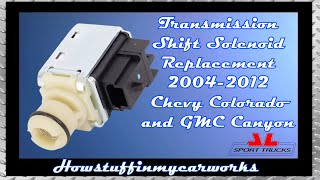
Helpful Videos
Used OEM Parts in Stock


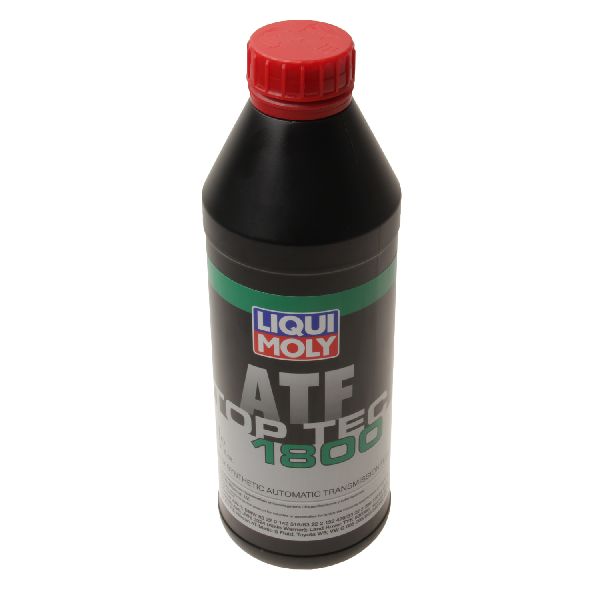
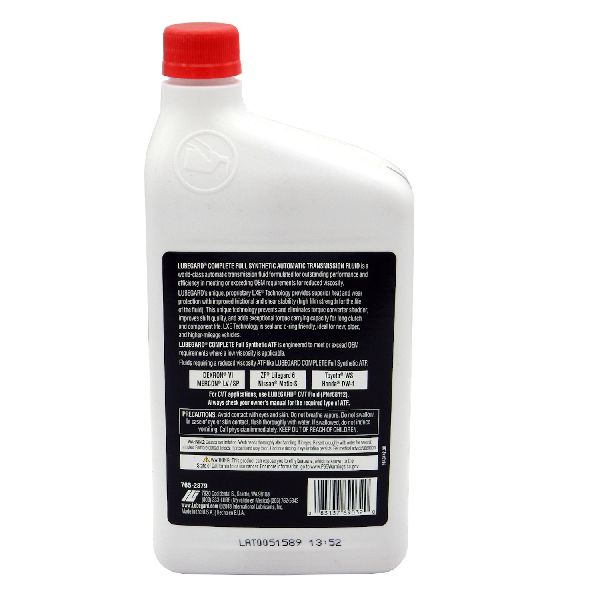
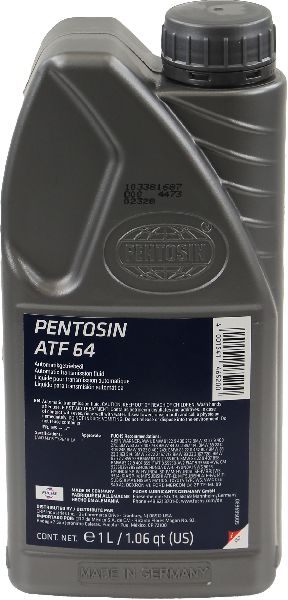
New Aftermarket Parts Available

The information in this article is provided for general reference and educational purposes only. Vehicle specifications, procedures, and part compatibility can vary by production date, trim level, and region. Always consult your vehicle's factory service manual and verify part numbers before purchasing or performing repairs. Safety-critical components such as airbags, seat belts, and braking systems should be installed by a qualified professional.
- Gmc CANYON:
- 🎬 Helpful Videos
- 🛍️ Shop This Part
- What's Unique About the 2015-2019 Gmc CANYON
- Diagnostic Flowchart
- Symptoms You May Notice
- Most Likely Causes
- Rare But Worth Checking
- Diagnosis Steps
- Parts You'll Likely Need
- Related Codes That Often Appear With This One
- Technical Service Bulletins (TSBs) & Recalls
- Platform-Specific Known Issues
- Mechanic-Grade Diagnostic Values
- Scan Tool Commands That Help
- Wiring & Ground Locations
- Real Owner Repair Stories
- OEM Part Supersession History
- Model Year Variations Within This Range
- 🎟️ Get 5% Off