

P0751 on 2009-2013 Ford E-350: Shift Solenoid 'A' Causes and Fixes
This code typically points to a faulty Shift Solenoid 'A' (also known as the Coast Clutch Solenoid) inside the TorqShift® 5R110W transmission, an issue often confirmed by Ford's Technical Service Bulletins. Other common causes include low or dirty transmission fluid and a faulty internal wiring harness. A solenoid replacement is a common fix, but in some cases, a more involved internal clutch component replacement is required per TSB 16-0057.
- P0751 on a 2009-2013 E-350 is a serious code that indicates a problem with Shift Solenoid 'A' and will likely put the vehicle in 'limp mode'.
- The most probable cause is a failed shift solenoid inside the transmission, an issue acknowledged by Ford in a TSB.
- Always check the transmission fluid level and condition first, as low or dirty fluid can cause similar symptoms.
- This repair is not recommended for DIY beginners; it requires dropping the transmission pan and working with sensitive components.
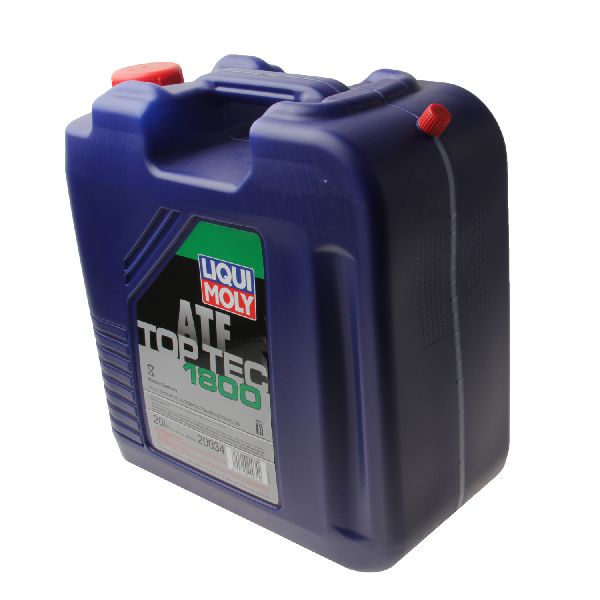
- When servicing, use the correct MERCON LV transmission fluid to ensure proper transmission function.
What's Unique About the 2009-2013 Ford E-350
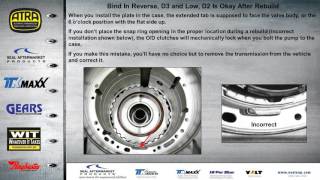
For the Ford E-350 with the heavy-duty TorqShift® 5R110W automatic transmission, this code is a known issue. Ford has issued Technical Service Bulletin (TSB) 16-0057 specifically mentioning P0751 on these transmissions, indicating a higher-than-average likelihood of encountering this problem. These workhorse vans put significant stress on the transmission. The TSB points not just to the solenoid, but to a potential failure of the coast clutch cylinder and the coast one-way clutch (OWC) mechanical diode assembly, which is a much more involved repair than a simple solenoid swap.
Diagnostic Flowchart
Tap your situation to follow the diagnostic path that matches what you're seeing on this vehicle.
Symptoms You May Notice
- Check Engine Light (Malfunction Indicator Lamp) is on
- Transmission gets stuck in one gear (limp mode)
- Harsh, delayed, or failed shifts
- Transmission slipping between gears
- Vehicle may not move or feel like it's in neutral
- Reduced fuel economy
- Transmission overheating, possibly with a burning smell
- No 1st gear when Tow/Haul mode is off; no 1st, 3rd, or 5th gears when Tow/Haul is on
- Replacing the entire transmission when only a single solenoid, the wiring harness, or fluid was needed.
- Replacing the shift solenoid without checking the fluid level and condition first.
- Replacing the solenoid when the root cause is the internal coast clutch mechanical failure described in TSB 16-0057.
Most Likely Causes
- Failed Shift Solenoid 'A' (Coast Clutch Solenoid) 🔴 High Probability As identified in Ford TSBs and numerous owner forums, solenoid failure is a recognized issue on TorqShift® transmissions. The solenoids operate in a high-temperature environment and can fail electrically or become mechanically stuck from debris.
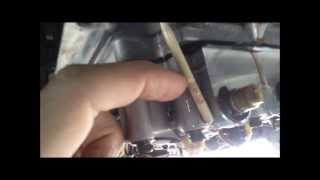
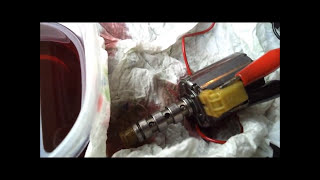
How to confirm: A technician can use a scan tool to command the solenoid on/off. Another method is to drop the transmission pan, access the solenoid, and test its resistance with a multimeter (should be within spec, not open or shorted). 🎬 Watch: A mechanic's guide to testing 5R110W shift solenoids. You can also carefully apply a 12V power source to check for an audible click. A user on Ford-trucks.com noted that codes can be set when the solenoid's internal armature fails to move when commanded.
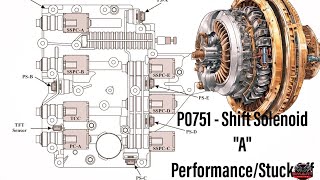
Typical fix: Replacement of the faulty shift solenoid (part # 3C3Z-7J136-AA). This requires draining the fluid, dropping the transmission pan, identifying and replacing the solenoid. 🎬 See this walkthrough for replacing the Coast Clutch Solenoid. It is an inversely proportional solenoid, meaning it has max pressure at zero current; it must not be confused with other solenoids.
Est. part cost: $70-$150 - Low or Dirty Transmission Fluid 🟡 Medium Probability High mileage and heavy use can lead to fluid breakdown or leaks, which are common in commercial vehicles like the E-350. Degraded fluid can lead to sludge and debris that clogs solenoid passages.
How to confirm: Check the transmission fluid dipstick for level and condition. The fluid should be at the 'FULL' mark when hot and be bright red and clear. If it's low, dark brown, or smells burnt, it needs attention.
Typical fix: Top off the fluid if low, or perform a transmission fluid and filter change if the fluid is dirty. Use only the specified fluid, MERCON LV or MERCON SP for the 5R110W transmission.
Est. part cost: $80-$200 - Internal Transmission Wiring or Connector Fault 🟡 Medium Probability The internal wiring harness is submerged in hot transmission fluid, which can cause insulation to become brittle and crack over time, leading to shorts or open circuits. The external connector can also get corroded or damaged.
How to confirm: After dropping the pan, visually inspect the wiring harness leading to the solenoids for any signs of damage, chafing, or burnt connectors. Check for continuity and shorts between the PCM connector and the transmission connector, and then from the internal connector to the solenoid.
Typical fix: Repair the damaged wire or replace the internal transmission wiring harness (OEM part # 3C3Z-7G276-AA).
Est. part cost: $100-$350 - Internal Mechanical Failure (Coast Clutch) ⚪ Low Probability TSB 16-0057 specifically calls out this possibility for transmissions built on or before 12/15/2015. Heavy-duty use can cause wear and failure of the coast clutch cylinder or the one-way clutch (OWC) mechanical diode.
How to confirm: This is an advanced diagnosis. It's suspected when the solenoid and wiring test good, but the code persists. A transmission pressure test may show incorrect pressures in the coast clutch circuit. TSB 12-3-15 details an air pressure test on the coast clutch port. Ultimately confirmed by transmission disassembly.
Typical fix: Requires removing and disassembling the transmission to replace the coast clutch cylinder and coast one-way clutch (OWC) assembly, as detailed in TSB 16-0057. This is a major repair.
Est. part cost: $500-$1000+
Rare But Worth Checking
- Faulty Powertrain Control Module (PCM) or Transmission Control Module (TCM): This is rare and should be considered only after all other possibilities (solenoid, wiring, fluid) have been exhaustively ruled out. A failed driver circuit in the module can mimic a solenoid failure. This is the last step in most diagnostic trees.
- Mechanical Failure in Valve Body: A sticking valve or a crack in the valve body can prevent proper hydraulic pressure from reaching the clutches, even if the solenoid is working correctly. This requires advanced diagnostics and often replacement or cleaning of the valve body.
- Failed Transmission Oil Pump: A user on a Ford truck forum reported that codes P0751 and P2700 were ultimately caused by a locked-up transmission pump that resulted in a lack of hydraulic pressure. If you have lost all gears, this is a possibility. 🎬 Watch: Diagnostic steps if your Ford won't move in any gear.
Diagnosis Steps
- Verify the code with a quality OBD-II scanner.
- Check the transmission fluid level and condition. Ensure the fluid is at the correct level and doesn't look or smell burnt.
- Scan for any other related trouble codes, paying close attention to P0730 and P2700.
- Check the transmission build date. If it is on or before 12/15/2015, be aware of TSB 16-0057 which points to a possible internal mechanical failure.
- Inspect the external transmission wiring harness and connectors for any visible damage, corrosion, or loose connections.
- Use an advanced scan tool to monitor live data and command Shift Solenoid 'A' on and off. Check if the solenoid status changes and if transmission fluid pressure responds accordingly.
- If the solenoid does not respond or tests are inconclusive, drain the transmission fluid and drop the transmission pan.
- Visually inspect the internal wiring, the solenoid itself, and look for excessive metal debris in the pan.
- Test the resistance of Shift Solenoid 'A' using a digital multimeter. Compare the reading to the manufacturer's specifications (typically 4.1-4.7 ohms). An open or shorted reading indicates a failed solenoid.
- If resistance is good, you can carefully apply a 12V power source to the solenoid to see if it actuates (it should make an audible click).
- If the solenoid and wiring test good, the issue may be a clogged valve body, a mechanical failure in the coast clutch pack as per TSB 16-0057, or, rarely, a faulty PCM.
Parts You'll Likely Need
- Shift Solenoid 'A' (Coast Clutch Solenoid)
(OEM #3C3Z-7J136-AA)— This is the most common point of failure for this code, as confirmed by Ford's TSBs and owner experiences. It is an inversely proportional solenoid.
Trusted brands: Motorcraft, Rostra, Suncoast
OEM price range: $80-$130
Aftermarket price range: $50-$90 - Transmission Fluid (MERCON SP or LV) — Required for any repair that involves dropping the pan. Using the correct fluid type is critical for transmission health.
Trusted brands: Motorcraft, Valvoline, Castrol
OEM price range: $10-$15 per quart
Aftermarket price range: $8-$12 per quart - Transmission Pan Gasket — The original gasket is reusable, but it is often recommended to replace it if it's old, brittle, or damaged to prevent leaks.
Trusted brands: Motorcraft, Fel-Pro, Mahle
OEM price range: $30-$50
Aftermarket price range: $15-$30
Related Codes That Often Appear With This One
- P0730 — Stands for 'Incorrect Gear Ratio'. This code is often triggered alongside P0751 because the failed solenoid prevents the transmission from achieving the correct gear, leading to a mismatch between engine RPM and output shaft speed. This is cited in Ford TSB 16-0057.
- P2700 — Stands for 'Transmission Friction Element 'A' Apply Time Range/Performance'. This indicates a problem with the timing of a clutch application, which can be a direct result of the solenoid not functioning correctly. This is also cited in Ford TSB 16-0057.
Technical Service Bulletins (TSBs) & Recalls
- Bulletin #16-0057
- Bulletin #TSB160057
Platform-Specific Known Issues
- Ford Technical Service Bulletin (TSB) #16-0057 is highly relevant. It notes that some 2009-2016 E-Series vehicles (among others) with a TorqShift® transmission built on or before 12/15/2015 may exhibit DTC P0751. The bulletin advises that the root cause may not be the solenoid itself, but a failure of the coast clutch cylinder and coast one-way clutch (OWC). The prescribed fix is a partial transmission rebuild to replace these components, a job estimated at 4.9-5.6 labor hours for an E-Series van.
Mechanic-Grade Diagnostic Values
- Shift Solenoid 'A' (SSPC-A) Resistance — expected: 4.1 - 4.7 Ω. Failure: An open circuit (infinite resistance) or a short (near zero ohms) indicates a failed solenoid coil.
- Coast Clutch Air Pressure Test (with transmission test plate 307-457 installed) — expected: A dull thud as the clutch applies, with no sound of leaking air (hissing).. Failure: A continuous hissing sound indicates a leaking coast clutch cylinder weld, requiring transmission removal and replacement of the cylinder.
- Voltage at Solenoid Connector (Key On, Engine Off) — expected: ≈12.6 V (Battery Voltage) on the supply wire.. Failure: Voltage deviation greater than 0.5V suggests excessive resistance in the wiring or a poor power feed.
Hidden / Shadow Codes Worth Checking
- Solenoid Band Number Mismatch: This is not a DTC, but a hidden configuration issue. 5R110W solenoids are factory-calibrated into 'bands' (e.g., 2, 3, 4, 5). The TCM stores a 'solenoid strategy' that expects specific bands. Replacing a solenoid with one from a different band without reprogramming the TCM can cause poor shift quality or persistent codes, even if the new solenoid is functional. (see via A professional scan tool (like Ford IDS or high-end Snap-on/Autel) has a specific function, often under 'Transmission Characterization' or 'Solenoid Identification', to read the strategy and band numbers from the TCM.)
Scan Tool Commands That Help
- Ford IDS / Professional Scan Tool: Transmission Characterization / Solenoid Identification — Use this command *before* ordering parts to identify the exact 'band number' of the installed solenoids. This prevents installing a mismatched part that will not function correctly with the existing TCM strategy.
- Ford IDS / J2534 Passthru Device: Module Programming / Solenoid Body Strategy Programming — This function is required after replacing the solenoid body or multiple solenoids to write the new part's strategy ID into the TCM. Failure to do so can result in harsh shifting or other performance issues.
- Professional Scan Tool: Output State Control / Activation Test — Use this bidirectional command to manually toggle Shift Solenoid 'A' on and off while monitoring live data for transmission fluid pressure. This helps confirm if the solenoid is physically actuating and if the hydraulic circuit is responding, isolating electrical from mechanical issues.
Wiring & Ground Locations
- Transmission Connector Pin 5 — On the main round electrical connector on the passenger side of the 5R110W transmission case.. This is the specific pin for the Coast Clutch Control Solenoid (SSPC-A). It can be used to test for voltage from the TCM or to check the solenoid's resistance without dropping the transmission pan.
- Powertrain Control Module (PCM) — Typically located in the engine compartment on the left (driver's) side, near the firewall.. This is the source of the command signal for the shift solenoid. Wiring integrity should be checked between the PCM connector and the transmission connector if a circuit fault is suspected.
- Battery Junction Box (Engine Fuse Box) — Located in the left front of the engine compartment.. Contains the fuses and relays that supply power to the transmission control system. A blown fuse (e.g., Fuse F1.43 - 10A for Transmission Control in a 2009 model) can cause a loss of power to the solenoids.
Real Owner Repair Stories
- Ford Truck Enthusiasts Forum user post (Ford truck with 6.0L Power Stroke and 5R110W transmission) — Transmission died while driving, no movement. Codes P0751 and P2700 were present. Transmission temperature was elevated.
❌ Tried (didn't work) The owner's initial plan was to immediately replace the Coast Clutch Solenoid (SSPC-A) based on the codes.
✅ What actually fixed it The owner updated the post stating the root cause was a complete lack of hydraulic pressure due to a locked-up transmission oil pump. The codes were a symptom of the pressure failure, not the cause. The advice given was to perform a pressure test before replacing any solenoids. - YouTube channel 'Smart Motives' (2015 Ford F59 with 6.8L V10 and 5R110W transmission) — Truck would not move when put in gear; clutch slipping. Code P0751 was present.
❌ Tried (didn't work) Diagnosis started with checking fluid, which was found to be very dark and dirty.
✅ What actually fixed it The mechanic dropped the pan, tested the resistance of Shift Solenoid 'A', and found it faulty. Replacing the solenoid (Part # 3C3Z-7J136-AA), along with the fluid and filter, resolved the issue.
"I Checked Everything" — The Actual Cause
- A common diagnostic dead-end occurs when the Shift Solenoid 'A' and its wiring test perfectly fine (correct resistance, good voltage, clicks on activation), yet the P0751 code persists. In these cases, the root cause is often mechanical, not electrical. The two most notable examples are: 1) An internal leak in the coast clutch hydraulic circuit, often at the cylinder weld, which can be diagnosed with an air pressure test as specified in TSB 12-3-15. 2) A failing or seized transmission oil pump, which results in insufficient hydraulic pressure to operate the circuit, falsely implicating the solenoid.
When the Usual Fixes Don't Work
- While replacing Shift Solenoid 'A' is the most common fix for P0751, it is not a guaranteed solution. There is strong evidence that other failures can trigger this specific code. A documented case showed that a completely failed transmission oil pump, resulting in a loss of hydraulic pressure, was the true cause of P0751 and P2700, not the solenoid itself. Furthermore, Ford's own Technical Service Bulletin (16-0057) for this exact code on this vehicle range explicitly directs technicians to investigate and replace major internal mechanical components (the coast clutch cylinder and OWC) for transmissions built before a specific date, bypassing the solenoid as the primary cause. Blindly replacing the solenoid without performing pressure tests or checking the transmission build date can lead to a failed repair.
OEM Part Supersession History
3C3Z-7J136-AA→3C3Z-7J136-AA (current)— This part number remains the correct one for the Coast Clutch Solenoid (SSPC-A).
Heads up: Crucially, this solenoid is NOT interchangeable with all other solenoids in the 5R110W. For example, part number 3C3Z-7J136-BA is for the TCC, Intermediate, Overdrive, or Low/Reverse solenoids and will NOT work for the Coast Clutch. The Coast Clutch Solenoid (SSPC-A) is only interchangeable with the Direct Clutch Solenoid (SSPC-D).
Model Year Variations Within This Range
- 2009-2013 (with build dates on or before 12/15/2015): Per Ford TSB 16-0057, transmissions built on or before December 15, 2015, are prone to a specific internal mechanical failure of the coast clutch cylinder and/or the coast one-way clutch (OWC) mechanical diode. If codes P0751, P0730, or P2700 are present on a vehicle with a transmission from this period, this mechanical failure is a strong possibility and diagnosis should proceed according to the TSB, which involves transmission removal.
Helpful Videos
Used OEM Parts in Stock

New Aftermarket Parts Available




The information in this article is provided for general reference and educational purposes only. Vehicle specifications, procedures, and part compatibility can vary by production date, trim level, and region. Always consult your vehicle's factory service manual and verify part numbers before purchasing or performing repairs. Safety-critical components such as airbags, seat belts, and braking systems should be installed by a qualified professional.
- Ford E-350:
- 🎬 Helpful Videos
- 🛍️ Shop This Part
- What's Unique About the 2009-2013 Ford E-350
- Diagnostic Flowchart
- Symptoms You May Notice
- Most Likely Causes
- Rare But Worth Checking
- Diagnosis Steps
- Parts You'll Likely Need
- Related Codes That Often Appear With This One
- Technical Service Bulletins (TSBs) & Recalls
- Platform-Specific Known Issues
- Mechanic-Grade Diagnostic Values
- Hidden / Shadow Codes Worth Checking
- Scan Tool Commands That Help
- Wiring & Ground Locations
- Real Owner Repair Stories
- "I Checked Everything" — The Actual Cause
- When the Usual Fixes Don't Work
- OEM Part Supersession History
- Model Year Variations Within This Range
- 🎟️ Get 5% Off