

P0748 on 2011-2015 Kia Optima: Pressure Control Solenoid 'A' Electrical Fault Guide
On a 2011-2015 Kia Optima, code P0748 almost always points to a failed pressure control solenoid or the internal transmission wiring harness inside the A6MF1 transmission. The fix typically involves replacing the individual solenoid or the entire solenoid pack. Do not replace the entire transmission, as advised by a Kia Technical Service Bulletin (TSBTRA051R1).
- P0748 on a 2011-2015 Kia Optima indicates an electrical fault with the Pressure Control Solenoid 'A' in the transmission.
- The most common cause is a failed solenoid, a known issue addressed by Kia TSB TSBTRA051R1.
- Key symptoms include harsh shifting, getting stuck in gear, and an illuminated Check Engine Light.
- The correct repair is to replace the faulty solenoid inside the transmission pan, not the entire transmission.
- Due to the complexity and need for precise fluid levels, professional repair is recommended over DIY for most owners.
What's Unique About the 2011-2015 Kia OPTIMA
The 6-speed automatic transmission (A6MF1/A6GF1 family) used in the 2011-2015 Kia Optima and its platform mates is known to have issues with its transmission solenoids and internal wiring harness. The problem became common enough that Kia issued a Technical Service Bulletin (TSB #TSBTRA051R1) specifically for this and other related solenoid codes. The TSB advises technicians to replace the individual solenoids rather than the entire, much more expensive, transmission assembly, which is a common misdiagnosis. Forum and video evidence shows the internal wiring harness ribbon can also fail, causing an open circuit to multiple solenoids at once.
Diagnostic Flowchart
Tap your situation to follow the diagnostic path that matches what you're seeing on this vehicle.
Symptoms You May Notice 🎬 Watch: A breakdown of common transmission solenoid failure symptoms.
- Check Engine Light is on
- Harsh, erratic, or delayed gear shifts
- Transmission gets stuck in one gear (limp mode, often 3rd gear)
- Engine stalls when coming to a stop
- Decreased fuel economy
- Transmission slipping or flaring between gears
- Vehicle has no power when taking off (due to starting in a higher gear)
- Replacing the entire transmission assembly. The official Kia TSB for this code explicitly advises against this, stating that only the solenoid(s) should be replaced.
- Replacing only the solenoid when the internal wiring harness is also faulty. This will result in the code returning immediately.
Most Likely Causes
- Failed Pressure Control Solenoid 'A' 🔴 High Probability This is a well-documented issue for this platform, as confirmed by Kia's own Technical Service Bulletin (TSBTRA051R1), which recommends solenoid replacement for this code. These solenoids are known to fail electrically over time.
How to confirm: After draining the transmission fluid and removing the pan and valve body, the solenoid's resistance can be tested with a multimeter. For the Variable Force Solenoids (VFS) in the A6MF1, the reading should be approximately 5.0 to 5.6 ohms. A reading that is open (infinite resistance) or shorted confirms failure. A professional scan tool can also command the solenoid on/off to check for a response, though a solenoid can sometimes pass this test and still be faulty under load.
Typical fix: Replace the faulty solenoid. It is often recommended to replace the entire set of 8 solenoids as a preventative measure while the transmission is open, as they are of the same age and design.
Est. part cost: $75-$150 for a single OEM solenoid, $250-$400 for a complete aftermarket solenoid kit. - Damaged Internal Transmission Wiring Harness 🟡 Medium Probability The internal wiring harness, which is a flexible ribbon-style connector, is a known failure point. The ribbon can develop cracks or breaks, causing an open circuit to one or more solenoids. This often happens alongside solenoid codes like P0753, P0758, etc.
How to confirm: Visually inspect the harness for cracks, breaks, or discoloration after removing the valve body. A common failure point is where the harness flexes. Technicians often test for continuity from the main connector pins to each solenoid connector pin to find the open circuit.
Typical fix: Replace the internal transmission wiring harness. This part is often replaced along with the solenoids.
Est. part cost: $50-$100 for the harness. - Low or Dirty Transmission Fluid 🟡 Medium Probability
How to confirm: Check the transmission fluid level and condition. This transmission does not have a dipstick and must be checked via a fill plug on the side of the case when the vehicle is level and at a specific temperature. Fluid should be red and not smell burnt. Dark or contaminated fluid can cause solenoids to stick or fail.
Typical fix: Perform a transmission fluid drain and fill. If the fluid is very dark or contains metal particles, it may indicate a more severe internal problem requiring a rebuild.
Est. part cost: $60-$120 for 5-6 quarts of Kia SP-IV compatible fluid. - Faulty Transmission Control Module (TCM) or Powertrain Control Module (PCM) ⚪ Low Probability While less common than solenoid or wiring failure, some Hyundai/Kia models have experienced TCM/PCM failures where the internal driver circuit for the solenoid fails. This can be caused by leaking capacitors on the circuit board.
How to confirm: This should be the last resort after confirming the solenoid and all wiring are in good condition. Diagnosis requires advanced probing of the TCM connector to see if it is sending the command signal to the solenoid. In some cases, visible damage like leaking capacitors can be seen upon opening the module.
Typical fix: Repair or replace the Transmission Control Module/Powertrain Control Module. This often requires reprogramming to the vehicle.
Est. part cost: $200-$800+
Diagnosis Steps
- Check the transmission fluid level and condition. This requires the vehicle to be level and the fluid to be at a specific operating temperature. Top off or change if necessary.
- Use an OBD-II scanner to check for any other related transmission codes. Multiple solenoid codes (e.g., P0753, P0758) often point to a wiring harness issue.
- Inspect the external transmission wiring harness and connectors for visible damage, corrosion, or loose connections.
- Test the resistance of the solenoids from the external transmission connector if possible to isolate the issue to inside or outside the transmission.
- With the transmission pan and valve body removed, test the resistance of the Pressure Control Solenoid 'A' using a multimeter. Compare the reading to the manufacturer's specifications (typically 5.0-5.6 ohms at 68°F/20°C).
- While the valve body is out, inspect the internal wiring harness for any cracks or damage and test for continuity from the main plug to each solenoid.
- Test for voltage and ground at the solenoid's connector to ensure the TCM is sending a signal. This is an advanced step.
- If the solenoid and wiring test good, the issue may lie with the Transmission Control Module (TCM), which requires professional diagnostics.
Parts You'll Likely Need
- Automatic Transmission Control Solenoid
(OEM #46313-3B030)— This is the most common failure point for code P0748 on this vehicle, as identified by owner experiences and a manufacturer TSB. This part number corresponds to the VFS (Variable Force Solenoid).
Trusted brands: Kia/Hyundai (OEM), Dorman, Rostra
OEM price range: $95-$140
Aftermarket price range: $40-$80 - Automatic Transmission Internal Wire Harness
(OEM #46307-3B650 (Verify for specific VIN))— A common secondary failure point. The flexible ribbon cable cracks, causing an open circuit. Often replaced preventatively with the solenoids.
Trusted brands: Kia/Hyundai (OEM)
OEM price range: $50-$100
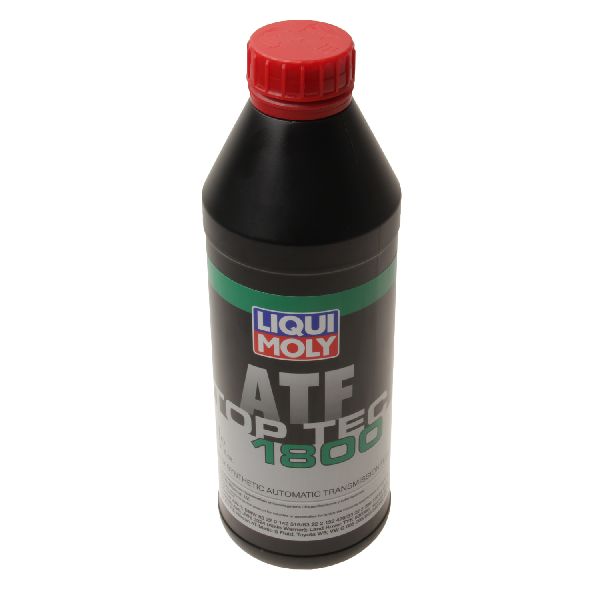
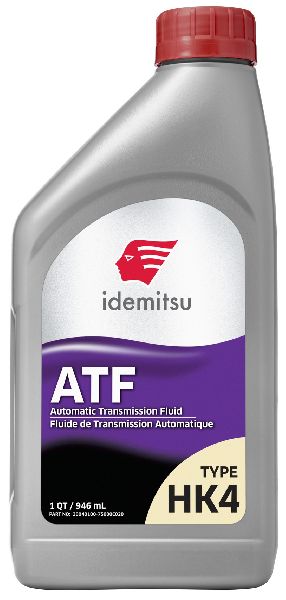
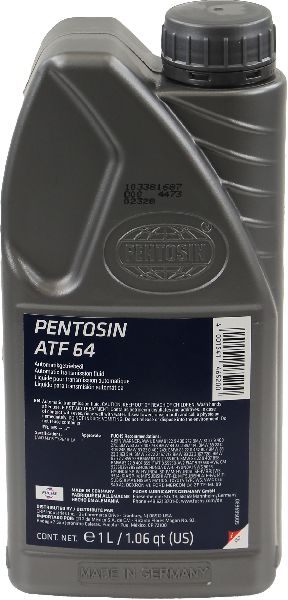
Aftermarket price range: $40-$70 - Automatic Transmission Fluid — The transmission fluid must be drained to access the solenoids and should be replaced with new fluid that meets Kia's SP-IV specification. The system holds over 7 quarts, but a drain and fill typically replaces 5-6 quarts.
Trusted brands: Kia/Hyundai (OEM SP-IV), Idemitsu TLS-LV, Valvoline MaxLife LV
OEM price range: $15-$25 per quart
Aftermarket price range: $8-$15 per quart
Related Codes That Often Appear With This One
- P0700 — This is a generic Transmission Control System Malfunction code. It is often stored in the PCM to indicate that a more specific transmission code, like P0748, is stored in the TCM.
- P0753 — This code is for Shift Solenoid 'A' Electrical. Like P0748, it is an electrical fault code for a transmission solenoid and is listed in the same TSB (TSBTRA051R1). Multiple solenoid codes appearing together often points to a faulty internal wiring harness.
- P0758 — This code is for Shift Solenoid 'B' Electrical. It is another common solenoid fault code that can appear alongside P0748, indicating a potential widespread issue with the solenoid pack or wiring harness.
- P2709 — This code is for Shift Solenoid 'F' Electrical. It is also listed in TSB TSBTRA051R1 and can appear with P0748, further suggesting a common electrical issue within the transmission.
Technical Service Bulletins (TSBs) & Recalls
- TSBTRA051R1
Platform-Specific Known Issues
- A Technical Service Bulletin (TSBTRA051R1) was issued by Kia for the 6-speed automatic transmission, which specifically lists P0748 as a code that should be addressed by replacing the solenoid, not the entire transmission.
- The internal wiring harness is a known weak point and can fail, causing P0748 and other electrical solenoid codes simultaneously. A YouTube video by NZ DIAGNOSTICS demonstrates this failure, showing a loss of power on the internal ribbon cable.
Mechanic-Grade Diagnostic Values
- Resistance of Pressure Control (VFS) Solenoids — expected: 5.0 - 5.6 Ohms (A more precise target is 5.1 Ohms).. Failure: Open circuit (infinite resistance) or a reading significantly outside the specified range.
- Resistance of On/Off Shift Solenoids (SSA/SSB) — expected: Approx. 10 - 11 Ohms.. Failure: Open circuit or a reading significantly outside this range.
- VFS Solenoid Commanded Current (Live Data) — expected: Varies from approx. 50 mA to 850 mA depending on load and required pressure.. Failure: Current is stuck at 0 or does not respond to changes in throttle and load.
- Transmission Fluid Temperature (TFT) Sensor Voltage — expected: Approx. 3.2V at 104°F (40°C) and 0.29V at 302°F (150°C).. Failure: Voltage that is stuck high or low, or does not correlate with the actual transmission temperature.
Scan Tool Commands That Help
- Kia GDS (or advanced aftermarket scanner): Solenoid Activation Test — To manually command a specific solenoid on and off to listen for an audible 'click', which helps confirm if the solenoid is mechanically stuck or electrically dead.
- Kia GDS (or advanced aftermarket scanner): View Live Data (Solenoid Current) — To monitor the electrical current (in milliamps) being sent to the Pressure Control Solenoid 'A' in real-time. This confirms if the TCM is commanding the solenoid correctly in response to driving conditions.
- Kia GDS (or advanced aftermarket scanner): Reset Adaptive Learning / Transmission Learning Process — After replacing solenoids, the valve body, or the entire transmission, this procedure should be performed to clear the old adaptive shift data and allow the TCM to relearn the characteristics of the new components for smooth shifting.
Wiring & Ground Locations
- Transmission Case Ground — A grounding strap or bolt connecting the main wiring harness to the transmission housing/bell housing.. A poor ground connection at the transmission can cause erratic voltage and current readings for all sensors and solenoids, leading to false electrical fault codes like P0748.
- TCM/PCM Main Connector — The large electrical connector at the Transmission Control Module or Powertrain Control Module.. This is the point where a technician can test for continuity and resistance of the solenoid circuit without opening the transmission, helping to isolate the fault to the external wiring, internal wiring, or the solenoid itself.
- Interior Ground Bolt — There is often a factory grounding bolt located near the interior fuse panel, sometimes behind the driver's side kick panel.. The TCM and other control modules rely on clean chassis grounds. A loose or corroded interior ground point can cause a variety of electrical issues, including transmission control problems.
Real Owner Repair Stories
- YouTube comment on a transmission diagnosis video (2011 Kia Sorento 2.4L (uses same A6MF1 transmission)) — Severe shifting problems, lack of power and acceleration, especially on hills. Manual shifting worked, but power was still low. No trouble codes were stored.
❌ Tried (didn't work) Replacing spark plugs, Replacing the torque converter
✅ What actually fixed it The internal transmission wiring harness was replaced. The owner noted that the new harness included a new transmission temperature sensor, which is a known failure point on these harnesses.
OEM Part Supersession History
46313-3B020→46313-3B030— Likely an updated design for improved reliability or material changes.
Heads up: The new part number (46313-3B030) is the correct replacement for the original.
Model Year Variations Within This Range
- 2011-2015: While a cosmetic facelift occurred for the 2014 model year, the core powertrain, including the 2.4L and 2.0L Turbo engines and the A6MF1 6-speed automatic transmission, remained consistent. Therefore, the causes and repair procedures for code P0748 are the same across the entire 2011-2015 range.
Helpful Videos


Used OEM Parts in Stock


New Aftermarket Parts Available



The information in this article is provided for general reference and educational purposes only. Vehicle specifications, procedures, and part compatibility can vary by production date, trim level, and region. Always consult your vehicle's factory service manual and verify part numbers before purchasing or performing repairs. Safety-critical components such as airbags, seat belts, and braking systems should be installed by a qualified professional.
- Kia OPTIMA:
- 🎬 Helpful Videos
- 🛍️ Shop This Part
- What's Unique About the 2011-2015 Kia OPTIMA
- Diagnostic Flowchart
- Symptoms You May Notice
- Most Likely Causes
- Diagnosis Steps
- Parts You'll Likely Need
- Related Codes That Often Appear With This One
- Technical Service Bulletins (TSBs) & Recalls
- Platform-Specific Known Issues
- Mechanic-Grade Diagnostic Values
- Scan Tool Commands That Help
- Wiring & Ground Locations
- Real Owner Repair Stories
- OEM Part Supersession History
- Model Year Variations Within This Range
- 🎟️ Get 5% Off