

P0747 on 2017-2024 Cadillac Escalade ESV: Causes, Fixes, and TSBs
P0747 on a 2017-2024 Escalade ESV almost always indicates a faulty transmission control valve body. This is a well-documented issue covered by multiple GM Technical Service Bulletins (TSBs) and a special coverage program. The fix involves replacing the valve body, a job for a professional. In some very recent cases on 10-speed transmissions, dealers may perform an internal repair on the valve body instead of a full replacement.
- P0747 on a 2017-2024 Escalade ESV is a serious code that points directly to a known issue with the transmission control valve body.
- Do not simply replace the solenoid; the entire valve body assembly typically requires replacement or, in newer cases, an internal repair with updated parts.
- Before paying for repairs, check with a Cadillac dealer to see if your vehicle is covered under Special Coverage N242454441, which could make the repair free.
- This is not a DIY-friendly repair. It requires professional diagnosis and installation.
- Stop driving the vehicle if you experience these symptoms to avoid further transmission damage and for safety reasons.
What's Unique About the 2017-2024 Cadillac ESCALADE ESV
On this specific platform (and its GM truck/SUV cousins), P0747 is rarely just a bad solenoid. General Motors has issued multiple TSBs and a special coverage program acknowledging a widespread issue with the transmission control valve body. The problem is often caused by internal wear within the valve body, specifically in the bores for the solenoid regulator valve or the feed limit valve, leading to a gradual loss of hydraulic pressure control. This is a known manufacturing-related weakness, not a simple electrical failure.
🎬 Watch: An expert breakdown of these transmission design flaws.Diagnostic Flowchart
Tap your situation to follow the diagnostic path that matches what you're seeing on this vehicle.
Generation note: This issue affects both the fourth generation (2017-2020) with the 8L90 8-speed transmission and the fifth generation (2021-2024) with the 10L80 10-speed transmission. The underlying cause related to the transmission valve body is common across these model years, as evidenced by TSBs and special coverage programs covering vehicles in both generations.
Symptoms You May Notice
- Malfunction Indicator Lamp (MIL) / Check Engine Light illuminated
- Transmission not shifting or stuck in a single gear (often defaults to 5th gear).
- Harsh, jerky, or banging shifts, especially on downshifts.
- Delayed engagement when shifting into Drive or Reverse.
- Reduced engine performance or 'Reduced Propulsion' message on the driver information center.
- In rare, extreme cases, momentary rear-wheel lock-up.
- Sensation of hitting a pothole during a shift.
- Vehicle revs without moving forward, then slams into gear.
- Replacing only the pressure control solenoid 'A'. The TSBs and expert analysis indicate the problem is typically wear within the valve body itself, not just a single solenoid.
- Blaming the high-pressure transmission pump. This is a common misdiagnosis when the issue is more often related to the valve body or its electrical circuit.
- Performing a transmission fluid flush without addressing the mechanical fault. A flush will not repair the worn bores in the valve body and the problem will persist.
Most Likely Causes
- Faulty Transmission Control Valve Body 🔴 High Probability This is a known issue documented by GM in numerous TSBs and a special coverage program. The valve body's internal aluminum bores for the feed limit valve and solenoid regulator valves can wear, causing pressure leaks and sticking components. This is the primary cause of P0747.
How to confirm: A professional technician will confirm the P0747 code with a scan tool. Diagnosis involves checking the transmission fluid condition for excessive debris and then following the specific diagnostic procedures outlined in GM's service bulletins (like 24-NA-088), which point directly to valve body replacement or repair if the code is present.
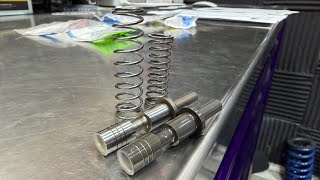
Typical fix: For most of the affected period, the fix is to replace the entire transmission control valve body assembly and perform the required solenoid valve characterization reprogramming. More recently, for 10-speeds, GM issued TSB 25-NA-255, which instructs 🎬 Watch: See the updated steel valve and repair kit components. dealers to repair the existing valve body with an updated steel feed limit valve, a stiffer spring, and a new spacer plate.
Est. part cost: $300-$900 - Low or Contaminated Transmission Fluid ⚪ Low Probability While less likely to be the root cause given the known TSBs, low or dirty fluid can cause erratic solenoid operation and shifting problems in any automatic transmission. TSB 24-NA-088 specifically instructs technicians to check the fluid; if it contains excessive clutch material, the transmission requires disassembly and inspection beyond just the valve body.
How to confirm: Check the transmission fluid level and condition. If the fluid is dark, has a burnt odor, or contains significant metallic/clutch debris, it indicates a more serious internal problem that may have been caused by or is in addition to the valve body failure.
Typical fix: If the fluid is just low, top it off. If it's dirty, a fluid and filter change is needed, but this is unlikely to solve the P0747 code if the valve body is already faulty. It is more of a diagnostic step.
Est. part cost: $50-$200
Rare But Worth Checking
- Wiring or Connector Issue: A damaged wire or loose connector to the transmission could mimic a solenoid failure, but this is far less common than the known valve body issue for this specific vehicle.
- Faulty Transmission Control Module (TCM): In very rare cases, the TCM itself could fail. An early TSB from 2016 (#PI1732A) mentioned a calibration anomaly that could cause P0747, which was resolved with a software update. However, this should be the last item to consider after all other possibilities, especially the valve body, have been ruled out.
Diagnosis Steps
- Verify the P0747 code is present using an OBD-II scanner.
- Check the transmission fluid level and condition. Look for signs of burning or excessive metal/clutch debris in the pan.
- Consult GM's service information (Global Warranty Management system) for the latest TSBs and Special Coverage information related to P0747 for the specific VIN. Key bulletins include #24-NA-088, #25-NA-255, and Special Coverage #N242454441.
- If DTC P0747 is set and fluid is not full of debris, the official GM procedure directs the technician to replace the control valve body or, for newer 10-speeds, repair it per TSB 25-NA-255.
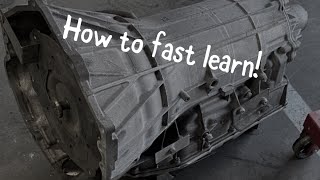
- After replacement, perform the transmission control solenoid valve characterization programming or Service Fast Learn procedure 🎬 See how to perform a Fast Learn using a scan tool. as required by the service information.
Parts You'll Likely Need
- Transmission Control Valve Body
(OEM #24044192 (example, varies by model/year, check EPC))— This is the component identified by GM as the primary cause of the P0747 code on these vehicles. A Reddit user reported part number 240653536 for their repair.
Trusted brands: ACDelco, GM Genuine Parts
OEM price range: $400-$900
Aftermarket price range: $300-$600 - Valve Body Repair Kit (for 10-speeds)
(OEM #Feed Limit Low Valve, Spring, and Spacer Plate (specific numbers in TSB 25-NA-255))— Per a recent TSB for 10-speed transmissions, GM now recommends repairing the valve body with updated internal components instead of full replacement in some cases.
Trusted brands: GM Genuine Parts, Sonnax (aftermarket)
OEM price range: $50-$150
Aftermarket price range: $50-$100
Related Codes That Often Appear With This One
- P0796 — P0796 is for 'Pressure Control Solenoid 'C' Stuck On'. An early TSB (PIP5425A) noted that P0747 and P0796 could appear together, suggesting a systemic issue within the valve body affecting multiple solenoids.
- P0777 — P0777 is for 'Pressure Control Solenoid 'B' Stuck On'. TSB PI1732A from 2016 listed this code alongside P0747 as being potentially caused by a TCM calibration issue, which was fixed with a software update.
Technical Service Bulletins (TSBs) & Recalls
- 24-NA-088: Addresses MIL illumination and a 'Transmission Not Shifting/Default Mode' due to P0747, recommending valve body replacement and providing guidance on checking fluid condition.
- N242454441-03: A special coverage bulletin detailing a gradual loss of pressure in the valve, causing harsh shifting and P0747. The fix is a new control valve body at no charge for 15 years/150,000 miles.
- PIP5425A: An early TSB from 2016 indicating that GM was investigating the cause for P0747 and the related P0796 code on 8L90 transmissions.
- 25-NA-255: A recent TSB for 10-speed transmissions that instructs technicians to repair the valve body with an updated steel feed limit valve, spring, and spacer plate, instead of replacing the entire unit.
- 21-NA-275: Addresses rear wheel lockup and loud bangs on
Platform-Specific Known Issues
- GM has issued Special Coverage N242454441, extending the warranty for this specific condition to 15 years or 150,000 miles for affected vehicles. This covers the replacement of the control valve body at no charge if DTC P0747 is present. Owners who previously paid for this repair may be eligible for reimbursement.
- Multiple Technical Service Bulletins (TSBs) have been released. #24-NA-088 addresses P0747 on 2023+ models. #25-NA-255 (for 10-speeds) details an internal repair procedure instead of full replacement. Early TSBs like PIP5425A and PI1732A show GM's long history of investigating this code.
- The root cause is often wear in the aluminum valve body bores, particularly the feed limit valve. Aftermarket companies like Sonnax and Next Gen Drivetrain identified this and produced hardened steel replacement valves before GM adopted a similar repair strategy.
Mechanic-Grade Diagnostic Values
- Resistance of 8L90 Variable Force (PWM) Solenoids — expected: 4.5–5.5 Ohms. Failure: A reading outside this range indicates a failed solenoid coil.
- Resistance of older GM 6-Speed PWM Solenoids (for reference) — expected: 3–8 Ohms. Failure: A reading outside this range suggests a faulty coil.
- Transmission Fluid Temperature for 'Service Fast Learn' — expected: 167°F – 185°F (75°C – 85°C). Failure: The procedure will not initiate if the fluid temperature is outside this specific range.
Scan Tool Commands That Help
- GM GDS2 (or equivalent J2534 device): Transmission Service Fast Learn — This is a mandatory stationary procedure after replacing the valve body (TEHCM) or entire transmission. It allows the TCM to learn the hydraulic characteristics and clutch apply pressures of the new components to ensure proper shift quality.
- GM GDS2 (or equivalent J2534 device): Solenoid Valve Diagnosis / Active Test — Used during diagnosis to command a specific solenoid (like PC Solenoid 'A') on and off. This helps a technician determine if a solenoid is mechanically stuck or if the fault is electrical (wiring, TCM driver) before removing the valve body.
- GM GDS2 (or equivalent J2534 device): Solenoid Valve Characterization Reprogramming — Required when the transmission, valve body, or solenoids are replaced. It downloads the unique performance characteristic data (PUN/TUN numbers) from GM's web service to the TCM, matching the software to the specific physical hardware.
Wiring & Ground Locations
- Transmission Control Module (TCM) — For 8L90 (approx. 2017-2018) transmissions, the TCM is an externally mounted module. For 10L80 (approx. 2018+) transmissions, the TCM is integrated inside the transmission, bolted to the valve body, and is part of the Transmission Electro-Hydraulic Control Module (TEHCM).. Knowing the TCM's location is critical. An internal TEHCM means the transmission pan must be dropped for any service, including replacement, making the job more complex than swapping an external module.
- Transmission Pass-Through Connector — This is the main electrical connector on the outside of the transmission case where the external vehicle harness connects to the internal transmission components.. This is the primary point for testing the electrical circuits for the solenoids from outside the transmission. A technician would back-probe pins here to check for voltage, ground signals, and continuity to the TCM.
- Engine/Chassis Grounds (G101, G108, etc.) — Key grounds are located on the engine block, the firewall, and the frame. One important ground strap runs from the firewall to the back of the engine cylinder head (G104/G108). Another key ground point for the ECM/TCM on some GM trucks is on the frame cross rail.. A poor ground connection can cause erratic behavior in control modules, including the TCM. While not the most common cause for P0747, checking major ground points is a fundamental step in any electrical diagnosis.
Real Owner Repair Stories
- Reddit user u/AllThemNinjas (2017 Silverado 1500 6.2L with 8L90 8-speed transmission, 72k miles) — At a stop light, the check engine light came on. When accelerating, the engine just revved without moving, then slammed hard into 1st gear and would not shift up.
❌ Tried (didn't work) Restarting the truck temporarily cleared the issue and the check engine light turned off after a few key cycles.
✅ What actually fixed it Another user confirmed that ignoring these exact symptoms on their 2019 8L90 led to a complete transmission rebuild with torque converter replacement, costing $6,000. The implied fix is to address the valve body issue before it causes catastrophic failure. - Reddit user u/mxskater (Silverado with 10-speed transmission) — Two hard shifts followed by a 'reduced acceleration' message. Code P0747 was set.
✅ What actually fixed it The dealership diagnosed a faulty transmission control valve (valve body). A responding user, identified as a technician, confirmed this is a common failure on the 10-speeds and that the replacement valve bodies were on backorder for months, indicating a widespread issue.
"I Checked Everything" — The Actual Cause
- The classic failure pattern for P0747 on these transmissions is that the pressure control solenoid itself will pass an electrical resistance test (reading a correct 4.5-5.5 ohms). This often misleads technicians into thinking the solenoid is good. However, the actual root cause is not electrical but mechanical: severe wear in the aluminum bore of the 'feed limit low valve' within the valve body. This wear allows hydraulic pressure to leak, causing the valve to stick. The solenoid is functioning correctly, but the hydraulic circuit it controls has failed mechanically.
OEM Part Supersession History
Gen 2 10-Speed Valve Body (various PNs)→Gen 3 10-Speed Valve Body (example PN: 24071206)— The Gen 3 design is a significant update to improve robustness, mitigate debris, and simplify the architecture by eliminating the auxiliary valve body. It is intended to fix the wear-prone issues of the Gen 2 design.
Heads up: The Gen 3 valve body is backward-compatible with Gen 2 vehicles but requires a specific new bolt kit (P/N 24073070) and solenoid characterization reprogramming.Original Aluminum Feed Limit Low Valve (in 10-speed valve bodies)→Repair Kit (PNs: Valve 24059372, Spring 24279142, Spacer Plate varies)— As an alternative to replacing the entire valve body, TSB 25-NA-255 directs technicians to install an updated, more durable steel valve and a stiffer spring to counteract wear in the valve bore and restore correct hydraulic pressure.
Heads up: This repair should not be performed if there is excessive clutch material in the transmission pan, as that indicates a more severe failure.
Model Year Variations Within This Range
- 2017 - ~2018 (8L90 8-Speed): These models use the 8L90 transmission, which has an EXTERNAL Transmission Control Module (TCM). The pressure control solenoids should have a resistance of 4.5-5.5 ohms.
- ~2018 - 2024 (10L80 10-Speed): These models use the 10L80 transmission, which features an INTERNAL Transmission Control Module (TEHCM) integrated with the valve body. The repair strategy for P0747 on these models has evolved from full valve body replacement to using an internal repair kit (TSB 25-NA-255) or a redesigned Gen-3 service valve body.
Helpful Videos
We Have This Part in Stock


The information in this article is provided for general reference and educational purposes only. Vehicle specifications, procedures, and part compatibility can vary by production date, trim level, and region. Always consult your vehicle's factory service manual and verify part numbers before purchasing or performing repairs. Safety-critical components such as airbags, seat belts, and braking systems should be installed by a qualified professional.
- Cadillac ESCALADE ESV:
- 🎬 Helpful Videos
- 🛍️ Shop This Part
- What's Unique About the 2017-2024 Cadillac ESCALADE ESV
- Diagnostic Flowchart
- Symptoms You May Notice
- Most Likely Causes
- Rare But Worth Checking
- Diagnosis Steps
- Parts You'll Likely Need
- Related Codes That Often Appear With This One
- Technical Service Bulletins (TSBs) & Recalls
- Platform-Specific Known Issues
- Mechanic-Grade Diagnostic Values
- Scan Tool Commands That Help
- Wiring & Ground Locations
- Real Owner Repair Stories
- "I Checked Everything" — The Actual Cause
- OEM Part Supersession History
- Model Year Variations Within This Range
- 🎟️ Get 5% Off