

P0741 on 2010-2017 Volvo XC60: Torque Converter Clutch Problems and Fixes
On a 2010-2017 Volvo XC60, code P0741 most often points to a faulty torque converter clutch (TCC) solenoid or a worn valve body. This is a common issue for the Aisin-Warner TF-80SC transmissions used in these vehicles. The root cause is often hydraulic pressure loss from wear in the valve body, preventing the TCC from locking up. Expect a repair cost of $500-$1200 for a solenoid replacement, and potentially more if the valve body needs rebuilding or replacement.
- P0741 on your XC60 means the torque converter clutch is failing to lock up as commanded, which will hurt your fuel economy and can damage the transmission.
- The most likely culprits are a bad TCC solenoid or a worn valve body, which are known issues on the Aisin transmissions used in these Volvos.
- Start your diagnosis by checking the transmission fluid level and condition. Using the wrong fluid type can cause this code.
- This is not a simple DIY fix. Repair requires accessing internal transmission components, and professional diagnosis is strongly recommended to avoid unnecessary, expensive repairs like replacing the entire torque converter.
- Do not ignore this code. Continued driving can lead to transmission overheating and complete failure.
What's Unique About the 2010-2017 Volvo XC60
The 2010-2017 Volvo XC60 primarily uses the Aisin-Warner TF-80SC 6-speed automatic transmission. While generally reliable, these transmissions are known to develop issues in the valve body, which houses the solenoids that control shifting and TCC lockup. Wear in the valve body bores, particularly the SL, SLS, and SLT solenoid modulator bores, causes hydraulic pressure leaks. This prevents the TCC solenoid from effectively applying the lock-up clutch, even if the solenoid itself is functional. This valve body wear is a very common source for the P0741 code on this platform, often more so than the torque converter itself. A Reddit user with a 2016 XC60 reported the code TCM-P074100, with the workshop suggesting a full gearbox replacement, highlighting the potential severity and common misdiagnosis.
Symptoms You May Notice
- Check Engine Light is on.
- Reduced fuel economy.
- Engine RPM is higher than usual at highway speeds (flares).
- A sensation of the transmission slipping or shuddering, especially during light acceleration at cruising speeds.
- Harsh or delayed gear shifts.
- Vehicle may stall when coming to a stop (though less common for a 'stuck off' code).
- Transmission overheating message on the dash (in severe cases).
- Flashing overdrive light (if equipped).
- Replacing the torque converter when the actual problem is a much cheaper and easier to replace TCC solenoid or a worn valve body.
- Replacing only the TCC solenoid when the root cause is a worn valve body bore, leading to a quick return of the P0741 code.
Most Likely Causes
- Worn Transmission Valve Body 🔴 High Probability The hydraulic channels and bores within the Aisin TF-80SC valve body can wear over time, especially at the solenoid modulator valve locations. This wear causes internal pressure leaks, preventing the TCC solenoid from receiving enough hydraulic pressure to apply the lock-up clutch, even if the solenoid itself is functional. Sonnax and other companies produce kits specifically to address this known wear point.
How to confirm: This is difficult to confirm without disassembly and specialized tools. It's often diagnosed after a new TCC solenoid fails to fix the issue. A transmission specialist can perform a vacuum test on the valve body bores to identify leaks.
Typical fix: Rebuild the valve body using an oversized valve kit (like a Sonnax Zip Kit) or replace it with a remanufactured unit. This is often a more permanent fix than just replacing the solenoid.
Est. part cost: $500-$1000 (for a remanufactured valve body) - Faulty Torque Converter Clutch (TCC) Solenoid 🔴 High Probability The solenoids within the Aisin transmission's valve body are a known failure point over time and mileage. They can fail electrically (open/short circuit) or mechanically (sticking due to debris or wear).
How to confirm: A technician can use a diagnostic scan tool (like Volvo's VIDA) to monitor the commanded state of the TCC solenoid versus the actual torque converter slip speed. The solenoid's electrical circuit can also be tested for proper resistance (around 5-7 Ohms is typical for this solenoid).
Typical fix: Replace the TCC solenoid (often referred to as the SL solenoid). This requires draining the transmission fluid, removing the transmission pan/cover, and then removing the valve body to access the solenoid.
Est. part cost: $150-$300 - Low or Degraded Transmission Fluid 🟡 Medium Probability Volvo specifies particular fluids for these transmissions. Early models use JWS 3309, while later models (Gen 2 TF-80SC, from MY 2010/2011 onwards) use the lower viscosity AW-1. Using the wrong fluid or operating with low or old, burnt fluid can cause operational issues with solenoids and clutches due to incorrect viscosity and friction properties.
How to confirm: Check the transmission fluid level and condition. The fluid should be reddish/pink and clear, not dark brown, black, or smell burnt. Note: These transmissions do not have a traditional dipstick and must be checked via a specific fill/check plug procedure at a specific temperature.
Typical fix: Perform a series of transmission fluid drain-and-fills or a full fluid exchange with the correct Volvo-specified fluid. A simple drain-and-fill only replaces about 3-4 quarts of the total ~7.2-quart capacity.
Est. part cost: $100-$250 - Failing Torque Converter ⚪ Low Probability While less common than solenoid or valve body issues, the internal clutch of the torque converter can wear out, especially at higher mileage or if driven with the P0741 code for an extended period. This failure contaminates the fluid with debris, accelerating wear on the valve body and solenoids.
How to confirm: This is usually diagnosed after all other possibilities (fluid, solenoid, valve body, wiring) have been ruled out. Excessive metallic debris in the transmission pan is a strong indicator. A failed torque converter often produces a noticeable shudder.
Typical fix: Replace the torque converter. This is a major repair that requires removing the entire transmission from the vehicle.
Est. part cost: $400-$800
Rare But Worth Checking
- Wiring Harness Damage: The wiring leading to the transmission can become damaged from heat, chafing, or corrosion, causing an open or short in the TCC solenoid circuit. This should be inspected before condemning internal transmission parts.
- Faulty Transmission Control Module (TCM): In very rare cases, the TCM itself can fail. This should be the last consideration after all other mechanical and electrical components have been verified as working.
Diagnosis Steps
- Check and verify the transmission fluid level and condition. Ensure the correct type of fluid (JWS 3309 or AW-1) is being used.
- Use a professional scan tool (ideally Volvo VIDA) to check for any other transmission-related trouble codes and to view live data.
- Monitor live data while driving. Observe the commanded TCC solenoid duty cycle and the actual torque converter slip RPM at a steady cruise (above 45 mph). When lock-up is commanded (duty cycle near 100%), the slip should be close to 0 RPM. If slip remains high (e.g., >100 RPM), the clutch is not locking.
- Inspect the wiring harness for the transmission for any visible damage, corrosion, or loose connections.
- Test the TCC solenoid circuit for correct resistance (typically ~5-7 Ohms) and check for power and ground at the transmission connector.
- If the electrical circuit is intact, the issue is internal. The next step is to remove the valve body to inspect and/or replace the TCC solenoid.
- While the valve body is out, it should be inspected for wear by a qualified technician, ideally with a vacuum tester. Consider installing a valve body repair kit (e.g., Sonnax Zip Kit) as a preventative measure.
- If a new solenoid and/or rebuilt valve body does not resolve the issue, the torque converter itself is the likely culprit, requiring transmission removal.
Parts You'll Likely Need
- Torque Converter Clutch (TCC) Solenoid
(OEM #Volvo 31259456 (check VIN))— This solenoid is a primary failure point for a P0741 code on this platform. It is responsible for controlling the hydraulic pressure that engages the lock-up clutch.
Trusted brands: Rostra, Genuine Volvo, Sonnax
OEM price range: $250-$400
Aftermarket price range: $100-$200 - Transmission Valve Body — Internal wear in the valve body is the most likely root cause, leading to pressure loss that prevents the TCC from engaging properly. A remanufactured unit or an in-place rebuild is often the best long-term solution.
Trusted brands: Sonnax (for rebuild kits like the TF80SC-ZIP), Genuine Volvo (reman), RevMax
OEM price range: $1000-$1500
Aftermarket price range: $600-$1000 (remanufactured) - Automatic Transmission Fluid
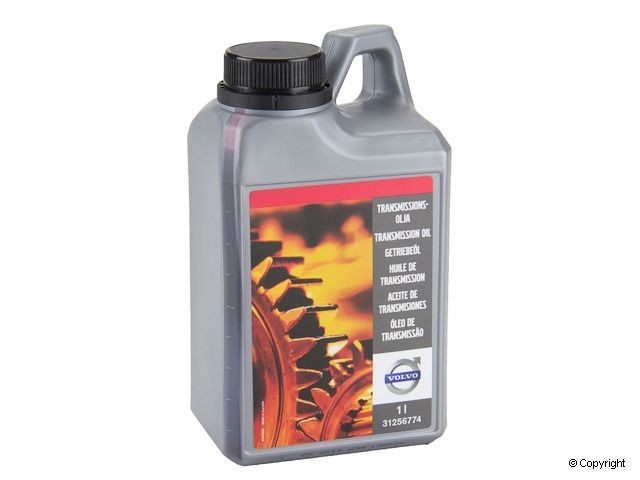
(OEM #JWS 3309 (Volvo 1161640) or AW-1 (Volvo 31256774))— Correct, clean fluid is essential for proper transmission operation. A fluid service is often the first step and is required for any internal repairs. Early models use JWS 3309, later models use AW-1.
Trusted brands: Genuine Volvo, Aisin, Idemitsu (Type-TLS / JWS 3309)
Platform-Specific Known Issues
- Valve Body Wear is Prevalent: On the TF-80SC transmission, the root cause of P0741 is very frequently wear in the valve body bores, not just a bad solenoid. Simply replacing the solenoid without addressing the hydraulic leak from a worn bore can lead to the code returning. Many transmission shops will recommend a valve body rebuild or replacement as the standard, correct fix.
Mechanic-Grade Diagnostic Values
- TCC Solenoid and other Linear Solenoid Resistance — expected: 5.0 - 7.0 Ohms. Failure: A reading outside this range, or a reading that is not 'open' when testing from a pin to the solenoid body, indicates a faulty solenoid.
- TCC Slip RPM (Live Data) — expected: Close to 0 RPM when lock-up is commanded by the TCM.. Failure: If the slip RPM remains high (e.g., over 100 RPM) when the scan tool shows the TCC is commanded to lock, it confirms a mechanical or hydraulic failure of the lock-up system.
- Transmission Fluid Temperature for Adaptation — expected: 150-230°F (65-110°C). Failure: The TCM will not enter the required 'Control Module Adaptation' mode if the fluid temperature is outside this range.
Hidden / Shadow Codes Worth Checking
- TCM-P074100: This is the Volvo-specific format for the generic P0741 code, meaning 'Torque converter clutch solenoid circuit stuck in OFF position'. It doesn't provide new information but confirms the fault is registered by the Transmission Control Module (TCM). (see via This code is visible with Volvo's VIDA diagnostic software or advanced professional scan tools.)
Scan Tool Commands That Help
- Volvo VIDA: Control Module Adaptation / Resetting adaptive values — This function must be used after replacing the valve body, solenoids, or the entire transmission. It clears the learned hydraulic pressure values and forces the TCM to relearn them with the new components. Failing to perform this procedure can result in harsh shifting or the P0741 code returning.
- Volvo VIDA: Reset transmission fluid change counter — This should be performed after a transmission fluid service. While it doesn't directly fix P0741, it's a critical step in proper maintenance that the TCM uses to adjust its parameters based on fluid age.
- Volvo VIDA or advanced scan tool: Live Data Monitoring (Solenoid Current & Slip Speed) — During diagnosis, a technician can monitor the 'solenoid current requested' vs. 'solenoid current actual' for the TCC solenoid (SLU). A significant discrepancy points to an electrical or solenoid fault. Simultaneously watching the torque converter slip speed confirms if the clutch is physically engaging.
Real Owner Repair Stories
- Reddit user in r/Volvo (2016 Volvo XC60, 175,000 km) — Check Engine Light with code TCM-P074100 appeared within a week of purchase.
❌ Tried (didn't work) The initial check by the dealer dismissed the code as 'nothing'.
✅ What actually fixed it The user's post is a request for advice, not a resolution. The Volvo workshop's recommendation was a full gearbox replacement, stating that just replacing the control unit (valve body/TCM) might not solve the problem and would increase costs if it failed. This highlights the common, and expensive, dealer approach to this code. - Volvo Owners Club Forum user Tannaton (2011 Volvo XC90 D5 (Mk1 with TF-80SC Gen 2)) — As part of maintenance, the user changed fluid. After using JWS 3309 fluid, the user experienced horrible, harsh shifts, flaring, and thumping between gears.
❌ Tried (didn't work) Using MANNOL JWS 3309 specification fluid, which was listed in the owner's manual but incorrect for the updated guidance on this specific chassis number.
✅ What actually fixed it The user contacted Volvo and found that for their chassis number, the correct fluid was JWS 3324 / AW-1 (Volvo P/N 31256775). Switching to the correct AW-1 fluid resolved the shifting issues. This story underscores the critical importance of using the correct fluid, as even the owner's manual can be outdated.
OEM Part Supersession History
Volvo 30713214→Volvo 31259456— This is a common supersession for the Gen 1 TF-80SC valve body assembly.
Heads up: Part 31259456 is generally listed for Gen 1 TF-80SC transmissions. Later Gen 2 models may use a different valve body. It is critical to verify the correct part number by VIN, as there are internal differences between valve body generations.JWS 3309 Fluid (e.g., Volvo 1161640)→AW-1 Fluid (e.g., Volvo 31256774)— The Gen 2 version of the TF-80SC transmission, introduced around the 2010-2011 model year, requires the lower viscosity AW-1 (JWS 3324) fluid for proper operation.
Heads up: Using the older, thicker JWS 3309 fluid in a transmission designed for AW-1 can cause harsh shifting, flaring, and potentially trigger fault codes. Conversely, using the thinner AW-1 in a transmission designed for JWS 3309 is also not recommended.
Model Year Variations Within This Range
- 2010-2011 vs 2012-2017: There was a transition from the JWS 3309 transmission fluid to the thinner AW-1 (JWS 3324) fluid around the 2010-2011 model years for the 'Gen 2' TF-80SC. While the P0741 causes are the same, using the incorrect fluid can cause identical symptoms and lead to misdiagnosis. Always verify the required fluid type via VIN with a dealer or by checking Volvo's updated service information, as owner's manuals may be outdated.
Diagnostic Flowchart
Other Known Issues on This Vehicle
Issues unrelated to this code that are worth knowing about as an owner of this generation:
- Excessive Oil Consumption (T6 & some Drive-E Engines) 🔴 High — Common on 2012-2016 T6 and 2015.5+ Drive-E engines, often appearing after 50,000 miles. Can lead to piston ring replacement. (Ref: No recall, but internal Volvo technical journals exist acknowledging the issue.)
- PCV System Failure (All Engines) 🟠 Medium — The PCV diaphragm is considered a wear item and often fails between 60,000-100,000 miles, causing a loud whistle, high crankcase pressure, and potential oil seal leaks.
- Haldex AWD Pump/DEM Failure 🟠 Medium — Common on AWD models around 40,000-80,000 miles. The AOC pump fails or its filter clogs, disabling the AWD system and often setting a P1889 code.
- Suspension Bushing and Mount Wear 🟡 Low — Front control arm bushings and top strut mounts can wear out prematurely, causing clunking noises over bumps and affecting alignment. Typically noticed after 60,000 miles.
- Infotainment System Glitches 🟡 Low — Owners report issues with the Sensus infotainment system, including screen freezing, slow response, or blank screens that may require a software update or reset to resolve.
Used vs. New Parts: Buying Guide for This Vehicle
When a used part is the smart pick: A complete, low-mileage used transmission from a reputable salvage yard can be a cost-effective alternative to a full rebuild or a new unit from Volvo, especially if the torque converter or internal hard parts are condemned. Buying a used valve body is risky due to the high probability of the same wear issues being present.
Donor-vehicle mileage cap: roughly under 80000 miles for the part to have meaningful remaining life.
What to inspect on the donor part:
- Verify the donor vehicle's mileage and check its history report for accidents or maintenance records if possible.
- Inspect the transmission fluid from the donor unit. If it's dark, burnt, or contains metallic particles, avoid it.
- Ensure the part number on the transmission tag matches your original unit exactly.
- Ask for a warranty (typically 30-90 days) from the salvage yard.
OEM-only on this vehicle (don't cheap out):
- Transmission Control Module (TCM): Aftermarket or used TCMs often have programming and compatibility issues. A new or remanufactured Genuine Volvo part is the safest bet.
- Valve Body: While aftermarket rebuild kits are excellent, a complete remanufactured valve body from a specialist like RevMax or a Genuine Volvo unit is recommended over a used one from a junkyard.
Aftermarket brands forum-validated for this vehicle:
- Sonnax: For valve body rebuild kits (e.g., Zip Kit TF80SC-ZIP) and oversized replacement valves. They are the industry standard for addressing the root cause of valve body wear.
- Rostra: A well-regarded manufacturer of aftermarket transmission solenoids.
- Aisin: As the original manufacturer of the transmission, Aisin-branded fluid (ATF-WS for AW-1 spec) is a reliable alternative to Genuine Volvo fluid.
Brands owners have reported issues with on this vehicle:
- Generic, unbranded solenoids or valve bodies from online marketplaces. These often have high failure rates and do not meet OEM specifications, leading to repeat repairs.
Real Owner Stories
Aggregated from forums and TSBs cited above. Mileages and costs reflect what owners reported in those sources.
2016 Volvo XC60
Symptoms: Reported code TCM-P074100; workshop advised that a full gearbox replacement might be necessary.
What fixed it: The source notes that while gearbox replacement was suggested, many users on the platform resolve this via valve body replacement or rebuilds.
Source hint: reddit.com
Volvo XC60 (P3 Platform) — ~120000 miles
Symptoms: P0741 code and shift quality issues.
What fixed it: Multiple drain-and-fills using the correct JWS-3309/AW-1 fluid, though the source notes high-mileage cases often eventually require valve body work.
Source hint: matthewsvolvosite.com
Volvo XC60 (P3 Platform)
Symptoms: P0741 code related to the TF-80SC transmission.
What fixed it: Valve body replaced or rebuilt by specialists like Level 10 or using Sonnax kits.
Source hint: swedespeed.com
Related OBD-II Codes
Frequently Asked Questions
Which transmission fluid should I use for my 2012 Volvo XC60 to avoid P0741 issues?
My XC60 is showing TCM-P074100; does this mean I need a whole new gearbox?
Can I check the transmission fluid level myself on my 2015 XC60?
Is the P0741 code on my XC60 usually just a bad sensor?
What are the symptoms of a failing TCC solenoid in the Aisin TF-80SC?
Helpful Videos


Used OEM Parts in Stock

New Aftermarket Parts Available

The information in this article is provided for general reference and educational purposes only. Vehicle specifications, procedures, and part compatibility can vary by production date, trim level, and region. Always consult your vehicle's factory service manual and verify part numbers before purchasing or performing repairs. Safety-critical components such as airbags, seat belts, and braking systems should be installed by a qualified professional.
- Volvo XC60:
- 🎬 Helpful Videos
- 🛍️ Shop This Part
- What's Unique About the 2010-2017 Volvo XC60
- Symptoms You May Notice
- Most Likely Causes
- Rare But Worth Checking
- Diagnosis Steps
- Parts You'll Likely Need
- Platform-Specific Known Issues
- Mechanic-Grade Diagnostic Values
- Hidden / Shadow Codes Worth Checking
- Scan Tool Commands That Help
- Real Owner Repair Stories
- OEM Part Supersession History
- Model Year Variations Within This Range
- Diagnostic Flowchart
- Other Known Issues on This Vehicle
- Used vs. New Parts: Buying Guide for This Vehicle
- Real Owner Stories
- 2016 Volvo XC60
- Volvo XC60 (P3 Platform) — ~120000 miles
- Volvo XC60 (P3 Platform)
- Related OBD-II Codes
- Frequently Asked Questions
- 🎟️ Get 5% Off