

P0741 on 2008-2017 Mitsubishi Lancer: Torque Converter Clutch and CVT Failure Guide
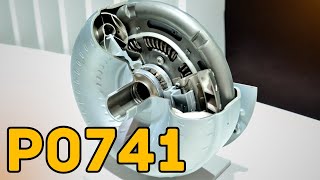
On a 2008-2017 Lancer, P0741 indicates the torque converter clutch is failing to lock up, a common issue with its Jatco JF011E CVT transmission. While it can sometimes be caused by old fluid or a bad solenoid, it frequently points to a failing valve body or a major internal transmission failure. This often requires a complete CVT replacement costing several thousand dollars, as simpler fixes are often temporary or ineffective.
- P0741 on a 2008-2017 Lancer is a serious code indicating a failure in the torque converter lock-up system, which is integral to the CVT.
- While low/bad fluid or a faulty solenoid can be the cause, this code very frequently points to a more severe failure of the valve body or the entire CVT assembly.
- Be prepared for a costly repair. Diagnosis can be a process of elimination, and many owners find that the only long-term solution is to replace the entire transmission.
- Always use the exact specification of CVT fluid (e.g., Mitsubishi CVTF-J1/J4). Using the wrong fluid can cause or worsen this problem.
- Due to the complexity of the CVT, this is not a recommended DIY repair. Seek a professional diagnosis from a shop experienced with CVTs.
What's Unique About the 2008-2017 Mitsubishi Lancer
The 2008-2017 Lancer primarily uses a Jatco JF011E Continuously Variable Transmission (CVT), also known by Mitsubishi's designation F1CJA or Nissan's part number RE0F10A. This specific transmission is notorious for developing issues that lead to code P0741 across multiple brands, including Nissan, Jeep, and Dodge. While the code points to the torque converter clutch system, on this platform it is often a symptom of a more severe underlying problem within the CVT, such as a worn valve body, failing oil pump, or stretched/slipping belt. Owners often find that replacing individual components like solenoids does not solve the problem, leading to the conclusion that the entire CVT unit needs replacement.
Generation note: The 2008-2017 Lancer is primarily the ninth generation (known as the Lancer EX). Throughout this period, the Jatco JF011E CVT was a common transmission option. The issues related to P0741 are consistent across this generation for CVT-equipped models and are also seen in platform mates using the same transmission.
Symptoms You May Notice
- Check Engine Light is on.
- Vehicle enters 'limp mode' with reduced power and acceleration, sometimes flashing a 'SLOW DOWN' warning.
- Sensation of transmission slipping, shuddering, or vibrating, especially during acceleration or at highway speeds.
- Engine RPM is higher than usual when cruising, as the torque converter fails to lock.
- Noticeable decrease in fuel economy.
- Car may stall after driving at highway speeds.
- A whining or grinding noise from the transmission area, which can indicate oil pump or gear issues.
- Inability to accelerate properly, as cited by an owner in NHTSA complaint ODI #11306186.
- Replacing only the TCC solenoid when the root cause is a worn valve body or failing torque converter. An owner reported replacing the solenoid and torque converter, yet the problem remained, pointing to a larger CVT issue.
- Performing a fluid change without resetting the CVT fluid deterioration counter in the TCM. This can lead to incorrect line pressure calculations and continued shifting problems.
Most Likely Causes
- Low, Degraded, or Incorrect CVT Fluid 🟡 Medium Probability CVTs are highly sensitive to fluid condition and type. The correct fluid (Mitsubishi CVTF-J1, or the superseding CVTF-J4) is required for proper hydraulic pressure and friction characteristics. Use of non-specified fluids can cause this code. The TCM also tracks a 'fluid deterioration level' which must be reset with a scan tool after a fluid change.
How to confirm: Check the transmission fluid level and condition. The fluid should be clear and not smell burnt. Dark, dirty fluid with metal particles indicates significant internal wear. Note: Some models had incorrect dipsticks from the factory, leading to overfilling issues.
Typical fix: Perform a CVT fluid drain and fill with the correct OEM fluid and replace both the internal and external filters. On high-mileage vehicles, a full flush is sometimes discouraged, so a drain-and-fill is a safer first step. Crucially, the CVT fluid degradation counter must be reset using a MUT-III or compatible scan tool.
Est. part cost: $100-$250 for fluid and filters - Faulty Torque Converter Clutch (TCC) Lock-Up Solenoid 🟡 Medium Probability The solenoid is an electro-mechanical part inside the transmission that can fail electrically or become stuck from contaminated fluid.
How to confirm: A technician can use a scan tool to command the TCC solenoid on and off to check its response. The solenoid's electrical resistance can also be tested. For the JF011E, the TCC (Lock-up Control) solenoid resistance should be 3-9 Ω. This requires dropping the transmission oil pan.
Typical fix: Replace the TCC solenoid, which is located on the valve body. This is often done as part of a solenoid pack replacement.
Est. part cost: $50-$150 for a single solenoid, $200-$400 for a pack - Worn or Failing CVT Valve Body 🔴 High Probability The Jatco CVT's valve body is a known weak point. Bores within the valve body, particularly the torque converter pressure regulator valve bore, can wear over time. This causes hydraulic pressure loss that prevents the TCC from engaging, even with a good solenoid.
How to confirm: This is difficult to confirm without ruling out other causes first. If fluid and solenoid replacement do not fix the issue, the valve body is the next logical suspect. A vacuum test on the valve body can confirm bore wear.
Typical fix: Replace the entire valve body assembly. Some specialists offer rebuild services or sell oversized valve kits (e.g., Sonnax 113741-13K) to repair worn bores. After replacement, an initialization procedure must be performed with a MUT-III scan tool.
Est. part cost: $500-$1200 for a remanufactured assembly - Catastrophic Internal CVT Failure 🔴 High Probability As documented in owner forums and NHTSA complaints, P0741 is often the first sign of the end of the CVT's life. This can include a failing torque converter, slipping/damaged belt and pulleys, or a failing oil pump. [5, 9, ODI #11301147]
How to confirm: Confirmed when all other simpler fixes (fluid, solenoid, valve body) fail to resolve the code, or when a transmission inspection reveals significant metal debris in the pan.
Typical fix: Complete replacement of the CVT assembly with a new or remanufactured unit. Some owners have opted for a manual transmission swap.
Est. part cost: $2500-$6000+
Rare But Worth Checking
- Damaged Wiring Harness: Check the wiring and connectors between the TCM and the transmission for any corrosion or damage before condemning internal components.
- Faulty Transmission Control Module (TCM): While listed as a possible cause by Mitsubishi, a failed TCM is rare and should only be considered after all other mechanical and electrical possibilities have been exhausted.
Diagnosis Steps
- Check for other transmission-related DTCs. Address codes like P0746 or P0868 first, as they can cause P0741.
- Inspect the CVT fluid level and condition. If it's low, top it off. If it's dark, burnt, or full of debris, a fluid and filter change is a necessary first step, but be aware it may not solve a deeper mechanical issue.
- Using a professional scan tool (like Mitsubishi's MUT-III), check the stored CVT fluid deterioration value. If high, a fluid change and counter reset are required.
- Using a professional scan tool, monitor live data for TCC command vs. actual slip RPM to confirm the slippage. The slip should drop to near zero when lock-up is commanded.
- Inspect the external wiring harness and connectors leading to the transmission for any visible damage or corrosion.
- If accessible, test the TCC lock-up solenoid's resistance (should be 3-9 Ω). This typically requires removing the transmission pan.
- If the fluid and solenoid are good, the next likely culprits are the valve body or the torque converter itself. A valve body vacuum test can check for bore wear.
- Given the high failure rate of the CVT, if simpler fixes don't work, a full transmission replacement is the most probable solution. Ensure all post-replacement initialization and learning procedures are completed.
Parts You'll Likely Need
- CVT Assembly (Transmission)
(OEM #F1CJA (Jatco JF011E))— Due to the common failure of the Jatco JF011E CVT in these vehicles, replacing the entire unit is often the only permanent fix for P0741 after simpler attempts fail.
Trusted brands: Mitsubishi (OEM Remanufactured), Jatco (OEM)
OEM price range: $4000-$6000
Aftermarket price range: $2500-$4000 (Remanufactured) - CVT Valve Body — Worn channels in the valve body are a frequent cause of the hydraulic pressure loss that triggers P0741.
Trusted brands: Rostra, Sonnax (offers repair kits, e.g., 113741-13K), World Wide Specialty Parts (Rebuild Service)
OEM price range: $800-$1500
Aftermarket price range: $500-$900 - CVT Fluid (Type J4)
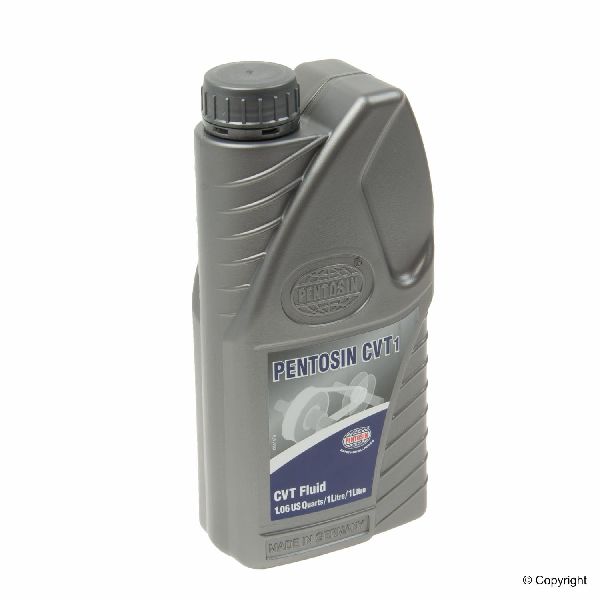
(OEM #MZ320185 (DiaQueen CVTF-J4))— The correct fluid is essential for the hydraulic operation of the CVT. CVTF-J4 is the recommended fluid, superseding J1. Using incorrect fluid is a primary cause of transmission problems.
Trusted brands: Mitsubishi Diamond Queen CVTF-J4, Idemitsu N3, ENEOS ECO CVT
OEM price range: $25-$35 per quart
Aftermarket price range: $15-$25 per quart
Related Codes That Often Appear With This One
- P0746 — Relates to a pressure control solenoid performance issue, indicating a widespread hydraulic control problem within the CVT.
- P0868 — Indicates secondary fluid pressure is low, which often accompanies major hydraulic leaks or pump issues within the CVT.
Platform-Specific Known Issues
- Owner Experience: The Full Gamut of Failed Fixes: A 2008 Lancer owner on a Mitsubishi forum documented their journey with P0741. After the code appeared, they changed the fluid and filters, replaced all valve body solenoids, and even replaced the torque converter itself. The problem persisted after every step. Ultimately, they gave up on repairing the CVT and spent $2,500 to swap in a manual transmission.
Mechanic-Grade Diagnostic Values
- TCC (Lock-up Control) Solenoid Resistance — expected: 3 - 9 Ω. Failure: Reading outside of this range indicates a faulty solenoid coil.
- Secondary Pressure Control Solenoid Resistance — expected: 3 - 9 Ω. Failure: Reading outside of this range indicates a faulty solenoid coil.
- TCC Select Solenoid Resistance — expected: 17 - 38 Ω. Failure: Reading outside of this range indicates a faulty solenoid coil.
- Torque Converter Slip Revolution (Live Data) — expected: Near 0 RPM when lock-up is commanded and active.. Failure: A sustained difference of 40 RPM or more (at speed) between engine RPM and primary pulley speed for over 30 seconds when lock-up is commanded.
Scan Tool Commands That Help
- Mitsubishi MUT-III SE: CVT oil degradation level reset — This is a mandatory procedure after changing the CVT fluid. The TCM uses this counter to adjust line pressures. Failure to reset it can cause continued shifting issues and premature wear even with fresh fluid.
- Mitsubishi MUT-III SE: Initialization Procedure for CVT Learned Value (Reset C/V initial & learned value) — This must be performed after replacing the CVT assembly or the valve body. It erases all adaptive learning values from the TCM to allow it to relearn the characteristics of the new components.
- Mitsubishi MUT-III SE: Control valve learning mode — After performing an initialization, this function helps the TCM learn the new hydraulic characteristics of the valve body solenoids.
- Mitsubishi MUT-III SE: Write calibration value — On some later model CVTs (like the CVT8/F1CJC), the valve body or transmission assembly has a unique calibration file that must be written to the TCM upon replacement for proper operation.
Wiring & Ground Locations
- Transmission Case Ground — On Mitsubishi and Nissan vehicles using the JF011E, all solenoids are grounded internally to the transmission case via a single eyelet.. Unlike Dodge/Jeep versions which use an external ground pin in the main connector, a poor internal ground connection within the transmission could cause multiple solenoid codes, including P0741. This is less common than component failure but important for deep electrical diagnosis.
- Transmission Pass-Through Connector — The main electrical harness connector on the exterior of the CVT case.. This is the primary point for checking wiring integrity between the TCM and the transmission's internal components. Corrosion or damage here can interrupt the signal to the TCC solenoid, causing P0741.
Real Owner Repair Stories
- Mitsubishi Forum user (2011 Outlander Sport SE 2.0L (same F1CJA CVT as Lancer)) — Engine failure, decided to swap in a newer engine and transmission from a 2016 model.
❌ Tried (didn't work) Swapped a 2016 F1CJC CVT into a 2011 vehicle that originally had an F1CJA CVT.
✅ What actually fixed it The swap resulted in multiple transmission codes, including P0740 (TCC Circuit Open), P0745, P0778, and P1777. The user's experience demonstrates that swapping different revisions of the CVT (F1CJA vs F1CJC) is not plug-and-play due to internal electronic differences, even if they physically bolt up. The fix would require reverting to the correct transmission model or attempting a complex TCM and wiring harness swap.
OEM Part Supersession History
Mitsubishi DiaQueen CVTF-J1→Mitsubishi DiaQueen CVTF-J4 (P/N: MZ320185)— Improved formulation for durability and performance.
Heads up: CVTF-J4 is backward compatible and is the recommended fluid for all Lancers that originally specified J1. Do not use standard ATF or other CVT fluids not meeting the J4 specification.
Model Year Variations Within This Range
- 2008-2017: While the base JF011E (F1CJA) transmission was used for many years, later models and related vehicles (like the Outlander Sport) introduced revised versions like the F1CJC (CVT8). As shown in a real repair story, these transmissions are not directly interchangeable due to differences in internal electronics and control strategies, even if they appear physically similar. Swapping between major revisions will cause multiple DTCs.
- 2010 and later: Beginning around the 2010 production year, Mitsubishi eliminated the Primary Pressure Sensor (also called Pressure Sensor A) from the JF011E valve body. This is a key difference to be aware of when sourcing a replacement valve body.
Diagnostic Flowchart
Other Known Issues on This Vehicle
Issues unrelated to this code that are worth knowing about as an owner of this generation:
- ETACS ECU Failure 🔴 High — Common enough to trigger a safety recall for 2009-2010 models. Can cause loss of headlights, wipers, and other critical functions. (Ref: Safety Recall Campaign (June 2015))
- ASC / ABS Module Failure 🟠 Medium — The 'ASC System Service Required' warning is a common complaint. It disables stability control and ABS. Often caused by a faulty ABS hydraulic unit, which can be expensive to replace. (Ref: Recalls existed for some models/years (e.g., SR-18-008 for other Mitsubishis), but Lancer owners often report paying for repairs.)
- Engine Stalling at Idle 🟠 Medium — Owners report intermittent stalling when slowing down or at a stop. Often attributed to a dirty throttle body or a faulty MAP sensor.
- Premature Clear Coat / Paint Failure 🟡 Low — Many owners, particularly of 2008 models, report peeling and flaking of the clear coat and paint on various body panels.
- Front Subframe Corrosion 🔴 High — In regions that use road salt, the front subframe is prone to severe rust, which can compromise structural integrity. A recall was issued for earlier models, but the issue can still affect the 2008 model year. (Ref: Recall for 2002-2008 models)
Used vs. New Parts: Buying Guide for This Vehicle
When a used part is the smart pick: Due to the extremely high failure rate and cost of new/reman units, a low-mileage used CVT assembly from a reputable wrecker is a common, albeit risky, repair strategy. It makes the most sense when the cost of a remanufactured unit exceeds the value of the vehicle.
Donor-vehicle mileage cap: roughly under 60000 miles for the part to have meaningful remaining life.
What to inspect on the donor part:
- Verify the exact transmission model (e.g., F1CJA) from the donor vehicle's ID plate to ensure compatibility.
- Obtain vehicle history if possible to check for regular fluid changes.
- Inspect the fluid from the donor transmission. If it's dark, burnt, or contains metal shavings, reject the unit.
- Ask for a warranty from the salvage yard, even if it's only 30-90 days, to protect against an immediate failure.
OEM-only on this vehicle (don't cheap out):
- CVT Assembly (Transmission): While aftermarket remanufactured units exist, their quality can be inconsistent. An OEM remanufactured unit or a known good, low-mileage used unit are generally the preferred, though more expensive, options.
- CVT Fluid: Strictly use Mitsubishi CVTF-J4 or a fully compatible equivalent like ENEOS ECO CVT or Idemitsu N3. Using the wrong fluid is a primary cause of failure.
Aftermarket brands forum-validated for this vehicle:
- Sonnax (for valve body repair kits)
- Rostra (for remanufactured valve bodies and solenoids)
Brands owners have reported issues with on this vehicle:
- No-name, unbranded solenoids and valve bodies from online marketplaces are highly suspect and often fail quickly.
Real Owner Stories
Aggregated from forums and TSBs cited above. Mileages and costs reflect what owners reported in those sources.
2008 Mitsubishi Lancer
Symptoms: The owner experienced a P0741 code and attempted multiple repairs including changing fluid and filters, replacing all valve body solenoids, and replacing the torque converter.
What fixed it: The owner eventually gave up on the CVT and performed a manual transmission swap.
Cost: $2,500-$2,500
Source hint: vehicle_specific_issues: Owner Experience: The Full Gamut of Failed Fixes
2008-2017 Mitsubishi Lancer
Symptoms: Inability to accelerate properly.
What fixed it: Complete replacement of the CVT assembly with a new or remanufactured unit.
Source hint: NHTSA complaint ODI #11306186
Mitsubishi Lancer (Jatco JF011E)
Symptoms: Exact lock-up problems and difficulty finding technicians willing to rebuild the unit.
What fixed it: Standard transmission replacement.
Source hint: Reddit.com (r/MechanicAdvice)
Related OBD-II Codes
Frequently Asked Questions
What specific CVT fluid should I use for my 2008-2017 Mitsubishi Lancer to avoid P0741?
Is there a specific maintenance step required after changing the transmission fluid on my Lancer?
Can a faulty valve body be repaired on the Lancer's Jatco CVT, or must it be replaced?
What is the correct electrical resistance for the TCC lock-up solenoid on the Lancer's JF011E transmission?
I'm seeing a 'SLOW DOWN' warning on my dash along with P0741; what does this mean?
Are there any known issues with the dipsticks on these Lancers?
Helpful Videos

We Have This Part in Stock

The information in this article is provided for general reference and educational purposes only. Vehicle specifications, procedures, and part compatibility can vary by production date, trim level, and region. Always consult your vehicle's factory service manual and verify part numbers before purchasing or performing repairs. Safety-critical components such as airbags, seat belts, and braking systems should be installed by a qualified professional.
- Mitsubishi Lancer:
- 🎬 Helpful Videos
- 🛍️ Shop This Part
- What's Unique About the 2008-2017 Mitsubishi Lancer
- Symptoms You May Notice
- Most Likely Causes
- Rare But Worth Checking
- Diagnosis Steps
- Parts You'll Likely Need
- Related Codes That Often Appear With This One
- Platform-Specific Known Issues
- Mechanic-Grade Diagnostic Values
- Scan Tool Commands That Help
- Wiring & Ground Locations
- Real Owner Repair Stories
- OEM Part Supersession History
- Model Year Variations Within This Range
- Diagnostic Flowchart
- Other Known Issues on This Vehicle
- Used vs. New Parts: Buying Guide for This Vehicle
- Real Owner Stories
- 2008 Mitsubishi Lancer
- 2008-2017 Mitsubishi Lancer
- Mitsubishi Lancer (Jatco JF011E)
- Related OBD-II Codes
- Frequently Asked Questions
- 🎟️ Get 5% Off