

P0741 on 2011-2015 Kia Optima: Causes and Fixes for Torque Converter Clutch Issues
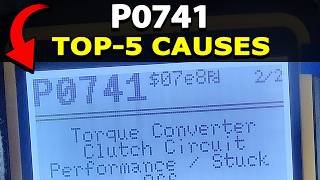
P0741 on a 2011-2015 Kia Optima is almost always caused by a failed torque converter clutch solenoid, also known as the Damper Clutch Solenoid. Kia has issued technical service bulletins for this known issue. The fix involves replacing the solenoid inside the transmission, a repair that can often be done without removing the entire transaxle.
- P0741 on a 2011-2015 Optima is a known issue with a specific fix.
- The most probable cause is a failed Torque Converter Clutch (TCC) Solenoid, which Kia calls the Damper Clutch Solenoid.
- Do not replace the entire transmission; Kia's own service bulletins advise replacing only the solenoid.
- Always check the transmission fluid level and condition first, as low or dirty fluid can cause similar symptoms.
- This repair requires accessing internal transmission components, so professional service is strongly recommended unless you are an experienced DIY mechanic.
What's Unique About the 2011-2015 Kia OPTIMA
This is a well-documented issue on the 2011-2015 Kia Optima and its platform mates (like the Hyundai Sonata) that use the 6-speed automatic transmission. Kia has released specific Technical Service Bulletins (TSBs), including TSB-TRA051 and its revision TSBTRA051R1, that directly address P0741. These bulletins identify the Damper Clutch (D/C) Solenoid—another name for the TCC solenoid—as the primary culprit and provide instructions for its replacement, often without needing to remove the entire transaxle.
Diagnostic Flowchart
Tap your situation to follow the diagnostic path that matches what you're seeing on this vehicle.
Symptoms You May Notice
- Check Engine Light is on
- Reduced fuel efficiency due to lack of TCC lockup.
- Engine RPMs are higher than usual at highway speeds (e.g., floating or swinging by 200-400 RPM).
- Transmission may feel like it's slipping or hunting for gears at cruising speeds.
- Vehicle may shudder or vibrate at cruising speeds (40-65 mph) 🎬 Watch: Understanding the causes and fixes for code P0741, often described as feeling like driving over rumble strips.
- Engine may stall when coming to a stop (if the solenoid fails in the 'stuck on' position, which is less common for this code).
- Harsh or delayed shifts as the transmission control module tries to compensate for the fault.
- Replacing the entire transmission. Kia's TSBs specifically advise against replacing the whole transaxle, as the issue is typically just the solenoid. An unnecessary transmission replacement can cost thousands.
- Replacing the torque converter. While the converter can fail, the solenoid is a far more common and cheaper failure point. The solenoid should always be the first component to be diagnosed and replaced.
Most Likely Causes
- Failed Torque Converter Clutch (TCC) Solenoid / Damper Clutch (D/C) Solenoid 🔴 High Probability This is a known, widespread issue acknowledged by Kia through multiple Technical Service Bulletins (TSB-TRA051, TSBTRA051R1). The bulletins specifically instruct dealers to replace this solenoid for a P0741 code, indicating a high failure rate of the original part.
How to confirm: A technician can use a diagnostic scan tool to monitor TCC slip RPM and command the solenoid on/off while listening for a click. The solenoid's resistance can also be tested with a multimeter (once accessed) and compared to specifications 🎬 See how to clean and test your transmission solenoids; it should be approximately 5.0 ohms.
Typical fix: Replace the faulty solenoid inside the transmission. The TSBs state to replace the solenoid, not the entire transaxle. This involves dropping the transmission pan and valve body cover to access the solenoid block.
Est. part cost: $60-$120 for an OEM solenoid. - Low or Dirty Transmission Fluid 🟡 Medium Probability Transmission fluid is the hydraulic medium for the solenoids. If the fluid is low, degraded, or contaminated with clutch material, it can clog the small passages in the solenoid and valve body, preventing proper operation.
How to confirm: Check the transmission fluid level and condition. The fluid should be pink/red and not smell burnt. Dark fluid or the presence of metallic particles indicates significant wear.
Typical fix: Perform a transmission fluid and filter change using the specified Kia Genuine ATF SP-IV fluid. If the solenoid is replaced, a fluid change is a required part of the service.
Est. part cost: $75-$150 for fluid and filter - Internal Wiring Harness Damage ⚪ Low Probability
How to confirm: During solenoid replacement, visually inspect the wiring harness inside the transmission pan for any signs of brittleness, damaged insulation, or loose connections at the solenoid connectors.
Typical fix: Repair or replace the damaged section of the wiring harness. In some cases, the entire internal harness is replaced as a preventative measure.
Est. part cost: $50-$200
Rare But Worth Checking
- Failing Torque Converter: While less common than the solenoid, the internal lock-up clutch of the torque converter can wear out and fail. This is a much more expensive repair requiring transmission removal and is usually suspected if a new solenoid doesn't fix the issue or if there is a large amount of metal debris in the fluid.
- Faulty Valve Body: The valve body directs hydraulic fluid. Clogged passages from debris or internal wear can cause pressure issues that trigger a P0741 code even with a good solenoid. Sometimes the valve body is replaced if solenoid replacement fails to resolve the code.
- Faulty Powertrain Control Module (PCM) or Software Logic: This is very rare. On some newer Kia models like the Telluride, a TSB was issued for a software update to fix erroneous P0741 codes, but this is less documented for the 2011-2015 Optima. The PCM should only be considered after all other possibilities are exhausted.
Diagnosis Steps
- Verify the code with a quality OBD-II scanner.
- Check the transmission fluid level and condition. Fluid should be at the correct level, pinkish-red, and free of debris or a burnt smell.
- Using an advanced scan tool, monitor live data for Torque Converter Clutch slip RPM while driving at highway speed. A slip of more than ~160 RPM when the TCC is commanded 'on' (duty cycle > 80%) confirms a failure to lock up.
- Perform an actuation test on the TCC solenoid using the scan tool, listening for an audible click from the transmission pan with a stethoscope.
- Inspect the external transmission wiring harness for any visible damage.
- If tests point to the solenoid, drain the ATF and drop the transmission pan.
- Visually inspect the internal wiring. Test the resistance of the TCC solenoid with a multimeter and compare it to the manufacturer's specifications. It should read approximately 5.0-5.1 ohms.
- If the solenoid tests bad or is the presumed cause based on the TSBs, replace it. It is often part of a larger solenoid block. 🎬 Watch: Step-by-step guide to removing and replacing the solenoid
- Reassemble with a new pan gasket, refill with Kia Genuine ATF SP-IV fluid to the correct level, clear the code, and perform a test drive to verify the repair.
Parts You'll Likely Need
- Torque Converter Clutch Solenoid (Damper Clutch Solenoid)
(OEM #46313-3B770)— This is the specific part identified by Kia's TSBs as the primary failure point for code P0741. It controls the lockup clutch. Vehicle fitment for this part includes the 2014-2020 Optima, as well as many Sorento, Sportage, and Cadenza models.
Trusted brands: Kia/Hyundai (Genuine OEM)
OEM price range: $70-$120
Aftermarket price range: $50-$90 - Transmission Fluid
(OEM #SP-IV)— The fluid must be drained and replaced when the transmission pan is dropped. Using the correct OEM-specified fluid is critical for transmission health.
Trusted brands: Kia/Hyundai Genuine ATF SP-IV
OEM price range: $15-$25 per quart
Aftermarket price range: $10-$20 per quart - Transmission Pan Gasket — It is standard practice to replace the gasket any time the transmission pan is removed to prevent leaks. Some pans use RTV sealant instead of a pre-formed gasket.
OEM price range: $40-$70
Aftermarket price range: $25-$50
Related Codes That Often Appear With This One
- P0743 — This code indicates an electrical circuit fault (e.g., open or short) for the TCC solenoid, which can appear alongside the P0741 performance code if the solenoid has failed electrically.
- P0753, P0758, P0763, etc. — These are electrical fault codes for other shift solenoids. TSB TSBTRA051R1 lists P0741 along with many other solenoid codes, suggesting a common failure of the solenoid block, harness, or a shared power/ground issue.
Technical Service Bulletins (TSBs) & Recalls
- TSB-TRA051: '6 SPD A/T SOLENOID REPLACEMENT – DTC P0741' - This bulletin provides information on replacing the Damper Clutch (D/C) Solenoid for code P0741 instead of replacing the transaxle.
- TSBTRA051R1: '6 SPD A/T SOLENOID REPLACEMENT – MULTIPLE DTCS' - This revised bulletin expands the procedure to include other solenoid-related DTCs that may appear with P0741.
Platform-Specific Known Issues
- Kia issued TSB-TRA051 and the revised TSBTRA051R1 specifically for this problem. They instruct technicians to replace the Damper Clutch (D/C) Solenoid for a P0741 code, rather than the entire transmission. This strongly indicates a known weakness in the original solenoid.
- The repair can be performed with the transaxle still in the vehicle, which significantly reduces labor time and cost compared to a full transmission removal.
Mechanic-Grade Diagnostic Values
- Torque Converter Clutch (TCC) Solenoid Resistance — expected: 5.0 - 5.1 Ohms. Failure: A reading of 0 ohms (short circuit), infinite/OL (open circuit), or a value significantly different from 5 ohms indicates a faulty solenoid.
- On/Off Shift Solenoid Resistance (e.g., SSA, SSB) — expected: 10 - 11 Ohms. Failure: A reading significantly different from 10-11 ohms. This is useful if other solenoid codes are present with P0741.
Scan Tool Commands That Help
- Kia GDS (or equivalent advanced bidirectional scanner): Solenoid Actuation Test / Output Test — This command is used to manually cycle the TCC solenoid on and off while the vehicle is stationary. A technician can use a stethoscope on the transmission pan to listen for an audible 'click,' which confirms the solenoid is mechanically responding to the electrical command. It also allows for monitoring of live data to see if the command registers correctly in the TCM.
Wiring & Ground Locations
- Transmission Main Harness Connector — On the top/front of the transmission, typically located below the battery and air filter housing.. This is the primary connection point between the Transmission Control Module (TCM) and all internal transmission components, including the TCC solenoid. TSB-TRA051 advises checking this connector and the harness running to it for damaged pins, corrosion, or loose connections before condemning internal parts.
- Transmission Case Ground — A grounding strap or wire bolted directly from the vehicle's chassis/frame to a bolt on the transmission case.. A poor ground connection can cause erratic behavior in electronic components, including solenoids. While not a primary cause for this specific code, ensuring the main transmission ground is clean and tight is a fundamental step in diagnosing any electronic transmission fault.
Real Owner Repair Stories
- YouTube channel 'Motorcar Nut' (2015 Kia Optima with A6MF1 6-speed transmission) — General shifting quality problems, which are often associated with solenoid performance codes like P0741.
❌ Tried (didn't work) The video focuses on a proactive diagnostic and cleaning procedure rather than listing failed parts.
✅ What actually fixed it The technician removed the valve body, then removed, cleaned, and tested each individual solenoid. He sprayed the solenoids with electronics cleaner, actuated them with a 12V power source to confirm a strong 'click,' and re-tested their resistance to ensure they were still in spec (approx. 5 ohms for PWM solenoids) after being energized. This process can restore function to a solenoid that is sticking due to contamination, potentially resolving the P0741 code without part replacement.
OEM Part Supersession History
Multiple variations (e.g., 46313-3B075, 46313-3B065)→46313-3B770— Part consolidation and design updates.
Heads up: While multiple solenoids exist for the A6MF1 valve body, part number 46313-3B770 is specifically designated for the Torque Converter Clutch (and 2-6 Brake) function. Ordering a generic 'solenoid kit' may not provide the correct, updated part for the TCC position, so it's crucial to order this specific number for a P0741 fault.
Model Year Variations Within This Range
- 2011-2015: The core cause of P0741 (TCC solenoid failure) is consistent across this range as both pre-facelift (2011-2013) and facelift (2014-2015) models use the same A6MF1 6-speed automatic transmission. However, a separate TSB (TRANS 043) was issued for a potentially faulty transmission fluid temperature sensor on 2011-2014 models, which can cause other shifting issues and is a rare but possible related problem to investigate.
Helpful Videos



Used OEM Parts in Stock


New Aftermarket Parts Available





The information in this article is provided for general reference and educational purposes only. Vehicle specifications, procedures, and part compatibility can vary by production date, trim level, and region. Always consult your vehicle's factory service manual and verify part numbers before purchasing or performing repairs. Safety-critical components such as airbags, seat belts, and braking systems should be installed by a qualified professional.
- Kia OPTIMA:
- 🎬 Helpful Videos
- 🛍️ Shop This Part
- What's Unique About the 2011-2015 Kia OPTIMA
- Diagnostic Flowchart
- Symptoms You May Notice
- Most Likely Causes
- Rare But Worth Checking
- Diagnosis Steps
- Parts You'll Likely Need
- Related Codes That Often Appear With This One
- Technical Service Bulletins (TSBs) & Recalls
- Platform-Specific Known Issues
- Mechanic-Grade Diagnostic Values
- Scan Tool Commands That Help
- Wiring & Ground Locations
- Real Owner Repair Stories
- OEM Part Supersession History
- Model Year Variations Within This Range
- 🎟️ Get 5% Off