

P0741 on 2005-2010 Chevrolet Cobalt: Torque Converter Clutch Causes and Fixes
P0741 on a 2005-2010 Cobalt usually points to a failed Torque Converter Clutch (TCC) solenoid inside the 4T45-E transmission. Expect to pay $20-$50 for the part, but labor to drop the transmission pan makes the total repair cost higher. This is a very common failure on this platform.
- P0741 means your transmission's torque converter clutch is failing to lock, which hurts fuel economy and increases transmission temperature.
- The most likely cause on a 2005-2010 Cobalt is a bad TCC solenoid, an inexpensive part located inside the transmission oil pan.
- Always check the transmission fluid level and condition first, as low or old fluid can cause this code.
- Driving for an extended period with this code is not recommended, as it can lead to more serious and expensive transmission damage.
- Repair is best left to a professional or experienced DIYer as it requires opening the transmission.
What's Unique About the 2005-2010 Chevrolet Cobalt
The 2005-2010 Chevrolet Cobalt with an automatic transmission uses the 4T45-E. While this is a generally reliable transmission, the TCC solenoid is a known, very common failure point that leads to P0741. Unlike some more complex transmission issues, this is often a straightforward component failure within the valve body, accessible after removing the transmission side cover and pan. The repair is common enough that many owners and shops are familiar with the procedure.
Symptoms You May Notice
- Check Engine Light is on
- Reduced fuel economy
- Engine RPMs are higher than usual at highway speeds (feels like it won't shift into the final gear)
- Sensation of a shudder or vibration, especially when accelerating at highway speeds.
- Car may stall when coming to a stop from highway speeds (less common, more associated with a 'stuck on' TCC)
- Harsh or delayed shifting in lower gears.
- Transmission overheating on long drives.
- Replacing the entire torque converter when only the TCC solenoid has failed. The solenoid is a much cheaper and easier fix and should always be diagnosed first.
- Replacing the entire transmission when only a solenoid or valve body repair is needed.
Most Likely Causes
- Failed Torque Converter Clutch (TCC) Solenoid 🔴 High Probability This is the most common failure point for a P0741 on the 4T45-E transmission used in the Cobalt and its platform mates. The solenoid is an electronic part that lives in hot fluid and fails electrically or mechanically over time.
How to confirm: A mechanic can command the TCC solenoid on and off with a professional scan tool to see if it responds and to monitor TCC slip RPM. The solenoid can also be tested for electrical resistance with a multimeter after being removed; it should typically measure between 10-30 ohms. A reading outside this range indicates failure.
Typical fix: Replace the TCC solenoid. This involves draining the transmission fluid, removing the pan and the side cover of the transmission to access the valve body where the solenoid is located.
Est. part cost: $20-$60 - Low or Dirty Transmission Fluid 🟡 Medium Probability Old, degraded fluid can lose its hydraulic properties and contain debris that clogs the small passages in the valve body or the TCC solenoid itself. Low fluid levels reduce the pressure needed to actuate the clutch.
How to confirm: Check the transmission fluid level and condition. The fluid should be at the correct level, red in color, and not smell burnt. Dark, brown, or metallic fluid indicates a more serious internal problem and that a fluid change alone is unlikely to fix the issue.
Typical fix: Perform a transmission fluid and filter change using DEXRON-VI fluid. If the fluid is very dirty, a full flush may be considered, but this is sometimes debated on high-mileage transmissions as it can dislodge sludge and cause new problems.
Est. part cost: $50-$150 - Damaged Wiring or Connectors ⚪ Low Probability The wiring harness inside the transmission is constantly exposed to heat and fluid, which can cause it to become brittle, and wires can break or short out over time.
How to confirm: Visually inspect the wiring harness leading to the TCC solenoid for breaks, corrosion, or loose connections. This requires removing the transmission pan and side cover to access the valve body area.
Typical fix: Repair the damaged section of wire or replace the internal transmission wiring harness.
Est. part cost: $40-$100
Rare But Worth Checking
- Worn or Failed Torque Converter: While less common than a solenoid failure, if the internal clutch inside the converter is worn out, it will not lock up and will set a P0741. This is a much more expensive repair as it requires removing the entire transmission.
- Faulty Transmission Valve Body: The valve body contains a maze of passages and valves that direct fluid. A stuck TCC regulator valve or a clogged passage can prevent the TCC from engaging, even with a good solenoid. This can be caused by debris from worn clutches or old fluid.
- Faulty Transmission Control Module (TCM): In rare cases, the computer that controls the transmission can fail, but this should be the last item to consider after all other possibilities are exhausted.
Diagnosis Steps
- Use an OBD-II scanner to confirm P0741 is present. Note if P0700 is also present, which is normal.
- Check the transmission fluid level and condition. The engine should be running and the transmission warm. Ensure the fluid is clean, red, and at the correct level.
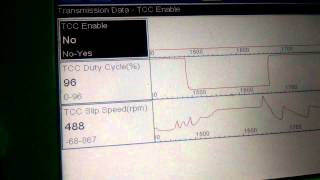
- Use a scan tool with live data to monitor the Torque Converter Clutch Slip Speed. When lock-up is commanded by the PCM (usually at steady cruising speed above 45 mph), the slip RPM should drop to near zero. If it remains high (e.g., over 200 RPM), the problem is confirmed.
- If the fluid is okay, the next step is to inspect the components inside the transmission. Drain the fluid, drop the pan, and remove the driver-side wheel and transmission side cover.
- Visually inspect the TCC solenoid and its wiring for any obvious damage, such as broken wires or burnt connectors.
- Test the TCC solenoid's resistance with a multimeter. The ACDelco solenoid for the 4T45-E should measure between 10-30 ohms. If it's significantly outside this range or shows an open circuit, it needs replacement.
- If the solenoid tests good, the issue may be in the valve body (stuck valve), the torque converter itself, or the internal wiring harness.
- At this stage, professional diagnosis is strongly recommended to avoid replacing expensive parts unnecessarily.
Parts You'll Likely Need
- Torque Converter Clutch (TCC) PWM Solenoid
(OEM #ACDelco 24227747)— This is the most frequent failure point for a P0741 code on the Cobalt's 4T45-E transmission. It is a pulse-width modulated solenoid that controls TCC apply pressure.
Trusted brands: ACDelco, Rostra, Sonnax
OEM price range: $40-$60
Aftermarket price range: $20-$40 - Transmission Filter and Gasket Kit
(OEM #ACDelco 24206435 (Filter))— Required when dropping the transmission pan to access the TCC solenoid. It's essential to replace the filter and pan gasket at the same time.
Trusted brands: ACDelco, ATP, Wix
OEM price range: $30-$50
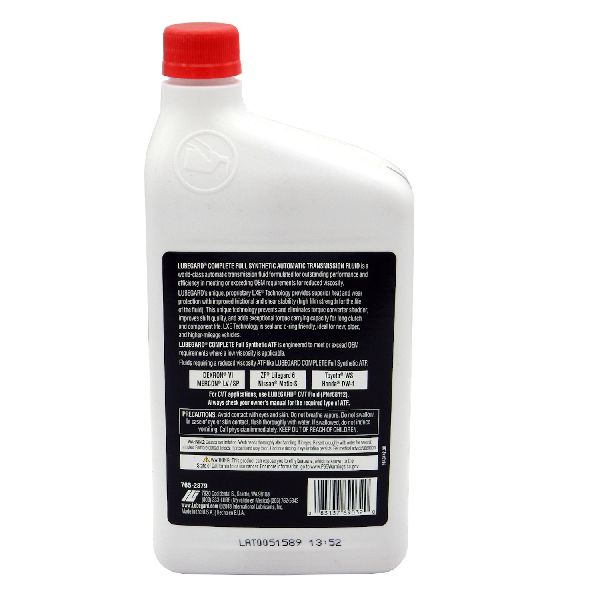
Aftermarket price range: $15-$30 - DEXRON-VI Automatic Transmission Fluid
(OEM #ACDelco 10-9395 (or equivalent))— The transmission must be refilled with the correct type of fluid after the service. A pan drop and filter change will require approximately 7-8 quarts.
Trusted brands: ACDelco, Valvoline, Castrol
OEM price range: $8-$12 per quart
Aftermarket price range: $7-$10 per quart
Related Codes That Often Appear With This One
- P0700: This is a general transmission fault code that simply means the Transmission Control Module (TCM) has stored a fault code. It will almost always be present alongside a more specific code like P0741.
Technical Service Bulletins (TSBs) & Recalls
- TSB #PI1447A: (On other GM models) Notes that a damaged turbine shaft front bushing could cause P0741.
- TSB #15111: (On other GM models) Suggests replacing the automatic transmission wiring harness if P0741 is present with a harsh 1-2 shift.
Platform-Specific Known Issues
- Owner Experience: TCC Solenoid Replacement: A user on the Chevy HHR Network (a platform mate) with codes P0700 and P0741 performed a fluid and filter change, which did not solve the issue. The next step identified by the community was to replace the TCC solenoid located inside the transmission side cover.
- Owner Experience: Misdiagnosing the Solenoid: In another thread on the Chevy HHR Network, an owner replaced all shift solenoids but forgot to replace the TCC solenoid, and the P0741 code remained, highlighting the importance of replacing the correct part.
Mechanic-Grade Diagnostic Values
- TCC PWM Solenoid Resistance — expected: 7-20 Ohms. General specifications also cite 10-30 Ohms as a common range.. Failure: A reading of 0 ohms (short circuit) or infinite/OL (open circuit) indicates a failed solenoid.
- TCC Slip Speed (Live Scan Tool Data) — expected: Should drop to near zero RPM (typically under 50 RPM) when the TCC is commanded to lock.. Failure: If slip speed remains high (e.g., over 100-200 RPM) when lockup is commanded, it confirms the clutch is not engaging.
- Transmission Fluid Temperature (Live Scan Tool Data) — expected: The P0741 diagnostic test runs when the transmission temperature is between 20°C and 130°C (68°F and 266°F).. Failure: This is a condition for the test, not a failure indicator itself, but a faulty temperature sensor could prevent the P0741 diagnostic from running correctly.
Scan Tool Commands That Help
- GM Tech 2 / GDS2 or equivalent professional scanner: TCC Control / TCC Solenoid Output Control — This bidirectional command allows a technician to manually command the TCC solenoid ON and OFF while monitoring live data like TCC Slip Speed. This is used to verify if the solenoid clicks and if the command has any effect on slip RPM, helping to isolate a faulty solenoid from a hydraulic or mechanical issue.
- GM Tech 2 / GDS2 or equivalent professional scanner: Live Data Monitoring (TCC Slip Speed, TCC Command State, Trans Fluid Temp) — Essential for diagnosis. By observing the computer's command versus the actual slip speed during a test drive, a technician can confirm the P0741 condition is actively occurring.
Wiring & Ground Locations
- G105 / G107 — On the lower left front of the transmission case.. These are primary ground points for the transmission and engine control systems. A corroded or loose connection at these grounds can cause erratic voltage and improper operation of electronic components like the TCM and transmission solenoids, potentially leading to a P0741 code.
- Transmission Main Connector — On the top or side of the transmission housing, where the main vehicle harness connects to the transmission.. This is the primary interface for all electronic signals to the transmission. The pins for the TCC solenoid power and control signal pass through this connector. Corrosion or a poorly seated connector here can interrupt the signal and cause a P0741.
Real Owner Repair Stories
- Oregon Performance Transmission Customer Review (2006 Chevrolet HHR (platform mate with 4T45-E), 205,000 miles) — Transmission fluid was burnt, vehicle would barely move, had intermittent shifting problems and codes prior to final failure.
❌ Tried (didn't work) An earlier replacement of some electronics at 100,000 miles did not permanently solve intermittent issues.
✅ What actually fixed it The owner replaced the complete master electronics kit, which includes the A/B shift solenoids, TCC lockup solenoid, EPC solenoid, pressure switch manifold, and speed sensor. This restored proper transmission function.
OEM Part Supersession History
24227747→24227747 (current)— This part number appears to be stable with no major supersessions noted, though it may have undergone internal revisions.
Heads up: Some sources indicate that this part requires programming or a special setup procedure after installation. Failure to perform this may result in continued issues.
Model Year Variations Within This Range
- 2006-2008: The 4T45-E transmission used in the Cobalt had at least four different valve body designs. The final design, casting number 24233226, was used from 2006-2008. While the TCC solenoid itself may be the same, internal passages and other valve body components differ, which is important to know if sourcing a used valve body.
Diagnostic Flowchart
Other Known Issues on This Vehicle
Issues unrelated to this code that are worth knowing about as an owner of this generation:
- Defective Ignition Switch 🔴 High — Extremely common across all model years, subject to a massive recall. The switch can unexpectedly move from 'Run' to 'Accessory', shutting off the engine and disabling airbags. (Ref: GM Recall #14299 (and others).)
- Electric Power Steering (EPS) Failure 🔴 High — Widespread issue where power steering assist is suddenly lost, making the vehicle difficult to steer, especially at low speeds. Subject of a major recall. (Ref: GM Recall #10023.)
- Failing Fuel Pump and/or Wiring 🟠 Medium — Common for the fuel pump to fail or for the wiring harness connector at the pump to fail, causing no-start or stalling conditions.
- Key Stuck in Ignition 🟡 Low — Very common issue reported by hundreds of owners, often related to a faulty shifter mechanism or ignition lock cylinder. (Ref: A service bulletin was issued to address the problem.)
- Timing Chain Tensioner Failure 🟠 Medium — The timing chain tensioner can fail, leading to a rattling noise on startup. If not addressed, it can lead to the timing chain skipping or breaking, causing significant engine damage.
Used vs. New Parts: Buying Guide for This Vehicle
When a used part is the smart pick: For a P0741 code, buying a complete used transmission from a low-mileage donor vehicle *can* be a cost-effective alternative to a full rebuild, but it carries risk. It does not make sense to buy a single used TCC solenoid, as it is an inexpensive electronic wear item.
Donor-vehicle mileage cap: roughly under 80000 miles for the part to have meaningful remaining life.
What to inspect on the donor part:
- Check the donor vehicle's VIN to confirm it had the same engine and final drive ratio.
- If possible, get video of the donor car running and driving to show it shifts smoothly.
- Inspect the transmission fluid on the dipstick or from the cooler lines. It should be bright red and not smell burnt. Any metal flakes are a major red flag.
- Ask for any available service history. A transmission that has had a fluid and filter change is a better bet.
OEM-only on this vehicle (don't cheap out):
- While not strictly OEM-only, using a genuine ACDelco TCC solenoid (24227747) is highly recommended due to potential programming requirements and to ensure compatibility.
Aftermarket brands forum-validated for this vehicle:
- Sonnax (for valve body repair kits and upgraded components)
- Rostra (for solenoids and wiring harnesses)
Brands owners have reported issues with on this vehicle:
- Unnamed, no-brand solenoids from online marketplaces often have high failure rates and should be avoided.
Real Owner Stories
Aggregated from forums and TSBs cited above. Mileages and costs reflect what owners reported in those sources.
2006 Chevrolet HHR 2.4L
Symptoms: Vehicle threw codes P0700 and P0741. Owner performed a fluid and filter change, but the issue persisted.
What fixed it: The community identified the fix as replacing the TCC solenoid located inside the transmission side cover.
Source hint: Chevy HHR Network: 2006 - HHR 2.4L with P0700 and P0741 code (2019)
2007 Chevrolet Cobalt SS
Symptoms: Check engine light with code P0741, described as 'torque converter clutch stuck off'.
What fixed it: The discussion pointed to either a solenoid failure or an internal converter failure as the likely causes.
Source hint: Cobalt SS Network: P0741, My girls car (2007)
Chevrolet HHR
Symptoms: P0741 code remained even after the owner replaced all shift solenoids.
What fixed it: The owner had to replace the TCC solenoid specifically, which they had previously forgotten to change.
Source hint: Owner Experience: Misdiagnosing the Solenoid
Related OBD-II Codes
Frequently Asked Questions
I have a P0741 and a harsh 1-2 shift on my Cobalt; is there a specific bulletin for this?
Could a turbine shaft bushing cause the P0741 code on my GM vehicle?
What is the correct resistance for a replacement TCC solenoid on the Cobalt's 4T45-E transmission?
My Cobalt has P0741 and P0700; does the P0700 mean I have a second major problem?
Which transmission fluid should I use for my 2005-2010 Chevrolet Cobalt?
Helpful Videos

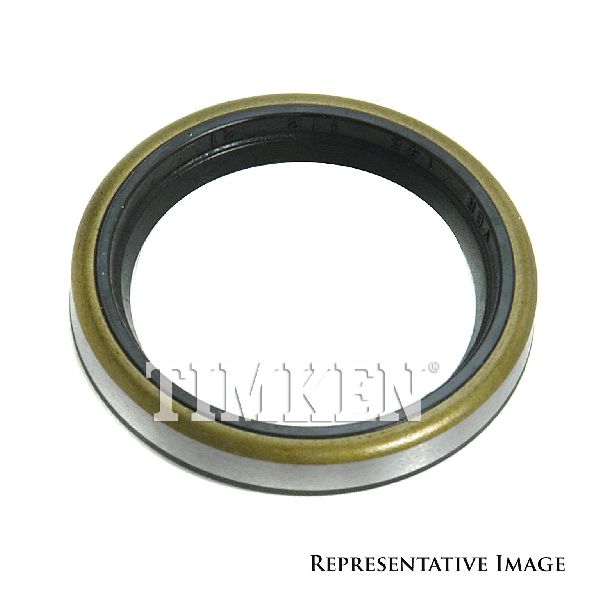
We Have This Part in Stock


The information in this article is provided for general reference and educational purposes only. Vehicle specifications, procedures, and part compatibility can vary by production date, trim level, and region. Always consult your vehicle's factory service manual and verify part numbers before purchasing or performing repairs. Safety-critical components such as airbags, seat belts, and braking systems should be installed by a qualified professional.
- Chevrolet Cobalt:
- 🎬 Helpful Videos
- 🛍️ Shop This Part
- What's Unique About the 2005-2010 Chevrolet Cobalt
- Symptoms You May Notice
- Most Likely Causes
- Rare But Worth Checking
- Diagnosis Steps
- Parts You'll Likely Need
- Related Codes That Often Appear With This One
- Technical Service Bulletins (TSBs) & Recalls
- Platform-Specific Known Issues
- Mechanic-Grade Diagnostic Values
- Scan Tool Commands That Help
- Wiring & Ground Locations
- Real Owner Repair Stories
- OEM Part Supersession History
- Model Year Variations Within This Range
- Diagnostic Flowchart
- Other Known Issues on This Vehicle
- Used vs. New Parts: Buying Guide for This Vehicle
- Real Owner Stories
- 2006 Chevrolet HHR 2.4L
- 2007 Chevrolet Cobalt SS
- Chevrolet HHR
- Related OBD-II Codes
- Frequently Asked Questions
- 🎟️ Get 5% Off