

P0740 on 2006-2010 Mercury Mountaineer: Torque Converter Clutch Circuit Fixes
P0740 on a 2006-2010 Mountaineer indicates a problem with the Torque Converter Clutch (TCC) circuit. The most common cause is a failed TCC solenoid or solenoid pack inside the transmission. On 5R55S transmissions (4.0L V6), this is often the entire solenoid block; on 6R60 transmissions (4.6L V8), it's an individual solenoid. Diagnosis is key, as wiring and PCM issues are also possible. Expect to pay a professional, as repair involves dropping the transmission pan.
- P0740 on your Mountaineer means there's an electrical fault in the torque converter clutch circuit, which is essential for good fuel economy at highway speeds.
- The most likely culprit is a failed TCC solenoid located inside the transmission pan.
- Always start diagnosis by checking the transmission fluid level and condition, as low or dirty fluid can cause numerous issues.
- This is not a beginner-friendly DIY repair. Due to the need to access internal transmission components, professional service is strongly recommended.
- Do not immediately assume the entire transmission or torque converter needs replacement; a thorough electrical diagnosis of the solenoid and its circuit should be performed first.
What's Unique About the 2006-2010 Mercury Mountaineer
The 2006-2010 Mountaineer was available with two different automatic transmissions: the 5-speed 5R55S (paired with the 4.0L V6) and the 6-speed 6R60 (with the 4.6L V8). While the P0740 code points to the same general issue on both, the specific failure points and components are different. The 5R55S family is notoriously prone to failure of the entire solenoid block, as well as wear in the transmission case's servo bores, which can cause a variety of shift problems. On the 6R60, which is a Ford-built version of the ZF 6HP26, the TCC solenoid is an individual component within the valve body, but issues can also arise from the 'mechatronic' unit (the combined valve body and TCM) or a blown-out bridge seal between the valve body and pump. 🎬 See how to replace the bridge seal and solenoids on the 6R60. On these platforms, it's crucial to diagnose the electrical circuit thoroughly, as a faulty PCM has also been identified as a less common but possible cause.
Symptoms You May Notice
- Check Engine Light is on
- Reduced fuel economy
- Vehicle may not shift into the highest gear at highway speeds
- Engine RPMs are higher than usual at cruising speed
- Shuddering or vibration, especially during light acceleration or when trying to maintain speed.
- Harsh or delayed shifts
- Engine may stall when coming to a stop after highway driving
- Transmission overheating or a burning smell from the fluid
- Replacing the entire transmission when only a solenoid, wiring repair, or PCM was needed.
- Blaming the torque converter itself before properly testing the TCC solenoid and its electrical circuit.
- On 4.0L V6 models, overlooking wear in the servo bores in the transmission case, which can cause pressure loss that affects shifting and TCC operation.
Most Likely Causes
- Faulty Torque Converter Clutch (TCC) Solenoid / Solenoid Block 🔴 High Probability On the 5R55S (4.0L V6), the entire solenoid block is a very common failure point; updated designs are available. On the 6R60 (4.6L V8), individual solenoids can fail due to heat and wear. These are electro-mechanical parts that wear out over time.
How to confirm: A technician can use a scan tool to command the TCC solenoid on and off. If it doesn't respond, and the wiring is confirmed to be good, the solenoid is faulty. The solenoid's resistance can also be tested with a multimeter from the transmission connector.
Typical fix: For the 5R55S, replace the entire solenoid block. For the 6R60, replace the individual TCC solenoid. Both repairs require draining the fluid and removing the transmission pan.
Est. part cost: $50-$250 - Low or Dirty Transmission Fluid 🟡 Medium Probability Neglected maintenance leads to fluid breakdown and contamination. Debris can clog the fine passages in the valve body or cause solenoids to stick, preventing proper hydraulic command of the TCC.
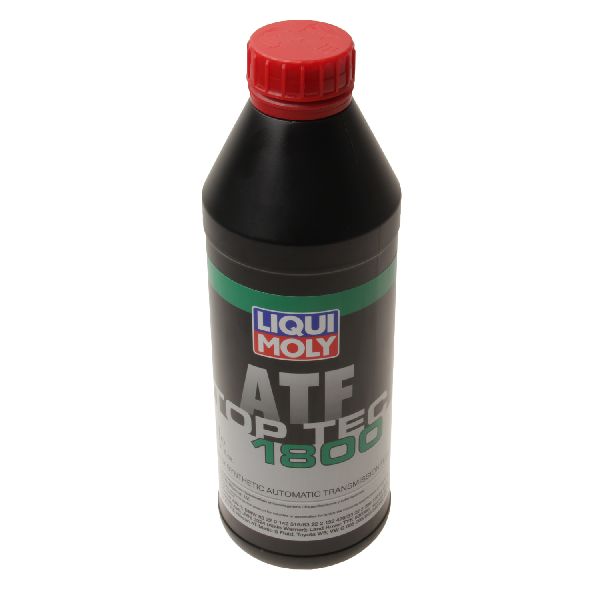
How to confirm: Check the transmission fluid level and condition. The fluid should be at the correct level, pink/red in color, and not smell burnt. Dark, brown, or gritty fluid indicates a problem. The 5R55S typically uses MERCON V, while the 6R60 uses MERCON SP (not LV, as in later 6R80s).
Typical fix: Perform a transmission fluid and filter change. If the fluid is heavily contaminated, a full flush may be recommended by a professional, but this is sometimes debated as it can dislodge debris and cause more issues.
Est. part cost: $50-$200 for fluid and a filter kit. - Damaged Wiring or Connectors ⚪ Low Probability The wiring harness to the transmission is exposed to heat, vibration, and road debris, which can cause chafing, melting, or corrosion over time. A specific issue on some Ford V8s involves ignition coil RFI (radio frequency interference) from failing aftermarket coils causing communication errors 🎬 Watch: Why you should check ignition coils for transmission shifting issues. (like U0101) that mimic transmission faults.
How to confirm: Visually inspect the wiring harness leading to the transmission for any signs of damage. A technician can perform a continuity test on the TCC solenoid circuit from the PCM to the transmission connector to check for opens or shorts.
Typical fix: Repair or replace the damaged section of the wiring harness. Ensure connectors are clean and secure.
Est. part cost: $20-$300 depending on the extent of the damage.
Rare But Worth Checking
- Faulty Powertrain Control Module (PCM): In some documented cases on the Ford/Mercury platform, even with a good solenoid and wiring, the PCM itself can be the root cause, failing to correctly interpret signals or its internal driver for the TCC circuit failing. This should be the last item to check after all other possibilities are exhausted.
- Internal Torque Converter Failure: The internal clutch inside the torque converter can wear out or delaminate. If significant metal shavings are found in the transmission pan, it's a strong indicator that the torque converter is failing and will need to be replaced, which is a transmission-out job.
- Worn Transmission Valve Body: The valve body directs hydraulic fluid throughout the transmission. On the 5R55S, the servo bores in the transmission case itself are known to wear, causing pressure loss. On the 6R60, bores within the valve body can wear, leading to pressure leakage and erratic solenoid function. Aftermarket kits exist to ream and sleeve these worn bores.
Diagnosis Steps
- Verify the code with an OBD-II scanner and check for any other related transmission codes. Document and clear them to see which ones return.
- Check the level and condition of the transmission fluid. Note any burnt smell or dark coloration. Ensure the correct fluid type is being used (MERCON V for 5R55S, MERCON SP for 6R60).
- Using an advanced scan tool, monitor the live data for Torque Converter Clutch operation, commanded state, and slip RPM while driving.
- Command the TCC solenoid on and off with the scan tool to check for a response (an audible click may be heard, and RPM should change).
- Inspect the external transmission wiring harness and connectors for any visible damage, corrosion, or loose connections.
- If external wiring is okay, disconnect the harness and test the TCC solenoid circuit for proper resistance (ohms) through the transmission connector. Compare the reading to the manufacturer's specification.
- Test the TCC solenoid circuit for continuity and for shorts to ground/power from the PCM connector to the transmission connector.
- If the circuit tests good, the next step is to drop the transmission pan to access and test the TCC solenoid or solenoid block directly.
- While the pan is off, inspect for metal shavings or other debris, which would indicate a more serious internal failure (e.g., torque converter).
- If the solenoid and wiring are confirmed to be good, further diagnosis of the valve body, torque converter, or PCM is required.
Parts You'll Likely Need
- Torque Converter Clutch (TCC) Solenoid / Block
(OEM #9L2Z-7G391-A (5R55S/W Solenoid Block) / AL3Z-7G383-U (6R60 TCC Solenoid))— This is the most frequent failure point. For the 5R55S (V6), it's the entire block. For the 6R60 (V8), it's an individual solenoid.
Trusted brands: Motorcraft, Bosch
OEM price range: $150-$250 (Block), $60-$100 (Solenoid)
Aftermarket price range: $100-$180 (Block), $40-$70 (Solenoid) - Transmission Filter and Gasket Kit — This is required whenever the transmission pan is removed to service the solenoid or valve body.
Related Codes That Often Appear With This One
- P0741 — This code indicates 'TCC System Stuck Off,' which is a performance-related fault, whereas P0740 is an electrical circuit fault. They can appear together if an electrical issue is causing the performance problem or if there are multiple faults.
- P0743 — This code specifically points to an electrical fault (short or open) in the TCC solenoid circuit, which is a more specific version of the general circuit malfunction indicated by P0740.
- U0101 — This code means 'Lost Communication with TCM'. On 6R60 transmissions where the TCM is inside the transmission, an internal wiring or component failure can cause both a P0740 and a U0101. It can also be caused by RFI from failing ignition coils.
Platform-Specific Known Issues
- 5R55S Servo Bore Wear: A well-documented issue on the 5R55S transmission (4.0L V6) is the wearing of the aluminum case at the overdrive and intermediate servo locations. This allows hydraulic pressure to leak, causing shift flares, delayed shifts, and can indirectly affect TCC operation. This is often misdiagnosed as a solenoid or clutch issue. The fix involves reaming the bores and installing brass sleeves, which is a specialized repair.
- 6R60 Mechatronic Unit and Bridge Seal: The 6R60 transmission (4.6L V8) integrates the TCM and valve body into a single 'mechatronic' unit. Failures can be electrical (TCM) or hydraulic (valve body). A common issue is the rubber 'bridge seal' between the valve body and the transmission case blowing out, causing severe pressure loss, delayed engagements, and various codes, including potentially P0740.
Mechanic-Grade Diagnostic Values
- TCC Solenoid Resistance (5R55S Transmission) — expected: 9 - 16 Ohms. Failure: A reading of 0 Ohms indicates a short circuit, while an infinite or OL (Over Limit) reading indicates an open circuit.
- TCC Solenoid Resistance (6R60 Transmission, Brown Top Solenoid) — expected: 4.8 - 5.6 Ohms at 68°F (20°C). Failure: Any reading outside this specific range indicates a faulty solenoid coil.
- Scan Tool Live Data: TCC Slip RPM — expected: Near 0 RPM when the TCC is commanded to lock at a steady cruising speed.. Failure: A consistent slip of 50-200 RPM or more when lockup is commanded points to a mechanical failure of the torque converter's clutch lining, not an electrical P0740 fault.
- TCC Circuit Voltage (at PCM or TCM) — expected: When the solenoid is off, the control module should see battery voltage (approx. 12V) on the control wire. When commanded on (grounded by the PCM), the voltage should drop to near 0V.. Failure: No voltage when off suggests an open circuit from the power source. Voltage that doesn't drop when commanded on indicates a bad PCM driver or an open in the control circuit.
Scan Tool Commands That Help
- Ford IDS (Integrated Diagnostic System) or equivalent advanced scanner: Solenoid Control / Output State Control — This bidirectional command allows a technician to manually activate and deactivate the TCC solenoid while the vehicle is stationary (Key On, Engine Off). This is used to verify if the solenoid clicks audibly and if the PCM driver and wiring are capable of completing the circuit. A lack of response points directly to a failure in the solenoid or its circuit.
- Ford IDS or equivalent: TCM Reset / Adaptive Learning Reset — After replacing a solenoid block or individual solenoid, the transmission's adaptive learn tables must be cleared. Failure to do so can result in harsh shifts or continued erratic behavior as the TCM is still using correction values based on the old, faulty part.
Wiring & Ground Locations
- Transmission Main Connector (C1575 on some models) — On the driver's side of the transmission case for both 5R55S and 6R60 models. It is a large, multi-pin round or rectangular connector.. This is the primary external test point. Technicians can check solenoid resistance and test for shorts or opens in the wiring harness between this connector and the PCM without removing the transmission pan.
- G104 / G101 (example ground points) — Main chassis and engine block ground points are typically located on the fender aprons in the engine bay or directly on the engine block/cylinder head.. A poor ground connection for the PCM or the main battery-to-chassis ground can cause erratic voltage readings and unpredictable behavior from electronically controlled components, including transmission solenoids. While not a direct cause of P0740, checking major grounds is a crucial step in diagnosing any complex electrical issue.
Real Owner Repair Stories
- S197Forum.com user 'tmcolegr' (2005-2009 Ford Mustang (uses same 5R55S transmission)) — Imperfect shifting, leading to investigation.
❌ Tried (didn't work) Initial diagnosis and discussion with a transmission specialist.
✅ What actually fixed it The user proactively replaced the 5R55S solenoid pack with an updated part number (9L2Z-7G391-A) after learning Ford had issued a message to discontinue using the older part. This resolved the issue. The user also drilled the pan to relocate the temperature sensor for better accuracy. - Lincoln vs Cadillac Forums user 'RCodePaul' (Vehicle with 5R55 transmission) — Transmission shifting problems.
❌ Tried (didn't work) Initial assumption was a worn servo bore, a very common issue.
✅ What actually fixed it The problem turned out to be a broken servo, not just a worn bore. Installing a servo bore fix kit (which includes new servos) and performing a fluid/filter change resolved the issue, making the transmission work like new.
OEM Part Supersession History
4L2P-7G391-AA / 1L2Z-7G391-AG→9L2Z-7G391-A— Updated design to address reliability and performance issues, including shift quality problems. The output pressure of the solenoids was slightly different between versions.
Heads up: Using an early solenoid pack on a later vehicle (or vice-versa) can cause shift flares and other drivability complaints, even if it physically fits. Ford issued a broadcast message to dealers to stop using the old part number and only install the updated 9L2Z-7G391-A.
Model Year Variations Within This Range
- 2006-2008 (6R60): Early 6R60 transmissions used MERCON SP transmission fluid.
- 2009-2010 (6R60/6R80 Transition): Ford began transitioning to the 6R80 and the use of MERCON LV fluid. While the Mountaineer largely stuck with the 6R60, it's critical to verify the fluid type specified on the dipstick or in the owner's manual, as using the wrong fluid can cause shift problems.
Diagnostic Flowchart
Used vs. New Parts: Buying Guide for This Vehicle
When a used part is the smart pick: For a major mechanical failure, a complete, low-mileage used transmission from a reputable salvage yard can be a cost-effective alternative to a full rebuild, especially for the 6R60. However, it must be from an identical year/model to ensure electronic compatibility.
Donor-vehicle mileage cap: roughly under 80000 miles for the part to have meaningful remaining life.
What to inspect on the donor part:
- Check the salvage vehicle's VIN to confirm compatibility.
- Inspect the transmission fluid from the donor unit. If it's dark, burnt, or contains metal, reject the part.
- Ask for a warranty from the salvage yard (typically 30-90 days).
- For 6R60, ensure the mechatronic connector pins are not bent or corroded.
OEM-only on this vehicle (don't cheap out):
- Solenoid Block (5R55S)
- Individual Solenoids (6R60)
- Mechatronic Unit (TCM/Valve Body for 6R60)
Aftermarket brands forum-validated for this vehicle:
- Sonnax (For valve body repair kits, servo bore sleeves, and other internal components)
- Bosch (Original equipment manufacturer for many solenoids)
Brands owners have reported issues with on this vehicle:
- Unbranded, no-name solenoid blocks from online marketplaces. Many forum users report these failing quickly, sometimes within weeks, leading to doing the job twice. A rebuilt OEM unit from a reputable supplier is often a better choice than a cheap new aftermarket one.
Real Owner Stories
Aggregated from forums and TSBs cited above. Mileages and costs reflect what owners reported in those sources.
2006 Mountaineer
Symptoms: Owner experienced transmission trouble codes P0740 and P0743.
What fixed it: After testing and ruling out the solenoid and wiring, the cause was determined to be a failed PCM, which was replaced.
Source hint: YouTube: 2006 Mountaineer P0743 P0740 transmission troubles
Mountaineer with 4.0L V6 (5R55S)
Symptoms: Check Engine Light with codes P0740 and P0735.
What fixed it: Many owners successfully resolved the code by replacing the entire transmission solenoid block.
Source hint: Explorerforum.com: '5r55s p0740 and p0735'
Mountaineer with 4.0L V6 (5R55S)
Symptoms: Owner had a P0740 code and underlying shift problems that persisted after a repair attempt.
What fixed it: A solenoid replacement did not fix the issue. The underlying problem was the common servo bore wear in the transmission case, which had to be addressed to resolve the shifting problems.
Source hint: Explorerforum.com: '5r55s p0740 and p0735'
Related OBD-II Codes
Frequently Asked Questions
I have a 2007 Mountaineer with the 4.0L V6. What is the most likely cause of a P0740 code?
Is the P0740 fix different for the 4.6L V8 Mountaineer?
My V6 Mountaineer has harsh shifts and a shudder along with the P0740 code. Is this just the solenoid?
What type of transmission fluid should I use for my 2009 Mercury Mountaineer?
My mechanic replaced the TCC solenoid, but the P0740 code returned. What else could be wrong?
Is this P0740 problem also common on the Ford Explorer of the same years?
Helpful Videos

We Have This Part in Stock


The information in this article is provided for general reference and educational purposes only. Vehicle specifications, procedures, and part compatibility can vary by production date, trim level, and region. Always consult your vehicle's factory service manual and verify part numbers before purchasing or performing repairs. Safety-critical components such as airbags, seat belts, and braking systems should be installed by a qualified professional.
- Mercury Mountaineer:
- 🎬 Helpful Videos
- 🛍️ Shop This Part
- What's Unique About the 2006-2010 Mercury Mountaineer
- Symptoms You May Notice
- Most Likely Causes
- Rare But Worth Checking
- Diagnosis Steps
- Parts You'll Likely Need
- Related Codes That Often Appear With This One
- Platform-Specific Known Issues
- Mechanic-Grade Diagnostic Values
- Scan Tool Commands That Help
- Wiring & Ground Locations
- Real Owner Repair Stories
- OEM Part Supersession History
- Model Year Variations Within This Range
- Diagnostic Flowchart
- Used vs. New Parts: Buying Guide for This Vehicle
- Real Owner Stories
- 2006 Mountaineer
- Mountaineer with 4.0L V6 (5R55S)
- Mountaineer with 4.0L V6 (5R55S)
- Related OBD-II Codes
- Frequently Asked Questions
- 🎟️ Get 5% Off