

P0733 on 2005-2015 Nissan Xterra 4.0L: Gear 3 Incorrect Ratio Causes & Fixes
On a 2005-2010 Xterra, this code is a major red flag for coolant contamination in the transmission (SMOD), which requires immediate radiator replacement and a full fluid flush. On later models, or if SMOD is ruled out, it often points to a failing valve body/TCM assembly. A new radiator costs $150-$400, while a remanufactured valve body can be found for $500-$1000+. Ignoring the issue will lead to complete transmission failure.
- For 2005-2010 models, P0733 is a strong indicator of potential coolant contamination (SMOD). Immediately check your transmission fluid and radiator for a pink, milky appearance.
- If you have SMOD, stop driving. The fix requires, at a minimum, a new radiator and a complete transmission fluid flush.
- If SMOD is not present, the most common causes are low/old fluid or a failing valve body/TCM assembly.
- Always use the specified Nissan Matic-S (or equivalent) transmission fluid.
- Due to the complexity and the high probability of the SMOD issue, professional diagnosis is strongly recommended.
What's Unique About the 2005-2015 Nissan Xterra
The 2005-2015 Xterra uses the RE5R05A automatic transmission, which has a notorious and well-documented design flaw in early models (2005-mid 2010). The original Calsonic radiator features an internal transmission cooler that is prone to failure. This failure allows engine coolant and automatic transmission fluid (ATF) to mix, creating a destructive pink sludge nicknamed the 'Strawberry Milkshake of Death' (SMOD). This contaminated fluid quickly damages transmission components, especially the integrated Transmission Control Module (TCM) located on the valve body, making P0733 a very common symptom of this specific and catastrophic issue. This problem is also shared with the Nissan Frontier and Pathfinder of the same era which use the same radiator and transmission.
Symptoms You May Notice
- Check Engine Light is on
- Harsh or delayed shifting, especially into 3rd gear
- Transmission slipping in and out of gear
- Vehicle stuck in 'limp mode' (usually 3rd or 4th gear)
- Engine RPMs flare up during shifts without a corresponding increase in speed
- Noticeable hesitation or lack of power
- Reduced fuel economy
- Replacing only the input or output speed sensors. While these sensors provide the data, they rarely fail on their own. The problem is almost always the fluid, the TCM, or internal slip that the sensors are correctly detecting.
- Performing a single drain-and-fill for SMOD. A simple drain only removes about 1/3 of the fluid. The entire system, including the torque converter and cooler lines, must be flushed multiple times to remove all coolant contamination.
- Assuming the transmission is destroyed by SMOD. Some owners have successfully saved their transmissions with a radiator replacement and very thorough fluid flushes, even after SMOD was detected. However, if shifting problems remain after the flush, the valve body is the next likely culprit.
Most Likely Causes
- Coolant Contamination of Transmission Fluid (SMOD) 🔴 High Probability This is a well-documented failure of the stock Calsonic radiator on 2005-mid 2010 models. The internal transmission cooler ruptures, mixing coolant and ATF. This is the most infamous issue for this platform.
How to confirm: Check the transmission fluid dipstick and radiator overflow tank. If the fluid is pink, frothy, and looks like a strawberry milkshake, you have SMOD. Also check for cross-contamination in the radiator itself (with the engine cool).
Typical fix: This is a multi-step repair. 1) DO NOT drive the vehicle. 2) Replace the radiator with an updated OEM part 🎬 Watch: Step-by-step radiator replacement guide or a quality aftermarket unit and bypass the internal cooler if desired. 3) Perform multiple transmission fluid flushes (some owners report using 20+ quarts of ATF) to remove all contaminated fluid. 4) If shifting issues persist, the valve body/TCM assembly is damaged and requires replacement. In severe cases, the entire transmission may need to be rebuilt or replaced.
Est. part cost: $150-$400 for a new radiator and $200-$300 for multiple rounds of ATF. - Failed Transmission Control Module (TCM) / Valve Body 🟡 Medium Probability The TCM is integrated with the valve body inside the transmission pan. It is highly susceptible to damage from heat and contaminated fluid (especially from SMOD). Even without SMOD, these units are a known failure point on the RE5R05A transmission.
How to confirm: After ruling out fluid issues (level and contamination), a diagnostic scan tool that can communicate with the Nissan TCM is needed to check for specific TCM error codes and monitor solenoid and sensor data. A mechanic may perform pressure tests. Often diagnosed after a fluid flush for SMOD fails to resolve shifting problems.
Typical fix: Replacement of the entire valve body and TCM assembly. 🎬 See how to diagnose and fix RE5R05A valve body issues This part is located inside the transmission oil pan. Remanufactured units are available that are pre-programmed to the vehicle's VIN. The job takes about 3 hours and requires a low-range inch-pound torque wrench for reassembly.
Est. part cost: $500-$1500+ for a new or remanufactured valve body/TCM assembly. - Low or Dirty Transmission Fluid 🟡 Medium Probability Like any vehicle, the transmission relies on the correct fluid level and condition to create hydraulic pressure for shifting. If not caused by SMOD, fluid can be low from a leak or simply old and degraded, which is common on higher-mileage vehicles where service has been neglected.
How to confirm: Check the transmission fluid dipstick with the engine warm and running in Park. The fluid should be at the 'HOT' mark and be reddish-brown. If it's low, black, or smells burnt, it needs attention.
Typical fix: If low, top off with Nissan Matic-S ATF and inspect for leaks. If old and dirty, perform a transmission fluid and filter change. 🎬 Watch: How to drain and fill your transmission fluid A full flush may be needed for very dirty fluid.
Est. part cost: $60-$150 for fluid and a filter kit.
Rare But Worth Checking
- Internal Mechanical Failure: While possible, worn clutch packs, bands, or internal seals are usually a result of long-term driving with one of the common causes listed above, rather than the initial point of failure. If the fluid is clean and at the correct level, and the TCM seems to function, internal wear may be the issue, requiring a full rebuild.
- Faulty Input/Output Speed Sensors: It is possible for the input or output speed sensors themselves to fail, sending incorrect data to the TCM. However, this is less common than valve body or fluid-related issues. Usually, a failing sensor will trigger its own specific trouble code in addition to the ratio code.
Diagnosis Steps
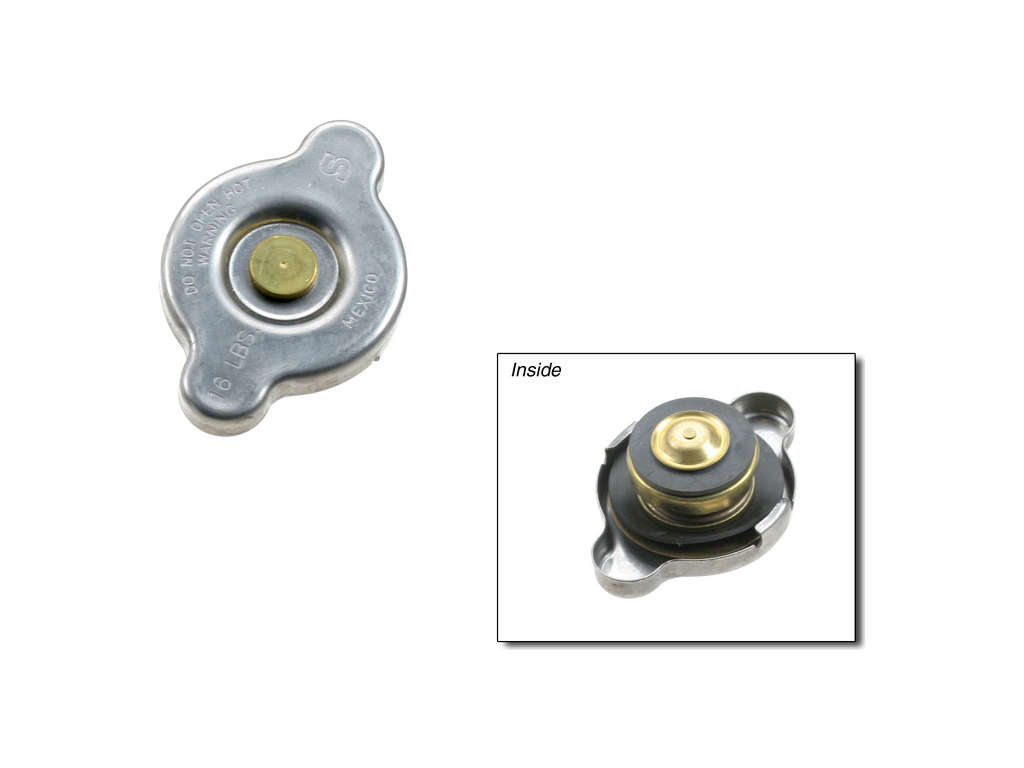
- Check for SMOD (2005-mid 2010 models especially): This is the most critical first step. With the engine cold, check the radiator overflow tank for pink, milky fluid. Remove the radiator cap and check for the same. Pull the transmission dipstick and check for the same 'strawberry milkshake' appearance.
- Check Transmission Fluid: If no SMOD is present, check the fluid level and condition with the engine warm and running in Park on a level surface. Note the level and color. If it's just low or very dark and burnt, that is also a problem that needs to be addressed.
- Scan for Codes: Use an OBD-II scanner to confirm P0733 and look for any other related transmission codes (e.g., other P07xx codes or Nissan-specific P17xx codes). The presence of other codes can help pinpoint the issue.
- Address Fluid Issues: If SMOD is confirmed, immediately replace the radiator and flush the transmission fluid multiple times until it runs clean. If the fluid is just low or old, perform a fluid and filter service using Nissan Matic-S ATF.
- Professional Diagnosis: If the problem persists after correcting fluid issues, the vehicle must be taken to a transmission specialist. They can perform advanced diagnostics, such as testing line pressures and commanding solenoids with a scan tool (like Nissan's CONSULT) to determine if the valve body/TCM assembly has failed.
- Consider Preventative Measures: If you have a 2005-mid 2010 Xterra that does *not* have SMOD, proactively replace the radiator with an updated part number (like 21460-9CA2E) or perform a 'radiator bypass' mod to prevent it from ever happening.
Parts You'll Likely Need
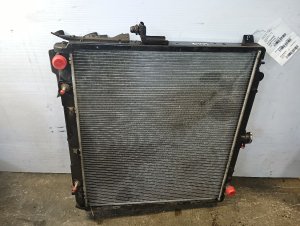
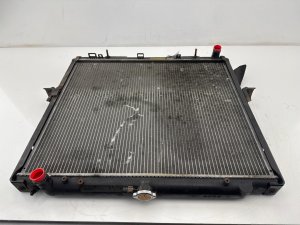
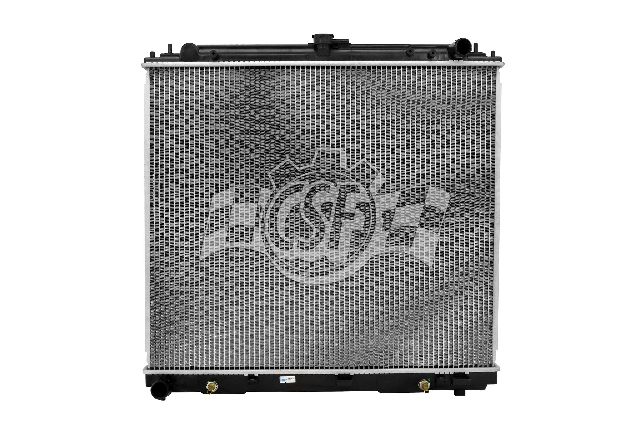
- Radiator
(OEM #21460-9CA2E (supersedes 21460-EA215, 21460-9CA5A, etc.))— The primary cause of catastrophic failure on 2005-2010 models. Must be replaced if SMOD is present. A common preventative replacement on these models.
Trusted brands: Nissan (OEM), Koyo, Denso, Spectra Premium
OEM price range: $300-$500
Aftermarket price range: $150-$250 - Valve Body / TCM Assembly — This is the 'brain' of the transmission and is frequently damaged by contaminated fluid (SMOD) or heat. It is the most common fix if the fluid is clean but the code persists. Remanufactured units are often sold pre-programmed to the VIN.
Trusted brands: Hitachi (OEM), Rostra, Street Smart Transmissions
OEM price range: $1000-$1500+
Aftermarket price range: $500-$1200
Related Codes That Often Appear With This One
- P0731, P0732, P0734, P0735 — These are incorrect gear ratio codes for other gears. Seeing multiple ratio codes together strongly points to a systemic problem like low/contaminated fluid or a failing TCM affecting the entire transmission.
- P1757, P1759, P1764 — These are manufacturer-specific transmission codes related to solenoid function. A user on a forum reported these codes alongside a valve body failure. Their presence would solidify the diagnosis of a failed valve body/TCM assembly.
Technical Service Bulletins (TSBs) & Recalls
- NTB09-128a: Addresses a high-frequency buzzing/whining noise from the secondary timing chain system on 2005-2010 Pathfinder, Xterra, and Frontier models with the VQ40 engine. The fix involves replacing both secondary timing chains and tensioner shoes.
- NTB10-101a: While not directly for P0733, this TSB could be related. It addresses harsh downshifts in some 2005-2010 models and involves a TCM software update. If you have other shifting complaints, this might be relevant.
- EM09-007: This TSB is referenced in a video about replacing the secondary timing chain tensioner guides to fix the common whining noise on 2005-2012 Xterras and other models.
- TSB Bulletin #NTB22-092: This manufacturer bulletin notes that P0733 (3GR Incorrect Ratio) can be stored alongside other gear ratio codes like P0731, P0732, and P0734, and recommends checking service history for specific campaigns.
- TSB Bulletin #NTB16-045: A manufacturer service bulletin for related Nissan platforms describes P0733 as a stored transmission DTC and suggests checking the engine intake air ducting as part of the diagnostic process.
Platform-Specific Known Issues
- The 'Strawberry Milkshake of Death' (SMOD) is the single most significant issue for the 2005-2010 Nissan Xterra with an automatic transmission. It is caused by a breach in the radiator's internal transmission cooler, leading to coolant and ATF mixing.
- A class-action lawsuit was filed against Nissan for the SMOD issue, which resulted in an extended warranty for some owners, though this program has long since expired.
Mechanic-Grade Diagnostic Values
- Solenoid Resistance (All except Low Coast Brake) — expected: 3.3 Ohms. Failure: Reading significantly higher or lower than 3.3 Ohms, or an open circuit.
- Low Coast Brake Solenoid Resistance — expected: 23 Ohms. Failure: Reading significantly higher or lower than 23 Ohms, or an open circuit. Note: Some sources indicate this value varies by valve body design (10-15 or 20-40 Ohms).
- Solenoid Current Draw (via Scan Tool) — expected: 0.0 to 0.8 amps, depending on solenoid and state (engaged/disengaged).. Failure: No current draw when commanded, or current outside the expected range for a given operation.
- Stall Speed Test ('D' Position) — expected: 2,650 - 2,950 rpm. Failure: A stall speed lower than the standard value can indicate engine problems or a torque converter one-way clutch issue. A higher value can indicate internal clutch slippage or low line pressure.
- Line Pressure at Idle ('D' Position) — expected: ~45-65 psi (Note: This is a general value; specific pressure charts should be consulted). Failure: Pressure significantly below this range indicates a weak pump, clogged filter, or major internal hydraulic leak.
Scan Tool Commands That Help
- Nissan CONSULT or equivalent professional scanner: Active Test / Work Support for Solenoids — To individually command each shift solenoid on and off while monitoring for an audible click and changes in current draw (amps). This helps isolate a single electrically failed solenoid on the valve body without removal.
- Nissan CONSULT or equivalent professional scanner: Self-Learning Control (Adaptive Strategy Reset) — This MUST be performed after replacing the valve body/TCM or the entire transmission. The TCM constantly adapts shift pressures to account for wear. Failing to reset this learned data will cause harsh shifting and potential damage with new components.
- Manual Procedure (No Scan Tool): Idle Air Volume Learning, Throttle Valve Closed Position Learning, Accelerator Pedal Released Position Learning — These procedures are required if the battery or TCM has been disconnected. They reset the engine and throttle parameters that the TCM uses for its calculations. They involve a specific sequence of turning the ignition on/off and pressing the accelerator pedal.
Wiring & Ground Locations
- Main Engine Ground — A primary ground strap runs from the intake manifold to the battery negative terminal. Another runs from the exhaust side of the cylinder head to the firewall.. A poor engine or body ground can cause floating voltages and erratic behavior in the TCM and its sensors, potentially mimicking internal transmission faults.
- TCM Ground (A/T Assembly) — The TCM, located on the valve body inside the transmission pan, grounds through the transmission case itself. The case is then grounded to the chassis/engine block.. Corrosion on the transmission mounting bolts or engine ground straps can create a poor ground for the TCM, leading to incorrect solenoid operation and false codes. Some owners add a supplementary ground wire directly to the engine block to resolve persistent electrical issues.
- TCM Harness Connector (F26/F27) — This is the main electrical connector on the outside of the transmission case that provides power, ground, and CAN bus signals to the internal TCM.. Corrosion or bent pins in this connector can interrupt power or data signals to the TCM, causing various transmission codes, including P0733. Pin 1 is typically the ignition voltage signal to the TCM.
Real Owner Repair Stories
- YouTube video by a technician (Nissan Xterra (year not specified, but RE5R05A)) — Vehicle seems to take off in a high gear, O/D light stays on, harsh/violent jerk when shifting into reverse when cold, sluggish on takeoff in drive.
❌ Tried (didn't work) Checked for fuel trim issues and O2 sensor problems to rule out engine-side causes.
✅ What actually fixed it Replacement of the entire valve body and TCM assembly, followed by programming the new module. The technician noted that two different Nissan technicians had recommended this fix based on the symptoms alone, even without a specific solenoid code.
OEM Part Supersession History
21460-EA215, 21460-9CA5A, 21460-EA22C, 21460-ZL21A→21460-9CA2E— The original Calsonic radiators had a design flaw in the internal transmission cooler that was prone to rupture. The updated part numbers are for the revised design that corrects this flaw.Multiple RE5R05A Valve Body Versions→Varies by VIN and Plate Code— Nissan used several different valve body designs and TCM calibrations throughout the production run. They are not directly interchangeable.
Heads up: Replacement valve bodies must be matched by VIN and a specific plate code found on the unit itself. There are at least three major design variations (Type 1 w/ external TCM, Type 2 Early, Type 2 Late). Using the wrong one will result in a no-start or no-shift condition.
Model Year Variations Within This Range
- 2005 - Mid-2010: These years were equipped with the faulty Calsonic radiator, making them highly susceptible to SMOD. The primary diagnostic path for P0733 on these models must start with checking for coolant contamination.
- Late-2010 - 2015: These models have the updated radiator design, making SMOD much less likely (though not impossible). For these years, P0733 is more likely to be caused by a failed valve body/TCM assembly or simple fluid-related issues.
- 2009+: The VQ40DE engine received updates to the timing chain guides and oil passage seals, resolving another common issue on earlier models. While not directly related to P0733, it's a key factor in overall vehicle reliability.
- 2011+: The trim lineup was simplified. The 'Off-Road' trim was replaced by the 'PRO-4X' trim, though the core mechanicals remained largely the same.
Diagnostic Flowchart
Other Known Issues on This Vehicle
Issues unrelated to this code that are worth knowing about as an owner of this generation:
- Secondary Timing Chain Tensioner Wear 🔴 High — Very common on 2005-2010 models. Causes a distinct high-pitched 'whine' that increases with engine RPM. If ignored, the plastic tensioner shoes can wear through, causing chain slack and potential engine damage. (Ref: NTB09-128a)
- Fuel Level Sending Unit Failure 🟠 Medium — Extremely common across the entire generation. The fuel gauge becomes inaccurate, may not read 'Full', or drops to 'Empty' erratically, often triggering a P0463 code. (Ref: A recall was issued for some early models, but may no longer be honored.)
- Intelligent Power Distribution Module (IPDM) Failure 🔴 High — Common on 2005-2007 models with the original 'white' IPDM. Can cause a sudden stall, crank-no-start condition, and other bizarre electrical issues. An updated black-colored IPDM is the fix. (Ref: A service bulletin was issued for the ECM relay within the IPDM on 2005-2006 models.)
- Cracked Exhaust Manifolds 🟠 Medium — The factory tubular exhaust manifolds are prone to cracking over time, causing an exhaust leak ticking noise, especially when cold.
- Valve Cover and Spark Plug Tube Seal Leaks 🟡 Low — Common on higher-mileage engines. The valve cover gaskets leak oil externally, and the integrated spark plug tube seals fail, allowing oil to fill the spark plug wells, which can cause misfires.
Used vs. New Parts: Buying Guide for This Vehicle
When a used part is the smart pick: A used part is generally not recommended for the key components in this repair. The risk of getting a used valve body that has already been damaged by heat or fluid contamination is very high. A used radiator from a pre-2011 vehicle carries the same SMOD risk as the original part.
Donor-vehicle mileage cap: roughly under 60000 miles for the part to have meaningful remaining life.
What to inspect on the donor part:
- For a radiator, only consider one from a 2011+ donor vehicle to ensure it's the updated design.
- For a valve body, it is extremely risky. If you must, ensure it comes from a post-2011 vehicle that was not in a front-end collision and has documented service history. Ask the seller to provide the VIN to cross-reference the specific part number.
- Check the transmission fluid from the donor car if possible. Any sign of darkness, burnt smell, or contamination is a major red flag.
OEM-only on this vehicle (don't cheap out):
- Valve Body / TCM Assembly: While remanufactured units are a good option, a cheap, no-name used or new unit is a huge gamble. A quality remanufactured unit from a reputable supplier (like Street Smart, Rostra) that is pre-programmed to your VIN is the safest and most cost-effective long-term solution.
Aftermarket brands forum-validated for this vehicle:
- Radiator: Koyo, Denso, Spectra Premium are well-regarded aftermarket brands that are often recommended on owner forums as reliable alternatives to the more expensive OEM Nissan part.
Brands owners have reported issues with on this vehicle:
- Avoid generic, unbranded 'white box' radiators and valve bodies from online marketplaces. The failure rate is high, and for a valve body, incompatibility is almost guaranteed without proper VIN programming.
Real Owner Stories
Aggregated from forums and TSBs cited above. Mileages and costs reflect what owners reported in those sources.
2005-2010 Nissan Xterra VQ40DE
Symptoms: The owner noted a high-pitched 'whine' that increased with engine RPM, though this was a separate known issue from the transmission codes.
What fixed it: Replacing both secondary timing chains and tensioner shoes as per TSB NTB09-128a.
Source hint: TSB NTB09-128a
Nissan Xterra (Year Unspecified) VQ40DE
Symptoms: The owner performed a valve body replacement, noting the job was very messy and required a special low-range inch-pound torque wrench for reassembly.
What fixed it: Replacement of the valve body with a pre-programmed part sourced from StreetSmartTransmissions.com.
Cost: $490-$490
Source hint: Reddit r/XTerra
2005 Nissan Xterra VQ40DE
Symptoms: After replacing a fuel sending unit, the owner had trouble filling the gas tank.
What fixed it: Correcting a kinked vent hose that occurred during the fuel sending unit installation.
Source hint: Car Talk Community
Related OBD-II Codes
Frequently Asked Questions
What is the 'Strawberry Milkshake of Death' (SMOD) I keep hearing about on my 2005-2010 Xterra?
Does TSB NTB09-128a explain why my Xterra is shifting poorly into 3rd gear?
Can I fix the P0733 code by just updating the TCM software according to TSB NTB10-101a?
I found pink fluid on my dipstick; what is the recommended fix for my 2007 Xterra?
Is there a specific part recommended for replacing the TCM/Valve Body if I want to do it myself?
What kind of transmission fluid should I use for my 2005-2015 Xterra?
Helpful Videos
Used OEM Parts in Stock
New Aftermarket Parts Available

The information in this article is provided for general reference and educational purposes only. Vehicle specifications, procedures, and part compatibility can vary by production date, trim level, and region. Always consult your vehicle's factory service manual and verify part numbers before purchasing or performing repairs. Safety-critical components such as airbags, seat belts, and braking systems should be installed by a qualified professional.
- Nissan Xterra:
- 🎬 Helpful Videos
- 🛍️ Shop This Part
- What's Unique About the 2005-2015 Nissan Xterra
- Symptoms You May Notice
- Most Likely Causes
- Rare But Worth Checking
- Diagnosis Steps
- Parts You'll Likely Need
- Related Codes That Often Appear With This One
- Technical Service Bulletins (TSBs) & Recalls
- Platform-Specific Known Issues
- Mechanic-Grade Diagnostic Values
- Scan Tool Commands That Help
- Wiring & Ground Locations
- Real Owner Repair Stories
- OEM Part Supersession History
- Model Year Variations Within This Range
- Diagnostic Flowchart
- Other Known Issues on This Vehicle
- Used vs. New Parts: Buying Guide for This Vehicle
- Real Owner Stories
- 2005-2010 Nissan Xterra VQ40DE
- Nissan Xterra (Year Unspecified) VQ40DE
- 2005 Nissan Xterra VQ40DE
- Related OBD-II Codes
- Frequently Asked Questions
- 🎟️ Get 5% Off