

P0733 on 2006-2010 Hummer H3: Gear 3 Incorrect Ratio Causes and Fixes
P0733 on a Hummer H3 almost always means the transmission is slipping in 3rd gear. The most likely cause is a failed 3-4 clutch pack inside the 4L60-E transmission, which requires a rebuild. Less common causes include low/burnt fluid or a bad shift solenoid. Continued driving is not recommended as it will lead to more severe damage.
- P0733 on a 2006-2010 Hummer H3 indicates a serious transmission slip in 3rd gear.
- The most probable cause is the failure of the notoriously weak 3-4 clutch pack in the 4L60-E transmission, which requires a rebuild.
- Always check the transmission fluid level and condition first, as low or burnt fluid is a simpler, though less likely, cause.
- Do not drive the vehicle extensively with this code, as you risk causing catastrophic transmission damage.
- This is not a simple DIY fix; professional diagnosis and repair are strongly recommended.
What's Unique About the 2006-2010 Hummer H3
The 2006-2010 Hummer H3 uses the GM 4L60-E automatic transmission. This transmission is known for a specific, very common failure that directly causes the P0733 code: the burnout of the 3-4 clutch pack. This component is a well-documented weak point that often fails, leading to a loss of third and fourth gear. While other issues like low fluid can cause this code, on an H3, a P0733 is a strong indicator of this specific internal mechanical failure, often requiring a full transmission rebuild.
Symptoms You May Notice
- Engine RPM flares up when shifting from 2nd to 3rd gear, as if in neutral.
- Vehicle won't shift into 3rd gear, limiting top speed.
- Harsh or jerky shifting.
- Transmission slipping.
- Check Engine Light is on.
- Reduced fuel economy.
- Transmission may get stuck in 2nd or 3rd gear (Limp Mode).
- Replacing only the shift solenoid when the 3-4 clutch pack is already burnt. A new solenoid cannot fix a mechanically failed clutch.
- Performing a fluid flush on a transmission with heavily burnt fluid. This can sometimes dislodge debris and worsen the problem or cause a complete failure.
Most Likely Causes
- Worn or Burnt 3-4 Clutch Pack 🔴 High Probability The 3-4 clutch pack in the 4L60-E is a notorious weak point. The bonded rubber seals on the apply piston can harden and shrink from heat and age, causing a loss of hydraulic pressure that leads to the clutches slipping and burning out. This is the most common root cause for P0733 on this platform.
How to confirm: Drop the transmission pan and inspect for an excessive amount of dark, black clutch material that looks like sludge or wet coffee grounds. The fluid will often be dark brown/black and have a burnt smell.
Typical fix: The transmission must be removed and rebuilt with a new 3-4 clutch pack and updated seals. Many rebuilders use upgraded aftermarket clutch kits (e.g., Alto Red Eagle) for better durability. This is a major repair.
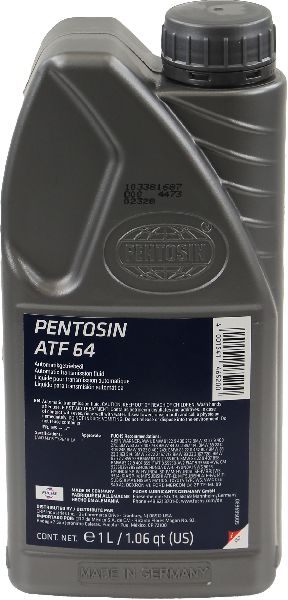
Est. part cost: $250-$600 for a quality rebuild kit with upgraded clutches - Low or Burnt Transmission Fluid 🟡 Medium Probability Leaks from the pan gasket, cooler lines, or seals can lead to low fluid levels. GM also updated its fluid recommendations over the years; using the wrong type can accelerate wear. The correct fluid is DEXRON-VI.
How to confirm: Check the transmission fluid level with the engine running and the transmission warm. The fluid should be bright red and not smell burnt. Low fluid prevents proper hydraulic pressure for gear engagement.
Typical fix: Top off the fluid if low and inspect for leaks. If the fluid is dark or burnt, perform a fluid and filter change, but this is unlikely to fix the issue if internal clutch damage has already occurred.
Est. part cost: $70-$160 for DEXRON-VI fluid and a new filter - Failed Shift Solenoid ⚪ Low Probability
How to confirm: A diagnostic scan tool can command the solenoid on and off to test function. A faulty solenoid may also set its own specific trouble code (e.g., P0756 for Shift Solenoid 'B'). The solenoid can be tested with a multimeter for correct resistance, which should be 20-40 ohms for a 4L60-E.
Typical fix: Drop the transmission pan to access and replace the faulty solenoid. Both the 1-2 and 2-3 shift solenoids are identical parts.
Est. part cost: $40-$80
Rare But Worth Checking
- Worn Valve Body Bore (TCC Regulator Valve): The TCC regulator valve bore in the valve body can wear out, causing pressure loss and slipping issues. This often triggers a P1870 code along with ratio codes like P0733. Repair involves reaming the bore and installing an oversized valve kit, such as the Sonnax 77754-04K.
- Faulty Transmission Control Module (TCM): While rare, a failing TCM can misinterpret sensor data or fail to command shifts correctly. This is usually diagnosed after all mechanical and hydraulic causes have been ruled out. A full scan for communication codes is necessary.
Diagnosis Steps
- Check the transmission fluid level and condition with the engine running and the transmission warm. Ensure the fluid is bright red and does not smell burnt.
- If the fluid is low, top it off with DEXRON-VI, clear the code, and test drive to see if the problem returns. Check for leaks.
- If the fluid is dark, black, or smells burnt, it's a very strong indicator of internal clutch failure. Proceed to the next step.
- Scan the TCM for other related codes (e.g., P0734, P0894, P1870) which can help confirm the diagnosis.
- Drop the transmission oil pan and inspect the magnet and pan bottom for excessive metal shavings or a thick, black, pasty material (clutch material). A thick sludge confirms a burnt clutch pack.
- If the fluid is clean and at the correct level with no significant debris in the pan, the issue could be electrical. Test the 1-2 and 2-3 shift solenoids for resistance (should be 20-40 ohms).
- If solenoids test good, the problem is likely a more complex internal hydraulic leak (e.g., valve body wear, cracked accumulator piston) or mechanical failure requiring professional diagnosis.
Parts You'll Likely Need
- Transmission Rebuild Kit — This is the most common fix, as P0733 on the H3's 4L60-E transmission usually indicates a failed 3-4 clutch pack that requires a full rebuild.
Trusted brands: ACDelco (OEM), Transtar, Alto (Often used for performance upgrades), Raybestos
OEM price range: $400-$600
Aftermarket price range: $250-$450 - A/T Shift Solenoid (A or B)
(OEM #ACDelco 24230298)— If diagnosis points to an electrical issue rather than a mechanical clutch failure, this solenoid is a potential culprit. The 1-2 and 2-3 solenoids are the same part.
Trusted brands: ACDelco, Bosch, Rostra
OEM price range: $50-$90
Aftermarket price range: $30-$60 - Transmission Fluid and Filter Kit — Always required for any repair that involves dropping the pan, or as a first diagnostic step. Must use DEXRON-VI fluid.
Trusted brands: ACDelco
OEM price range: $90-$140
Aftermarket price range: $60-$100
Related Codes That Often Appear With This One
- P0734 — Stands for 'Gear 4 Incorrect Ratio.' Since the 3-4 clutch pack is used for both 3rd and 4th gear in the 4L60-E, its failure often triggers both P0733 and P0734 codes simultaneously.
- P0894 — A general code for 'Transmission Component Slipping.' It often appears with specific gear ratio codes like P0733 to confirm that the TCM is detecting a slip.
- P1870 — Stands for 'Transmission Component Slipping' or 'Transmission Undefined Gear Ratio'. This code is often triggered by a worn TCC regulator valve bore in the valve body, a known issue that can lead to clutch-burning low pressure conditions that also cause P0733.
Technical Service Bulletins (TSBs) & Recalls
- TSB 01-07-30-038: Addresses conditions of no 3rd/4th gear or a 2-3 shift flare on 4L60-E transmissions, pointing to potential issues with the 3-4 clutch pack, forward accumulator piston, or servo assembly.
- TSB 08-07-30-035C: While not a direct cause, this bulletin discusses the diagnosis of water or ethylene glycol (coolant) contamination in the transmission fluid, which can destroy clutches and cause shuddering and slipping.
Platform-Specific Known Issues
- The 4L60-E transmission's 3-4 clutch pack is a widely documented failure point across all GM trucks and SUVs from this era that use it, including the Hummer H3.
- GM issued TSB 01-07-30-038 for 4L60-E transmissions, which discusses conditions including no 3rd or 4th gear, often caused by a worn 3-4 clutch pack or a leaking accumulator piston seal.
Mechanic-Grade Diagnostic Values
- 1-2 and 2-3 Shift Solenoid Resistance — expected: 20-40 Ohms. Failure: A reading outside this range, or open/shorted, indicates a failed solenoid.
- Pressure Control (PC / EPC) Solenoid Resistance — expected: 3.5-8.0 Ohms. Failure: A reading outside this range indicates a faulty PC solenoid, which can cause incorrect line pressure and lead to clutch slip.
- Torque Converter Clutch (TCC) PWM Solenoid Resistance — expected: 10-15 Ohms. Failure: A reading outside this range points to a failure in the TCC apply circuit, which can sometimes be related to pressure loss issues causing other codes.
- Input/Output Speed Sensor (ISS/OSS) Live Data — expected: With the transmission in 3rd gear, the ratio of Input Speed to Output Speed should be 1.00:1.. Failure: A scan tool showing a significant deviation from this 1:1 ratio (e.g., input speed is much higher than output speed) confirms the slip that triggers P0733.
Scan Tool Commands That Help
- GM Tech 2 / GDS2: Solenoid Test — With the key on and engine off, a technician can individually command the 1-2 and 2-3 shift solenoids on and off. A distinct 'click' should be heard from the transmission pan with each command. The absence of a click indicates a failed solenoid or wiring issue, allowing for electrical diagnosis without dropping the pan.
- GM Tech 2 / GDS2: Transmission Adaptive Pressure (TAP) Reset — This function must be used after rebuilding the transmission or replacing the valve body. It clears the learned shift pressure values stored in the TCM. Failing to reset the TAP values can cause harsh shifts and premature wear on the new components as the TCM tries to apply pressures learned for a worn-out unit.
- Professional Scan Tool: Live Data Monitoring: Desired vs. Actual Gear — During a test drive, a technician can monitor the gear commanded by the TCM versus the actual gear ratio calculated from the speed sensors. This helps confirm the slip is occurring specifically when 3rd gear is commanded, ruling out sensor glitches that might occur at other times.
Wiring & Ground Locations
- G101 / G103 — On the lower left side of the engine block. G103 is often located on the cowl, above the brake booster.. These are primary grounds for the Engine Control Module (ECM) and Transmission Control Module (TCM). A loose or corroded ground at these locations can cause erratic behavior from the TCM, including incorrect solenoid commands and false sensor readings, potentially leading to shifting problems or incorrect codes.
- G105 — Located on the left front inner wheel well, often behind the battery or cooling fan relays.. This is another critical chassis ground. While not directly for the TCM, poor grounding here can introduce electrical noise into the system, which can affect sensitive sensor readings and module communication.
- Transmission Main Connector (C1 / C100) — The large, round 13-pin (or more on later models) connector on the passenger side of the transmission case.. This is the single point of connection for all electronic controls. Specifically for P0733, Pin T is the control for the 2-3 Shift Solenoid and Pin U is for the 1-2 Shift Solenoid. A technician can perform continuity and voltage checks at this connector to isolate a problem between the TCM and the transmission internals. A common failure point is the wiring harness rubbing through near the bell housing.
Real Owner Repair Stories
- Colorado & Canyon Enthusiasts Forum user (GMC Canyon with 4L60-E (same platform as H3)) — P0733 and P0734 codes, but transmission fluid was clean and solenoids tested good.
❌ Tried (didn't work) Checking fluid, Testing solenoids
✅ What actually fixed it The owner dropped the valve body and found a small, torn accumulator piston seal within the valve body itself. Replacing this inexpensive seal restored proper hydraulic pressure and resolved the codes without requiring a full transmission rebuild. - HummerForums user (2008 Hummer H3) — Vehicle stuck in 2nd gear (limp mode), no engine light initially, but ABS/Traction Control faults appeared after driving. Scan tool showed multiple communication faults.
❌ Tried (didn't work) Attempting to replace and program a new TCM.
✅ What actually fixed it The problem was a chafed wiring harness. The main loom running over the transmission bell housing had rubbed through, causing a short circuit. Repairing the damaged wires restored communication and normal transmission function.
OEM Part Supersession History
Various OEM 2-4 Servos→ACDelco 8677751 (Corvette Servo)— The 'Corvette' servo has a larger apply area, providing increased holding power for the 2-4 band and resulting in a firmer 1-2 and 2-3 shift. It is a common and recommended durability upgrade.
Heads up: The servo pin length is critical and must be matched to the existing transmission's wear. Using the pin from a complete new assembly without measuring can lead to band damage or slipping. It is often recommended to buy the servo piston only and reuse the original pin.
Model Year Variations Within This Range
- 2006-2010: All Hummer H3 models in this range use the later style 4L60-E which includes an Input Shaft Speed (ISS) sensor. This is significant because the P0733 code is specifically generated by comparing the ISS signal to the Output Shaft Speed (OSS) signal. Earlier 4L60-E versions without an ISS could not generate this specific code in the same way.
- 2009-2010: Starting in 2009, some 4L60-E transmissions were updated with an internal mode switch and eliminated the 3-2 downshift solenoid, changing the internal wiring harness from a 15-pin to a 17-pin connector. While this doesn't directly cause P0733, it's a critical difference when sourcing a replacement transmission or valve body. A 2009+ transmission is not directly backward compatible with a pre-2009 vehicle without modification.
Diagnostic Flowchart
Other Known Issues on This Vehicle
Issues unrelated to this code that are worth knowing about as an owner of this generation:
- Cracked Radiator 🔴 High — Very common. The plastic end tanks crimped to the aluminum core are prone to cracking with age and heat cycles, causing coolant leaks. Failures can occur anywhere from 50,000 to 100,000 miles. (Ref: TSB #PIE0354 was issued to gather information on this issue.)
- GM Passlock II Anti-Theft Failure 🟠 Medium — Extremely common intermittent issue where the vehicle cranks but will not start, accompanied by a flashing security light. It can strand the driver for a mandatory 10-minute lockout period before a restart is allowed.
- Worn Front Differential Bushings 🟠 Medium — The rubber bushings for the front differential, particularly the main crossmember bushing and the passenger side bracket bushing, wear out, causing a distinct 'clunk' when shifting into Drive or Reverse, or during acceleration/deceleration.
- Leaking Cylinder Head / Valve Seats (3.5L & 3.7L I5) 🔴 High — Primarily affecting 2006-2007 models, the valve seats can wear prematurely, causing low compression, misfires (P0300), rough idle, and oil consumption. This often requires cylinder head replacement and can occur around 87,000 miles.
- Leaking Sunroof Drain Tubes 🟡 Low — The drain tubes for the factory sunroof can become clogged with debris, causing rainwater to back up and leak into the cabin, typically soaking the headliner and A-pillar trim.
- Reduced Power (Throttle Body Issues) 🟠 Medium — The engine can suddenly go into 'Reduced Engine Power' mode, setting codes like P1516 or P2135. This is often caused by a dirty throttle body, a failing throttle position sensor, or a poor electrical connection at the throttle body harness. (Ref: TSB #PIP4578B (carbon buildup), TSB #PIP4573B (icing).)
Used vs. New Parts: Buying Guide for This Vehicle
When a used part is the smart pick: A complete, used transmission from a low-mileage, non-abused donor can be a cost-effective but risky alternative to a rebuild. A used valve body can also be considered if the fluid from the donor unit is clean and pink. For most other individual parts, new is strongly recommended.
Donor-vehicle mileage cap: roughly under 70000 miles for the part to have meaningful remaining life.
What to inspect on the donor part:
- Ask to see the fluid from the donor transmission. It MUST be bright red and have no burnt smell.
- If possible, pull the pan and inspect the magnet. A light coating of metallic dust is normal, but any chunks or a thick sludge are red flags.
- Check the torque converter hub for scoring or blueing from overheating.
- Get a written warranty, even if it's only 30-90 days. This provides some recourse if it fails immediately.
- Spin the input shaft by hand (in neutral) and ensure the output shaft does not spin with it 1-for-1, which could indicate welded internal components.
OEM-only on this vehicle (don't cheap out):
- Transmission Control Module (TCM) - While aftermarket TCMs exist, they often have programming and compatibility issues. A new or properly remanufactured OEM unit is the safest bet.
Aftermarket brands forum-validated for this vehicle:
- Sonnax (for valve body repair kits, accumulator pistons, and servo upgrades)
- TransGo (for shift kits and valve body components)
- Alto (for high-performance 'Red Eagle' clutch and rebuild kits)
- ACDelco (for OEM replacement solenoids and sensors)
Brands owners have reported issues with on this vehicle:
- Unbranded, no-name 'complete' rebuild kits from online marketplaces. They often use inferior quality seals and clutches that fail prematurely.
Real Owner Stories
Aggregated from forums and TSBs cited above. Mileages and costs reflect what owners reported in those sources.
2007 Hummer H3 3.7L I5 — 115000 miles
Symptoms: Engine RPM would flare up when trying to shift from 2nd to 3rd gear, as if it was slipping into neutral. The Check Engine Light came on and the vehicle wouldn't go into 3rd gear at all.
What fixed it: The transmission had to be removed and rebuilt. The 3-4 clutch pack was completely burnt. It was replaced with an upgraded aftermarket clutch kit and new seals.
Source hint: TSB 01-07-30-038 and Common Causes section
2008 Hummer H3 3.7L I5 — ~85000 miles
Symptoms: The stock radiator's plastic end tank cracked, causing a coolant leak. Shortly after, the transmission began to shudder and slip between gears before setting a trouble code.
What fixed it: The radiator was replaced to stop the leak. The transmission fluid was found to be contaminated with coolant, which had destroyed the clutches. The transmission required a full rebuild.
Source hint: Hummer Forums - Read If Your H3 Radiator Has Cracked or Leaked
Related OBD-II Codes
Frequently Asked Questions
What is the most likely cause of a P0733 code on my 2007 Hummer H3?
My transmission fluid is dark brown and smells burnt. Is that related to the P0733 code?
Is there a Technical Service Bulletin (TSB) for this transmission issue on the Hummer H3?
What is the correct transmission fluid for a 2006-2010 Hummer H3?
Could a bad shift solenoid cause the P0733 code on my H3?
My H3's radiator recently cracked. Could this be related to my new P0733 transmission code?
Do other GM trucks like the Chevy Colorado have this same P0733 problem?
Used OEM Parts in Stock

New Aftermarket Parts Available



The information in this article is provided for general reference and educational purposes only. Vehicle specifications, procedures, and part compatibility can vary by production date, trim level, and region. Always consult your vehicle's factory service manual and verify part numbers before purchasing or performing repairs. Safety-critical components such as airbags, seat belts, and braking systems should be installed by a qualified professional.
- Hummer H3:
- 🛍️ Shop This Part
- What's Unique About the 2006-2010 Hummer H3
- Symptoms You May Notice
- Most Likely Causes
- Rare But Worth Checking
- Diagnosis Steps
- Parts You'll Likely Need
- Related Codes That Often Appear With This One
- Technical Service Bulletins (TSBs) & Recalls
- Platform-Specific Known Issues
- Mechanic-Grade Diagnostic Values
- Scan Tool Commands That Help
- Wiring & Ground Locations
- Real Owner Repair Stories
- OEM Part Supersession History
- Model Year Variations Within This Range
- Diagnostic Flowchart
- Other Known Issues on This Vehicle
- Used vs. New Parts: Buying Guide for This Vehicle
- Real Owner Stories
- 2007 Hummer H3 3.7L I5 — 115000 miles
- 2008 Hummer H3 3.7L I5 — ~85000 miles
- Related OBD-II Codes
- Frequently Asked Questions
- 🎟️ Get 5% Off