

P0733 on 2020-2023 Ford Transit: Gear 3 Incorrect Ratio Causes & Fixes
P0733 on a 2020-2023 Ford Transit almost always points to a known internal transmission issue with the CDF clutch drum assembly in the 10R80 transmission. This is a complex, expensive repair requiring a transmission specialist and is not a DIY job. The failure is so common that Ford has updated the part and issued multiple Technical Service Bulletins (TSBs).
- P0733 on a 2020-2023 Ford Transit is not a simple sensor or fluid issue; it strongly indicates a known, specific mechanical failure inside the 10R80 transmission.
- The most likely cause is a faulty CDF clutch drum, as documented in multiple Ford TSBs.
- This is a serious issue that requires professional diagnosis and repair by a qualified transmission specialist.
- Do not ignore this code. Continued driving will lead to more severe and costly transmission damage.
- The repair involves replacing the original CDF drum with an updated part from Ford that corrects the design flaw.
What's Unique About the 2020-2023 Ford TRANSIT
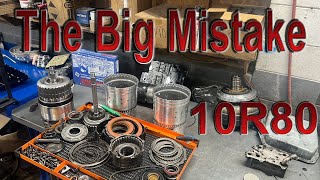
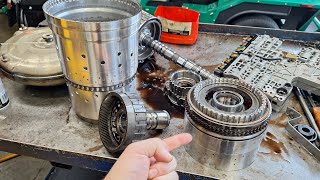
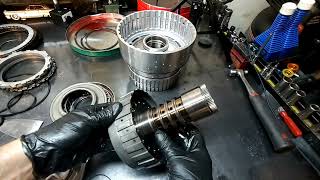
The 2020-2023 Ford Transit uses the 10-speed 10R80 automatic transmission, which is known to have a specific, widespread design flaw. Ford has issued multiple Technical Service Bulletins (TSBs) that directly link P0733 and other shifting problems to a faulty CDF (Clutch C-D-F) clutch drum. 🎬 Watch: A deep dive into the CDF clutch drum design flaw. An internal sleeve, or bushing, on this drum can walk or move axially, which uncovers hydraulic fluid passages. This movement causes a critical loss of hydraulic pressure to the clutch packs responsible for engaging the gears, leading to slipping, harsh shifts, and gear ratio codes like P0733.
Diagnostic Flowchart
Tap your situation to follow the diagnostic path that matches what you're seeing on this vehicle.
Symptoms You May Notice
- Check Engine Light (Malfunction Indicator Lamp) is on
- Harsh, delayed, or erratic shifting, especially involving third gear.
- A noticeable 'flare' or slip where engine RPMs rise between shifts (e.g., 2-3 or 3-4) before the next gear engages.
- Transmission slipping (engine RPMs rise without an increase in speed).
- Vehicle enters 'limp mode,' often stuck in a single gear, with a wrench icon on the dash.
- Delayed or harsh engagement when shifting from Park to Drive.
- Loss of power and poor acceleration, sometimes feeling like the vehicle is 'floating' between gears.
- Clunking or banging noises during upshifts or downshifts.
- Replacing only the transmission fluid and filter. This is often a temporary fix at best; if the CDF drum has failed, new fluid will quickly become contaminated and symptoms will return.
- Replacing a single shift solenoid when the root cause is the mechanical failure of the CDF clutch drum causing a hydraulic leak.
- Unnecessarily replacing the entire transmission. A competent transmission shop can often rebuild the existing unit by replacing the CDF drum, seals, and other worn components for less than the cost of a new or remanufactured transmission.
Most Likely Causes
- Faulty CDF Clutch Drum Assembly 🔴 High Probability This is a well-documented failure point in the Ford 10R80 transmission. Ford TSBs 24-2254, 26-2046, and 21-2377 all point to axial movement of the CDF clutch cylinder sleeve causing hydraulic leaks and a host of DTCs, including P0733. The original drum design allows the bushing to slide, exposing oil passages and causing a pressure drop to the clutches.
How to confirm: A technician must perform hydraulic pressure tests as outlined in the TSBs using specialized equipment like the Rotunda Pressure Vacuum Transducer Kit. Visual confirmation requires transmission disassembly to inspect the drum for a shifted internal sleeve; the sleeve's movement will often expose a previously covered oil hole.
Typical fix: Replace the faulty CDF clutch drum with the updated part from Ford (Part No. JL3Z-7H351-B), which has a machined lip to prevent the sleeve from moving. This requires a partial or full transmission rebuild. Some aftermarket solutions, like a Sonnax drum saver kit, also exist.
Est. part cost: $250-$400 for the updated OEM drum assembly. - Low or Dirty Transmission Fluid 🟡 Medium Probability While not a root cause on its own, low fluid can exacerbate wear and cause slipping. Dirty fluid, often containing clutch material from a failing CDF drum, is a strong indicator of the mechanical failure.
How to confirm: Check the transmission fluid level and condition. The 10R80 is a sealed unit without a dipstick, requiring a technician to check it from a fill plug on the transmission case while the vehicle is level and at a specific temperature. Fluid should be bright red and clear, not dark, burnt-smelling, or containing excessive metal particles ('glitter').
Typical fix: Perform a transmission fluid and filter change using only Motorcraft MERCON ULV fluid. If the fluid is very dirty or contains metal, it confirms a more severe internal problem (the CDF drum) is present and a simple fluid change will not be a lasting fix.
Est. part cost: $150-$300 for fluid and filter - Faulty Valve Body or Shift Solenoids ⚪ Low Probability While less common than the CDF drum issue for this specific code, valve body problems are another known weakness of the 10R80 transmission. Often, solenoid codes appear *because* of the hydraulic leak from the CDF drum, not because the solenoid itself has failed.
How to confirm: A technician can use a high-level scan tool (like Ford's IDS) to command individual solenoids and monitor pressure data to identify a malfunctioning solenoid or sticking valve. However, this can be misleading if the underlying issue is a hydraulic leak elsewhere.
Typical fix: Replace the specific faulty solenoid or the entire valve body assembly. This is often done during the CDF drum replacement as a preventative measure or if it's also found to be faulty.
Est. part cost: $800-$1200 for a valve body assembly.
Rare But Worth Checking
- Faulty Transmission Speed Sensors: An input (TSS) or output (OSS) speed sensor can fail and send incorrect data to the TCM, triggering the code by creating a false slip reading. This is less likely than a mechanical failure but worth checking, especially if other speed sensor codes are present.
- Damaged Internal Wiring or Connectors: Wiring inside the transmission can become damaged, leading to intermittent signals from sensors or solenoids. This is usually discovered during a transmission teardown.
Diagnosis Steps
- Verify the transmission fluid level and condition. This requires a lift and knowledge of the correct procedure for the sealed 10R80. Dark, burnt, or metallic fluid is a key indicator of internal failure.
- Use a professional scan tool to read all codes from the TCM and PCM. Note any other accompanying gear ratio or solenoid codes, as they strengthen the diagnosis of a CDF drum failure.
- Review Ford TSBs 24-2254, 26-2046, and 21-2377. These bulletins are critical for this specific issue and outline the known fault and repair path.
- Monitor live data with the scan tool, focusing on input/output speed sensors and commanded vs. actual gear. Confirm a spike in input RPM relative to output RPM when 3rd gear is commanded.
- If symptoms and codes align with the TSBs, the next step is to perform the hydraulic circuit leak test outlined by Ford. This requires specialized equipment like the Rotunda Pressure Vacuum Transducer Kit (164-R9833).
- Based on the test results, proceed with transmission removal and replacement of the CDF clutch drum with the updated part, along with all necessary seals, gaskets, and any other damaged components like the valve body.
Parts You'll Likely Need
- CDF Clutch Drum Assembly (Updated Design)
(OEM #JL3Z-7H351-B (supersedes older versions))— This is the most common point of failure. The updated Ford part has a machined lip to prevent the internal sleeve from moving, providing a permanent fix.
Trusted brands: Motorcraft
OEM price range: $250-$400
Aftermarket price range: Varies, Sonnax offers a 'CDF Drum Saver Kit' (Part #129910-01K) as an alternative to full drum replacement. - Transmission Overhaul Gasket & Seal Kit — Required for any internal transmission work to replace all seals and gaskets during reassembly. Often includes new sealing rings that are damaged by the CDF drum failure.
Trusted brands: Motorcraft
OEM price range: $700-$950
Aftermarket price range: $200-$400 - Motorcraft MERCON ULV Automatic Transmission Fluid
(OEM #XT-12-QULV)— The 10R80 transmission requires this specific ultra-low viscosity fluid. A full refill (approx. 13 quarts) is necessary after the repair.
Trusted brands: Motorcraft
OEM price range: $10-$20 per quart - Valve Body Assembly
(OEM #JL3Z-7A100-C (for 2017-2020 models))— Often recommended for replacement during the CDF drum repair due to contamination from clutch debris or its own known issues. In some cases, it is replaced first as a misdiagnosis.
Trusted brands: Motorcraft
Related Codes That Often Appear With This One
- P0729, P0731, P0732, P0734, P0735 — These are incorrect gear ratio codes for other gears (6th, 1st, 2nd, 4th, 5th). When multiple appear, it strongly points to a systemic issue like the CDF drum failure affecting hydraulic pressure to multiple clutch packs.
- P0751, P0756, P0761, etc. — These are codes for shift solenoid performance (A, B, C, etc.). They often appear alongside gear ratio codes because the hydraulic leak from the CDF drum causes the solenoids to work improperly or the TCM to detect a fault in their operation as they struggle to compensate for the pressure loss.
Technical Service Bulletins (TSBs) & Recalls
- TSB 24-2254: The most current TSB, superseding previous versions. It covers 2020-2023 Transit models and lists P0733 as a primary code related to the axial movement of the CDF clutch cylinder sleeve. It provides a detailed diagnostic procedure involving hydraulic testing.
- TSB 26-2046: An older TSB for 2021 models with the same list of codes and issue, now superseded by 24-2254.
- TSB 21-2377: An earlier bulletin for 2020 models also listing P0733 in connection with delayed shifts and internal transmission faults, also superseded.
Platform-Specific Known Issues
- The 10R80 transmission in 2020-2023 Ford Transits is subject to Ford Technical Service Bulletin TSB 24-2254, which details a known issue with the CDF clutch cylinder sleeve moving and causing hydraulic leaks. This TSB covers a wide range of DTCs, including P0733, and points to a specific mechanical part failure. Vehicles built after August 15, 2022, should have the updated component from the factory.
Mechanic-Grade Diagnostic Values
- Shift Solenoids (A-F), TCC Solenoid, LPC Solenoid Resistance — expected: 5.0 - 5.4 Ohms at 68°F (20°C). Failure: Readings outside of this range indicate a faulty solenoid coil.
- Transmission Fluid Temperature (TFT) Sensor Resistance — expected: 37k-16k Ohms at 69°F-104°F (21°C-40°C); 2.7k-1.5k Ohms at 195°F-230°F (90°C-110°C). Failure: Resistance values that do not correlate with the transmission fluid temperature suggest a faulty sensor.
- Input/Output/Turbine Speed Sensor Resistance — expected: 325-485 Ohms at 70°F (21°C). Failure: Resistance outside this range points to a failed speed sensor.
Scan Tool Commands That Help
- Ford IDS (Integrated Diagnostic Software) or FDRS: PCM/TCM > Programmable Parameters > Transmission — This function is required after replacing the transmission or valve body. The technician must enter the 13-digit Solenoid Body Strategy number and the 12-digit Solenoid Body ID from the tag on the new part to ensure the controller has the correct calibration for the specific solenoids.
- Ford IDS (Integrated Diagnostic Software) or FDRS: Toolbox > Powertrain > Transmission > Adaptive Learning — After any major transmission repair, including replacing the CDF drum or valve body, the adaptive learning tables must be reset. A specific drive cycle must then be performed to allow the TCM to relearn clutch fill times and shift pressures, which is critical for smooth operation.
- High-level scan tool: Hydraulic Pressure Circuit Test — As specified in TSB 24-2254, a scan tool is used in conjunction with a pressure/vacuum transducer kit (Rotunda 164-R9833) to test the integrity of the hydraulic circuits. This is the definitive step to confirm a leak at the CDF drum before transmission removal.
Wiring & Ground Locations
- C168B (Main Transmission Connector) — External connector on the passenger side of the 10R80 transmission case.. This is the main electrical interface between the vehicle's wiring harness and all internal transmission components, including all solenoids and sensors. A poor connection, corrosion, or damaged pins at this connector can interrupt signals and mimic internal transmission faults.
- Transmission Case Ground — A strap or wire connecting the transmission bellhousing or case directly to the vehicle chassis/frame.. A poor or missing transmission ground can cause erratic behavior from electronic components, including the solenoids and sensors within the transmission, potentially leading to incorrect diagnostic codes. While not a primary cause for P0733, it's a foundational check for any electronic transmission issue.
- G104 (Example Ground Point) — Ford often uses designated ground points on the frame or body structure, such as near the B-pillar or under the driver's seat. Specific locations vary by vehicle configuration.. The TCM and related control modules rely on clean chassis ground points. Corrosion or looseness at these points can cause unpredictable electrical issues that may affect transmission operation.
Real Owner Repair Stories
- Reddit user in r/f150 (2023 Ford Transit with 10R80, 30,000 miles) — While accelerating to pass on the highway at 70 mph, the transmission failed.
❌ Tried (didn't work) The vehicle was still under warranty.
✅ What actually fixed it The dealership determined the transmission needed to be rebuilt. This occurred even in a newer model year vehicle that was expected to have the updated parts.
OEM Part Supersession History
HL3Z-7H351-A→JL3Z-7H351-A, then JL3Z-7H351-B— The original CDF clutch drum assembly (C/D/F hub) was prone to an internal sleeve shifting axially, which would uncover hydraulic passages and cause a severe pressure loss to the clutches.
Heads up: The newest part, JL3Z-7H351-B, is the correct and required replacement for any 10R80 transmission undergoing this repair. It is a direct fit and features a redesigned drum with a machined lip to prevent the sleeve from moving.
Model Year Variations Within This Range
- 2020-mid 2023: Vehicles built before approximately mid-2023 are more likely to contain the original CDF drum design that is prone to failure. TSB 24-2254 specifically covers Transit vehicles built on or before August 15, 2022. While later models are expected to have the updated part from the factory, the issue is not entirely eliminated.
Helpful Videos

Used OEM Parts in Stock

New Aftermarket Parts Available


The information in this article is provided for general reference and educational purposes only. Vehicle specifications, procedures, and part compatibility can vary by production date, trim level, and region. Always consult your vehicle's factory service manual and verify part numbers before purchasing or performing repairs. Safety-critical components such as airbags, seat belts, and braking systems should be installed by a qualified professional.
- Ford TRANSIT:
- 🎬 Helpful Videos
- 🛍️ Shop This Part
- What's Unique About the 2020-2023 Ford TRANSIT
- Diagnostic Flowchart
- Symptoms You May Notice
- Most Likely Causes
- Rare But Worth Checking
- Diagnosis Steps
- Parts You'll Likely Need
- Related Codes That Often Appear With This One
- Technical Service Bulletins (TSBs) & Recalls
- Platform-Specific Known Issues
- Mechanic-Grade Diagnostic Values
- Scan Tool Commands That Help
- Wiring & Ground Locations
- Real Owner Repair Stories
- OEM Part Supersession History
- Model Year Variations Within This Range
- 🎟️ Get 5% Off