

P0732 on 2020-2023 Ford Transit: Gear 2 Incorrect Ratio Causes and Fixes
On a 2020-2023 Ford Transit, P0732 almost always indicates a significant internal transmission problem, not a simple sensor failure. The most common cause is a known issue with the CDF clutch drum assembly inside the 10R80 transmission, detailed in Ford Technical Service Bulletins. This is a complex, expensive repair requiring a transmission specialist, with costs often exceeding $4,000.
- P0732 on a 2020-2023 Transit indicates a Gear 2 ratio error, but the cause is almost certainly a significant mechanical failure inside the 10R80 transmission.
- The most probable cause is a well-documented failure of the CDF clutch drum, which requires an updated part from Ford.
- Do not assume the problem is a bad sensor or simple electronic fault; diagnosis should focus on the known mechanical weak points of this transmission.
- This is not a DIY-friendly repair. It requires specialized tools and extensive knowledge of automatic transmission overhaul.
- Always use the specified Motorcraft MERCON ULV transmission fluid; using the wrong fluid can cause damage.
What's Unique About the 2020-2023 Ford TRANSIT
The 2020-2023 Ford Transit uses the 10-speed 10R80 automatic transmission, which is known to have specific design issues, particularly in vehicles built on or before August 15, 2022. Ford has issued multiple Technical Service Bulletins (TSBs) pointing to a faulty CDF (Clutch D-F) clutch drum as the primary culprit for this and many other transmission codes. A sleeve inside this drum can 'walk' or move out of position, causing hydraulic leaks that lead to pressure loss and severe shifting problems. This makes P0732 on this specific vehicle far more likely to be a major internal mechanical failure than a simple electronic issue.
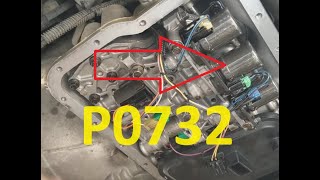
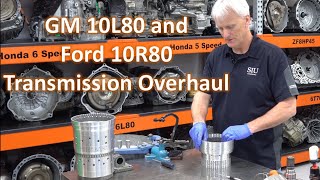
🎬 Watch: Understanding the P0732 code and common gear ratio fixes.Diagnostic Flowchart
Tap your situation to follow the diagnostic path that matches what you're seeing on this vehicle.
Symptoms You May Notice
- Check Engine Light or Malfunction Indicator Lamp (MIL) is on
- Harsh, delayed, or erratic shifting, especially involving second gear
- Transmission slipping, shuddering, or lurching
- Vehicle enters 'limp mode' (limited gears and power)
- Delayed or clunking engagement when shifting from Park to Drive or Reverse
- Loss of power or hesitation when accelerating from a stop
- Replacing input or output speed sensors. While these sensors provide the data to set the code, they are rarely the root cause on this platform. The incorrect ratio is a real mechanical slip, not a sensor error.
- Performing a simple transmission fluid flush. While good maintenance, if the CDF drum has failed and is leaking hydraulically, new fluid will not solve the mechanical problem.
Most Likely Causes
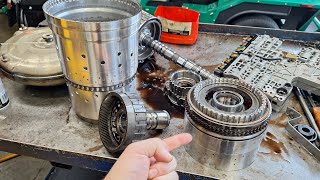
- CDF Clutch Drum Assembly Failure 🔴 High Probability As documented in Ford TSBs like 24-2254, the 10R80 transmission in Transits built on or before Aug 15, 2022, is prone to the internal sleeve of the CDF clutch drum moving axially. This uncovers hydraulic passages, causing pressure loss and incorrect gear operation. Ford later redesigned the part with a machined lip to prevent this movement.
How to confirm: A technician must perform a specific hydraulic circuit leakage test as outlined in TSB 24-2254, which may require specialized tools like the Rotunda Pressure Vacuum Transducer Kit (164-R9833). Often, this requires transmission disassembly for visual inspection to confirm the slipped bushing on the drum.
Typical fix: The transmission must be partially or fully disassembled to replace the faulty CDF clutch drum with the updated part, OEM number JL3Z-7H351-B.
Est. part cost: $200-$400 - Low or Contaminated Transmission Fluid 🟡 Medium Probability While the CDF drum is the most likely cause, low or burnt fluid can cause similar symptoms and should be the first check. The 10R80 is sensitive to fluid level and condition.
How to confirm: Check the transmission fluid level and condition according to the manufacturer's procedure. The fluid should be at the correct level, red in color, and not smell burnt or contain excessive metal particles.
Typical fix: If low, top off with the correct fluid (Motorcraft MERCON ULV). If dirty or contaminated, perform a fluid and filter change. This is unlikely to fix a P0732 if the CDF drum has failed.
Est. part cost: $100-$250 - Valve Body Issues or Failed Shift Solenoid ⚪ Low Probability The 10R80 can suffer from valve body cross-leaks or solenoid failures, though this is less common than the CDF drum issue for this specific code. However, a failing valve body can also be a consequence of debris from the failing drum.
How to confirm: A professional scan tool can be used to command the specific shift solenoids to check for proper operation. A valve body inspection and vacuum or pressure test can identify leaks.
Typical fix: Replace the faulty shift solenoid or overhaul/replace the main control valve body. This can be an expensive repair on its own.
Est. part cost: $300-$800
Rare But Worth Checking
- Faulty Transmission Control Module (TCM) or Wiring: While possible, electronic failures are much less common than the documented mechanical issues with the 10R80 transmission. Check for damaged wiring or connectors leading to the transmission before condemning the TCM.
Diagnosis Steps
- Verify the transmission fluid level and condition. Ensure it is filled with the correct Motorcraft MERCON ULV fluid.
- Use a professional OBD-II scanner to check for any other transmission-related trouble codes. Note all codes present.
- As a preliminary step, some users suggest using a tool like Forscan to clear the transmission's adaptive learning tables. If shifting improves temporarily but then degrades, it strongly points to a mechanical failure.
- Review Ford Technical Service Bulletin TSB 24-2254 to confirm it applies to the vehicle's symptoms and build date (on or before August 15, 2022).
- If the CDF drum failure is suspected, the vehicle must be taken to a qualified transmission shop or dealer. The technician will need to perform hydraulic pressure tests as per the TSB, possibly using the Rotunda 164-R9833 and 164-R9534 test kits, before proceeding with transmission disassembly.
Parts You'll Likely Need
- CDF Clutch Cylinder / Drum Assembly (Updated Design)
(OEM #JL3Z-7H351-B)— This is the most common point of failure on the 10R80 transmission for these symptoms, as documented by Ford. The original design allows a sleeve to slip, causing hydraulic leaks. This updated part has a machined lip to prevent the failure.
Trusted brands: Motorcraft
OEM price range: $200-$400
Aftermarket price range: $150-$350 - Automatic Transmission Fluid
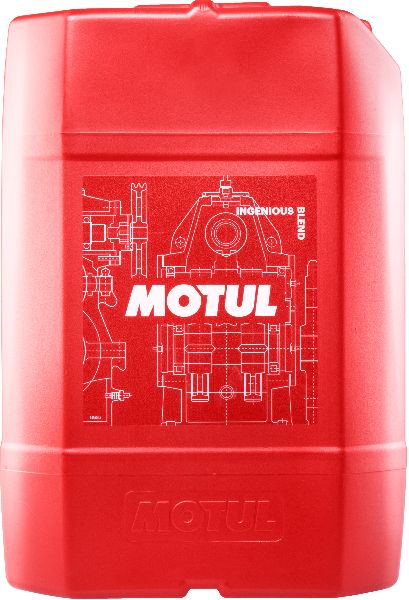
(OEM #Motorcraft MERCON ULV)— The transmission must be refilled with fresh fluid after the repair.
Trusted brands: Motorcraft MERCON ULV
OEM price range: $15-$25 per quart
Aftermarket price range: $10-$20 per quart - Transmission Gasket and Seal Kit — Required for any internal transmission repair to ensure no leaks after reassembly.
Trusted brands: Motorcraft
OEM price range: $100-$200
Aftermarket price range: $75-$150
Related Codes That Often Appear With This One
- P0729, P0731, P0733, P0734, P0735 — These are incorrect gear ratio codes for other gears (6th, 1st, 3rd, 4th, 5th). They frequently appear with P0732 because the underlying CDF clutch drum failure affects multiple gear circuits.
- P0751, P0756, P0761, P0766, P2700-P2708 — These are codes for shift solenoid performance and clutch circuit issues. They are all listed in the same Ford TSBs as being caused by the same CDF clutch cylinder failure.
Technical Service Bulletins (TSBs) & Recalls
- TSB 24-2254: States that harsh/delayed shifts and a list of DTCs including P0732 may be due to axial movement of the CDF clutch cylinder sleeve on 2020-2023 Transits built on or before August 15, 2022.
- TSB 26-2046: Also lists P0732 among a large group of codes related to internal transmission faults.
- TSB 21-2377: Connects P0732 with harsh/delayed shifts and other transmission DTCs, pointing towards an internal issue.
Platform-Specific Known Issues
- Ford has issued multiple TSBs (including TSB 24-2254) for 2020-2023 Transits with the 10R80 transmission built on or before August 15, 2022. These bulletins directly link codes like P0732 to a condition where "axial movement of the CDF clutch cylinder sleeve [causes] hydraulic circuit leaks." The repair involves testing for this leak and, if confirmed, replacing the entire CDF clutch cylinder assembly with an updated part (JL3Z-7H351-B).
Hidden / Shadow Codes Worth Checking
- 13-digit Solenoid Body Strategy Number: A unique number etched on the main control valve body that must be programmed into the PCM/TCM after replacing the valve body or the entire transmission. Failure to program this can cause harsh shifting and other issues. (see via Visually inspect the main control/valve body casting. It can be read and programmed using a dealer-level scan tool like Ford IDS.)
- 12-digit Solenoid Body Identification: A unique serial number for the solenoid body assembly, also recorded during service. (see via Visually inspect the main control/valve body casting or service tag. Can be viewed with a scan tool like Ford IDS.)
Scan Tool Commands That Help
- FORScan / Ford IDS: Clear Transmission Adaptive Tables — This service function resets the transmission's learned shift patterns. It should be performed after any transmission repair, fluid change, or as a diagnostic step. If clearing the tables temporarily resolves harsh shifting but the issue returns quickly, it strongly suggests an underlying mechanical or hydraulic fault rather than a software issue.
- Ford IDS: Transmission Characterization/Solenoid IDN — This function is required after replacing the valve body or a single solenoid. The technician must enter the 13-digit solenoid body strategy number and/or the 12-digit identification number from the new part into the PCM/TCM. This calibrates the controller to the specific performance of the new solenoids.
- FORScan / Ford IDS: Adaptive Learning Drive Cycle — After clearing the adaptive tables, a specific, multi-step drive cycle must be performed to allow the TCM to relearn clutch fill times and shift pressures. This involves a series of gentle accelerations and stops. Skipping this procedure can result in prolonged poor shift quality.
Wiring & Ground Locations
- C175B — This is one of the main connectors at the Powertrain Control Module (PCM).. This connector contains pins for critical transmission functions, including signals for shift select switches and vehicle speed output. A poor connection or corrosion at this connector could disrupt communication between the transmission and the PCM, potentially causing shifting faults.
- Main Transmission Case Connector — Located on the side of the transmission case, connecting the internal transmission harness (solenoids, sensors) to the main vehicle harness.. This is the primary electrical interface for the transmission. It contains pins for all shift solenoids, speed sensors (TSS, ISS, OSS), and the transmission fluid temperature sensor. Damage, corrosion, or fluid intrusion at this connector can directly cause various transmission codes, including P0732.
- Engine Compartment Fuse Box — Located under the hood, near the driver's side.. This box contains the fuses and relays for the Powertrain Control Module (PCM) and the Transmission Control Module (TCM). A blown fuse or faulty relay can cause a loss of power to the transmission controls, leading to no-shift conditions and fault codes.
- Body Control Module (BCM) Fuse Box — Located in the passenger cabin, often under the dashboard.. The BCM manages various vehicle functions and communicates with the PCM/TCM. While less direct, a fault in the BCM or its power supply could potentially affect the network communication required for proper transmission operation.
OEM Part Supersession History
HL3Z-7H351-A, JL3Z-7H351-A→JL3Z-7H351-B— The original CDF clutch drum design allowed an internal bushing/sleeve to 'walk' out of position, uncovering oil passages and causing a loss of hydraulic pressure to the clutches. The updated JL3Z-7H351-B part features a machined lip that physically prevents the sleeve from moving, correcting the design flaw.
Model Year Variations Within This Range
- 2020 - Mid-2022: Vehicles built on or before August 15, 2022, are equipped with the original CDF clutch drum design that is prone to the sleeve-walking failure outlined in TSB 24-2254. Vehicles built after this date are expected to have the updated drum (JL3Z-7H351-B) from the factory, making this specific failure much less likely.
Helpful Videos



Used OEM Parts in Stock

New Aftermarket Parts Available


The information in this article is provided for general reference and educational purposes only. Vehicle specifications, procedures, and part compatibility can vary by production date, trim level, and region. Always consult your vehicle's factory service manual and verify part numbers before purchasing or performing repairs. Safety-critical components such as airbags, seat belts, and braking systems should be installed by a qualified professional.
- Ford TRANSIT:
- 🎬 Helpful Videos
- 🛍️ Shop This Part
- What's Unique About the 2020-2023 Ford TRANSIT
- Diagnostic Flowchart
- Symptoms You May Notice
- Most Likely Causes
- Rare But Worth Checking
- Diagnosis Steps
- Parts You'll Likely Need
- Related Codes That Often Appear With This One
- Technical Service Bulletins (TSBs) & Recalls
- Platform-Specific Known Issues
- Hidden / Shadow Codes Worth Checking
- Scan Tool Commands That Help
- Wiring & Ground Locations
- OEM Part Supersession History
- Model Year Variations Within This Range
- 🎟️ Get 5% Off