

P0716 on 2012-2019 Chrysler 300: Input Speed Sensor / Conductor Plate Failure Causes and Fixes
P0716 on a Chrysler 300 indicates an erratic signal from the transmission's input speed sensor. On models with the common 8-speed automatic, this is a known issue where the sensor, integrated into the internal conductor plate (lead frame), fails. This causes harsh shifting, limp mode, and requires professional replacement of the valve body/mechatronic assembly. For older, less common 5-speeds, it's a simpler external sensor replacement.
- P0716 on a 2012-2019 Chrysler 300 means the transmission input speed sensor is sending an erratic signal.
- Symptoms are serious and impact drivability, including harsh shifting and the transmission going into 'limp mode'.
- For the common 8-speed automatic, this is not a simple DIY fix. The sensor is part of an internal transmission assembly (mechatronics/valve body).
- Repair requires professional service to drop the transmission pan and replace internal components, along with a fluid and filter change.
- Always verify if your car has the 5-speed or 8-speed transmission, as the repair procedure and cost are vastly different.
What's Unique About the 2012-2019 Chrysler 300
The 2012-2019 Chrysler 300 spans the transition from older 5-speed automatic transmissions (NAG1) to the more common ZF-designed 8-speed automatics (like the 8HP45, 8HP70, and the Chrysler-built 845RE). The diagnosis and repair for P0716 are drastically different between them. On the 5-speed, the input speed sensor is an accessible, external part. On the much more common 8-speed transmissions, the input and output speed sensors are integrated into the internal conductor plate (also called a lead frame), which is part of the valve body/mechatronics assembly. Replacement is a significant, labor-intensive job that is not recommended for DIY beginners.
Diagnostic Flowchart
Tap your situation to follow the diagnostic path that matches what you're seeing on this vehicle.
Symptoms You May Notice
- Check Engine Light or transmission warning light is on
- Harsh, erratic, or delayed gear shifts.
- A hard clunk when shifting into Drive or Reverse, or when coming to a stop.
- Hesitation or bucking when shifting, particularly between 1st and 2nd gear.
- Transmission gets stuck in one gear (limp mode).
- Vehicle feels sluggish or has reduced acceleration.
- Reduced fuel economy.
- Engine revs flare between shifts without a corresponding increase in speed.
- Replacing the entire transmission when only the internal mechatronics unit (valve body/conductor plate) is faulty.
- Assuming the input speed sensor is a simple, external part without first identifying whether the vehicle has the 5-speed or 8-speed transmission.
- Replacing the input speed sensor without checking for contamination from a failing torque converter, which can cause the new part to fail prematurely.
- Mistaking the transmission input speed sensor for a wheel speed sensor, which is part of the ABS system and would set different codes.
Most Likely Causes
- Faulty Input Speed Sensor (Internal to Conductor Plate/Mechatronic Assembly on 8-Speed) 🔴 High Probability On the widely used 8-speed ZF transmissions, the speed sensors are integrated into the lead frame/conductor plate, which is a known failure point across many vehicle brands using this transmission. The electronics on this plate can fail, especially when exposed to heat cycles over time, leading to erratic signals. The manufacturer TSB S2621000003 REV. A confirms this code is a known issue for these transmissions.
How to confirm: A professional will use a bi-directional scan tool to monitor the input speed sensor data in real-time while driving. If the signal is erratic, drops to zero, or is irrational compared to engine RPM, the sensor/conductor plate is faulty.
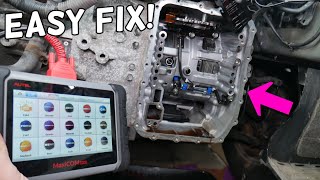
Typical fix: Replace the entire transmission mechatronic/valve body assembly, or in some cases, just the conductor plate/lead frame which contains the sensors. 🎬 See this walkthrough on how to replace the conductor plate. This requires draining the fluid, dropping the transmission pan, and careful removal of the valve body. A transmission adaptation relearn procedure is required after installation.
Est. part cost: $400-$2500 - Low or Contaminated Transmission Fluid 🟡 Medium Probability The 8-speed transmission is a 'fill-for-life' unit, but leaks can develop from the pan gasket or electrical connector sleeve. Incorrect fluid levels can cause pressure issues, leading to shifting problems and codes. Fluid can also become contaminated with clutch material from a failing torque converter, which can clog passages in the valve body.
How to confirm: Check the transmission fluid level and condition. This is difficult on the 8-speed as it has no dipstick and requires a specific procedure at a certain temperature. Look for signs of leaks. Note: Per TSB S2621000003 REV. A, a burnt odor is a normal characteristic of the specified fluid and is not, by itself, an indicator of a problem.
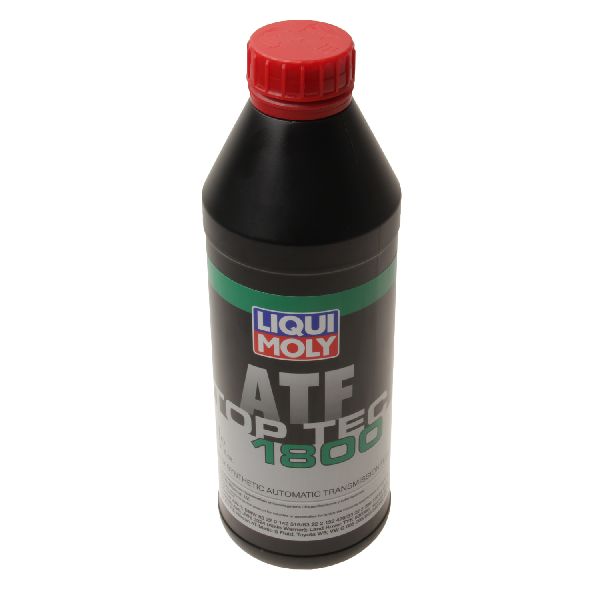
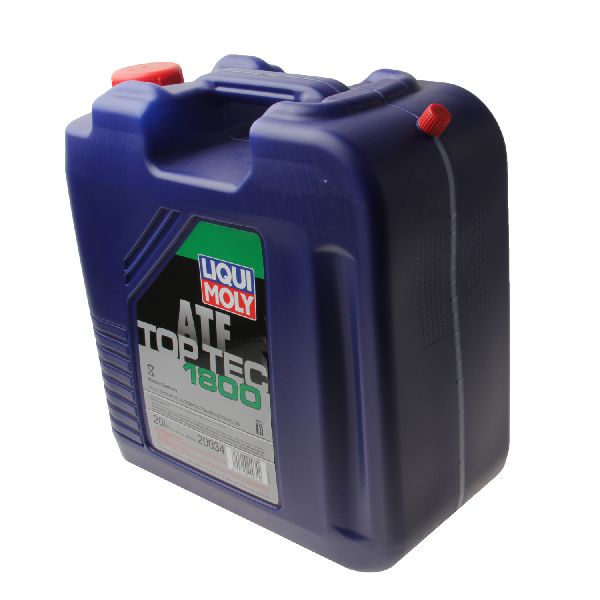
Typical fix: Perform a transmission fluid and filter change using the correct OEM-specified fluid (e.g., Mopar ZF 8&9 Speed ATF). If the fluid contains significant metallic debris, a failing torque converter or other internal damage is likely.
Est. part cost: $150-$300 - Damaged Wiring or Connector ⚪ Low Probability The main transmission harness connector sleeve is a common leak point. Fluid can seep through the connector, wicking up the wiring harness and causing corrosion, short circuits, or high resistance in the sensor circuit.
How to confirm: Unplug the main electrical connector at the transmission case and inspect it thoroughly for any signs of transmission fluid. Check for corrosion, bent, or spread pins. Inspect the wiring harness for any visible damage, chafing, or melting near exhaust components.
Typical fix: Replace the leaking connector sleeve and meticulously clean the harness terminals with an electronics-safe cleaner. If the harness is damaged, it will need to be repaired or replaced.
Est. part cost: $20-$100
Rare But Worth Checking
- Faulty Transmission Control Module (TCM): While less common, the TCM (which is integrated into the mechatronics unit on the 8-speed) can fail internally, causing it to misinterpret a valid sensor signal. This should only be considered after the conductor plate, wiring, and fluid have been ruled out.
- Failing or Weak Battery: On modern Chrysler/Dodge/Jeep vehicles, a weak or failing battery can cause low voltage situations that lead to a variety of seemingly unrelated electronic glitches and fault codes, including transmission codes. Before expensive transmission work, it's wise to test the battery and charging system.
Diagnosis Steps
- Verify the transmission type (5-speed NAG1 or 8-speed ZF/845RE). The following steps assume the common 8-speed transmission.
- Connect a professional-grade scan tool to read and document all fault codes and freeze-frame data.
- Test the battery and charging system to rule out low-voltage issues.
- Monitor the live data stream for the Input Speed Sensor. Compare its reading to the Engine RPM and Output Speed Sensor while driving.
- Look for signal dropouts, erratic jumps, or readings that are clearly illogical (e.g., 0 RPM while the vehicle is moving in gear).
- If the signal is faulty, the vehicle should be taken to a qualified transmission shop.
- The shop will inspect the transmission fluid level and condition, looking for leaks or excessive contamination.
- Inspect the main transmission electrical connector for fluid intrusion or pin damage.
- If wiring, fluid, and battery are good, the next step is to replace the internal mechatronic assembly or conductor plate that houses the sensor.
Parts You'll Likely Need
- Transmission Conductor Plate / Lead Frame (part of Valve Body/Mechatronic Assembly) — For the common 8-speed transmission, the input speed sensor is integrated into the conductor plate. This entire electronic board is the most common failure point for a P0716 code. It is often replaced as part of a complete valve body/mechatronic assembly. Part numbers are VIN-specific and frequently superseded.
Trusted brands: Mopar, ZF
OEM price range: $800-$2500
Aftermarket price range: $400-$1000 - Transmission Fluid and Filter Pan Kit
(OEM #e.g., Mopar 68225344AA (verify by VIN))— This repair requires removing the transmission pan and draining the fluid. The pan for the ZF 8-speed has an integrated filter and is typically replaced as part of the service. Using the correct fluid (Mopar ZF 8&9 Speed ATF) is criti 🎬 Watch: Step-by-step guide for an 8-speed transmission filter service.cal.
Trusted brands: Mopar, ZF, Mahle
OEM price range: $150-$250
Aftermarket price range: $100-$200
Related Codes That Often Appear With This One
- P0717 — This code means 'Input/Turbine Speed Sensor Circuit No Signal'. It often appears with P0716, indicating the signal is not just erratic but is disappearing completely at times.
- P0733 — This code means 'Gear 3 Incorrect Ratio'. The TSB S2621000003 REV.A lists this code alongside P0716, as an erratic input speed signal prevents the TCM from verifying correct gear ratios.
- P0741 — This code means 'Torque Converter Clutch Circuit Performance or Stuck Off'. This can indicate a failing TCC, which can shed debris and contaminate the fluid, leading to valve body and sensor issues that trigger P0716.
Technical Service Bulletins (TSBs) & Recalls
- S2621000003 REV.A: A comprehensive diagnostic aid for a wide range of Stellantis vehicles (including the Chrysler 300) with 8-speed transmissions. It lists P0716 as a known fault code and provides diagnostic context, such as noting that a burnt fluid smell is normal.
Platform-Specific Known Issues
- The NHTSA Technical Service Bulletin #S2621000003 REV.A directly lists P0716 as a potential diagnostic code for the 8HP series transmissions used in 2012-2023 Chrysler 300s, confirming it's a known issue to the manufacturer.
- The TSB also notes that the specific transmission fluid used (Mopar ZF 8&9 Speed ATF) has a naturally burnt odor, and smell alone should not be used to condemn a transmission.
Mechanic-Grade Diagnostic Values
- Solenoid Resistance (on 8-speed Mechatronics) — expected: 5.0 Ω at 20°C (68°F). Failure: A reading significantly different from 5.0 ohms indicates a faulty solenoid on the valve body assembly.
- Sensor Signal Wire Continuity — expected: 0.5 Ω or lower. Failure: A higher resistance reading indicates a problem in the wiring harness between the TCM and the transmission connector.
- Sensor Reference Voltage (at connector) — expected: Approximately 5.0 V (±0.2 V). Failure: No voltage or voltage outside this range points to a problem with the TCM or the wiring providing power to the sensor.
Hidden / Shadow Codes Worth Checking
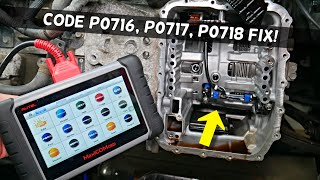
- P0717, P0718: These codes are part of the same family as P0716. P0717 indicates 'No Signal' and P0718 indicates an 'Intermittent' signal from the input speed sensor. They often point to a more severe or complete failure of the sensor or its circuit. (see via Standard OBD-II scan tool. A list of DTCs for the 845RE transmission confirms these are related codes.)
Scan Tool Commands That Help
- wiTECH or equivalent professional scan tool: Transmission Adaptation Learn Procedure — Required after replacing the valve body/mechatronics assembly or clearing adaptation memory cells. This procedure allows the TCM to relearn clutch fill times and pressures for smooth shifting.
- wiTECH or equivalent professional scan tool: Quick Learn — A stationary procedure that allows the TCM to recalibrate itself. It should be performed after replacing the transmission, TCM, valve body, or solenoid pack.
Wiring & Ground Locations
- TCM Fuses — In the engine bay fuse box: Fuse F29 (15A) and Fuse F37. In the trunk fuse box: Fuse F26. Locations can vary slightly by year and options.. A blown fuse will cut power to the Transmission Control Module (TCM), which processes the input speed sensor signal, potentially causing this code or a no-communication issue.
- G300 — On older models, this ground point is located below the center console area. Its exact location on 2012-2019 models may vary but it serves as a key ground point for transmission-related components.. A poor ground connection for the TCM or transmission sensors can introduce electrical noise or incorrect reference points, leading to erratic signal readings and triggering a P0716 code.
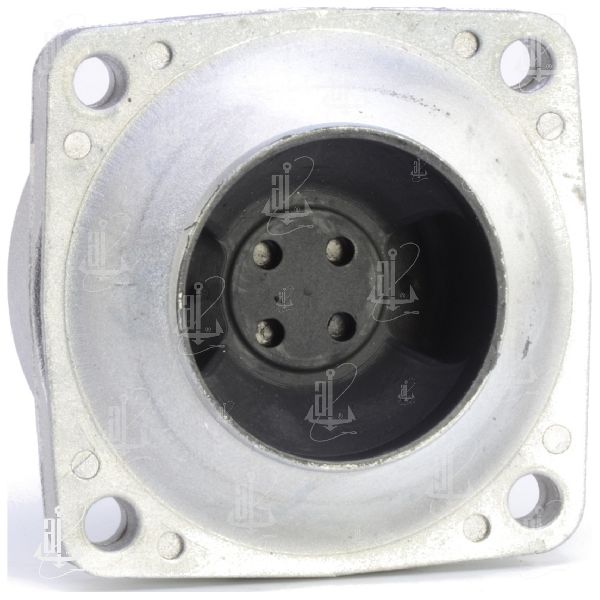
- Main Transmission Connector — On the side of the transmission case, connecting the main vehicle harness to the internal mechatronics unit.. This 18-pin connector is a common point for fluid leaks via a failed sealing sleeve (ZF P/N 0501220929). Fluid can wick into the connector and harness, causing short circuits or high resistance on the speed sensor circuit.
Real Owner Repair Stories
- YouTube video by 'Transmission Bench' (2008 Saturn Outlook with 6T75E transmission (Illustrates a relevant failure mode)) — Harsh shifting into 2nd, 5th, and Reverse, with codes P0716 and P0717 stored.
❌ Tried (didn't work) Initial diagnosis pointed only to an electronic speed sensor failure.
✅ What actually fixed it The root cause was a mechanical failure. A broken 3-5-Reverse wavy plate inside the transmission had disintegrated. Metal fragments from the broken plate contaminated the transmission and stuck to the magnetic tip of the input speed sensor, causing erratic and false readings. The fix required a transmission teardown to replace the broken wavy plate and clutch drum, and to thoroughly clean all metal debris.
OEM Part Supersession History
68227332AA, 68227332AB, 68227332AC→68227332AD (and corresponding remanufactured RL-prefixed numbers)— Part revisions to improve reliability and address known failure modes of the TCM on the conductor plate.
Heads up: While physically interchangeable, the replacement mechatronic/TCM assembly must be programmed to the vehicle's VIN. Some vendors sell pre-programmed 'plug-and-play' units.N/A→0501220929— This is the ZF part number for the Mechatronic Case Connector Sealing Sleeve, which is a very common failure point for leaks. It is almost always replaced when the valve body is serviced.
Model Year Variations Within This Range
- 2012-2019: Models with the 3.6L V6 engine are typically equipped with the Chrysler-built 845RE transmission. Models with V8 engines (5.7L, 6.4L) are equipped with the ZF-sourced 8HP70 transmission. While functionally similar and sharing the same root cause for P0716, the specific mechatronics/valve body part numbers are different and not interchangeable.
- 2015-2019: The 2015 model year refresh introduced the electronic rotary shifter. This changed the driver interface but did not alter the internal function of the transmission or the causes of code P0716. The transmission still has a manual park release override, but it is accessed differently.
Helpful Videos


Used OEM Parts in Stock


New Aftermarket Parts Available


The information in this article is provided for general reference and educational purposes only. Vehicle specifications, procedures, and part compatibility can vary by production date, trim level, and region. Always consult your vehicle's factory service manual and verify part numbers before purchasing or performing repairs. Safety-critical components such as airbags, seat belts, and braking systems should be installed by a qualified professional.
- Chrysler 300:
- 🎬 Helpful Videos
- 🛍️ Shop This Part
- What's Unique About the 2012-2019 Chrysler 300
- Diagnostic Flowchart
- Symptoms You May Notice
- Most Likely Causes
- Rare But Worth Checking
- Diagnosis Steps
- Parts You'll Likely Need
- Related Codes That Often Appear With This One
- Technical Service Bulletins (TSBs) & Recalls
- Platform-Specific Known Issues
- Mechanic-Grade Diagnostic Values
- Hidden / Shadow Codes Worth Checking
- Scan Tool Commands That Help
- Wiring & Ground Locations
- Real Owner Repair Stories
- OEM Part Supersession History
- Model Year Variations Within This Range
- 🎟️ Get 5% Off