

P0715 on 2007-2012 Nissan Altima: Input Speed Sensor Failure Causes and Fixes
On a 2007-2012 Nissan Altima, the P0715 code almost always points to a failed transmission input speed sensor (also called a turbine speed sensor) or its wiring. This typically forces the car into 'limp mode' with poor acceleration and is a common issue for this model's Jatco RE0F09A/B CVT transmission. Replacing the sensor is the most frequent fix.
- P0715 on a 2007-2012 Altima is a serious code that will put the car in 'limp mode'.
- The most likely cause is a failed input speed sensor, followed by damaged wiring.
- Do not immediately assume the entire CVT has failed; the sensor circuit should be diagnosed first.
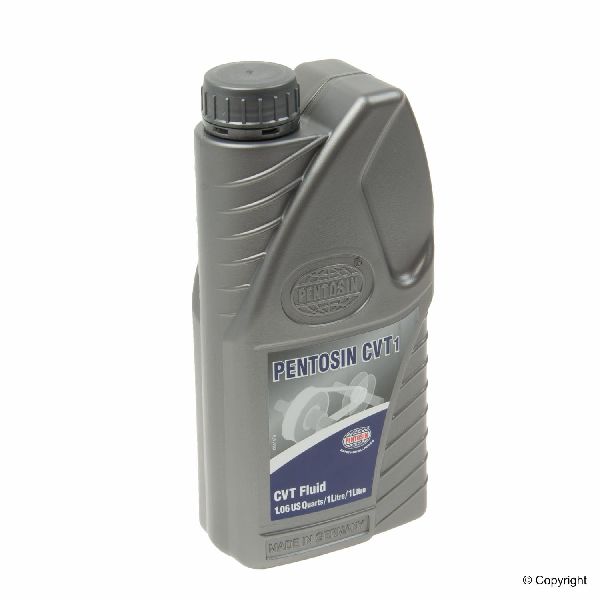
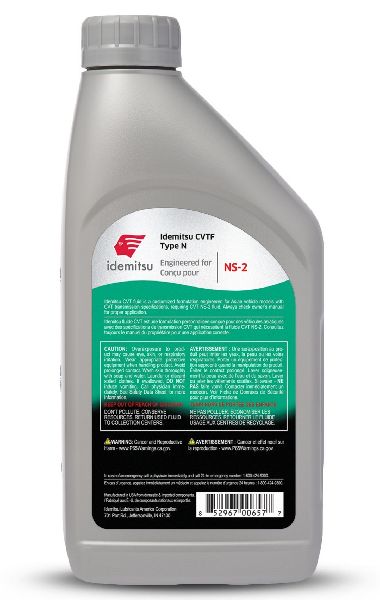
- Use only Nissan NS-2 specific fluid for the CVT; using the wrong fluid will cause damage.
- Due to the sensitive nature of the CVT, professional diagnosis and repair are strongly recommended.
What's Unique About the 2007-2012 Nissan Altima

The 2007-2012 Nissan Altima uses a Jatco Continuously Variable Transmission (CVT), model RE0F09B for the V6 and the RE0F10A for the 4-cylinder, which is known for developing problems. The P0715 code is a very common symptom on this platform, frequently preceding more significant CVT issues. While the code points to a sensor circuit, it's often the sensor itself that fails due to the transmission's operating conditions. Unlike many other vehicles, this code on an Altima of this era is a strong indicator of a specific, well-documented component failure, often discussed in owner forums.
Symptoms You May Notice
- Vehicle enters 'fail-safe' or 'limp' mode, limiting acceleration and speed to around 35 mph.
- Check Engine Light is illuminated.
- Harsh, erratic, or delayed gear shifting, sometimes described as a 'thud' or 'jolt' when engaging gears.
- Transmission may seem to 'hunt' for gears or fail to shift at all.
- Reduced fuel efficiency.
- The engine may hesitate or stall in some circumstances.
- Inability to use cruise control.
- Replacing the output speed sensor instead of the input speed sensor. These transmissions have two main speed sensors; P0715 specifically refers to the input ('A') sensor, while P0720 refers to the output sensor.
- Assuming the entire transmission has failed without first diagnosing the much cheaper sensor and its circuit. Many owners have fixed limp mode by only replacing the sensor(s).
- Mistaking the code for a fuel or air mixture problem, as one user in a forum incorrectly suggested.
Most Likely Causes

- Faulty Input/Turbine Speed Sensor 🔴 High Probability The sensors used in this generation's CVT are a known failure point, susceptible to heat and internal electronic failure over time. It is the most common cause of P0715 on this platform.
How to confirm: After checking wiring, the sensor can be tested with a multimeter for correct resistance (typically 500–1,200 Ω). A more definitive test is monitoring its output on a professional scan tool while driving; a lack of signal or an erratic signal that doesn't correspond to engine speed points to a bad sensor. 🎬 See a breakdown of P0715 causes and common fixes. The input and output sensors are located externally on the transmission case, though they can be difficult to access.
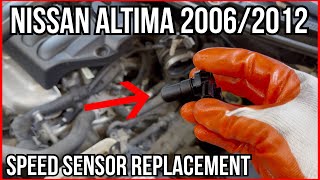
Typical fix: Replace the input speed sensor. 🎬 Watch this step-by-step guide to replacing the speed sensor. Many owners and mechanics recommend replacing both the input and output (P0720) sensors at the same time as a preventative measure.
Est. part cost: $50-$150 - Damaged Wiring or Connectors 🟡 Medium Probability The wiring harness to the transmission is exposed to engine and exhaust heat, vibration, and potential fluid leaks, leading to corrosion, shorts, or open circuits in the wires or at the connector pins. The pigtail connector itself can become brittle and fail.
How to confirm: Visually inspect the wiring harness and connector leading to the input speed sensor for any signs of melting, chafing, corrosion, or fluid contamination. Perform a continuity test on the wires between the sensor connector and the TCM connector to check for breaks or shorts.
Typical fix: Repair the damaged section of the wiring harness or replace the pigtail connector.
Est. part cost: $10-$100 - Low or Contaminated Transmission Fluid ⚪ Low Probability CVT fluid (Nissan NS-2) degrades over time. If it's very old, burnt, or contains metallic debris from internal wear, it can interfere with sensor operation and is a strong indicator of a more severe internal transmission problem, like a failing belt or pulley.
How to confirm: Check the level and condition of the Nissan NS-2 CVT fluid. The fluid should be translucent green and not smell burnt. Significant metal debris on the dipstick or in the pan is a sign of impending internal failure.
Typical fix: Perform a transmission fluid drain and fill with genuine Nissan NS-2 fluid. If significant debris is found, the transmission may need to be rebuilt or replaced.
Est. part cost: $150-$300 for fluid service - Failing Transmission Control Module (TCM) or Valve Body ⚪ Low Probability While less common than a sensor failure, the TCM or the solenoid-containing valve body it controls can malfunction. This can be due to internal circuit board failure or stuck solenoids, causing a variety of codes, including P0715.
How to confirm: This is typically a diagnosis of exclusion. If the sensor, wiring, and fluid are all confirmed to be good, the TCM/valve body becomes the primary suspect. This requires advanced diagnostics with a Nissan-specific scan tool (CONSULT) to check for communication errors and perform self-tests.
Typical fix: Replace the valve body assembly, which often includes the TCM. The new unit must be programmed/calibrated to the vehicle using the procedure outlined in Nissan TSB NTB12-103g.
Est. part cost: $800-$1500
Rare But Worth Checking
- Damaged Reluctor Ring: The input speed sensor reads a toothed wheel (reluctor ring) on the input shaft. In very rare cases, this ring can become damaged or break, causing an erratic signal. This is a major repair requiring transmission disassembly to inspect and fix.
Diagnosis Steps

- Scan for all stored trouble codes to see if P0715 appears with any others, such as P0720 or P0717.
- Check the transmission fluid level and condition. Ensure it is the correct Nissan NS-2 CVT fluid and is at the proper level. Note any burnt smell or visible metal particles, which indicate a severe internal issue.
- Visually inspect the wiring harness and electrical connector for the input speed sensor. Look for frayed wires, corrosion, melting, or fluid contamination. The sensors are located on the outside of the transmission case.
- Using a capable scan tool, monitor the live data from the input speed sensor while the vehicle is running. The reading should be stable and correspond to engine RPM. An erratic, zero, or unchanging reading points to a problem in the sensor circuit.
- If scan tool access is limited, disconnect the sensor and test its internal resistance with a multimeter. Compare the reading to the manufacturer's specification (often in the range of 500-1,200 ohms). An open or shorted reading indicates a failed sensor.
- If the sensor tests good, perform a continuity check on the wiring between the sensor connector and the TCM to rule out a wiring fault.
- If the sensor and wiring are confirmed to be good, the problem likely lies with the valve body or the TCM itself, which requires professional diagnosis and potentially reprogramming.
Parts You'll Likely Need
- Transmission Input Speed Sensor (Turbine Revolution Sensor)
(OEM #31935-8E006 (may be superseded by 31935-1XF00 or 31935-1XF0C for some applications))— This sensor is the most common component to fail and directly cause the P0715 code on this vehicle.
Trusted brands: Nissan (OEM), Hitachi, NTK, Beck/Arnley
OEM price range: $120-$180
Aftermarket price range: $50-$100 - Transmission Output Speed Sensor (Vehicle Speed Sensor)
(OEM #31935-1XF00 (often sold as a set with the input sensor))— Often replaced along with the input sensor as a preventative measure, as it is of the same age and exposed to the same conditions. A failure of this sensor will trigger code P0720. 🎬 Watch: How to replace the output vehicle speed sensor.
Trusted brands: Nissan (OEM), Hitachi, Soillar, NTK
OEM price range: $100-$160
Aftermarket price range: $40-$90 - Nissan NS-2 CVT Fluid
(OEM #999MP-NS200P)— Required if the repair involves opening the transmission (like replacing a sensor) or if the fluid is found to be low or contaminated. Using the correct OEM fluid is critical for CVT longevity.
Related Codes That Often Appear With This One
- P0720 — This code is for the Output Speed Sensor circuit. It's common to see both input and output sensor codes together if there is a widespread electrical issue, a failing TCM, or significant internal transmission problems. Many mechanics replace both sensors at the same time.
- P0868 — This code indicates 'Transmission Fluid Pressure Low'. It can appear with P0715 if the root cause is a failing valve body, severe fluid leak, or internal CVT damage affecting both pressure regulation and sensor readings.
- P0717 — This code for 'Input/Turbine Speed Sensor 'A' Circuit No Signal' is a more specific version of P0715, indicating a complete loss of signal rather than just an erratic one. They often appear together.
Technical Service Bulletins (TSBs) & Recalls
- NTB12-103g: This Technical Service Bulletin details the mandatory procedure for writing calibration data to the TCM after replacing a CVT or valve body. It requires a dealer-level CONSULT scan tool and access to a calibration file, which originally came on a CD with the new part. Failure to perform this calibration can result in persistent trouble codes and improper transmission operation.
- TSB Bulletin #NTB22-030: While issued for a different model, this bulletin notes that a stored DTC P0715 in the TCM may be accompanied by a "SERVICE AT POWER REDUCED" warning message displayed to the driver.
Platform-Specific Known Issues
- The Jatco CVT (model RE0F09A/B) in the 2007-2012 Altima is known for premature failures. P0715 can be an early warning sign of problems that may eventually require valve body or full transmission replacement. Regular CVT fluid changes (every 30,000-50,000 miles) are highly recommended to prolong its life.
Mechanic-Grade Diagnostic Values
- Primary (Input) Speed Sensor voltage at TCM connector F23, pins 25 to 26 — expected: 4.75 – 5.25 V. Failure: Voltage outside this range indicates a circuit or TCM issue.
- Primary (Input) Speed Sensor frequency at TCM connector F23, pin 33 — expected: Approx. 680 Hz while driving in 'L' at 20 km/h (12 MPH). Failure: No signal or a wildly different frequency points to a sensor or reluctor ring issue.
- Input Speed Sensor reference voltage at sensor connector — expected: 5V. Failure: No voltage suggests a wiring or TCM power supply problem.
Scan Tool Commands That Help
- Nissan CONSULT-III plus: TRANSMISSION > Work Support > SAVE / WRITE CALIBRATION DATA — This function is mandatory when replacing the TCM or the entire valve body assembly. It writes the unique calibration data from a CD or downloaded file to the new module to ensure proper CVT operation. Failure to perform this step will result in poor performance or a non-functional transmission.
- Nissan CONSULT-III plus: TRANSMISSION > Self-Diagnosis > CLUTCH POINT LEARNING — After replacing the valve body or TCM and writing the calibration data, this procedure must be performed. It teaches the TCM the engagement point of the forward and reverse clutches. If skipped, the vehicle may not move when put into gear.
- Nissan CONSULT-III plus: Data Monitor — Used to confirm the P0715 fault by observing live data. A technician would monitor 'PRI SPEED SENSOR' while driving to see if the value is erratic, zero, or does not correlate with engine RPM, confirming a sensor circuit fault.
Wiring & Ground Locations

- TCM Connector F23 — The TCM is located inside the transmission, integrated with the valve body. The main harness connector (F23) is on the outside of the transmission case.. This is the central point for testing the entire sensor circuit from outside the transmission. Probing pins here for voltage, ground, and signal frequency can differentiate between a sensor, wiring, or TCM fault without removing the transmission pan.
- Input Speed Sensor Connector — On the driver's side front of the transmission case, near the linkage and front cooler line.. This is the primary point of failure for wiring. The pigtail connector at this location is exposed to heat and vibration and is a common replacement item. It is a 3-wire connector.
- TCM Pins 25, 26, 33 (for RE0F09B) — Within the main F23 harness connector that plugs into the transmission.. According to a service manual for the related RE0F09B transmission, Pin 25 and 26 are for sensor voltage checks, and Pin 33 is the signal wire for frequency measurement. These are the specific pins a technician needs to probe for advanced diagnosis.
Real Owner Repair Stories
- YouTube channel 'Car & Truck Problems' (Vehicle appears to be a 2007-2012 Nissan Altima.) — P0715 code was present. Live data on a scan tool showed the input RPM dropping out intermittently while the engine RPM was steady.
✅ What actually fixed it The mechanic replaced both the input speed sensor and the pigtail connector. After the repair, the live data showed the input RPM matching the engine RPM without any dropouts, confirming the fix. - YouTube channel 'H&F Auto Repair' (Nissan Altima (model year appears to be in the 2013-2018 range, but discusses issues common to 2008+ models)) — P0715 code along with other transmission codes. A key symptom noted was transmission fluid being forced out of the breather hose due to overheating.
❌ Tried (didn't work) Adding fluid, assuming it was a leak.
✅ What actually fixed it The mechanic diagnosed this as a catastrophic internal transmission failure (likely a damaged belt). The P0715 code was a symptom of the larger failure, not the root cause. The final fix was a complete transmission replacement. - NHTSA ODI #11388651: An owner of a related Nissan model reported that the vehicle wouldn't go fast enough and started to roll back; a scan revealed P0715 along with P0744 and P285A.
OEM Part Supersession History
31935-8E005, 31935-8E007→31935-1XF00, which was then superseded by 31935-1XF0C.— Part consolidation and potential design improvements. The same part number is often used for both input and output sensors across various Nissan models.
Heads up: The part number 31935-1XF0C is listed as a replacement for several older numbers, including 31935-8E007 and 31935-1XF00. It is crucial to verify fitment with the vehicle's VIN, as these sensors are used across many different Nissan CVT models (Juke, Rogue, Sentra, etc.) and using the wrong one, even if it fits physically, can cause issues.
Model Year Variations Within This Range
- 2007-2012: The 2.5L 4-cylinder models typically use the Jatco RE0F10A CVT, while the 3.5L V6 models use the larger Jatco RE0F09B (also called JF010E) CVT. While the P0715 code applies to both, the physical location of the sensors and internal components may have slight differences. The diagnostic procedures and part numbers are often shared but should always be verified for the specific transmission model.
- 2010-2012: A mid-cycle refresh occurred for the 2010 model year, which included revised interior and exterior styling. While major powertrain components remained the same, there could be minor wiring harness or connector changes. Problems with the CVT were reported more frequently in the earlier 2007-2009 models compared to the 2010-2012 models.
Diagnostic Flowchart
Other Known Issues on This Vehicle
Issues unrelated to this code that are worth knowing about as an owner of this generation:
- Electronic Steering Column Lock (ESCL) Failure 🔴 High — Very common on 2009-2010 models, leading to a no-start condition. The failure rate was high enough to prompt a voluntary service campaign. (Ref: Nissan Service Campaign PC516 (detailed in TSB NTB17-018) was issued to replace the faulty ESCL with an Electronic Steering Column Box (ESCB) that removes the locking function.)
- Melting / Sticky Dashboard 🟠 Medium — Widespread in vehicles operated in high-heat, high-sunlight climates (e.g., Florida, Texas, Arizona). The dashboard surface degrades, becomes sticky, and creates a dangerous reflective glare on the windshield. (Ref: A class-action lawsuit was settled for 2008-2009 models in Florida, but the problem affects the entire generation. No national recall was ever issued.)
- Rear Subframe Corrosion and Cracking 🔴 High — Common in regions that use road salt in winter ('Salt Belt'). Corrosion attacks the rear subframe, which can lead to cracking and noise. While Nissan stated it doesn't affect handling, severe cases can be a safety concern. (Ref: Nissan issued a recall (06V-046) for some earlier models and a warranty extension for 2002-2005 Altimas, but the issue can still appear on the 4th generation cars, though perhaps less frequently.)
- Premature CVT Transmission Failure 🔴 High — A well-documented issue with the Jatco CVT, particularly in 2007-2009 models. Problems range from overheating and whining to complete failure, often costing $3,500+ to replace. P0715 can be an early symptom of these larger issues.
- Faulty Brake Light Switch 🟡 Low — A common and relatively inexpensive failure that can prevent the car from starting (as the brake signal is not detected) and cause the brake lights to stop working.
Used vs. New Parts: Buying Guide for This Vehicle
When a used part is the smart pick: A used speed sensor is generally not recommended due to the high failure rate and low cost of a new aftermarket part. A used valve body assembly from a low-mileage donor vehicle could be a cost-effective option *if* it comes with the original calibration CD or if you have access to a dealer/specialist who can retrieve the calibration file for programming. A complete used transmission is a viable option if a major internal failure is diagnosed.
Donor-vehicle mileage cap: roughly under 80000 miles for the part to have meaningful remaining life.
What to inspect on the donor part:
- For a complete transmission, verify the donor vehicle's mileage and history if possible.
- Check the color and smell of the CVT fluid from the donor unit; it should be green-ish and not smell burnt.
- Inspect the external case for any cracks or damage.
- When buying a used valve body, ensure it is from the exact same model and year, and ask if the calibration information is available.
OEM-only on this vehicle (don't cheap out):
- CVT Fluid (Nissan NS-2). Using anything else is a major risk to the transmission's longevity.
- Transmission Control Module (TCM) / Valve Body. While refurbished units exist, a new OEM unit with proper programming offers the highest chance of success.
Aftermarket brands forum-validated for this vehicle:
- Hitachi (often the OEM supplier)
- NTK
- Beck/Arnley
Brands owners have reported issues with on this vehicle:
- Unbranded, no-name sensors from online marketplaces are a gamble; many forum users report premature failure after replacing with cheap alternatives.
Real Owner Stories
Aggregated from forums and TSBs cited above. Mileages and costs reflect what owners reported in those sources.
2007-2012 Nissan Altima
Symptoms: A 'THUD' noise was heard when shifting and accelerating, accompanied by the P0715 code.
What fixed it: A commenter diagnosed the issue as a bad input sensor causing hard shifts and recommended replacing both the input and output sensors as the first step.
Source hint: Reddit r/MechanicAdvice - Difficulty in Changing Gears + Error Code P0715
2012 Nissan Altima
Symptoms: The owner had a P0715 trouble code and was having difficulty locating the correct sensor on the transmission case for a DIY repair.
What fixed it: The owner was seeking to replace the input turbine speed sensor to resolve the code.
Source hint: Reddit r/MechanicAdvice - Input turbine speed sensor
Related OBD-II Codes
Frequently Asked Questions
My 2010 Altima is in 'limp mode' with code P0715. Is it safe to continue driving?
I have a P0715 code on my Altima. Should I replace both the input and output speed sensors at the same time?
What specific transmission fluid should I use for my 2008 Altima's CVT when addressing a P0715 code?
Is P0715 a sign that my Altima's entire CVT transmission is failing?
I'm replacing the valve body on my 2011 Altima to fix P0715. Is there a special procedure I need to follow?
Where is the input speed sensor located on my 2012 Altima's transmission?
Helpful Videos

We Have This Part in Stock


The information in this article is provided for general reference and educational purposes only. Vehicle specifications, procedures, and part compatibility can vary by production date, trim level, and region. Always consult your vehicle's factory service manual and verify part numbers before purchasing or performing repairs. Safety-critical components such as airbags, seat belts, and braking systems should be installed by a qualified professional.
- Nissan Altima:
- 🎬 Helpful Videos
- 🛍️ Shop This Part
- What's Unique About the 2007-2012 Nissan Altima
- Symptoms You May Notice
- Most Likely Causes
- Rare But Worth Checking
- Diagnosis Steps
- Parts You'll Likely Need
- Related Codes That Often Appear With This One
- Technical Service Bulletins (TSBs) & Recalls
- Platform-Specific Known Issues
- Mechanic-Grade Diagnostic Values
- Scan Tool Commands That Help
- Wiring & Ground Locations
- Real Owner Repair Stories
- OEM Part Supersession History
- Model Year Variations Within This Range
- Diagnostic Flowchart
- Other Known Issues on This Vehicle
- Used vs. New Parts: Buying Guide for This Vehicle
- Real Owner Stories
- 2007-2012 Nissan Altima
- 2012 Nissan Altima
- Related OBD-II Codes
- Frequently Asked Questions
- 🎟️ Get 5% Off