

P0715 on 2018-2022 Ford Ecosport: Input Speed Sensor Failure Causes & Fixes
On the 2018-2022 Ecosport with the 6F15 automatic transmission, P0715 almost always points to a faulty Input/Turbine Speed Sensor (TSS). The transmission may shift harshly, get stuck in gear, or go into 'limp mode'. Since the sensor is external, it's a very accessible and straightforward DIY repair. The replacement sensor (OEM part numbers may include GN1Z-7H103-A or similar) typically costs between $30 and $70.
- P0715 on your Ecosport almost certainly means the transmission's input speed sensor is failing or its wiring is damaged.
- Symptoms are serious and affect safety: expect harsh shifting or the vehicle entering a low-power 'limp mode'. Driving is not recommended.
- The most likely fix is replacing the sensor itself, which is an affordable part and relatively easy to access on the outside of the transmission.
- Do not agree to expensive repairs like a transmission rebuild or valve body replacement without first having the sensor and its wiring professionally tested.
- This code is often accompanied by P0717; both point to the same problem area.
What's Unique About the 2018-2022 Ford Ecosport
The Ford Ecosport in this year range uses the 6F15 6-speed automatic transmission, which is shared with other Ford models like the Escape and Fusion. This P0715 code is a relatively common issue across these platforms. A key characteristic for this vehicle is that the input (TSS) and output (OSS) speed sensors are mounted externally on the transmission case, making them highly accessible for testing and replacement without dropping the transmission. The input sensor is typically located on the top of the transmission, under the air filter housing.
Symptoms You May Notice
- Harsh, erratic, or delayed shifting, sometimes with a loud 'thud' or 'bang'. [9, ODI #11464253]
- Transmission gets stuck in one gear (limp mode or fail-safe mode). [8, 9, ODI #11437142]
- Illuminated Malfunction Indicator Lamp (Check Engine Light).
- Wrench light or "Transmission Limited Function" / "Transmission Malfunction Service Now" message on the dashboard. [23, ODI #11464253]
- Noticeable lack of power or failure to accelerate properly. [TSB 20-2393]
- In rare cases, the vehicle may fail to start.
- Speedometer may fluctuate erratically or drop to zero.
- Replacing the entire transmission or valve body without first testing the inexpensive external speed sensor and its wiring.
- Performing a costly transmission fluid service in the hope it will fix the electronic fault, as reported by some owners who were incorrectly advised by shops.
Most Likely Causes
- Faulty Input/Turbine Speed Sensor (TSS) 🔴 High Probability Ford has issued TSBs for other models with similar 6-speed transmissions (e.g., 6F50) for intermittent shorts in these sensors, indicating a known failure pattern. The sensor is a common failure point across the 6F15/6F35 transmission family.
How to confirm: Use a scan tool like FORScan to monitor live data for 'Turbine Shaft Speed'. An erratic, flat (0 RPM), or frozen reading while the engine is running points to a bad sensor. You can also test the sensor's internal resistance with a multimeter; it should typically be within 500-1,200 Ω.
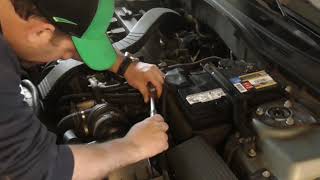
Typical fix: Replace the faulty Input/Turbine Speed Sensor. On the Ecosport, this involves removing the air filter box for access. The sensor is located on top of the transmission case and is held in by a single 8mm or 10mm bolt. 🎬 Watch how to replace the Ecosport input speed sensor
Est. part cost: $30-$70 - Damaged Wiring or Connector 🟡 Medium Probability The wiring harness is located underneath the vehicle and is exposed to heat, moisture, and road debris, which can cause corrosion at the connector pins or physical damage to the wires over time.
How to confirm: Visually inspect the wiring harness leading to the input speed sensor for any signs of chafing, melting, or corrosion at the connector pins. Perform a continuity test on the wires between the sensor and the TCM. Check for the correct reference voltage (typically 5V) and ground at the connector with the key on.
Typical fix: Repair the damaged section of wire or replace the connector pigtail. In some cases, cleaning corrosion from the connector pins is sufficient.
Est. part cost: $10-$30 - Low or Contaminated Transmission Fluid ⚪ Low Probability While not a direct cause of an electrical circuit code, extremely low or contaminated fluid can cause erratic transmission behavior that may be misdiagnosed. The 6F15 transmission is sealed and does not have a traditional dipstick, making fluid level checks more difficult for DIYers.
How to confirm: Check the transmission fluid level and condition via the check/fill plug on the side of the transmission case. This must be done with the vehicle level and at a specific temperature. Fluid that is dark, burnt-smelling, or contains metal particles indicates a problem.
Typical fix: Perform a transmission fluid drain and fill using the correct Motorcraft MERCON LV fluid. If significant metal debris is present, a more serious internal failure is likely.
Est. part cost: $50-$150
Rare But Worth Checking
- Metal Debris on Sensor Tip: The speed sensor is magnetic and can attract metallic shavings from normal wear or a failing component (like a torque converter). This buildup can disrupt the signal. Cleaning the sensor may be a temporary fix, but the debris often signals a more serious internal transmission problem that needs investigation.
- Faulty Transmission Control Module (TCM) or Powertrain Control Module (PCM): This is the least likely cause and should only be considered after the sensor and wiring have been thoroughly tested and ruled out. A scan tool that can perform a TCM self-test may help identify an internal module fault.
- Damaged Reluctor Ring: The sensor reads notches on a spinning reluctor ring inside the transmission. If this ring is damaged or broken, the signal will be lost or erratic. This is a major internal transmission repair and is very rare.
Diagnosis Steps
- Scan the TCM/PCM for all stored diagnostic trouble codes. Note P0715 and any other related codes like P0717 or P0720.
- Using a capable scan tool (like FORScan for Fords), access the live data stream for the Input/Turbine Speed Sensor (TSS). Observe the RPM reading. It should be smooth and correspond to engine RPM. A reading that is erratic, 0, or frozen confirms a circuit fault.
- Locate the sensor on the top of the transmission case, typically under the air filter assembly.
- Visually inspect the sensor's connector and wiring for any obvious damage, corrosion, or loose connections.
- Disconnect the sensor. Remove it (usually one 8mm or 10mm bolt) and inspect the magnetic tip for metal shavings. Clean if necessary.
- With the sensor disconnected, use a multimeter to test the internal resistance across its pins. Compare this reading to the manufacturer's specification (often in the 500-1,200 Ω range). An open (infinite resistance) or shorted (zero resistance) sensor needs to be replaced. 🎬 See how to test a P0715 turbine speed sensor
- With the key on and sensor disconnected, test the wiring harness connector. You should find a reference voltage (typically 5V) and a good ground.
- If the sensor and wiring test good, the issue may be internal to the transmission (like a damaged reluctor ring) or a fault within the TCM/PCM, which typically requires professional diagnosis.
Parts You'll Likely Need
- Transmission Input Speed Sensor (TSS)
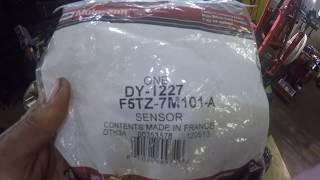
(OEM #GN1Z-7H103-A (Verify with VIN))— This sensor is the most common failure point for a P0715 code on this platform.
Trusted brands: Motorcraft, Standard Motor Products (SMP), Delphi, NTK
OEM price range: $80-$150
Aftermarket price range: $30-$70
Related Codes That Often Appear With This One
- P0717 — This code means 'Input/Turbine Speed Sensor No Signal'. P0715 is for an erratic signal, while P0717 is for a complete loss of signal. They often appear together and point to the same failed sensor or a broken wire. [18, 28, ODI #11681679]
- P0720 — This code relates to the Output Speed Sensor (OSS). Seeing input and output sensor codes together may suggest a shared wiring harness problem, a widespread contamination issue with metal debris, or a failing control module.
Technical Service Bulletins (TSBs) & Recalls
- SSM 49441: Mentions P0715 on Ford Super Duty trucks and advises focusing diagnostics on the turbine speed sensor.
- TSB 20-2393: Links P0715 on Ford Super Duty trucks to a potential issue with the turbine shaft speed sensor.
Platform-Specific Known Issues
- Owner Experience on Ford Fusion (Platform Mate): A 2013 Ford Fusion owner on Reddit with the 2.5L engine and 6F35 transmission reported codes P0715 and P0717, causing a loud 'thud' and hard jerk when shifting from 1st to 2nd gear. The transmission would then skip gears, shifting from 1st to 4th.
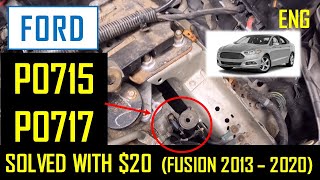
- Repair Video for Ford Fusion (Platform Mate): A YouTube video by 'doublewide6' demonstrates the replacement of the input speed sensor on a Ford Fusion to resolve a P0715 code. The video confirms the sensor's location on top of the transmission under the battery/airbox area and shows the straightforward replacement process using a long extension and a 10mm socket.
Mechanic-Grade Diagnostic Values
- Input Speed Sensor Resistance — expected: 35.88 kΩ (for a new, functioning sensor). Failure: A significantly different resistance value, or an open/short circuit.
- Wiring Harness Continuity — expected: Less than 1 Ω. Failure: High resistance or an open circuit (infinite resistance) indicates a break or corrosion in the wire between the sensor connector and the control module.
Hidden / Shadow Codes Worth Checking
- P0715:00-64: The ':00' is a placeholder, but the '64' is a Failure Type Byte. For Ford, this often indicates a 'Signal Plausibility Failure,' meaning the sensor's signal is present but doesn't make sense compared to other inputs like engine speed or output shaft speed. This was reported in an owner complaint for a similar Ford model. [ODI #11716353] (see via A professional-level scan tool like Ford's IDS or a high-end aftermarket scanner (like some versions of FORScan) that can read manufacturer-specific DTCs and their failure type bytes.)
- P0717:00-6C: The ':00' is a placeholder. The '6C' Failure Type Byte often points to an 'Intermittent/Erratic' fault. This means the signal is dropping out unexpectedly. This was seen alongside P0715 in an owner complaint. [ODI #11716353] (see via A professional-level scan tool like Ford's IDS or a high-end aftermarket scanner that can read manufacturer-specific DTCs and their failure type bytes.)
Scan Tool Commands That Help
- FORScan: Live Data Monitoring (PID: 'TSS_SRC') — Use this to watch the raw RPM signal from the Turbine Shaft Speed sensor in real-time. A healthy sensor will show a smooth RPM reading that correlates with engine speed when in gear. A faulty sensor will show erratic jumps, dropouts to zero, or a frozen value.
- FORScan / Ford IDS: TCM Self-Test — After checking the sensor and wiring, running a TCM self-test can help identify if the module itself is reporting internal faults. This is a good step before condemning the TCM.
- FORScan / Ford IDS: Transmission Control Module (TCM) Adaptive Learning Reset — After replacing the sensor, it is recommended to perform this procedure. It clears the learned shift adaptations, forcing the TCM to relearn shift points and pressures with the new, accurate sensor data, which can result in smoother operation.
Wiring & Ground Locations
- Main Transmission Ground Strap — Connects from the transmission case to the frame rail. On some Ecosport models, a key ground point is located to the right of the battery near the engine compartment fuse box.. A poor ground connection can cause erratic behavior in various electronic components, including transmission sensors. Ford has issued TSBs for other models regarding poor grounding causing shifting issues. Ensuring this connection is clean and tight is a crucial, often overlooked, diagnostic step.
- G103, G105, G106, G108 — These are various chassis and engine ground points on the Ford Ecosport platform.. A video for the Ecosport specifically recommends adding or reinforcing ground cables at these points to resolve a variety of electrical issues, including poor transmission performance, citing Ford TSBs 11-5-24 and 10-19-6 for other models. A bad ground at any of these points could introduce electrical noise that affects the sensitive TSS signal.
Real Owner Repair Stories
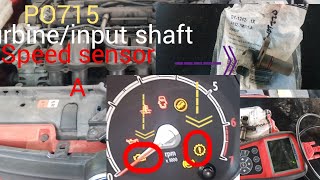
- YouTube video on Ford Fiesta (2011 Ford Fiesta with codes P0715, P0717, P0718) — No signal from input speed sensor 'A' on the scan tool. All ABS and warning lights were on the dash.
❌ Tried (didn't work) The technician first checked the wiring with a diagram and confirmed the harness was good.
✅ What actually fixed it Replacing the input speed sensor 'A' restored the RPM signal on the scanner and fixed the issue. The technician demonstrated measuring the resistance of the new sensor, which read 35.88 kΩ.
OEM Part Supersession History
GN15-14324 (Interchange Part Number)→GN1Z-14324-B— This part number refers to the transmission ground strap ('Strap Assembly Earth'). Part updates often involve improved materials or design for better corrosion resistance and connectivity.
Heads up: The listed part GN1Z-14324-B is specified for the 2.0L engine in 2018-2019 models. Verify the correct ground strap part number for your specific engine and model year.
Diagnostic Flowchart
Other Known Issues on This Vehicle
Issues unrelated to this code that are worth knowing about as an owner of this generation:
- 1.0L EcoBoost Oil Pump Belt/Tensioner Failure 🔴 High — Common enough to trigger a major safety recall. Failures reported between 60,000-90,000 miles, leading to sudden loss of oil pressure and catastrophic engine seizure. (Ref: Ford Safety Recall 23S64 / NHTSA 23V-905.)
- 1.0L EcoBoost Internal Coolant Leak / Head Gasket Failure 🔴 High — A widely documented design flaw where coolant leaks internally into the cylinders, causing overheating, white smoke, and eventual engine failure. (Ref: Ford has issued warranty extensions and addressed this in some regions, but no universal US recall exists for this specific issue. (SSM 47557 for Focus is related).)
- Rough and Jerky Transmission Shifting (6F15) 🟠 Medium — Owners report harsh engagement, hesitation, and lurching, particularly at low speeds and when cold. Some have required transmission replacements under 40,000 miles.
- Premature A/C Compressor Failure 🟠 Medium — Compressors are known to fail prematurely, sometimes before 60,000 miles, resulting in a sudden loss of cold air and grinding noises.
Used vs. New Parts: Buying Guide for This Vehicle
When a used part is the smart pick: For this specific repair, buying a used Input Speed Sensor is not recommended. The part is relatively inexpensive to buy new, is a common failure item, and its electronic nature makes it difficult to assess its remaining lifespan. A used part carries a high risk of being faulty or failing shortly after installation.
Donor-vehicle mileage cap: roughly under 15000 miles for the part to have meaningful remaining life.
What to inspect on the donor part:
- If forced to buy used (e.g., part of a larger assembly), ensure the donor vehicle had no transmission-related trouble codes.
- Visually inspect the connector pins for any signs of corrosion or damage.
- Check the magnetic tip for excessive metal shavings, which could indicate the donor transmission had internal damage.
OEM-only on this vehicle (don't cheap out):
- While not strictly OEM-only, using a Motorcraft sensor is highly recommended for best compatibility and longevity. Some aftermarket sensors may not meet the precise specifications required by the TCM, leading to persistent or new issues.
Aftermarket brands forum-validated for this vehicle:
- Motorcraft (OEM)
- Standard Motor Products (SMP)
- Delphi
- NTK
Brands owners have reported issues with on this vehicle:
- Avoid unbranded, no-name sensors from online marketplaces, as their quality control and adherence to OEM specifications are often questionable.
Real Owner Stories
Aggregated from forums and TSBs cited above. Mileages and costs reflect what owners reported in those sources.
2013 Ford Fusion 2.5L (6F35 Transmission)
Symptoms: Experienced a loud 'thud' and a hard jerk when shifting from 1st to 2nd gear. The transmission would then skip gears, shifting directly from 1st to 4th.
What fixed it: Replacement of the input speed sensor (TSS).
Source hint: Owner Experience on Ford Fusion (Platform Mate) - Reddit
Ford Mondeo
Symptoms: Dashboard displayed a 'Transmission Limited Function' warning message.
What fixed it: Diagnosis confirmed an electronic fault rather than a fluid issue; sensor/circuit repair required.
Source hint: Ford Owners Club (fordownersclub.com)
2018-2022 Ford Ecosport
Symptoms: Harsh, erratic, or delayed shifting, sometimes accompanied by a loud 'thud' or 'bang' and a wrench light on the dashboard.
What fixed it: Replacement of the Input/Turbine Speed Sensor (TSS) located under the air filter box.
Source hint: ODI #11464253
Related OBD-II Codes
Frequently Asked Questions
My Ecosport is displaying 'Transmission Limited Function' and shifting harshly. Is this related to the oil pump recall?
Where is the Input Speed Sensor located on the 2018-2022 Ford Ecosport?
Can I use FORScan to diagnose P0715 on my Ecosport?
Is the P0715 code caused by the same issue as the Ford Fusion's transmission problems?
Should I change my transmission fluid first to fix the P0715 code?
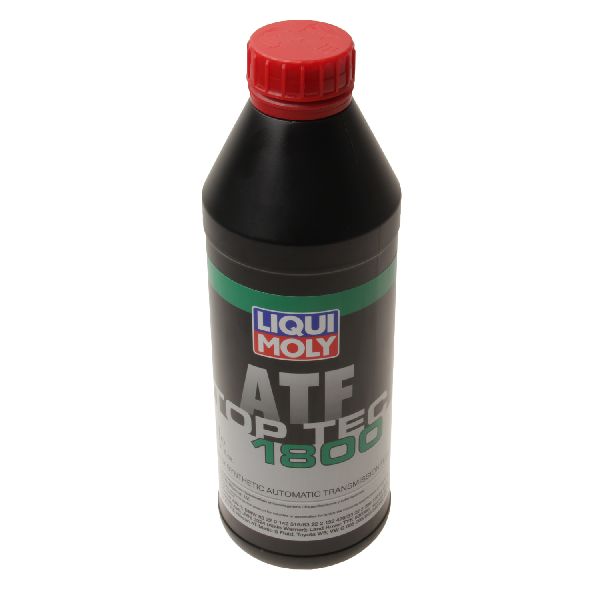
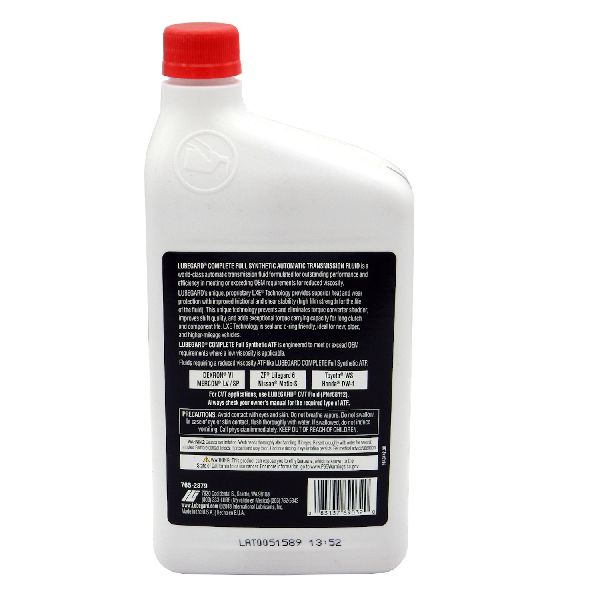
What is the correct transmission fluid for the Ecosport if I need to top it off during a sensor repair?
Helpful Videos
We Have This Part in Stock



The information in this article is provided for general reference and educational purposes only. Vehicle specifications, procedures, and part compatibility can vary by production date, trim level, and region. Always consult your vehicle's factory service manual and verify part numbers before purchasing or performing repairs. Safety-critical components such as airbags, seat belts, and braking systems should be installed by a qualified professional.
- Ford Ecosport:
- 🎬 Helpful Videos
- 🛍️ Shop This Part
- What's Unique About the 2018-2022 Ford Ecosport
- Symptoms You May Notice
- Most Likely Causes
- Rare But Worth Checking
- Diagnosis Steps
- Parts You'll Likely Need
- Related Codes That Often Appear With This One
- Technical Service Bulletins (TSBs) & Recalls
- Platform-Specific Known Issues
- Mechanic-Grade Diagnostic Values
- Hidden / Shadow Codes Worth Checking
- Scan Tool Commands That Help
- Wiring & Ground Locations
- Real Owner Repair Stories
- OEM Part Supersession History
- Diagnostic Flowchart
- Other Known Issues on This Vehicle
- Used vs. New Parts: Buying Guide for This Vehicle
- Real Owner Stories
- 2013 Ford Fusion 2.5L (6F35 Transmission)
- Ford Mondeo
- 2018-2022 Ford Ecosport
- Related OBD-II Codes
- Frequently Asked Questions
- 🎟️ Get 5% Off