

P0712 on 2011-2016 Ford Fiesta: Transmission Temp Sensor Causes and Fixes
On a 2011-2016 Ford Fiesta, code P0712 is most often caused by a failing Transmission Control Module (TCM), a very common issue on the PowerShift automatic transmission. While it can be a bad sensor or wiring, suspect the TCM first. Ford issued an extended warranty (14M02) for the TCM, which may still apply to some vehicles. A replacement TCM costs $400-$700+ and requires professional programming.
- For a 2011-2016 Fiesta, P0712 strongly suggests a problem with the Transmission Control Module (TCM), a known weak point.
- Before attempting any other repair, investigate the status of the TCM and check for related warranty extensions from Ford.
- Do not drive the vehicle extensively with this code, as it can go into limp mode unexpectedly, creating a safety risk.
- Replacing the TCM is not a simple DIY job; it requires professional programming to sync with the vehicle.
What's Unique About the 2011-2016 Ford Fiesta
The 2011-2016 Ford Fiesta with the automatic transmission uses the DPS6 PowerShift, a dual-clutch system notorious for electronic failures. Unlike many vehicles where P0712 points to an internal sensor, on the Fiesta, this code is very frequently a symptom of a failing external Transmission Control Module (TCM). Ford has faced class-action lawsuits and issued extended warranties, specifically Customer Satisfaction Program 14M02, for this module due to its high failure rate. While a bad sensor or wiring is possible, the TCM is the primary suspect on this platform.
Symptoms You May Notice
- Check Engine Light or wrench light is on
- Harsh, erratic, or delayed gear shifts
- Vehicle gets stuck in one gear ('limp mode')
- Shuttering or hesitation on acceleration
- Transmission warning light on the dashboard
- Inability to select gears (no Reverse or Drive) 🎬 See this quick reset trick if you're stranded and can't shift.
- Replacing the TFT sensor without first ruling out a faulty TCM. On the Fiesta, the TCM is the most probable cause and should be investigated first to avoid an unnecessary and difficult transmission disassembly.
- Replacing the transmission itself when the issue is solely the external TCM or its wiring.
Most Likely Causes
- Failed Transmission Control Module (TCM) 🔴 High Probability The DPS6 transmission's TCM is a widely documented, high-failure part. Internal circuit failures, such as bad solder joints or failed transistors, can mimic a sensor circuit fault, triggering codes like P0712. Ford's Customer Satisfaction Program 14M02 extended the warranty on this part to 10 years/150,000 miles due to the high failure rate.
How to confirm: Check for other TCM-related trouble codes, especially U0100 or U0101 (Lost Communication With TCM). A professional scan tool can check for communication errors with the TCM. Given the high failure rate and extended warranty program, if symptoms match, the TCM is the most likely cause.
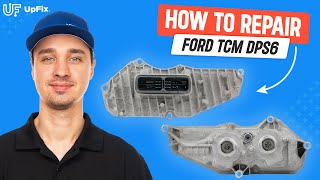
Typical fix: Replace the Transmission Control Module. 🎬 Watch: This step-by-step guide shows you how to replace the TCM. The new module must be programmed to the vehicle's VIN by a Ford dealership or a properly equipped independent repair shop. Some remanufactured units feature improved soldered connections to prevent repeat failures.
Est. part cost: $400 - $700 - Shorted Wiring or Damaged Connector 🟡 Medium Probability The wiring harness for the transmission sensors runs in a tight, hot area. Wires can chafe against the transmission case, shock tower, or other components, causing a short to ground. A GM TSB for a different vehicle lists P0712 as a possible result of harness chafing, indicating it's a known wiring failure pattern.
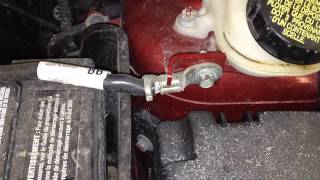
How to confirm: Visually inspect the wiring harness going to the transmission, especially where it connects to the TCM and passes near the shock tower. 🎬 Watch: How to fix common transmission issues by cleaning ground connections. Check for continuity and shorts to ground using a multimeter. A 'wiggle test' of the harness while monitoring sensor data can sometimes reveal the fault.
Typical fix: Repair the damaged section of the wire or replace the affected connector. Use protective conduit or re-route the harness to prevent future chafing.
Est. part cost: $10 - $100 - Failed Transmission Fluid Temperature (TFT) Sensor ⚪ Low Probability While the sensor can fail, it is much less common than TCM failure on this specific platform. The sensor is a thermistor that can short internally, causing a permanent low-voltage signal.
How to confirm: Using a scan tool, check the live data for the TFT sensor. A reading of -40°F or another extreme, unchanging cold temperature points to a shorted circuit. If the wiring and TCM are confirmed good, the sensor is the likely fault. The sensor is located inside the transmission, often on the valve body, and is not easily accessible.
Typical fix: Replace the transmission fluid temperature sensor. This is a complex job that requires removing the transmission oil pan and possibly the valve body to access the sensor, which may be part of an internal harness assembly.
Est. part cost: $50 - $150
Diagnosis Steps
- Connect an OBD-II scanner and check for any other codes, especially communication codes (U-codes like U0101) or other transmission codes (P07xx, P06xx).
- View the live data stream for the Transmission Fluid Temperature (TFT) Sensor. A reading of -40°F or a similar, static low value confirms a 'circuit low' condition.
- Research Customer Satisfaction Program 14M02 for your vehicle's VIN. Ford offered a 10-year/150,000-mile warranty on the TCM for many Fiestas, and some vehicles may have been eligible for a one-time replacement through June 30, 2025.
- Locate the TCM, which is mounted on the front of the transmission case, underneath the air intake box.
- Carefully inspect the wiring and the large connector at the TCM for any signs of damage, corrosion, pushed-out pins, or chafing against the chassis or other components.
- If other TCM codes are present or the TCM warranty is active, focus diagnosis there. This is the most likely point of failure.
- If the TCM is ruled out, perform a continuity test on the TFT sensor wiring between the main transmission connector and the TCM connector to check for a short to ground.
- If the wiring and TCM are confirmed to be good, the fault lies with the internal TFT sensor, which requires transmission disassembly to replace.
Parts You'll Likely Need
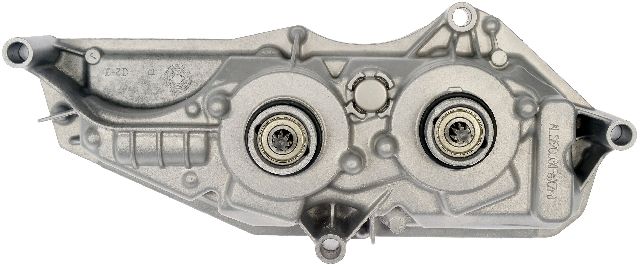
- Transmission Control Module (TCM)
(OEM #AE8Z-7Z369-F)— This is the most common failure point on the 2011-2016 Fiesta PowerShift transmission and a frequent cause of electrical fault codes like P0712. This part number supersedes previous versions like AE8Z-7Z369-D.
Trusted brands: Motorcraft
OEM price range: $500-$700
Aftermarket price range: $350-$500 (Remanufactured)
Related Codes That Often Appear With This One
- P07A3 — This is a code for 'Transmission Friction Element 'A' Stuck On', another common code related to DPS6 internal faults or TCM issues.
- U0101 — This code means 'Lost Communication With TCM'. If you see this along with P0712, it's a very strong indicator that the TCM has failed.
- U0100 — Similar to U0101, this indicates 'Lost Communication with ECM/PCM'. This often appears alongside other TCM communication faults.
- P0606 — This code means 'PCM/ECM Processor Fault' and can be triggered by the internal failure of the TCM.
Technical Service Bulletins (TSBs) & Recalls
- TSB 16-0109: Addresses excessive transmission clutch shudder and/or fluid leaks from the clutch housing, which are common related problems on the DPS6 transmission.
- Customer Satisfaction Program 14M02: Not a TSB, but a Ford program extending the warranty on the TCM to 10 years/150,000 miles due to a high rate of failure causing symptoms like no-start, loss of power, and setting various fault codes.
Platform-Specific Known Issues
- The DPS6 PowerShift automatic transmission in this generation of Fiesta is subject to widespread, well-documented problems, primarily with the Transmission Control Module (TCM) and clutch actuators. Ford has faced class-action lawsuits and issued multiple warranty extensions.
- Customer Satisfaction Program 14M02 specifically covered the TCM for up to 10 years or 150,000 miles. Later updates to the program offered a one-time replacement for certain expired vehicles through June 30, 2025.
- Customer Satisfaction Program 14M01 and TSB 16-0109 addressed related issues of clutch shudder and leaking input shaft seals, extending that warranty to 7 years or 100,000 miles.
Mechanic-Grade Diagnostic Values
- Transmission Fluid Temperature (TFT) Sensor Resistance — expected: Follows a standard NTC thermistor curve: approx. 2,200-3,000 Ω at 20°C (68°F), and approx. 250-350 Ω at 80°C (176°F).. Failure: A reading of near-zero ohms indicates a short, which triggers P0712. An extremely high or open-circuit reading would trigger P0713.
- TFT Sensor Circuit Voltage at TCM — expected: Voltage should vary with temperature, typically between 0.5V (hot) and 3.5V (cold).. Failure: A sustained voltage reading below 0.313V for 2.5 seconds will set the P0712 code.
Scan Tool Commands That Help
- FORScan, Ford IDS, or equivalent professional scan tool: TCM Adaptive Learning — This procedure is mandatory after replacing the Transmission Control Module (TCM) or performing major transmission work. It allows the new module to learn the clutch engagement points and shift drum positions.
- FORScan, Ford IDS, or equivalent professional scan tool: Clutch System Adaptive Learn — A specific sub-function of the main adaptive learning process. Failure to perform this can result in harsh shifting, shudder, and premature clutch wear.
- FORScan, Ford IDS, or equivalent professional scan tool: Clear All Codes / Clear Transmission Adaptive Tables — Should be performed before starting the adaptive learning process to ensure the TCM starts from a clean slate.
Wiring & Ground Locations
- G102 — Located on the left front transmission support.. This is a primary ground point for the transmission assembly. A poor connection here can cause a variety of erratic electrical issues within the transmission, potentially affecting sensor readings.
- G103 / G104 — Located on the left front of the engine compartment.. These are major engine compartment grounds. While not directly on the transmission, they provide a ground path for modules that communicate with the TCM. A fault here could contribute to communication errors (U-codes) that often accompany P0712.
- TCM Connector (C1750) — The large main connector on the TCM, which is mounted to the front of the transmission case under the airbox.. The TFT sensor circuit can be tested here. Diagnostic documents specify checking resistance between pins 10 and 20 for the TFT sensor. The HS-CAN bus, critical for communication, is on pins 47 and 48.
Real Owner Repair Stories
- Aggregated from Reddit (r/FordFiesta, r/FordFocus) and FiestaFaction forum discussions (2011-2016 Ford Fiesta (and related Focus models with DPS6)) — Check engine light with code P0712, often accompanied by communication codes like U0100/U0101. Harsh shifting, getting stuck in gear, and a 'Transmission Fault' message on the dash.
❌ Tried (didn't work) Clearing codes (they return immediately)., Replacing the battery (no effect)., In some reported cases, users purchased cheap, used TCMs from eBay or Amazon which were either dead on arrival or failed within a few hundred miles.
✅ What actually fixed it The universally agreed-upon fix was the replacement of the Transmission Control Module (TCM) with either a new OEM unit or a quality remanufactured one from a reputable source like Dorman. The repair requires programming and performing the 'TCM Adaptive Learning' procedure with a tool like FORScan or the dealer's IDS software.
OEM Part Supersession History
AE8Z-7Z369-A, AE8Z-7Z369-B, AE8Z-7Z369-C, AE8Z-7Z369-D, AE8Z-7Z369-E→AE8Z-7Z369-F— Revisions to address the high failure rate of the original modules. Remanufacturers like Dorman claim their versions fix the root cause by soldering weak internal connections that were originally press-fit.
Heads up: While all are for the DPS6, it is critical to use the latest available revision (AE8Z-7Z369-F) for the most reliable repair. A used module must be reprogrammed for the specific vehicle's VIN and configuration.
Diagnostic Flowchart
Other Known Issues on This Vehicle
Issues unrelated to this code that are worth knowing about as an owner of this generation:
- Faulty Door Latches 🔴 High — Very common on 2011-2015 models, leading to multiple recalls. A pawl spring tab inside the latch can break, preventing the door from latching or causing it to unlatch while driving. (Ref: Recalls 15S16, 16S30, 20S30)
- Clicking HVAC Blend Door Actuator 🟡 Low — Extremely common across most model years. The plastic gears inside the actuator strip, causing a repetitive clicking sound from behind the dashboard when the car is started or climate controls are adjusted. It is an annoyance but does not affect vehicle operation.
- 1.0L EcoBoost Engine Coolant Hose Failure 🔴 High — A known issue on earlier EcoBoost models (approx. 2012-2016). A specific coolant hose could fail, leading to rapid coolant loss, overheating, and potential catastrophic engine damage if not caught immediately. (Ref: Recall may have been issued in some regions (e.g., UK).)
- Starter Motor Failure 🟠 Medium — Reported with some frequency, leading to a no-start or no-crank condition. Symptoms can include a clicking noise when turning the key or smoke from the engine bay.
- Unresponsive MyFord Touch Infotainment System 🟡 Low — Common on models equipped with the MyFord Touch system. The system can become laggy, freeze, or go blank, affecting audio, navigation, and backup camera functions. It was the subject of a class-action lawsuit.
Used vs. New Parts: Buying Guide for This Vehicle
When a used part is the smart pick: For the Transmission Control Module (TCM), a 'used' part from a junkyard is extremely high-risk and generally not recommended due to the inherent design flaws. A 'remanufactured' unit from a reputable rebuilder (like Dorman or services that clone your original module) is a viable, cost-effective alternative to a new OEM part.
Donor-vehicle mileage cap: roughly under 30000 miles for the part to have meaningful remaining life.
What to inspect on the donor part:
- For a remanufactured TCM, verify the seller offers a warranty.
- Look for claims of design improvement, such as 'soldered critical connections' which Dorman and other rebuilders advertise.
- Avoid units that show physical damage, pry marks, or have missing connector clips, as these are signs of a poorly handled part.
- If using a cloning service, you must send in your old module, and it must still be able to communicate on the bench.
OEM-only on this vehicle (don't cheap out):
- While not strictly 'OEM-only', a brand new Motorcraft TCM (AE8Z-7Z369-F) is the most straightforward, albeit most expensive, option that guarantees you have the latest factory revision.
Aftermarket brands forum-validated for this vehicle:
- Dorman (e.g., 609-032): Widely available and claims to fix the original failure point by soldering internal connections.
- UpFix / Velectronix: These are examples of repair/cloning services that rebuild your original module, which avoids the need for programming if done correctly.
Brands owners have reported issues with on this vehicle:
- Unnamed, low-cost sellers on platforms like Amazon or eBay. Forum users report these are often just cleaned-up junk parts that fail quickly.
Real Owner Stories
Aggregated from forums and TSBs cited above. Mileages and costs reflect what owners reported in those sources.
2013 Ford Fiesta — ~145000 miles
Symptoms: Vehicle had a loss of power, harsh shifting, and set various fault codes including P0712.
What fixed it: The Transmission Control Module (TCM) was replaced under Ford's extended warranty program.
Source hint: Reddit r/FordFocus - Thread titled 'What is the process off getting the transmission repaired through warranty?'
2012 Ford Fiesta — ~85000 miles
Symptoms: Owner experienced excessive transmission clutch shudder and noticed fluid leaking from the clutch housing area.
What fixed it: The vehicle was repaired according to the procedures in TSB 16-0109, which addresses clutch and seal issues.
Source hint: TSB 16-0109
2015 Ford Focus
Symptoms: Transmission was shifting erratically and unable to select gears, even after a new TCM had been installed previously.
What fixed it: Further diagnosis found a mechanical fault; the failed clutch fork was replaced.
Source hint: YouTube - 'Ford Focus DCT Transmission Diagnosis - DCT DPS6'
Related OBD-II Codes
Frequently Asked Questions
My 2014 Fiesta has a P0712 code and is shifting erratically. Is this covered by a special warranty?
What is the most likely part to fail on my Fiesta when I get a P0712 code?
I have a U0101 code along with P0712. What does that point to?
My Fiesta is shuddering on acceleration and has a check engine light. Could TSB 16-0109 be related?
Is the P0712 and TCM failure problem on my Fiesta also an issue on the Ford Focus?
The repair shop wants to replace the internal transmission temperature sensor for P0712. Is this a common fix?
Helpful Videos

We Have This Part in Stock


The information in this article is provided for general reference and educational purposes only. Vehicle specifications, procedures, and part compatibility can vary by production date, trim level, and region. Always consult your vehicle's factory service manual and verify part numbers before purchasing or performing repairs. Safety-critical components such as airbags, seat belts, and braking systems should be installed by a qualified professional.
- Ford Fiesta:
- 🎬 Helpful Videos
- 🛍️ Shop This Part
- What's Unique About the 2011-2016 Ford Fiesta
- Symptoms You May Notice
- Most Likely Causes
- Diagnosis Steps
- Parts You'll Likely Need
- Related Codes That Often Appear With This One
- Technical Service Bulletins (TSBs) & Recalls
- Platform-Specific Known Issues
- Mechanic-Grade Diagnostic Values
- Scan Tool Commands That Help
- Wiring & Ground Locations
- Real Owner Repair Stories
- OEM Part Supersession History
- Diagnostic Flowchart
- Other Known Issues on This Vehicle
- Used vs. New Parts: Buying Guide for This Vehicle
- Real Owner Stories
- 2013 Ford Fiesta — ~145000 miles
- 2012 Ford Fiesta — ~85000 miles
- 2015 Ford Focus
- Related OBD-II Codes
- Frequently Asked Questions
- 🎟️ Get 5% Off