

P0710 on 2007-2018 Nissan Altima CVT: Transmission Temperature Sensor Causes and Fixes
On a 2007-2018 Nissan Altima, code P0710 almost always points to a failed transmission fluid temperature sensor. This sensor is integrated into the internal wiring harness attached to the valve body, so the fix typically involves replacing the entire valve body assembly. This is a complex job costing between $800 and $2,000, and is a very common failure on these Jatco CVTs.
- P0710 on a CVT Altima is not a simple sensor swap; it points to a problem inside the transmission.
- The most common fix is replacing the entire valve body assembly, as the sensor is integrated into its wiring harness.
- Before performing this expensive repair, check for any TCM software updates with a dealer, as this can sometimes be the cause.
- Always use the correct Nissan-specific CVT fluid (NS-2 or NS-3) when servicing the transmission.
- Check with a Nissan dealer to see if your vehicle's VIN is covered under any extended CVT warranty programs.
What's Unique About the 2007-2018 Nissan Altima

On this generation of Nissan Altima with a Continuously Variable Transmission (CVT), the P0710 code is a very common issue. Unlike many other vehicles where the temperature sensor is a simple, externally accessible part, on the Altima's Jatco CVT it is integrated into the internal transmission wiring harness (lead frame), which is mounted directly on the valve body. This design flaw means a simple 'sensor replacement' is not possible; the entire valve body assembly is typically replaced, making the repair significantly more complex and expensive.
Generation note: This guide covers the 4th generation Altima (2007-2012) and the 5th generation (2013-2018). The 4th gen typically uses the Jatco RE0F10A (JF011E) CVT, while the 5th gen uses the RE0F10D/RE0F10E (JF016E/JF017E). While the fundamental cause (internal sensor failure) is the same, the specific valve body part numbers, connector pinouts, and diagnostic values differ between these generations.
Symptoms You May Notice
- Check Engine Light is on
- Transmission warning light is on
- Harsh or delayed shifting
- Vehicle enters 'limp mode' (limited engine power and gear ratio)
- Transmission judder or shudder
- Transmission overheating warning on the dash
- Torque converter lock-up feels erratic or disabled
- Replacing only the external transmission speed sensors, which are different components and will not fix this issue.
- Assuming the entire transmission needs to be replaced without first diagnosing the valve body and its integrated electronics.
- Replacing the TCM when the fault lies with the internal harness/sensor.
Most Likely Causes

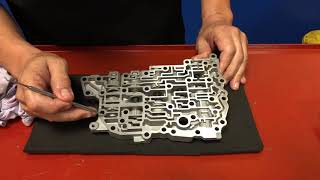
- Internal Transmission Harness / Sensor Failure 🔴 High Probability The temperature sensor is integrated into a flexible wiring harness inside the transmission, constantly exposed to hot fluid 🎬 Watch: A deep dive into why these Nissan CVTs fail. and vibration. Over many heat cycles, the sensor's internal connections or the harness traces degrade and fail, creating an open or short circuit.
How to confirm: A professional technician will use a scan tool to monitor the transmission fluid temperature data. If the reading is erratic, stuck at an extreme value (e.g., -40°F or 300°F), or doesn't change as the vehicle warms up, it points to a sensor circuit failure. The sensor's resistance can be tested at the valve body connector; a typical value is around 2.5 kOhms at 68°F (20°C), which drops as temperature increases. An open or shorted reading confirms failure.
Typical fix: Replace the transmission valve body assembly, which includes a new internal harness and temperature sensor.
Est. part cost: $400-$1200 - Faulty Transmission Valve Body 🟡 Medium Probability Nissan CVTs of this era are known for valve body issues, including sticking solenoids. Since the sensor is part of the assembly, a faulty valve body necessitates replacing the whole unit, resolving the P0710 code in the process.
How to confirm: This is often diagnosed when other DTCs related to pressure solenoids (e.g., P0740, P0962) are present alongside P0710. TSBs like NTB15-087a instruct technicians to replace the valve body for a list of such codes.
Typical fix: Replace the complete transmission valve body assembly.
Est. part cost: $400-$1200 - Low or Degraded CVT Fluid 🟡 Medium Probability CVT fluid degrades over time, and low levels can cause overheating. This overheating can trigger a valid high-temperature reading (which may log a P0710) or accelerate the degradation of the sensor itself.
How to confirm: Check the level and condition of the Nissan NS-2 or NS-3 CVT fluid. The fluid should be clean and at the correct level per the factory service manual procedure. Dirty, burnt-smelling fluid indicates a problem and likely internal wear.
Typical fix: Perform a CVT fluid drain and fill. If the fluid is very degraded, a full flush may be needed. This may not fix a damaged sensor but is critical maintenance to prevent recurrence.
Est. part cost: $150-$300 - Faulty Transmission Control Module (TCM) Software ⚪ Low Probability Nissan has issued technical service bulletins for some models where the TCM software can be overly sensitive or incorrectly interpret sensor data, sometimes related to CVT judder.
How to confirm: A Nissan dealership or a qualified shop can check the current TCM software version against available updates mentioned in TSBs like NTB15-014. This TSB specifically addresses adding logic to detect judder but involves a TCM reprogram.
Typical fix: Reprogram the TCM with the latest software.
Est. part cost: $0-$250
Rare But Worth Checking
- Damaged External Wiring Harness: Check the wiring harness between the TCM and the transmission case connector for any visible damage, corrosion, or loose pins before condemning the internal transmission components.
- Faulty Transmission Control Module (TCM): A hardware failure in the TCM's input circuit is rare but possible. This should only be considered after all other causes, especially the internal harness and valve body, have been ruled out.
Diagnosis Steps
- Connect an OBD-II scanner and confirm P0710 is the primary code. Note any other codes, especially those related to pressure or judder (P0868, P17F0, P17F1).
- Use the scanner's live data function to monitor the Transmission Fluid Temperature reading. Check if the reading is logical (e.g., close to ambient temperature when cold) or if it's stuck at an extreme value like -40°F or over 280°F.
- Check for any available Technical Service Bulletins (TSBs) related to P0710 or CVT behavior for your specific year. A TCM software update (per NTB15-014) may be required.
- Inspect the external wiring harness and the main circular connector at the transmission case for any signs of damage, corrosion, or fluid intrusion.
- Check the CVT fluid level and condition. Burnt or dark fluid can indicate internal problems that may have damaged the sensor.
- If external checks are inconclusive, the next step is internal inspection. Drain the fluid, remove the transmission pan, and access the valve body.
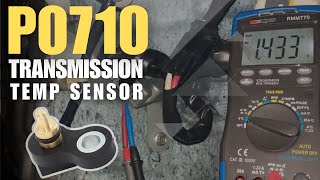
- Disconnect the main connector from the valve body assembly. Using a multimeter and the service manual's pinout diagram, test the resistance of the temperature sensor. A reading of infinite resistance (open) or zero resistance (short) confirms a failed sensor/harness. 🎬 Watch: How to diagnose the transmission fluid temperature sensor circuit.
- If the sensor/harness is confirmed to be faulty, the standard repair is to replace the entire valve body assembly.
- After replacement, perform the CVT fluid filling procedure, clear all DTCs, and perform any necessary TCM relearn or programming procedures.
Parts You'll Likely Need

- CVT Valve Body Assembly
(OEM #31705-1XF1A (example for JF011E, 4th Gen); 31705-28X0B (example for JF016E, 5th Gen). Part numbers are year/model specific, always verify with VIN.)— This assembly contains the integrated transmission fluid temperature sensor and internal harness, which is the most common point of failure for code P0710.
Trusted brands: Hitachi, Nissan Genuine, Rostra (Aftermarket)
OEM price range: $800-$1200
Aftermarket price range: $400-$700 - Nissan CVT Fluid
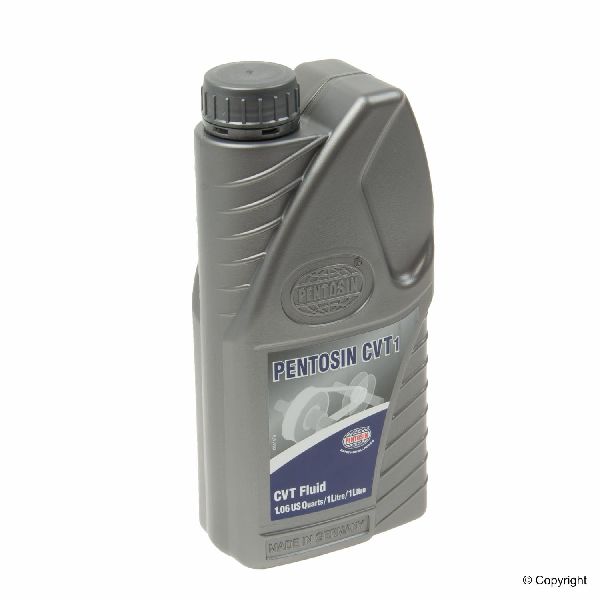
(OEM #999MP-NS200P (NS-2 for 4th Gen); 999MP-NS300P (NS-3 for 5th Gen))— The correct fluid type is critical. Using incorrect fluid can damage the CVT. NS-2 is for the RE0F10A and NS-3 is for the RE0F10D/E.
Trusted brands: Nissan Genuine
OEM price range: $20-$25 per quart
Aftermarket price range: $15-$20 per quart - Transmission Pan Gasket
(OEM #31397-1XF0D (example, verify with VIN))— The pan must be removed to access the valve body, and the gasket should always be replaced to prevent leaks.
Trusted brands: Fel-Pro, Nissan Genuine
OEM price range: $25-$40
Aftermarket price range: $15-$30
Related Codes That Often Appear With This One
- P0868 — Indicates low secondary fluid pressure, often related to internal CVT issues like a failing pump or valve body, and can appear alongside sensor circuit codes.
- P17F0 / P17F1 — These codes relate to CVT judder. TSBs like NTB15-015e and NTB15-084d instruct technicians to inspect the CVT belt and potentially replace the valve body or the entire transmission, which would also address the P0710.
Technical Service Bulletins (TSBs) & Recalls
- NTB15-014 / NTB15-014c: Reprogramming the TCM to add enhanced diagnostic logic for CVT judder (P17F0/P17F1).
- NTB15-087a: Instructs replacement of the valve body when specific DTCs for solenoids or pressure switches are confirmed, as an alternative to replacing the entire CVT.
- NTB15-015e / NTB15-084d: Diagnostic and repair flowchart for CVT judder codes P17F0/P17F1, which can lead to valve body or full transmission replacement.
- PC516 / NTB17-018: Voluntary service campaign to replace the Electronic Steering Column Lock (ESCL) on 2009-2010 models.
- TSB Bulletin #NTB13018A: Notes that the MIL may be on with DTC P0710 (Transmission Fluid Temperature Sensor A) stored in the ECM only.
Platform-Specific Known Issues
- Nissan extended the warranty on some CVT transmissions for certain model years due to widespread issues. It is worth contacting a Nissan dealer with your VIN to check for any open campaigns or warranty extensions, even if you are the second owner. [4, 3
Mechanic-Grade Diagnostic Values

- Transmission Fluid Temperature Sensor Resistance — expected: Approx. 6.29 - 6.83 kΩ at 20°C (68°F), 2.10 - 2.25 kΩ at 50°C (122°F), and 0.85 - 0.90 kΩ at 80°C (176°F).. Failure: A reading of infinite ohms (open circuit) or near-zero ohms (short circuit), or a value that does not decrease as the fluid warms up.
- Transmission Fluid Temperature Sensor Voltage (via CONSULT-III Scan Tool) — expected: Normal operating range is 0.16 V to 2.03 V.. Failure: A voltage reading of 0.15 V or less (short circuit) or 2.04 V or more (open circuit) will trigger the DTC.
- Transmission Fluid Temperature Sensor Voltage (at TCM, alternate spec) — expected: Approximately 3.8 - 4.0 V at 20°C (68°F), dropping to 1.7 - 1.9 V at 80°C (176°F).. Failure: Voltage that is stuck high or low, or does not correspond to the fluid temperature.
Scan Tool Commands That Help
- Nissan CONSULT or equivalent professional scanner: Live Data Monitoring for 'ATF TEMP SEN' — This is the primary diagnostic step to see what temperature the TCM is reading. A value stuck at an extreme (e.g., -40°F or 302°F) or a value that doesn't change as the engine warms up confirms a circuit fault.
- Nissan CONSULT or equivalent professional scanner: CVT Fluid Temperature Check and Level Adjustment — After replacing the valve body and refilling the fluid, the level must be checked and finalized when the fluid is within a specific temperature range, typically 35°C to 45°C (95°F to 113°F) for the JF016E/JF017E. The scan tool is required to accurately monitor this temperature.
- Nissan CONSULT or equivalent professional scanner: TCM Reprogramming / Adaptation — After a new valve body is installed, the TCM may need to be reprogrammed with the latest software or have its adaptive learn values reset to work correctly with the new component. This is often specified in TSBs related to CVT performance.
Wiring & Ground Locations
- CVT Unit Harness Connector (JF011E/RE0F10A example) — The main round electrical connector on the transmission case.. For a 2010 Altima, service info specifies checking continuity between TCM connector F16 (terminals 13 & 25) and the CVT connector F46 (terminals 17 & 19) to test the sensor circuit wiring externally.
- CVT Assembly Connector (Alternate Example) — The main electrical connector on the transmission case.. On some models, the temperature sensor resistance is tested between terminal 12 and terminal 18 (ground) of the sensor-side connector. This confirms the integrity of the internal harness before condemning the valve body.
Real Owner Repair Stories
- YouTube channel 'GT Sam' (2016 Nissan Sentra (uses a similar Jatco CVT)) — Transmission slipping, not holding gears.
❌ Tried (didn't work) Replacing CVT fluid and filters., Installing a supposed 'new' valve body purchased from an online marketplace (eBay).
✅ What actually fixed it The repair was unsuccessful because the 'new' valve body purchased from eBay was determined to be faulty or counterfeit, exhibiting different physical characteristics from the OEM part. The story serves as a cautionary tale about sourcing these critical parts from non-verified sellers. - Reddit user 'Prudent-Track3292' (claims to be a Nissan Parts Mgr) (General Nissan CVTs from the 2014 era) — General CVT failure (judder, solenoid codes).
❌ Tried (didn't work) The user advises against rebuilding these CVTs.
✅ What actually fixed it The advice given is to replace the entire unit or sub-assembly. The parts manager states that Nissan does not supply most internal components for rebuilds to dealers and that their own master technicians are instructed to replace, not rebuild, the transmissions. This implies that a valve body replacement is the most granular 'repair' sanctioned by the manufacturer.
OEM Part Supersession History
31705-1XF0C, 31705-1XZ0D→31705-1XF1A— Part revision and improvement by the manufacturer.31705-28X0A→31705-28X0B— Part revision and improvement by the manufacturer.
Heads up: A kit part number, 3170E-28X0B, also exists and may supersede older numbers like 3170528x9b. Always verify the correct, latest part number with a VIN at a Nissan dealer.
Model Year Variations Within This Range
- 2007-2012 (4th Gen): Uses the Jatco RE0F10A (JF011E) CVT. The valve body part number is typically in the format 31705-1XF##. Uses NS-2 CVT fluid.
- 2013-2018 (5th Gen): Uses the Jatco RE0F10D/E (JF016E/JF017E) CVT. The valve body part number is typically in the format 31705-28X## or 3170E-28X##. Uses NS-3 CVT fluid. The fluid level check procedure is done at a lower temperature (95°F-113°F) than the previous generation.
Diagnostic Flowchart
Other Known Issues on This Vehicle
Issues unrelated to this code that are worth knowing about as an owner of this generation:
- Premature CVT Failure 🔴 High — Extremely common across all model years, often appearing between 80,000 and 150,000 miles. Symptoms include shuddering, whining, hesitation, and sudden loss of power. (Ref: Multiple class-action lawsuits and a warranty extension for early models (up to 10 years/120,000 miles) were issued.)
- Electronic Steering Column Lock (ESCL) Failure 🔴 High — Very common on 2009-2010 models, causing a no-start condition where the car does not recognize the key fob. (Ref: Nissan issued a voluntary service campaign (PC516 / NTB17-018) to replace the faulty ESCL unit.)
- Rear Subframe Corrosion 🔴 High — Common in vehicles operated in the rust belt. The rear subframe can rust through, becoming structurally unsound. (Ref: Nissan had a warranty extension program for this issue on older models, but it has since expired for this generation.)
- Cracked Radiators / Coolant Leaks 🟠 Medium — The plastic end tanks on the radiator are prone to cracking with age and heat cycles, leading to coolant leaks.
- Faulty Camshaft/Crankshaft Position Sensors 🟠 Medium — A well-documented issue that can cause stalling, rough idling, and no-start conditions. (Ref: Recalls were issued for this problem on earlier Nissan models, and it remains a frequent failure point.)
Used vs. New Parts: Buying Guide for This Vehicle
When a used part is the smart pick: For this specific repair (P0710), a used valve body from a junkyard is almost never a smart choice. The failure is due to an inherent design flaw and wear over heat cycles. A used part is highly likely to have the same issue or fail soon after installation.
Donor-vehicle mileage cap: roughly under 50000 miles for the part to have meaningful remaining life.
What to inspect on the donor part:
- This is not recommended, but if forced, source from the lowest-mileage, latest-model-year donor possible.
- Ask for the VIN of the donor car to check its history for accidents or transmission-related complaints.
- Inspect the fluid from the donor transmission if possible; any sign of dark, burnt fluid or metal debris is a red flag.
OEM-only on this vehicle (don't cheap out):
- CVT Valve Body Assembly
Aftermarket brands forum-validated for this vehicle:
- Hitachi (often the OEM supplier)
- Sonnax (provides repair kits and remanufactured components)
- Rostra (offers complete aftermarket valve bodies)
Brands owners have reported issues with on this vehicle:
- Unbranded or suspiciously cheap 'new' or 'remanufactured' units from online marketplaces like eBay or AliExpress. These have a high risk of being counterfeit, poorly repaired, or failing to program correctly, as documented by mechanics.
Real Owner Stories
Aggregated from forums and TSBs cited above. Mileages and costs reflect what owners reported in those sources.
2007-2018 Nissan Altima CVT
Symptoms: The check engine light was on and a scan tool showed the transmission fluid temperature was stuck at an extreme reading of -40 degrees.
What fixed it: The problem was resolved by replacing the transmission valve body assembly, which contains the integrated temperature sensor.
Source hint: altimaforums.net thread titled 'p0710 code'
2010 Nissan Altima 2.5S CVT
Symptoms: Vehicle presented with both P0710 (Transmission Fluid Temperature Sensor Circuit) and P1777 (Step Motor) codes.
What fixed it: The combination of codes led to a diagnosis pointing towards a faulty valve body.
Source hint: nissanclub.com thread titled 'p0710 and p1777 on 2010 altima 2.5s cvt'
Nissan Altima — ~115000 miles
Symptoms: Vehicle experienced shuddering, whining, hesitation, and a sudden loss of power, which are signs of premature CVT failure often associated with codes like P0710.
What fixed it: Due to the widespread nature of this issue, Nissan issued a warranty extension for some models, which covered the cost of transmission repair or replacement.
Source hint: known_issues: Premature CVT Failure
Related OBD-II Codes
Frequently Asked Questions
My mechanic says the transmission temperature is reading -40°F. Is that a valid reading for my Altima?
Why does the repair for a P0710 code involve replacing the entire valve body instead of just the sensor?
Could a software update fix the P0710 code on my Altima?
Is it possible that my P0710 code is covered by a warranty extension?
I have other codes like P0740 and P0962 along with P0710. What does that mean?
Will simply changing my CVT fluid fix the P0710 code?
Helpful Videos
We Have This Part in Stock




The information in this article is provided for general reference and educational purposes only. Vehicle specifications, procedures, and part compatibility can vary by production date, trim level, and region. Always consult your vehicle's factory service manual and verify part numbers before purchasing or performing repairs. Safety-critical components such as airbags, seat belts, and braking systems should be installed by a qualified professional.
- Nissan Altima:
- 🎬 Helpful Videos
- 🛍️ Shop This Part
- What's Unique About the 2007-2018 Nissan Altima
- Symptoms You May Notice
- Most Likely Causes
- Rare But Worth Checking
- Diagnosis Steps
- Parts You'll Likely Need
- Related Codes That Often Appear With This One
- Technical Service Bulletins (TSBs) & Recalls
- Platform-Specific Known Issues
- Mechanic-Grade Diagnostic Values
- Scan Tool Commands That Help
- Wiring & Ground Locations
- Real Owner Repair Stories
- OEM Part Supersession History
- Model Year Variations Within This Range
- Diagnostic Flowchart
- Other Known Issues on This Vehicle
- Used vs. New Parts: Buying Guide for This Vehicle
- Real Owner Stories
- 2007-2018 Nissan Altima CVT
- 2010 Nissan Altima 2.5S CVT
- Nissan Altima — ~115000 miles
- Related OBD-II Codes
- Frequently Asked Questions
- 🎟️ Get 5% Off