

P0707 on 2010-2017 Subaru Forester: Transmission Range Sensor Causes and Fixes
P0707 on a 2010-2017 Forester most often means the transmission range sensor (inhibitor switch) has failed or its connector is corroded. This can prevent the car from starting or cause shifting problems. Replacing the sensor is the usual fix, costing around $65-$150 for the part, depending on the transmission type.
- P0707 on a Forester almost always points to a problem with the external transmission range sensor (inhibitor switch) or its wiring.
- Symptoms are serious and can include a no-start condition or getting stuck in gear, so the issue should be addressed promptly.
- The most common fix is replacing the inhibitor switch, which is a moderately difficult DIY job but is relatively inexpensive.
- Before replacing parts, always inspect and clean the sensor's electrical connector, as corrosion is a frequent cause.
- Ensure the correct part is ordered, as the sensor for the 2010-2013 4-speed automatic may differ from the 2014-2017 CVT.
What's Unique About the 2010-2017 Subaru Forester
The 2010-2017 Forester spans two distinct generations with different transmissions: the 2010-2013 (SH generation) models use a 4-speed automatic (4EAT), while the 2014-2017 (SJ generation) models use a Lineartronic CVT (TR580). While both can experience the P0707 code, the specific part and its location differ. The underlying cause is often the same: the inhibitor switch, mounted externally on the transmission case by the selector shaft, is prone to moisture and corrosion, leading to the low voltage signal that triggers the code. On the CVT models, this switch is also covered under Subaru's extended transmission warranty.
Generation note: This range covers the end of the third generation (SH, 2010-2013) with a 4-speed automatic transmission (4EAT), and the start of the fourth generation (SJ, 2014-2017) with a TR580 CVT. The function of the transmission range sensor is the same, but the part number and exact location on the transmission will differ between the 4EAT and the CVT. The 4EAT switch is a more traditional design, while the CVT switch is integrated into a larger assembly.
Symptoms You May Notice
- Check Engine Light is on
- Flashing 'AT OIL TEMP' light
- Vehicle will not start, or only starts intermittently
- No-crank, no-start condition
- Inability to shift out of Park
- Incorrect gear position displayed on the instrument panel
- Harsh or delayed gear engagement
- Vehicle enters 'limp mode' (stuck in a single gear)
- Engine stalls when coming to a stop
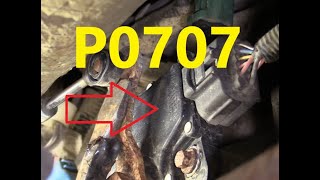
- Replacing the transmission valve body. While valve body issues are common on the CVT models and can cause shifting problems, they typically present with different codes (e.g., P2762, P2757) and are a separate issue. P0707 points specifically to the range sensor circuit. 🎬 Watch: Overview of P0707 causes and fixes
- Assuming the transmission has failed. This code is almost always caused by a relatively inexpensive external sensor or wiring, not a major internal transmission failure.
- Replacing the starter. A no-crank symptom is often blamed on the starter, but if the P0707 code is present, the inhibitor switch is not sending the 'start enable' signal in Park or Neutral, which is the root cause.
Most Likely Causes
- Failed Transmission Range Sensor (Inhibitor Switch) 🔴 High Probability The sensor is mounted externally on the transmission case, exposing it to road salt, moisture, and debris, which can lead to internal corrosion and failure. Some owners have successfully disassembled and cleaned the contacts on older 4EAT switches, but replacement is the standard repair. The CVT inhibitor switch is also a known failure point and is covered by Subaru's CVT warranty extension.
How to confirm: With a multimeter, back-probe the sensor's output signal wires at the connector. As you move the gear selector, the voltage readings should change according to the service manual's specifications. If they are consistently low, absent, or do not change, the sensor is faulty. A scan tool can also read the gear position data directly from the TCM.
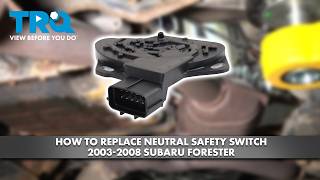
Typical fix: Replace the transmission range sensor. This involves disconnecting the wiring and shift linkage, unbolting the old sensor from the side of the transmission 🎬 See this tutorial on replacing a Forester neutral safety switch, and installing and adjusting the new one. The new sensor must be aligned correctly in the 'Neutral' position before tightening the bolts.
Est. part cost: $65-$150 - Corroded or Damaged Wiring/Connector 🟡 Medium Probability The connector for the range sensor is in an exposed location under the vehicle, making it highly susceptible to corrosion from water and road salt, or physical damage from road debris. Pins can corrode and break, causing a low or no-signal condition.
How to confirm: Visually inspect the sensor's electrical connector and nearby wiring for green or white corrosion, frayed wires, or loose/broken pins. Tug gently on the wires at the back of the connector to ensure they are secure. Clean any corrosion with an electrical contact cleaner and a small brush, then apply dielectric grease before reconnecting.
Typical fix: Clean the connector terminals thoroughly. If the wiring or connector is badly damaged (e.g., broken locking tab, corroded-off pins), a new connector pigtail will need to be spliced in, or the damaged section of the harness repaired.
Est. part cost: $15-$150 - Misadjusted Sensor or Shift Linkage ⚪ Low Probability
How to confirm: Verify that the gear indicated on the dashboard matches the physical position of the gear selector. If they don't align, or if the vehicle only starts when the shifter is wiggled between 'Park' and 'Reverse', the sensor's alignment may be off. This can happen after other transmission work has been performed.
Typical fix: Loosen the sensor's mounting bolts and rotate it slightly to align it correctly. Most sensors have alignment marks or require a pin to be inserted through the sensor body into the transmission case while in Neutral to set the correct position before retightening.
Est. part cost: $0
Rare But Worth Checking
- Faulty Transmission Control Module (TCM) or Powertrain Control Module (PCM): This is very rare. The TCM/PCM is the last item to suspect. Before condemning the module, all other possibilities including the sensor, wiring, connectors, and adjustments must be exhaustively ruled out.
- Faulty Relays Causing No-Start: On some models, a no-start condition that mimics an inhibitor switch failure can be caused by main or ignition relays failing due to internal condensation, especially in very cold weather. This was addressed by TSB 07-89-15R for 2015-2016 models but is a plausible issue on others. This would typically not be accompanied by a P0707 code but can present similar symptoms.
Diagnosis Steps
- Scan for all stored trouble codes. Note if P0705 or P0706 are also present.
- Check for any applicable TSBs or warranty extensions, especially the CVT warranty extension which covers the inhibitor switch.
- Inspect the transmission fluid level and condition. While not a direct cause, low or burnt fluid can indicate broader transmission health issues.
- Safely raise and support the vehicle. Locate the transmission range sensor (inhibitor switch) on the side of the transmission where the shift cable attaches.
- Visually inspect the sensor's electrical connector and wiring harness for any signs of corrosion (green/white powder), moisture intrusion, physical damage, or stretched/chafed wires.
- Disconnect the connector, inspect the pins for damage, clean both halves with electrical contact cleaner, apply dielectric grease, and reconnect securely. Clear codes and re-test.
- If the code returns, use a scan tool to view live data for the transmission range sensor. Observe the displayed gear position as you move the shifter. It should match the shifter position exactly. A reading that is stuck, intermittent, or incorrect points to the sensor/circuit.
- If a scan tool is unavailable, use a multimeter to test the sensor's output circuits. Back-probe the connector and check for voltage changes as the gear selector is moved through each position. Compare the readings to the vehicle's service manual specifications. A consistently low or zero voltage reading confirms the P0707 fault. 🎬 Watch: How to test and replace an inhibitor switch
- If the sensor tests bad, replace it. During installation, ensure the new sensor is properly aligned. This usually involves putting the transmission in Neutral and aligning marks on the sensor and transmission body.
- If the sensor and connector test good, perform a continuity test on the wiring harness between the sensor connector and the TCM to check for an open or short to ground.
- If wiring and the sensor are confirmed good, the issue may lie with the TCM, though this is highly unlikely.
Parts You'll Likely Need
- Transmission Range Sensor / Inhibitor Switch
(OEM #31918AA090 (4EAT) / 31918AA10A (CVT, check VIN))— This sensor is the primary cause of the P0707 code due to its susceptibility to failure from environmental exposure and internal wear.
Trusted brands: Subaru (OEM), Dorman, Standard Motor Products
OEM price range: $80-$150
Aftermarket price range: $45-$90
Related Codes That Often Appear With This One
- P0705 — P0705 indicates a general malfunction in the transmission range sensor circuit, while P0707 specifies a 'low input' condition. They often appear together as they point to the same component's failure.
- P0706 — P0706 indicates a 'Range/Performance' problem with the sensor, meaning the signal is erratic or doesn't match other vehicle speed/gear data. It can appear with P0707 if the sensor is failing intermittently.
Technical Service Bulletins (TSBs) & Recalls
- Subaru CVT Warranty Extension (e.g., TSB 16-107-17R): Extends warranty coverage for the CVT assembly and its components, including the inhibitor switch, to 10 years/100,000 miles for many models, including the 2014-2017 Forester.
- TSB 07-89-15R: Addresses a no-crank/no-start condition in cold weather on some 2015-2016 models due to freezing moisture in various relays. While not a direct cause of P0707, it can create similar symptoms and is a relevant diagnostic consideration for no-start issues.
Platform-Specific Known Issues
- Subaru issued a safety recall (WRQ-23R / NHTSA 23V-755) for the inhibitor switch on some 2022 Foresters and other models due to insufficient welds that could allow water intrusion, leading to failure. While the 2010-2017 models are not covered by this specific recall, it highlights a known weakness in the part's design against moisture.
Mechanic-Grade Diagnostic Values
- CVT Inhibitor Switch Ground Circuit Resistance — expected: Less than 1 Ω. Failure: Resistance greater than 1 Ω indicates a bad ground connection.
- CVT Inhibitor Switch Circuit to Ground (Short Test) — expected: 1 MΩ or more. Failure: Resistance less than 1 MΩ indicates a short circuit in the harness.
- CVT Inhibitor Switch Continuity (In Gear) — expected: Less than 1 MΩ in the selected gear position. Failure: Resistance of 1 MΩ or more in the selected gear indicates a faulty switch.
- CVT Inhibitor Switch Continuity (Out of Gear) — expected: 1 MΩ or more. Failure: Resistance less than 1 MΩ when not in the selected gear indicates a faulty, internally shorted switch.
Scan Tool Commands That Help
- Subaru Select Monitor (SSM): Data Display > Range Switch — To live-monitor the inhibitor switch status (ON/OFF) as the gear selector is moved. This is the primary factory method to confirm if the TCM is receiving the correct signal from the switch for each gear position without manual electrical testing.
Wiring & Ground Locations
- TCM (Transmission Control Module) — On the SJ generation (2014-2017), it is located on the left side of the dash, accessible from the driver's footwell.. This is the module that receives the signal from the inhibitor switch. All wiring tests for continuity or shorts will terminate at the TCM's connector.
- Inhibitor Switch Connector (CVT models) — On the right side of the automatic transmission housing where the selector lever attaches.. This is the primary point for visual inspection of corrosion and for performing electrical tests on the sensor itself.
- GE-1 (Ground) — Top center rear of the engine.. This is a main engine ground point. While not exclusive to the inhibitor switch, poor engine grounding can cause a variety of electrical issues and fault codes due to floating ground references.
- TCM Connector B54 (Non-turbo CVT) — Connector at the Transmission Control Module.. Specific pins on this connector correspond to the inhibitor switch signals. For example, Pin 5 (to B12 Pin 1), Pin 18 (to B12 Pin 2), Pin 9 (to B12 Pin 3), and Pin 22 (to B12 Pin 4) are the signal lines from the transmission harness connector (B12) to the TCM.
Real Owner Repair Stories
- Reddit user in r/SubaruForester (Unknown year Subaru Forester) — No-crank, no-start condition.
❌ Tried (didn't work) Checked fuses, Checked battery, Checked starter
✅ What actually fixed it The user was attempting to replace the inhibitor switch as the next logical step. A technician advised to first check the single-wire flat blade connector on the back of the starter, as they have been known to fall off, which would also cause a no-crank condition. While the final outcome wasn't posted, this represents a critical, simple check before replacing the switch.
OEM Part Supersession History
31918AA10A (for CVT)→31918AA120— Part update/revision. The 31918AA120 is the part number identified in the 2023 recall (WRQ-23) for newer models, produced by Tokai Rika, which had a manufacturing defect related to a bad weld.
Heads up: While the newer part may be a revised design, always confirm fitment with a VIN. The recall for the newer part number suggests potential quality control issues from the supplier during a specific period.
Model Year Variations Within This Range
- 2010-2013: These models use the 4EAT 4-speed automatic transmission. The inhibitor switch (PN 31918AA090) is a different design and can sometimes be disassembled, cleaned, and repaired by carefully removing the rear sealant and polishing the internal contacts.
- 2014-2017: These models use the TR580 Lineartronic CVT. The inhibitor switch (PN 31918AA10A) is a more integrated, sealed unit. Wiring diagrams and pinouts are specific to this generation. The TCM is located on the left side of the dashboard.
Diagnostic Flowchart
Other Known Issues on This Vehicle
Issues unrelated to this code that are worth knowing about as an owner of this generation:
- Excessive Oil Consumption (FB25 Engine) 🔴 High — Common on 2011-2014 models, less so on 2015+. Can start as early as 40k miles. Consumption of 1 quart per 1,200-3,000 miles is frequently reported. (Ref: TSB 02-157-14R led to a class-action lawsuit and warranty extension (8yr/100k miles) for affected VINs, with the fix being a short block replacement.)
- CVT Valve Body / Solenoid Failure 🔴 High — Common on 2014+ models, often occurring between 60k-130k miles. Symptoms include shuddering, hesitation, and stalling. (Ref: Covered under the Subaru CVT Warranty Extension (10yr/100k miles). TSB 16-90-13R addressed a related torque converter issue on earlier models.)
- Failing Wheel Bearings 🟠 Medium — Known to fail prematurely, sometimes before 100k miles. Symptoms include a loud humming or droning noise that changes with speed and cornering.
- Rear Coil Spring Failure 🟠 Medium — Particularly noted on 2014 models, but can affect others. Springs can fracture and collapse, causing a sudden drop in rear ride height. (Ref: A recall was issued for some model years for faulty rear suspension springs.)
- A/C Condenser/Compressor Failure 🟡 Low — Commonly reported, especially on 2017 models. The A/C system may stop blowing cold air due to a failed condenser or compressor clutch.
Used vs. New Parts: Buying Guide for This Vehicle
When a used part is the smart pick: A used inhibitor switch from a junkyard is a reasonable option, especially for the older 4EAT transmission, if you are on a tight budget. The part is external to the transmission and relatively easy to access and replace.
Donor-vehicle mileage cap: roughly under 80000 miles for the part to have meaningful remaining life.
What to inspect on the donor part:
- Inspect the connector pins for any signs of green or white corrosion.
- Check the plastic housing for cracks or signs of heat damage.
- Ensure the selector shaft arm is not bent or damaged.
- If possible, choose a donor vehicle from a dry, non-salt-belt region to minimize the risk of internal corrosion.
OEM-only on this vehicle (don't cheap out):
- Transmission Control Module (TCM)
Aftermarket brands forum-validated for this vehicle:
- Standard Motor Products (Intermotor)
- Dorman
Brands owners have reported issues with on this vehicle:
- No-name, unbranded parts from online marketplaces should be avoided, as their internal contacts and seals may be of poor quality, leading to premature failure.
Real Owner Stories
Aggregated from forums and TSBs cited above. Mileages and costs reflect what owners reported in those sources.
2009 Subaru Forester (4EAT)
Symptoms: No-start condition and erratic shifting issues.
What fixed it: Replacing the inhibitor switch, which involved a difficult process of removing the shift lever from the sensor shaft.
Source hint: subaruforester.org forum thread
2014-2017 Subaru Forester (CVT)
Symptoms: P0707 code and transmission issues covered under extended warranty.
What fixed it: Replacement of the inhibitor switch under the Subaru CVT Warranty Extension (TSB 16-107-17R).
Source hint: Subaru CVT Warranty Extension (TSB 16-107-17R)
2015 Subaru Forester
Symptoms: No-crank, no-start condition.
What fixed it: Removing the inhibitor switch by driving out a roll pin on the linkage and removing two 10mm bolts.
Source hint: Reddit - r/SubaruForester
Related OBD-II Codes
Frequently Asked Questions
Is the inhibitor switch failure on my 2014-2017 Forester covered under a special warranty?
My 2015 Forester won't start in cold weather; could this be related to P0707?
Does the 2022 Forester inhibitor switch recall (WRQ-23R) apply to my 2010-2017 model?
Can I just clean the sensor on my 2010 Forester with a 4EAT transmission instead of replacing it?
Why is the inhibitor switch so prone to failure on the Forester compared to other cars?
What should I check if my Forester only starts when I wiggle the shifter?
Helpful Videos

We Have This Part in Stock

The information in this article is provided for general reference and educational purposes only. Vehicle specifications, procedures, and part compatibility can vary by production date, trim level, and region. Always consult your vehicle's factory service manual and verify part numbers before purchasing or performing repairs. Safety-critical components such as airbags, seat belts, and braking systems should be installed by a qualified professional.
- Subaru Forester:
- 🎬 Helpful Videos
- 🛍️ Shop This Part
- What's Unique About the 2010-2017 Subaru Forester
- Symptoms You May Notice
- Most Likely Causes
- Rare But Worth Checking
- Diagnosis Steps
- Parts You'll Likely Need
- Related Codes That Often Appear With This One
- Technical Service Bulletins (TSBs) & Recalls
- Platform-Specific Known Issues
- Mechanic-Grade Diagnostic Values
- Scan Tool Commands That Help
- Wiring & Ground Locations
- Real Owner Repair Stories
- OEM Part Supersession History
- Model Year Variations Within This Range
- Diagnostic Flowchart
- Other Known Issues on This Vehicle
- Used vs. New Parts: Buying Guide for This Vehicle
- Real Owner Stories
- 2009 Subaru Forester (4EAT)
- 2014-2017 Subaru Forester (CVT)
- 2015 Subaru Forester
- Related OBD-II Codes
- Frequently Asked Questions
- 🎟️ Get 5% Off