

P0700 on 2012-2018 Ford Focus: DPS6 Transmission Fault Guide
P0700 on a 2012-2018 Ford Focus with an automatic transmission indicates a fault has been detected by the Transmission Control Module (TCM). This is almost always related to the notoriously problematic DPS6 PowerShift transmission, with the most common cause being a failed TCM. Before paying for repairs, check with a Ford dealer for any applicable extended warranties or customer satisfaction programs related to the transmission, specifically program 14M02 which covers the TCM.
- P0700 on a 2012-2018 Focus is a serious warning sign of a fault in the notoriously unreliable DPS6 automatic transmission.
- Before any other action, contact a Ford dealer with your VIN to check for coverage under extended warranty program 14M02 for the Transmission Control Module (TCM).
- The most probable cause is a failed TCM, which requires replacement and professional programming.
- A basic code reader is insufficient. Diagnosis requires a scan tool that can communicate with the TCM to retrieve the specific fault codes.
- Other common issues include the clutch assembly and clutch actuators, but the TCM should be the primary suspect.
What's Unique About the 2012-2018 Ford Focus

The 2012-2018 Ford Focus is equipped with the DPS6 PowerShift, a dry dual-clutch automatic transmission that is infamous for widespread problems. Unlike conventional automatics that use a torque converter, the DPS6 uses two dry clutches operated by electric motors, a design that proved susceptible to overheating and premature wear. This led to shuddering, hesitation, and outright failure, resulting in numerous Technical Service Bulletins (TSBs) and class-action lawsuits. Code P0700 on this specific vehicle is a significant indicator of these well-documented issues, most frequently pointing to a failure of the Transmission Control Module (TCM) itself, a problem so common that Ford extended its warranty coverage under program 14M02.
Symptoms You May Notice
- Shuddering or jerking on light acceleration.
- Hesitation or delay when accelerating from a stop.
- Harsh, erratic, or unpredictable shifting.
- Inability to shift or getting stuck in gear.
- Flashing gear selector indicator (PRNDL/S) on the dash.
- "Transmission Malfunction Service Now" message in the instrument cluster.
- Vehicle will not start or has a delayed start.
- Check Engine Light is on.
- Sudden loss of power while driving.
- Inability to select reverse gear.
- Replacing the entire transmission when only the TCM is faulty. The P0700 code often leads to a broad diagnosis, but on this platform, the issue is very frequently the externally-mounted and separately replaceable TCM.
- Replacing the battery without checking the TCM. While a weak battery can cause communication issues and even trigger a P0606 code, a no-start condition combined with P0700 on this car is a classic symptom of TCM failure covered under warranty extension 14M02.
Most Likely Causes

- Failing Transmission Control Module (TCM) 🔴 High Probability The original TCM had internal electrical circuit failures, specifically related to poor quality compliant pin connections that would loosen over time from heat and vibration. This is the most common failure point on the DPS6 transmission, leading Ford to issue Customer Satisfaction Program 14M02, extending the warranty to 10 years/150,000 miles.
How to confirm: Scan the TCM for codes like U0100 (Lost Communication With TCM), U0101, U1013, or P0606 (Internal Processor Fault). A professional diagnosis is needed as these codes confirm a communication loss or internal processor fault within the TCM. A complete lack of communication with the TCM via a scan tool is a definitive sign of failure.
Typical fix: Replace the TCM with the updated version (part number AE8Z-7Z369-F). The new module must be programmed to the vehicle by a dealer or qualified shop using Ford's diagnostic software. A recent supplement (14M02-S7) also offered a one-time TCM replacement through June 30, 2025, for vehicles outside the original warranty extension.
Est. part cost: $600-$900 - Worn or Leaking Clutch Assembly 🟡 Medium Probability Input shaft seals on earlier models (pre-2015) were prone to leaking fluid onto the dry clutches, causing contamination and severe shudder. The clutch forks and release bearings can also wear out, causing engagement problems. This was addressed by TSB 16-0109 and Customer Satisfaction Program 14M01.
How to confirm: A diagnostic 'shudder test' can be performed by a dealer to measure clutch slip. Visual inspection during transmission service may reveal fluid contamination from the input shaft seals. Codes like P287A or P287B often point to clutch fork issues.
Typical fix: Replacement of the dual-clutch assembly and input shaft seals. This is a major repair requiring transmission removal. The updated clutch kit is part number FA6Z-7B546-B.
Est. part cost: $500-$800 - Faulty Clutch Actuators ⚪ Low Probability The electric motors that move the clutch forks can fail, leading to an inability to engage or disengage a clutch. This is less common than a TCM failure but can produce similar symptoms.
How to confirm: Specific codes like P0902 or P090C point to an actuator circuit fault. A technician can test the actuator motors directly or swap the upper and lower actuators to see if the fault code follows the motor, confirming the failure.
Typical fix: Replace the failed clutch actuator motor (Part AE8Z-7C604-A). This part is external to the transmission and relatively accessible.
Est. part cost: $70-$140
Rare But Worth Checking
- Poor TCM Ground Connection: A simple but often overlooked issue. The main ground points for the TCM, located on the chassis frame rail under or near the battery tray, can become corroded or loose. This causes erratic communication and various transmission fault codes. Cleaning and securing these ground points (sanding away paint for a better connection) should be an early diagnostic step.
Diagnosis Steps
- Check your vehicle's VIN with a Ford dealer to see if any open recalls or extended warranty programs (like Customer Satisfaction Program 14M02 for the TCM or 14M01 for the clutch) apply. This should always be the first step, as the repair may be free.
- Use an advanced scan tool capable of reading manufacturer-specific codes from the Transmission Control Module (TCM). A basic OBD-II reader will only show P0700 from the ECM.
- Analyze the codes stored in the TCM. Codes like U0100, U0101, and P0606 strongly suggest TCM failure.
- Check battery health and voltage. A weak battery can cause various communication errors. Ensure voltage is above 12.4V with the engine off.
- Inspect and clean the main TCM ground connections. There are two key grounds on the painted chassis frame rail near the battery. It is critical to sand the paint off these connection points to ensure a solid ground and re-secure the terminals.
- If actuator codes (P090C, P0902) are present, a technician may swap the upper and lower actuators to see if the code moves, isolating the faulty part.
- If no conclusive codes are found but shudder is the main symptom, a clutch shudder test should be performed by a qualified technician to measure clutch slip, which may indicate a worn/contaminated clutch per TSB 16-0109.
Parts You'll Likely Need

- Transmission Control Module (TCM)
(OEM #AE8Z-7Z369-F)— This is the most common point of failure for the DPS6 transmission, causing a wide range of symptoms and fault codes. The 'F' revision has improved internal soldering to prevent common failures.
Trusted brands: Motorcraft
OEM price range: $600-$900
Aftermarket price range: $450-$700 (Remanufactured) - Dual Clutch and Fork Assembly
(OEM #FA6Z-7B546-B)— Required when shudder is caused by leaking input shaft seals contaminating the clutches or when the clutch forks/bearings have failed. Addressed in TSB 16-0109.
Trusted brands: Motorcraft, LuK
OEM price range: $500-$800
Aftermarket price range: $400-$600 - Clutch Actuator Motor
(OEM #AE8Z-7C604-A)— Replaced when specific actuator circuit codes are present and the fault is isolated to the motor itself, not the TCM. Two are used, one for each clutch fork.
Trusted brands: Motorcraft
OEM price range: $70-$140
Aftermarket price range: $50-$90
Related Codes That Often Appear With This One
- U0100 / U0101 — These codes indicate a loss of communication with the TCM, which is a primary symptom of TCM failure. On the Focus, this almost always points to a bad TCM itself.
- P0606 — This code indicates a PCM/ECM processor fault, but on the Focus, it is often triggered as a result of a failing TCM. TSB 16-0044 specifically links this code to TCM replacement.
- P0902 / P090C — These codes point to faults in the clutch actuator circuits, which can be caused by a bad actuator motor or a failing TCM that controls them.
- P287A / P287B — These codes indicate that one of the clutches is stuck engaged, often due to a problem with the clutch forks, the clutch actuator, or the TCM itself.
Technical Service Bulletins (TSBs) & Recalls

- TSB 16-0044: Links diagnostic codes like P0606 to a required TCM replacement.
- TSB 16-0109: Details the diagnostic and repair procedure for excessive clutch shudder, often caused by leaking input shaft seals contaminating the clutch pack.
- Customer Satisfaction Program 14M02: Extends the warranty on the Transmission Control Module (TCM) to 10 years/150,000 miles.
- Customer Satisfaction Program 14M01: Extends the warranty on the clutch pack and input shaft seals to 7 years/100,000 miles to address shudder issues.
Platform-Specific Known Issues
- DPS6 Transmission Control Module Warranty Extension (14M02): Ford extended the warranty on the TCM to 10 years or 150,000 miles for affected vehicles due to high failure rates. Always check with a dealer first.
Mechanic-Grade Diagnostic Values
- Clutch Actuator Motor Resistance — expected: 1.5–2.2 ohms. Failure: A reading outside this range indicates a faulty motor.
- Clutch Actuator Motor Voltage at Connector — expected: 12V (or battery voltage). Failure: Significantly lower voltage (e.g., 7.8V) points to a power delivery issue in the wiring or TCM, even if motor resistance is good.
- TCM Power Supply Pin Voltage (Key On) — expected: 12.0–14.5 V. Failure: Voltage below this range indicates a power supply problem to the module.
- TCM Ground Pin Resistance — expected: < 0.1 Ω. Failure: Higher resistance indicates a poor ground connection, a very common issue on this vehicle.
- Clutch Travel Range (Post-Learn) — expected: 9-14mm for clutches A and B. Failure: Values outside this range, or severe variation between tests, can indicate a mechanical clutch fault or that the learn procedure was unsuccessful.
Scan Tool Commands That Help
- Ford IDS (or capable aftermarket tool like FORScan): TCM Adaptive Learning — This is a required procedure after replacing the TCM or the clutch assembly. It consists of three main parts: TR (Transmission Range) Sensor Learn, Shift Drum Learn, and Clutch Adaptive Learn. The Clutch Adaptive Learn function teaches the TCM the clutch engagement points.
- Ford IDS: Clutch Travel Test — This test, which can be run separately from the full adaptive learn routine, verifies that the TCM can move the clutch actuators through their full range of motion. A failure here points directly to a problem with the actuators, motors, or mechanical fork assembly.
- Ford IDS / FORScan: Reset All Adaptations / Clear Transmission Adaptive Tables — Used to erase the learned values from the TCM. This is the first step before performing a new adaptive learn procedure, either via a scan tool or a manual drive cycle. This can sometimes resolve minor shifting quirks on its own.
Wiring & Ground Locations
- Main Battery Ground — A 13mm nut on the chassis frame rail, directly next to the battery.. This is a primary ground for the vehicle's electrical system. Corrosion here can cause a host of issues, including intermittent TCM problems. It should be removed, cleaned to bare metal, and re-secured.
- TCM-related Grounds — Two 10mm bolts on the chassis, located under the airbox assembly near the battery.. These are critical grounds for the transmission control circuits. They are notorious for having paint underneath from the factory, leading to a poor connection. A loose or corroded connection here is a very common cause of intermittent communication faults (U-codes) and P0700.
- C1750B — The main electrical connector on the Transmission Control Module (TCM) itself.. All power, ground, and communication signals for the TCM pass through this connector. It should be inspected for bent pins, corrosion, or wire damage, especially if communication with the TCM is intermittent.
Real Owner Repair Stories
- YouTube comment on a diagnostic video (2012 Ford Focus) — Jerking transmission, rough drive. Voltage reading was low at 13.4-13.8V.
❌ Tried (didn't work) Believed the alternator was bad due to low voltage readings.
✅ What actually fixed it The owner cleaned the main electrical ground points near the battery as shown in the video. After cleaning, the transmission drove smoothly and the system voltage returned to a normal 14.2-14.4V, indicating the poor ground was the root cause of the electrical and transmission issues. - YouTube comment on a TCM replacement video (Ford Focus (Mk3)) — Unspecified transmission problems requiring TCM replacement.
❌ Tried (didn't work) Some customers had multiple TCMs replaced, but issues would intermittently return.
✅ What actually fixed it A former Ford dealership technician stated that in many cases, thoroughly cleaning the ground areas on the car body fixed the issues completely without needing to replace the TCM, saving the customer nearly $1000.
OEM Part Supersession History
AE8Z-7Z369-B, AE8Z-7Z369-D→AE8Z-7Z369-F— The original TCMs used compliant pin connections for critical internal components which would fail due to heat and vibration. The updated 'F' revision (and remanufactured units) feature soldered connections for these components to create a more durable and reliable repair.
Model Year Variations Within This Range
- 2012-2014 vs. 2015-2018: The transmission calibrations are different between these two groups. Additionally, the input shaft speed sensor shims have different thicknesses. 2012-2014 models use thicker shims (approx. 3.2-3.5mm), while 2015-2018 models use thinner shims. Using a transmission or TCM from the wrong year group without reprogramming to the correct calibration can result in shifting issues.
Diagnostic Flowchart
Other Known Issues on This Vehicle
Issues unrelated to this code that are worth knowing about as an owner of this generation:
- Electronic Power Steering Failure 🔴 High — Common, especially in 2012-2014 models. Can occur suddenly at low mileage, causing a complete loss of power assist. (Ref: Recall 14S18 was issued for a small batch of 2014 models, but widespread issues exist outside the recall. Ford has issued TSBs to reprogram the EPAS module, but often the entire steering rack requires replacement.)
- Faulty EVAP Purge Valve (Code P1450) 🟠 Medium — Extremely common across all 2012-2018 models. The valve sticks open, causing rough idle, stalling after refueling, and difficulty starting. (Ref: Safety Recall 18S32 (NHTSA 18V735) was issued, involving a PCM reprogram to detect the fault. Multiple TSBs (19-2363, 17-0016) also address this. The part itself (BV61-9G866-AA) is often replaced.)
- Prematurely Worn Engine/Transmission Mounts 🟠 Medium — The passenger-side hydraulic engine mount (CM5Z-6038-A) is a very common failure point, leading to excessive vibration at idle and clunking noises. The other two mounts can also wear out.
- Engine Stalling and Rough Idle 🟠 Medium — Often related to the faulty purge valve (P1450), but can also be caused by other vacuum leaks or throttle body issues. (Ref: Primarily addressed by EVAP system recalls and TSBs.)
Used vs. New Parts: Buying Guide for This Vehicle
When a used part is the smart pick: A used clutch actuator motor is a reasonable choice as they are simple electric motors and can be tested. A used entire transmission assembly can be cost-effective IF it's from a low-mileage donor and you replace the clutch/forks/seals as a precaution before installation.
Donor-vehicle mileage cap: roughly under 70000 miles for the part to have meaningful remaining life.
What to inspect on the donor part:
- For a TCM, verify the part number is an exact match.
- For a transmission assembly, check the build date. Later models (2015+) are generally preferred.
- Check for any signs of fluid leaks around the bell housing, which could indicate a failed input shaft seal.
OEM-only on this vehicle (don't cheap out):
- Transmission Control Module (TCM): While cloning a used module is possible, it's a significant gamble. The failure rate of these modules is extremely high, and a used one may fail shortly after installation. A new OEM part (AE8Z-7Z369-F) is strongly recommended for reliability.
- Dual Clutch Assembly: Given the high labor cost to access the clutch, installing a used one is not recommended. A new, updated kit from an OEM supplier like LuK or Motorcraft is the only reliable option.
Aftermarket brands forum-validated for this vehicle:
- LuK (for clutch assembly)
Brands owners have reported issues with on this vehicle:
- Unknown/unbranded TCMs from online marketplaces. Many are simply pulled from junk cars with no testing or refurbishment and have a high probability of being faulty.
Real Owner Stories
Aggregated from forums and TSBs cited above. Mileages and costs reflect what owners reported in those sources.
2016 Ford Focus SE
Symptoms: The vehicle experienced a no-reverse condition and became stuck in gear.
What fixed it: The owner received a quote for a TCM and internal transmission repair, though the TCM is the primary failure point addressed by Ford's extended warranty.
Cost: $4500-$4500
Source hint: Reddit - r/MechanicAdvice - "2016 Ford Focus SE, DPS6 Transmission, Transmission Control Module(TCM) issue"
Related OBD-II Codes
Frequently Asked Questions
Is there a warranty extension for the Transmission Control Module (TCM) on my 2012-2018 Ford Focus?
My Focus is shuddering during acceleration; is this covered under a specific program?
What specific TCM part number should be used for the replacement?
Can a bad battery cause transmission codes like P0700 on this car?
Are there any ground connections I should check for transmission issues?
Does the Ford Fiesta share these same transmission problems?
Helpful Videos
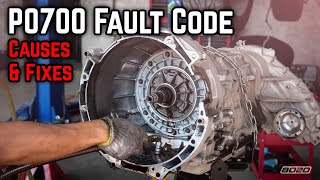

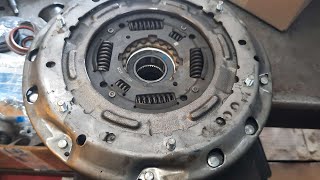
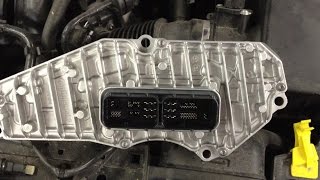
We Have This Part in Stock



The information in this article is provided for general reference and educational purposes only. Vehicle specifications, procedures, and part compatibility can vary by production date, trim level, and region. Always consult your vehicle's factory service manual and verify part numbers before purchasing or performing repairs. Safety-critical components such as airbags, seat belts, and braking systems should be installed by a qualified professional.
- Ford Focus:
- 🎬 Helpful Videos
- 🛍️ Shop This Part
- What's Unique About the 2012-2018 Ford Focus
- Symptoms You May Notice
- Most Likely Causes
- Rare But Worth Checking
- Diagnosis Steps
- Parts You'll Likely Need
- Related Codes That Often Appear With This One
- Technical Service Bulletins (TSBs) & Recalls
- Platform-Specific Known Issues
- Mechanic-Grade Diagnostic Values
- Scan Tool Commands That Help
- Wiring & Ground Locations
- Real Owner Repair Stories
- OEM Part Supersession History
- Model Year Variations Within This Range
- Diagnostic Flowchart
- Other Known Issues on This Vehicle
- Used vs. New Parts: Buying Guide for This Vehicle
- Real Owner Stories
- 2016 Ford Focus SE
- Related OBD-II Codes
- Frequently Asked Questions
- 🎟️ Get 5% Off