

OBD-II Code P0902: Clutch Actuator 'A' Control Circuit Low
The Ultimate 2026 Guide: What P0902 means, why it triggers, and how to fix it for good.
- P0902 is a critical safety code indicating low voltage in the clutch actuator circuit that requires an immediate tow to prevent catastrophic transmission failure.
- Ford Focus (2012-2018) and Fiesta (2011-2019) owners must check their VIN with a dealer for the 14M02 extended warranty, which covers the $1,000+ TCM replacement for free.
- Swapping the 'A' and 'B' clutch actuators on Ford DPS6 transmissions definitively isolates a faulty $150 actuator motor from a $1,000 TCM failure.
- Every actuator or TCM replacement requires a mandatory transmission adaptive relearn procedure using a bidirectional scan tool to restore shifting functionality.
- Never authorize a $3,000+ mechanical clutch replacement for a P0902 code without first verifying the electrical integrity of the chassis grounds, actuators, and TCM.
What Does P0902 Mean?

P0902 means your vehicle's computer detects low voltage in the electronic circuit controlling clutch 'A'. In automated or dual-clutch transmissions, an electric motor operates the clutch. This code indicates the voltage in that motor's control circuit is below the manufacturer's required threshold. This low voltage prevents the clutch from engaging or disengaging, causing immediate and severe shifting failures.
Technical definition: The SAE/OBD-II definition is "Clutch 'A' Actuator Control Circuit Low". The Powertrain Control Module (PCM) or Transmission Control Module (TCM) detects voltage or resistance in the clutch actuator 'A' control circuit below the expected normal range. Clutch 'A' controls the odd-numbered gears (1, 3, 5), while clutch 'B' controls the even-numbered gears (2, 4, 6).
Can I Drive With P0902?
No — Do Not Drive. Driving is strictly prohibited. The transmission will suddenly fail to shift, lock into neutral, or lose power completely. This happens without warning at highway speeds or in intersections, creating a severe safety risk. Continuing to drive also forces the clutch to slip, turning a $200 electrical repair into a $3,000 mechanical clutch replacement.
Common Causes

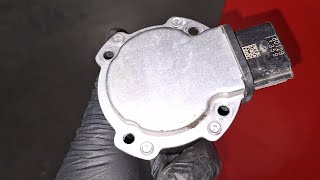
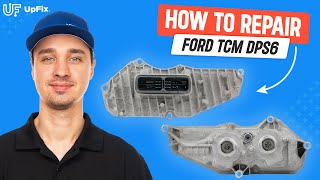
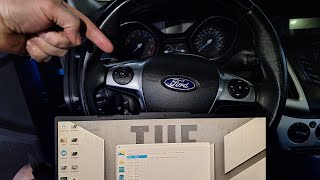
- Faulty Transmission Control Module (TCM) (Very Common) — The TCM is the brain of the transmission. Internal failures, such as cracked solder joints or burned-out driver circuits, are the leading cause of this code, particularly in Ford's DPS6 transmission. 🎬 Watch: Expert diagnosis and advice for Ford P0902 codes The module fails to send the required voltage to the actuator.
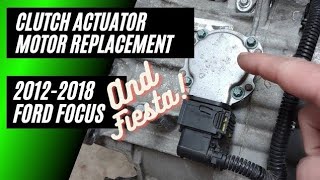
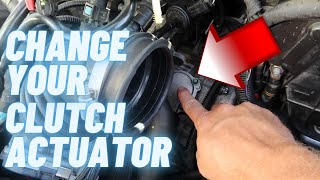
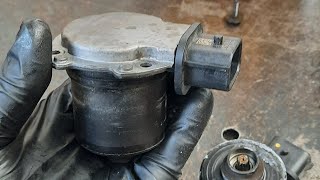
- Faulty Clutch Actuator Motor (Very Common) — The electric motor that physically moves the clutch fork fails internally. The copper windings short out or the internal gears seize, causing the motor to draw incorrect voltage and trigger the circuit low code. 🎬 See how to diagnose and replace faulty clutch actuators
- Corroded or Loose Ground Connections (Common) — The TCM and actuators rely on clean, bare-metal ground connections to the chassis and transmission case. Oxidation or loose ground straps create a massive voltage drop, triggering a P0902 even when all physical components are perfectly fine.
- Damaged Wiring Harness or Connectors (Common) — The wiring harness connecting the TCM to the actuator is exposed to extreme engine heat and vibration. Wires chafe through their insulation and short to the chassis, or connector pins corrode, blocking voltage from reaching the actuator.
- Low or Unstable Battery Voltage (Less Common) — A weak battery, a failing alternator, or a recent battery replacement without a proper Battery Monitoring System (BMS) reset causes system-wide voltage drops. The highly sensitive TCM interprets this drop as a specific actuator circuit fault.
- Internal Hydraulic Leak (VW/Audi Mechatronic) (Rare) — Specific to VW/Audi DSG transmissions, hydraulic fluid leaks internally into the electronic circuit board of the mechatronic unit. This fluid causes short circuits and low voltage readings across the actuator control circuits.
Symptoms

- Transmission stuck in one gear or neutral ('Limp Mode') — The TCM locks the transmission in a single gear (usually 2nd or 3rd) or prevents gear engagement entirely to protect the drivetrain. The vehicle will not accelerate.
- Engine will not crank or start — The vehicle's immobilizer prevents the engine from starting because the TCM cannot verify if the transmission is safely in Park or Neutral.
- Harsh, delayed, or erratic shifting — Gear changes feel violent, unpredictable, or delayed, especially at low speeds or when accelerating from a complete stop.
- Engine stalls or hesitates — The vehicle stalls when coming to a stop or hesitates severely upon acceleration because the clutch fails to disengage from the engine.
- Clutch slipping and burning smell — The actuator fails to fully clamp the clutch disc, causing it to slip under engine load. This generates extreme friction heat and a distinct burning smell.
- Check Engine Light illuminated — The dashboard displays a Check Engine Light, a wrench icon, or a specific "Transmission Fault" warning message.
Diagnostic Flowchart
Tap your situation to follow the diagnostic path that matches what you're seeing on this code.
Common Fixes & Costs
- Replacing the Transmission Control Module (TCM)
— Parts: $300-$600, Labor: $300-$600, ~2.0 hr book time
(Professional)
Ford Focus/Fiesta (DPS6): OEM AE8Z-7Z369-F (Alt: Dorman 609-031) - Replacing Both Clutch Actuators
— Parts: $200-$400, Labor: $200-$400, ~2.0 hr book time
(Intermediate)
Ford Focus/Fiesta: OEM AE8Z-7C604-A (Alt: LUK 41470) - Cleaning and Securing Ground Connections — Parts: $0-$15, Labor: $100-$150, ~1.0 hr book time (Beginner)
- Repairing Wiring Harness or Connectors — Parts: $20-$50, Labor: $200-$400, ~2.5 hr book time (Intermediate)
- Replacing the Clutch Assembly and Forks — Parts: $800-$1500, Labor: $1200-$2000, ~8.5 hr book time (Professional)
Used vs. New Parts: Buying Guide
When a used part is worth it: Never buy a used TCM; they are VIN-locked and prone to the exact same failure. A used clutch actuator from a low-mileage salvage vehicle is acceptable only if your budget is strictly limited.
Donor-vehicle mileage cap: roughly under 60000 miles for the part to have meaningful remaining life.
Donor quality checklist:
- Ensure the donor vehicle was scrapped for a rear-end collision, not a transmission failure.
- Inspect the actuator connector pins for any green corrosion or signs of water intrusion.
Decision logic:
- If The vehicle is a Ford Focus/Fiesta → Check VIN for the 14M02 warranty. If covered, get a free new TCM from the dealer.
- If The clutch actuators are confirmed dead → Buy a new OEM or high-quality aftermarket pair (LUK/Dorman). Used actuators will fail quickly and double your labor costs.
Warranty tradeoff: New OEM parts carry a 1-2 year warranty. Used parts offer 30 days at best. The labor to replace these parts is expensive, making the warranty on new parts highly valuable.
Worst-case if a used part fails: $600 (Cost of paying a shop to remove a failed used actuator, buy a new one, and perform the relearn procedure again).
What Happens If You Wait — Timeline
- 0-2 weeks: Intermittent Check Engine Light and occasional harsh shifts. The fault clears itself after a restart. The vehicle is drivable but unpredictable. (MPG impact: 0-5%% · Added cost: $0)
- 2-6 weeks: The vehicle enters Limp Mode, locking into a single gear or dropping into neutral while driving. The car requires an immediate tow. (MPG impact: 10%% · Added cost: $150-$300 (Towing costs))
- 2+ months: Continuous driving with low actuator voltage forces the clutch to slip constantly. The extreme heat destroys the clutch friction material, release bearing, and forks. (MPG impact: 25%% · Added cost: $2000-$3500 (Full mechanical clutch replacement required on top of the electrical fix))
Cost of Not Fixing It
- Immediate (0-1 month): The vehicle drops into neutral at highway speeds or refuses to start, requiring an immediate tow and creating a severe collision risk. (Added cost: $150-$300 (Towing fees))
- 1-3 months: The low voltage causes the actuator to partially engage the clutch. This continuous slipping incinerates the clutch friction material and warps the flywheel. (Added cost: $2000-$3500 (Full mechanical clutch replacement))
Diagnosis Steps

- Scan Codes and Review Freeze Frame Data
Connect an OBD-II scanner to confirm P0902. Check for related codes (P090C, U0101). Record the freeze frame data to see the exact vehicle speed, RPM, and system voltage at the moment the fault triggered.
Tools: OBD-II Scanner (Beginner) - Verify Battery Health and Clean Chassis Grounds
Test the battery to ensure it holds 12.4V+ resting and 13.5V-14.5V while running. Locate the main transmission ground strap attached to the chassis. Remove the bolt, scrub the terminal and chassis to bare metal with a wire brush, and reinstall tightly.
Tools: Digital Multimeter, Wire Brush, Socket Set (Beginner) - PRO TIP: Perform the 'Actuator Swap' Test (Ford DPS6)
Locate the 'A' and 'B' clutch actuators on the transmission housing. Remove them and swap their physical positions. Clear the codes and test drive. If the code changes to P090C (Clutch B), the actuator motor is dead. If P0902 returns, the TCM or wiring is faulty.
Tools: E8 Torx Socket, Ratchet (Intermediate) - Multimeter Testing: Circuit and Motor
Disconnect the actuator harness. Measure resistance across the two pins on the actuator motor; it should read between 5-15 ohms. Infinite resistance (OL) means a dead motor. Next, turn the ignition ON and probe the harness connector for 12V on the supply pin and less than 0.1 ohms on the ground pin.
Tools: Digital Multimeter, Vehicle-specific Wiring Diagram (Advanced) - Analyze the Actuator Control Signal
Use a bidirectional scan tool to command the clutch actuator to move. Back-probe the control wire at the TCM with an oscilloscope. You must see a clean square wave (PWM signal). A flat line confirms a burned-out driver inside the TCM.
Tools: Bidirectional Scan Tool, Oscilloscope (Professional) - Advanced: VW/Audi Mechatronic Pressure Test
For VW/Audi DQ200 transmissions, use VCDS to monitor live hydraulic pressure. The system must hold 40-60 bar. If pressure drops below 35 bar or the pump runs continuously, the mechatronic accumulator is cracked and requires replacement.
Tools: VCDS or ODIS Scan Tool (Professional)
When This Code Triggers (Freeze-Frame Conditions)
- System Voltage: Below 11.5V (A voltage drop recorded at the exact moment of failure points directly to a failing alternator, a dying battery, or severe ground corrosion.)
- Engine Coolant Temp: 180-210°F (If the code only triggers when the engine is fully hot, it strongly indicates a failing TCM, as heat causes internal solder joints to expand and break contact.)
- Vehicle Speed: 0-15 mph (The fault almost exclusively triggers during low-speed, stop-and-go driving when the clutch actuator is working its hardest.)
Related Codes
- P090C — Clutch 'B' Actuator Control Circuit Low. The direct counterpart to P0902. If this code appears after swapping the A and B actuators on a Ford, it definitively proves the actuator motor is dead.
- P0900 — Clutch Actuator Circuit Open. Indicates a completely severed wire, an unplugged connector, or a totally burned-out motor winding, rather than just low voltage.
- U0101 — Lost Communication with TCM. If present alongside P0902, the TCM is completely offline. Diagnose the U-code first by checking main power and grounds to the module.
Climate & Environmental Factors
- High Humidity and Road Salt: Salt and moisture aggressively attack the exposed aluminum transmission case and chassis ground points. This corrosion creates massive electrical resistance, dropping the voltage below the TCM's required threshold.
- Stop-and-Go Traffic in Extreme Heat: Creeping in heavy traffic forces the dry dual-clutch system to slip continuously. This bakes the transmission housing, accelerating the failure of the heat-sensitive solder joints inside the TCM.
How to Talk to a Mechanic About This Code
Say this: "I have a P0902 code on my [Year/Make/Model] and need a diagnostic focusing on electrical causes like chassis grounds, actuators, and the TCM. Please do not quote a mechanical clutch replacement without verifying these electrical components first. If this is a Ford, check my VIN for the 14M02 TCM extended warranty coverage."
This proves you understand the code. It forces the technician to check the cheap electrical fixes (grounds, actuators) before upselling a $3,000 mechanical clutch replacement. Mentioning the warranty forces them to check for free coverage.
Avoid saying:
- My transmission is slipping, can you look at it?
- The internet said I need a new clutch.
- Just clear the code and see if it comes back.
Questions to ask before authorizing the repair:
- Did you scrub the main transmission ground points to bare metal?
- Did you perform the 'actuator swap test' to isolate the fault? What was the result?
- If you are recommending a full clutch replacement, what specific mechanical failure did you find to justify it over an electrical fault?
- Does your estimate include the mandatory transmission adaptive learning procedure after the parts are replaced?
Where to Take It: Dealer vs Independent vs Chain
- Dealer:
Go here FIRST solely to check for free warranty coverage. If not covered, take the car to an independent transmission specialist.
Best for: Ford vehicles covered by the 14M02 TCM extended warranty., Complex VIN programming for a new TCM.
Downsides: Highest labor rates., Service advisors frequently push for a $3,000 full clutch replacement instead of a $300 electrical repair. (Typical cost: +40% vs. baseline) - Independent Shop:
The best option, provided you verify they own the equipment to program a TCM and perform dual-clutch adaptive relearns.
Best for: Out-of-warranty vehicles., Shops that specifically advertise transmission repair or European auto expertise.
Downsides: General mechanics often lack the $1,000+ bidirectional scan tools required to perform the mandatory transmission relearn procedure. (Typical cost: +0% vs. baseline) - Chain Shop:
Avoid completely. They cannot fix this code.
Best for: Tires and oil changes.
Downsides: Technicians lack the specialized training and equipment for complex dual-clutch electronics., High risk of misdiagnosis. (Typical cost: -10% vs. baseline)
When to Walk Away From the Repair
If the estimated repair cost exceeds 50% of the car's current private-party value, sell or trade in the vehicle.
- Car worth $4000, fix is $1200: Fix it. The repair is 30% of the vehicle's value, which makes economic sense for a TCM or actuator replacement.
- Car worth $5000, fix is $3500: Walk away. The shop is quoting a full mechanical clutch replacement that equals 70% of the car's value. Sell the vehicle as-is.
What Scan Tool You Need for This Code
Minimum: A bidirectional scanner capable of reading transmission modules and executing the 'Transmission Adaptive Learning' procedure.
A $20 code reader only clears the Check Engine Light. It cannot perform the mandatory software relearn required after replacing the actuators or TCM. Without this relearn, the car will not shift.
Budget: FORScan with Extended License (Ford Only) (~$60) — Provides dealer-level diagnostics for Ford. Runs on a laptop to perform the actuator tests and the critical transmission relearn procedure.
Mid-range: Foxwell NT530 Elite (~$160) — A handheld device that supports bidirectional control and adaptive relearns for specific vehicle makes without needing a laptop.
Professional: Autel MaxiCOM MK808S (~$450) — A professional tablet that commands actuators, reads live data streams, and reliably performs TCM resets across all vehicle makes.
Rent vs buy: You cannot rent bidirectional scanners from auto parts stores. You must buy a capable tool or pay a shop $150 just to perform the relearn procedure.
How to Clear the Code After You Fix It
- Ensure the battery is fully charged and connected securely.
- Use a bidirectional scan tool to clear all TCM and PCM diagnostic trouble codes.
- Execute the mandatory Transmission Adaptive Learning Procedure via the scan tool to calibrate the clutch engagement points.
Drive cycle (~30 minutes): Start the vehicle cold and idle for 3 minutes. Drive in stop-and-go traffic for 15 minutes to force 1-2 and 2-3 shifts. Accelerate smoothly to 55 mph and hold for 10 minutes. Park and let the vehicle cool completely.
Readiness monitors affected: Comprehensive Component Monitor
Before emissions retest: drive at least 50 miles to fully set monitors.
Watch out for:
- Disconnecting the battery does not clear the code or reset the TCM's adaptive memory.
- Failing to perform the scan tool relearn procedure guarantees the vehicle will shift violently and the code will return immediately.
Will This Fail Emissions / State Inspection?
Yes — this code typically fails an OBD-II emissions inspection.
- California: An active P0902 triggers an automatic smog check failure. All readiness monitors must be set to 'Ready' after repairs, requiring a strict drive cycle.
- New York: NYS inspections require a clean OBD-II scan. The illuminated Check Engine Light from P0902 results in an immediate failure.
Most Commonly Affected Vehicles

- Ford Focus (2012-2018) — Equipped with the DPS6 PowerShift transmission. TCM and actuator failures are guaranteed. Always check VIN for the 14M02 extended warranty.
- Ford Fiesta (2011-2019) — Shares the identical DPS6 transmission and failure points as the Focus. Actuator part number is AE8Z-7C604-A.
- Hyundai Veloster (2012-2017) — Models with the 6-speed EcoShift DCT suffer from actuator motor burnouts and wiring harness chafing.
- Volkswagen Jetta/Golf (2010-2018) — Vehicles with the 7-speed DQ200 DSG transmission experience internal mechatronic unit failures that trigger actuator circuit codes.
- Chevrolet Cruze (2012-2016) — Models utilizing dry dual-clutch variants experience control module and actuator voltage drops similar to the Ford DPS6.
Manufacturer-Specific Notes
- Ford: Ford issued Customer Satisfaction Program 14M02, extending the TCM warranty to 10 years or 150,000 miles. Always force the dealer to run your VIN before paying out of pocket for a TCM replacement.
- Volkswagen/Audi: Actuator circuit codes on the DQ200 DSG are rarely the actuator itself. They are almost always a symptom of a cracked hydraulic accumulator inside the $1,500 mechatronic unit.
Real Owner Stories
2014 Ford Focus - Intermittent P0902 when hot
Code P0902 appeared only after driving for 20 minutes. Shifting became violent. After letting the car sit for an hour, it drove perfectly until it got hot again.
Outcome: The temperature-dependent failure is the textbook symptom of a dying TCM. The owner took the car to Ford, verified coverage under the 14M02 warranty, and received a free TCM replacement.
Lesson: Electrical faults that only occur when the engine is hot point directly to failing control modules. Always check for extended warranties before paying out of pocket.
2012 Ford Fiesta - P0902 immediately after battery swap
The owner replaced a dead battery in their driveway. Upon starting the car, the Check Engine Light illuminated with P0902, and the car would not shift out of 1st gear.
Outcome: The code cleared and the transmission shifted perfectly. The battery swap disturbed a heavily corroded ground connection, causing a massive voltage drop to the TCM.
Lesson: If a transmission code appears immediately after electrical work, check your grounds. A $0 wire brushing often fixes what shops quote $1,500 to repair.
How to Prevent This Code From Triggering
- Clean Chassis Ground Points (Every 2 years) — Prevents the voltage drops that trigger false actuator codes. Scrubbing the main transmission ground to bare metal ensures the TCM receives stable power.
- Modify Heavy Traffic Driving Habits (Daily) — Avoid 'creeping' forward inch-by-inch in traffic. This forces the dry dual-clutch to slip constantly, generating extreme heat that destroys the TCM and actuators. Leave a gap, then move decisively.
- Replace Battery Proactively (Every 4 years) — Dual-clutch transmissions are hyper-sensitive to voltage fluctuations. A weak battery stresses the TCM and triggers spurious electrical fault codes during engine cranking.
Frequently Asked Questions
My dealer quoted $3,600 for a new clutch for a P0902 code. Is this correct?
Be highly skeptical. P0902 almost always points to the electrical actuator or TCM, not the mechanical clutch. Get a second opinion from an independent transmission specialist before authorizing a mechanical overhaul.
What is the actuator swap test?
Ford DPS6 transmissions have two identical actuators (A and B). Swap their physical positions and clear the codes. If P0902 changes to P090C, the actuator motor is bad; if P0902 returns, the TCM or wiring is faulty.
Can a bad battery cause a P0902 code?
Yes, these systems are highly sensitive to voltage drops. A weak battery, incorrect installation, or failing to reset the Battery Monitoring System triggers this code. Clean all ground connections and ensure the battery outputs 12.4V+ resting.
Can I replace just one clutch actuator?
No. Actuators wear at identical rates, and replacing only one guarantees the other will fail shortly after. Replace them as a pair to avoid paying for the same labor twice.
Does the transmission need a relearn after replacing parts?
Yes. Replacing the actuators or TCM requires a mandatory adaptive learning procedure using a bidirectional scan tool. Skipping this step causes immediate shifting failures and triggers the code again.
Is it safe to clear the code and keep driving?
No. Clearing the code masks the symptom but leaves the electrical fault active. The transmission will suddenly drop into neutral or lock in gear, creating a severe safety hazard.
Key Takeaways
- P0902 is a critical safety code indicating low voltage in the clutch actuator circuit that requires an immediate tow to prevent catastrophic transmission failure.
- Ford Focus (2012-2018) and Fiesta (2011-2019) owners must check their VIN with a dealer for the 14M02 extended warranty, which covers the $1,000+ TCM replacement for free.
- Swapping the 'A' and 'B' clutch actuators on Ford DPS6 transmissions definitively isolates a faulty $150 actuator motor from a $1,000 TCM failure.
- Every actuator or TCM replacement requires a mandatory transmission adaptive relearn procedure using a bidirectional scan tool to restore shifting functionality.
- Never authorize a $3,000+ mechanical clutch replacement for a P0902 code without first verifying the electrical integrity of the chassis grounds, actuators, and TCM.
Helpful Videos

The information in this article is provided for general reference and educational purposes only. Vehicle specifications, procedures, and part compatibility can vary by production date, trim level, and region. Always consult your vehicle's factory service manual and verify part numbers before purchasing or performing repairs. Safety-critical components such as airbags, seat belts, and braking systems should be installed by a qualified professional.
- 🎬 Helpful Videos
- What Does P0902 Mean?
- Can I Drive With P0902?
- Common Causes
- Symptoms
- Diagnostic Flowchart
- Common Fixes & Costs
- Used vs. New Parts: Buying Guide
- What Happens If You Wait — Timeline
- Cost of Not Fixing It
- Diagnosis Steps
- When This Code Triggers (Freeze-Frame Conditions)
- Related Codes
- Climate & Environmental Factors
- How to Talk to a Mechanic About This Code
- Where to Take It: Dealer vs Independent vs Chain
- When to Walk Away From the Repair
- What Scan Tool You Need for This Code
- How to Clear the Code After You Fix It
- Will This Fail Emissions / State Inspection?
- Most Commonly Affected Vehicles
- Manufacturer-Specific Notes
- Real Owner Stories
- 2014 Ford Focus - Intermittent P0902 when hot
- 2012 Ford Fiesta - P0902 immediately after battery swap
- How to Prevent This Code From Triggering
- Frequently Asked Questions
- My dealer quoted $3,600 for a new clutch for a P0902 code. Is this correct?
- What is the actuator swap test?
- Can a bad battery cause a P0902 code?
- Can I replace just one clutch actuator?
- Does the transmission need a relearn after replacing parts?
- Is it safe to clear the code and keep driving?
- Key Takeaways
- 🎟️ Get 5% Off