

P0700 on 2006-2013 Chevrolet Impala: Transmission Fault Causes and Fixes
P0700 on a 2006-2013 Impala means the transmission has a problem. It's a general code, so you must scan the Transmission Control Module (TCM) for specific codes. The most likely culprits are failed transmission solenoids, especially the pressure control solenoid in 4-speed models, or a broken wave plate in later 6-speed models.
- P0700 is a general alert from your transmission. You MUST use a scanner that can read transmission codes to find the real problem.
- For most 2006-2011 Impalas, the cause is likely a failed Pressure Control Solenoid inside the transmission, causing harsh shifts.
- For 2012-2013 V6 Impalas, be aware of the potential for a major internal failure (broken wave plate) that requires a transmission rebuild.
- Always check the simple things first: transmission fluid level/condition and battery connections/grounds.
- This is not a beginner-friendly DIY repair. Diagnosis is complex and most fixes require significant mechanical work.
What's Unique About the 2006-2013 Chevrolet Impala

The 2006-2013 Impala used two main automatic transmissions. Earlier models (roughly 2006-2011) primarily used the 4-speed 4T65-E, which is well-known for failures of the Electronic Pressure Control (EPC) solenoid, causing harsh shifts and setting a P1811 code alongside the P0700. Later V6 models (around 2012-2013) used the 6-speed 6T70, which has a known weakness with a broken 3-5-R wave plate, a failure that can send metal debris through the transmission and require a complete rebuild.
Generation note: This range covers the entire ninth generation of the Chevrolet Impala (2006-2013, with a 'Limited' fleet model until 2016). The key difference is the transmission: most earlier models used the 4-speed 4T65-E, while later V6 models (approx. 2012+) used the 6-speed 6T70. The specific transmission dictates the most likely internal problems.
Symptoms You May Notice
- Check Engine Light is on
- Harsh, banging, or delayed shifts
- Transmission slipping or hesitating
- Vehicle stuck in one gear (limp mode)
- Flashing gear indicator light on the dashboard
- Inability to engage reverse (common with 6T70 wave plate failure)
- Vehicle fails to move intermittently
- Decreased fuel economy
- "Engine Power Reduced" or Stabilitrak warnings appearing on the Driver Information Center
- Replacing only the Transmission Control Module (TCM) without diagnosing the underlying cause. Often, a bad solenoid, wiring issue, or even a loose ground is the real problem, not the computer itself.
- Clearing the P0700 code and assuming the problem is fixed. The P0700 is just an indicator; the specific, underlying TCM codes must be addressed or they will return.
Most Likely Causes

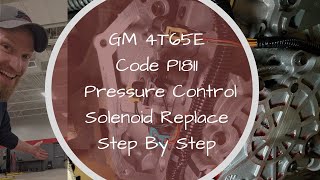
- Failed Transmission Solenoid(s) (4T65-E) 🔴 High Probability On 4T65-E models, the Electronic Pressure Control (EPC) solenoid is a very common failure point, causing harsh shifts and often a P1811 code. 🎬 Watch: Step-by-step guide to replacing the pressure control solenoid. The plastic and electronic components degrade over time from heat and constant pressure modulation. Shift solenoids can also fail on both 4-speed and 6-speed models.
How to confirm: Scan the TCM for specific solenoid codes (e.g., P1811, P0751). A mechanic can also test solenoid resistance and function. Burnt fluid is also a strong indicator of internal issues.
Typical fix: Replace the faulty solenoid(s). Since accessing them requires removing the transmission side cover, it's highly recommended to replace the EPC solenoid, both shift solenoids (A and B), and the TCC lockup solenoid as a kit.
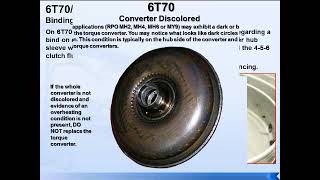
Est. part cost: $100-$250 for a complete solenoid kit - Broken 3-5-R Wave Plate (6T70 Transmission) 🔴 High Probability The 6-speed 6T70 transmission used in later V6 models has a well-documented design flaw where the 3-5-R wave plate fractures, leading to a loss of 🎬 See a detailed breakdown of common 6T70 transmission design flaws. 3rd, 5th, and Reverse gears. GM issued a special coverage adjustment (14404B) for this, but it has expired for most vehicles due to age and mileage.
How to confirm: Symptoms are a sudden loss of 3rd, 5th, and Reverse. A scan of the TCM will show codes related to gear ratio errors or solenoid performance as the broken metal pieces contaminate the system. Metal shavings will be obvious in the fluid pan.
Typical fix: This requires a complete transmission rebuild or replacement. The broken metal fragments travel throughout the transmission and can damage the valve body, solenoids, and other components.
Est. part cost: $1800-$4500+ for a rebuilt transmission - Low or Burnt Transmission Fluid 🟡 Medium Probability Leaks from cooler lines, axle seals, or the case itself can lead to low fluid levels, causing overheating and poor hydraulic pressure, which triggers faults. Fluid should be bright red; dark or burnt-smelling fluid indicates internal wear or damage.
How to confirm: Check the transmission fluid dipstick (if equipped) for level and condition. The fluid should be bright red and not smell burnt. If there is no dipstick (common on 6T70), the level must be checked from a plug on the transmission case with the engine running at a specific temperature.
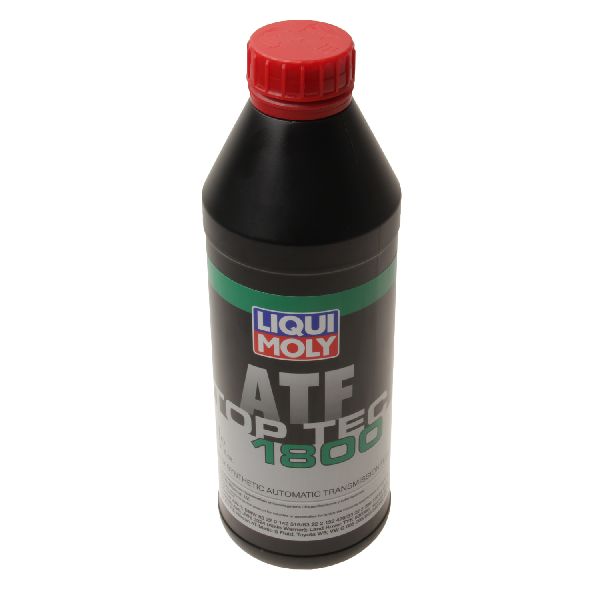
Typical fix: Top off with the correct fluid (DEXRON-VI for all of these models) and fix any leaks. If the fluid is dark or burnt, a fluid and filter change is necessary, though this may not fix underlying mechanical damage.
Est. part cost: $50-$150 for a fluid and a filter - Faulty Transmission Control Module (TCM/TEHCM) ⚪ Low Probability While less common than solenoids, the TCM can fail. On these Impalas, the TCM (often called a TEHCM - Transmission Electro-Hydraulic Control Module) is located inside the transmission on the valve body, making replacement labor-intensive and expensive.
How to confirm: This is usually diagnosed by exclusion. If all solenoids, wiring, and fluid are good, and the scanner cannot communicate with the TCM (often setting a U0101 code), the module itself is suspect.
Typical fix: Replace the Transmission Control Module. This part must be programmed to the vehicle's VIN to function correctly.
Est. part cost: $300-$800 for a remanufactured and programmed TEHCM
Rare But Worth Checking
- Wiring Harness or Connector Issues: A loose or corroded ground wire, especially the main battery ground, can cause intermittent communication faults and trigger a P0700 and other 'U' codes. Always check the main harness connector at the transmission for damage or fluid intrusion before condemning internal parts. A YouTube video shows a broken ground wire on a 2007 Impala causing a crank/no-start, highlighting the vulnerability of these grounds.
- Faulty Valve Body: Debris from normal wear or a failing component can score the valve body bores, causing solenoids to stick and leading to shifting issues. Sometimes the entire valve body must be replaced or remanufactured.
- Electrical System Drain: NHTSA ODI #11363700 describes a scenario where a drain in the electrical system was suspected of causing multiple codes, including P0700, alongside Stabilitrak and Reduced Engine Power warnings.
Diagnosis Steps
- Connect an OBD-II scanner capable of reading transmission codes to the vehicle's diagnostic port.
- Confirm the presence of P0700 in the Engine Control Module (ECM).
- Access the Transmission Control Module (TCM) and retrieve all stored transmission-specific DTCs (e.g., P1811, P07xx, Uxxxx).
- Prioritize diagnosis based on the specific codes found. For example, a P1811 points to a pressure control issue, while a P0751 points to a shift solenoid.
- Check the transmission fluid level and condition. Look for low levels, a burnt smell, or excessive metal particles.
- Inspect the main electrical connector at the transmission for corrosion, bent pins, or fluid intrusion.
- CRITICAL: Inspect chassis grounds, especially the main battery-to-chassis ground strap and the grounds on the transmission case. 🎬 Watch: How a simple ground wire fix can clear P0700 codes. A loose or corroded ground is a known cause of phantom communication codes like P0700 and U0101.
- Follow the specific diagnostic procedures for the codes retrieved from the TCM, which may involve testing solenoid resistance, checking wiring continuity, or monitoring sensor data with the scan tool.
Parts You'll Likely Need

- Transmission Solenoid Kit (4T65-E)
(OEM #24227792 (Superseded by various kit numbers))— This is the most common fix for P0700 accompanied by harsh shifting on 2006-2011 models. The kit should include the Pressure Control Solenoid (EPC), two shift solenoids, and a TCC solenoid.
Trusted brands: ACDelco, Rostra, Borg-Warner
OEM price range: $200-$300
Aftermarket price range: $100-$180 - Rebuilt Transmission (6T70) — Required if the 3-5-R wave plate has failed in 2012-2013 V6 models, as the failure sends metal throughout the unit causing widespread damage.
Trusted brands: GM Genuine, Jasper, JEGS
OEM price range: $3000-$4500
Aftermarket price range: $1800-$3000 - Transmission Control Module (TEHCM for 6T70)
(OEM #24261875, 24275870 (check by VIN))— Needed if the internal TCM/TEHCM fails, often causing communication codes (U-codes) or erratic behavior not attributable to solenoids or wiring.
Trusted brands: ACDelco, Street Smart Transmission
OEM price range: $500-$800
Related Codes That Often Appear With This One
- P1811 — On 4T65-E models, this code for 'Maximum Adapt and Long Shift' is a classic sign of a failing Pressure Control Solenoid (PCS/EPC) causing the transmission to default to maximum line pressure, resulting in harsh shifts.
- P0751, P0752, P0756, P0757 — These codes point to performance or stuck-state issues with Shift Solenoids 'A' and 'B', a common cause for P0700.
- U0101 — This code indicates a loss of communication with the TCM, which could be caused by a wiring issue, a bad ground, or a failed TCM itself.
Technical Service Bulletins (TSBs) & Recalls
- GM TSB 14404B: Special Coverage Adjustment for the broken 3-5-R wave plate in 6T70 transmissions. This extended the warranty for this specific failure, but has likely expired for most 2012-2013 Impalas.
- GM TSB 00-02-35-003N (and subsequent revisions): Addresses a clunking noise from the steering system, often caused by the intermediate steering shaft. While not directly related to P0700, it's a very common issue on this platform.
Platform-Specific Known Issues
- 4T65-E Models (2006-2011): Highly prone to Pressure Control Solenoid (EPC) failure, leading to code P1811 and extremely harsh, banging shifts.
- 6T70 Models (2012-2013 V6): Known for catastrophic failure of the 3-5-R wave plate, which breaks apart and causes a loss of 3rd, 5th, and Reverse gears. This requires a full transmission rebuild.
Mechanic-Grade Diagnostic Values
- 4T65-E Shift Solenoid (A/B) Resistance — expected: 20 - 40 Ohms. Failure: A reading outside this range indicates a failed solenoid coil.
- 4T65-E Electronic Pressure Control (EPC) Solenoid Resistance — expected: 4.0 - 6.0 Ohms (approximate, varies by temperature). Failure: Readings significantly outside this range suggest a faulty EPC solenoid.
- 6T70 Shift Solenoid (On/Off type) Resistance — expected: 20 - 40 Ohms. Failure: A reading outside this range indicates a failed solenoid coil within the TEHCM.
- 6T70 Pressure Control Solenoid (PWM type) Resistance — expected: 3 - 8 Ohms. Failure: A reading outside this range indicates a failed solenoid coil within the TEHCM.
Scan Tool Commands That Help
- GM Tech 2 / GDS2: Solenoid Test — After retrieving DTCs, a technician can use a bidirectional scanner to command each individual shift and pressure solenoid on and off. This helps verify if the solenoid is mechanically stuck or electrically unresponsive without removing it from the transmission. For the 6T70, this test is often performed with a special test plate (Kent-Moore DT-47825) attached to the TEHCM on the bench.
- GM Tech 2 / GDS2: Transmission Service Fast Learn — This procedure is required after replacing the TEHCM or rebuilding the transmission. It allows the TCM to quickly learn the individual characteristics and apply volumes of the clutches to ensure smooth shifting. Failure to perform this can result in harsh shifts and codes setting.
Wiring & Ground Locations

- G111 — On a transmission-to-engine bolt. For non-5.3L engines, it's above the starter; for 5.3L engines, it's below the starter (2007 models). For 2012-2013 models, it's generally listed as being above the starter motor.. This is a primary ground point for the engine and transmission assembly. Corrosion or a loose connection here can cause a host of electrical issues, including erratic sensor readings and communication codes like U0101 that often accompany P0700.
- G113 — On the front of the automatic transaxle, to the left of G111 (2007 models).. Provides another critical ground path for the transaxle. A fault here can directly impact the TCM and its ability to control the solenoids.
- G102 — Near the battery, often on the strut tower or inner fender.. This is a major body and engine compartment ground. While not directly on the transmission, a poor connection here can create voltage offsets that affect the ECM and TCM communication.
- Transmission Main Connector (C1) — On the top or side of the transmission case where the main vehicle harness connects.. This is the single point for all power and signal wires going to the transmission's internal components. Check for bent pins, corrosion from moisture, or fluid contamination from a leaking seal. A pinout diagram can be used to test for power, ground, and signal continuity back to the TCM/ECM.
Real Owner Repair Stories
- YouTube channel 'Pro Automotive Diagnostics' (2007 Chevy Impala) — Crank no start, multiple communication codes (U-codes).
❌ Tried (didn't work) Initial diagnosis pointed towards a possible module failure due to lack of communication.
✅ What actually fixed it A broken black ground wire was found in the harness near the front of the transaxle. The wire had corroded and broken internally. Repairing this ground wire restored communication and resolved the no-start condition. - NHTSA ODI #11363700 — An owner reported that a scan tool reflected a drain in the electrical system which may have been causing multiple codes, including P0700, P0513, P0523, P2122, P0411, P0449, and P0455, while driving with Stabilitrak and Reduced Engine Power warnings active.
OEM Part Supersession History
24212690→24227792— Part update/revision by GM.
Heads up: The part 24227792 is listed as a TCC PWM (Torque Converter Clutch Pulse Width Modulation) solenoid for the 4T65-E and requires programming or special setup procedures.
Model Year Variations Within This Range
- 2006-2011: These models predominantly use the 4T65-E 4-speed automatic. P0700 is most often caused by a failed Pressure Control Solenoid (leading to P1811) or other accessible solenoids in the side cover.
- 2012-2013: V6 models in these years use the 6T70 6-speed automatic. The most notorious cause for P0700 is the failure of the 3-5-R wave plate, which requires a full transmission rebuild. Solenoids and the TCM are integrated into a single TEHCM unit inside the oil pan, making individual solenoid replacement impossible.
- 2007: Specific ground locations are documented for this model year, such as G111 (on the transmission-to-engine bolt, location varies by engine) and G113 (on the front of the transaxle).
- 2012-2013: Wiring diagrams for these later models show slightly different ground distribution, with G111 located above the starter motor and no specific callout for G113 in the same location as earlier models.
Diagnostic Flowchart

Other Known Issues on This Vehicle
Issues unrelated to this code that are worth knowing about as an owner of this generation:
- Leaking Lower Intake Manifold Gaskets (3.5L/3.9L V6) 🔴 High — Very common, especially on the 3.5L V6. Often occurs between 60,000 and 120,000 miles. Can lead to coolant mixing with oil, causing catastrophic engine failure.
- Failing Blend Door Actuators 🟠 Medium — Extremely common. Owners report a loud clicking or knocking sound from the dashboard when starting the car or changing temperature settings.
- Clunking Intermediate Steering Shaft 🟠 Medium — Widespread issue causing a clunking or popping noise/feel in the steering wheel during low-speed turns. The shaft requires lubrication or replacement. (Ref: GM TSB #00-02-35-003 (multiple revisions))
- Excessive Oil Consumption 🟠 Medium — Reported across multiple engine options, can be caused by worn piston rings or valve seals, leading to premature engine wear if not monitored.
- PassLock Security System Failure 🟡 Low — A faulty PassLock sensor can prevent the car from starting by disabling the fuel system. Owners report the security light flashing and the car failing to crank.
Used vs. New Parts: Buying Guide for This Vehicle
When a used part is the smart pick: A complete, low-mileage used transmission assembly can be a cost-effective choice, especially for the 4T65-E if the casing is damaged or multiple hard parts have failed. For the 6T70, a used unit is a gamble unless you can verify it's from a later production run or has had the wave plates updated.
Donor-vehicle mileage cap: roughly under 80000 miles for the part to have meaningful remaining life.
What to inspect on the donor part:
- Check the fluid color and smell from the donor car if possible. It should be bright red and not smell burnt.
- Look for a vehicle history report to check for prior accidents or maintenance records.
- Inspect the transmission case for cracks, heavy corrosion, or signs of previous repairs (e.g., excessive RTV sealant).
- Get a warranty from the salvage yard, even if it's only 30-90 days. This provides some protection against an immediate failure.
OEM-only on this vehicle (don't cheap out):
- Transmission Control Module (TEHCM): Due to the requirement for VIN-specific programming, a new or professionally remanufactured and programmed unit from ACDelco or a specialist is the only reliable option. A used TEHCM will not function correctly.
Aftermarket brands forum-validated for this vehicle:
- Solenoids (4T65-E): Borg-Warner, Rostra, and TransGo (for shift kits/upgrades) are well-regarded in professional forums.
- Rebuild Kits: TransGo and Sonnax offer kits that address known flaws, such as accumulator pistons and pressure regulator components for the 4T65-E.
Brands owners have reported issues with on this vehicle:
- Unbranded, no-name solenoid kits from online marketplaces. These often have high failure rates and inconsistent quality control, leading to repeat repairs.
Real Owner Stories
Aggregated from forums and TSBs cited above. Mileages and costs reflect what owners reported in those sources.
2009 Chevrolet Impala
Symptoms: The vehicle experienced intermittent failure to move. Upon inspection, the transmission fluid was found to be burnt.
What fixed it: The transmission required a full replacement after a full-function scan tool was used to pull specific TCM codes.
Source hint: https://chevroletforum.com/forum/impala-14/2009-impala-p0700-code-53749/
2012 Chevrolet Impala V6
Symptoms: Sudden loss of 3rd, 5th, and Reverse gears due to internal component fracture.
What fixed it: Complete transmission rebuild or replacement due to broken metal fragments from the 3-5-R wave plate contaminating the system.
Source hint: GM TSB 14404B / vehicle_specific_issues
2006-2011 Chevrolet Impala (4T65-E)
Symptoms: Extremely harsh, banging shifts often accompanied by a P1811 code.
What fixed it: Replacement of the Electronic Pressure Control (EPC) solenoid, often as part of a kit including shift solenoids A and B and the TCC lockup solenoid.
Cost: $100-$250
Source hint: common_causes / vehicle_specific_issues
2006-2013 Chevrolet Impala
Symptoms: Multiple communication codes including P0700 and U0101 appearing simultaneously.
What fixed it: Tightening or cleaning a loose battery ground wire.
Source hint: https://www.youtube.com/watch?v=Rj3v3h9aCns ('Automotive Drama')
2010 Chevrolet Impala
Symptoms: An owner reported multiple codes including P0700, P0513, P0523, P2122, P0411, P0449, and P0455. The vehicle displayed Stabilitrak, Traction Control, and Engine Power Reduced warnings.
What fixed it: A scanner indicated a drain in the electrical system was potentially causing the issues (NHTSA ODI #11363700).
Related OBD-II Codes
Frequently Asked Questions
Does GM TSB 14404B cover the transmission failure in my 2012 Chevrolet Impala?
My 2008 Impala has harsh, banging shifts and a P1811 code. What is the likely cause?
I have a P0700 and U0101 code on my Impala. Should I replace the transmission?
Why can't I engage reverse in my 2013 Impala V6?
What type of transmission fluid should I use for my 2006-2013 Impala?
Is the clicking sound in my dashboard related to the P0700 transmission code?
Helpful Videos
We Have This Part in Stock

The information in this article is provided for general reference and educational purposes only. Vehicle specifications, procedures, and part compatibility can vary by production date, trim level, and region. Always consult your vehicle's factory service manual and verify part numbers before purchasing or performing repairs. Safety-critical components such as airbags, seat belts, and braking systems should be installed by a qualified professional.
- Chevrolet Impala:
- 🎬 Helpful Videos
- 🛍️ Shop This Part
- What's Unique About the 2006-2013 Chevrolet Impala
- Symptoms You May Notice
- Most Likely Causes
- Rare But Worth Checking
- Diagnosis Steps
- Parts You'll Likely Need
- Related Codes That Often Appear With This One
- Technical Service Bulletins (TSBs) & Recalls
- Platform-Specific Known Issues
- Mechanic-Grade Diagnostic Values
- Scan Tool Commands That Help
- Wiring & Ground Locations
- Real Owner Repair Stories
- OEM Part Supersession History
- Model Year Variations Within This Range
- Diagnostic Flowchart
- Other Known Issues on This Vehicle
- Used vs. New Parts: Buying Guide for This Vehicle
- Real Owner Stories
- 2009 Chevrolet Impala
- 2012 Chevrolet Impala V6
- 2006-2011 Chevrolet Impala (4T65-E)
- 2006-2013 Chevrolet Impala
- 2010 Chevrolet Impala
- Related OBD-II Codes
- Frequently Asked Questions
- 🎟️ Get 5% Off