

P0700 on 2023-2025 Cadillac Escalade: Transmission Control System Malfunction Guide
P0700 on a 2023-2025 Escalade means the transmission control module (TCM) has detected a fault and turned on the check engine light. It's a general alert; the real problem is a separate code stored in the TCM that requires a special scanner to read. A known TSB suggests a simple reset procedure may fix it if seen with code P18AE, but if the code returns, a valve body replacement is likely needed.
- P0700 is a general alert from the transmission; it is not the root cause of the problem.
- You must use a scan tool that can read codes from the Transmission Control Module (TCM) to find the specific fault.
- For a 2023-2024 Escalade with low mileage, check for TSB #23-NA-210 if code P18AE is also present, as a simple reset procedure may be the fix.
- Do not immediately assume a major failure. Check transmission fluid level and condition first, and inspect for any visible wiring damage.
- Ignoring this code can lead to poor drivability and potentially severe, expensive damage to the transmission.
What's Unique About the 2023-2025 Cadillac ESCALADE

The 2023-2025 Cadillac Escalade uses a sophisticated 10-speed 10L80 automatic transmission co-developed by GM and Ford. For this specific vehicle generation, a P0700 code may not always signal a major mechanical failure, especially on low-mileage examples. General Motors has issued Technical Service Bulletin (TSB) #23-NA-210 for low-mileage 2023-2024 models where P0700 appears alongside a manufacturer-specific code, P18AE. This bulletin outlines a specific diagnostic check and reset procedure, suggesting that a software glitch or intermittent fault can be the cause, potentially avoiding an immediate, costly repair. However, if the code returns after the procedure, the TSB directs technicians to replace the control valve body. Additionally, Service Update N232399010-01 was issued for certain 2023 models to address an intermittent loss of communication with the TCM via an over-the-air (OTA) or dealer-installed software update.
Diagnostic Flowchart

Tap your situation to follow the diagnostic path that matches what you're seeing on this vehicle.
Symptoms You May Notice
- Check Engine Light is on
- "Service Transmission" message on the dashboard.
- Rough, jerky, or delayed shifts.
- Transmission slipping between gears or feeling like it's in neutral.
- Vehicle enters "limp mode" (gets stuck in one gear).
- Grinding or clunking noises when shifting.
- Hesitation or shuddering during acceleration.
- Transmission overheating.
- Replacing the Engine Control Module (ECM). The P0700 code is a message *to* the ECM, not a problem *with* the ECM. GM documentation explicitly warns against this misdiagnosis. 🎬 Watch: Why your transmission might not actually be broken.
Most Likely Causes

- A secondary fault code is stored in the TCM 🔴 High Probability This is the fundamental meaning of P0700; it is always triggered by another, more specific code in the transmission module that identifies the actual problem.
How to confirm: Use an advanced OBD-II scanner capable of reading codes from the Transmission Control Module (TCM).
Typical fix: Diagnose and repair the specific transmission code(s) found in the TCM. For example, code P18AE is a common companion on these vehicles.
Est. part cost: $0 - Software Anomaly / Intermittent Fault 🟡 Medium Probability TSB #23-NA-210 specifically addresses P0700 and P18AE setting on low-mileage vehicles (under 5,000 miles), which can sometimes be resolved by a code-clearing and specific shift cycle procedure, indicating a non-permanent fault. GM also issued Service Update N232399010-01 for 2023 models to fix intermittent TCM communication loss via a software update.
How to confirm: If P18AE is also present on a low-mileage vehicle, follow the diagnostic steps in TSB #23-NA-210: clear codes, perform a specific drive/shift cycle, and see if codes return. Check vehicle history for the N232399010-01 update.
Typical fix: If codes do not return after the TSB procedure, no repair is needed. If code P18AE returns, the TSB advises replacing the control valve body. If the vehicle is eligible, perform the OTA or dealer software update for N232399010-01.
Est. part cost: $0 - $900 - Faulty Control Valve Body 🟡 Medium Probability The 10L80 transmission family has known issues with valve bodies, leading to shifting problems. TSB #23-NA-210 points directly to the valve body as the required fix if code P18AE persists after a reset, confirming it as a known failure point for this specific issue.
How to confirm: This is typically identified by the return of code P18AE after performing the TSB #23-NA-210 diagnostic procedure. Other solenoid-specific codes can also point to valve body or TEHCM issues.
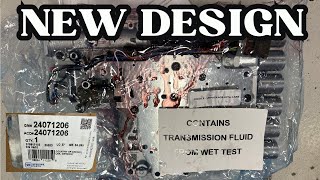
Typical fix: Replace the entire control valve body assembly. The part is often an integrated unit with solenoids and sometimes the TCM (on older platforms). ACDelco is the OEM supplier. 🎬 Watch: A first look at the new design valve body.
Est. part cost: $600 - $900 - Low or Dirty Transmission Fluid 🟡 Medium Probability Low fluid levels can cause a variety of hydraulic pressure issues, leading to shifting problems, overheating, and triggering fault codes. The 10L80 transmission is sensitive to fluid level and condition.
How to confirm: Check the transmission fluid level and condition according to the manufacturer's procedure. The fluid should be bright red and not have a burnt smell. This transmission does not have a traditional dipstick, so the check must be performed by a technician from underneath the vehicle with the fluid at a specific temperature (167-176°F). 🎬 See how to check the fluid level on a 10L80.
Typical fix: Top off the fluid if low, or perform a transmission fluid and filter change if the fluid is dirty or contaminated. Use the specified GM fluid, Dexron ULV.
Est. part cost: $50 - $250
Rare But Worth Checking
- Damaged Wiring or Loose Connector: A user with a 2023 Escalade reported transmission issues that were traced back to a loose connector on the radiator oil pressure sensor, which resolved the problem. TSB #23-NA-102 also notes that various drivability issues, including rough shifting and P0700, can be caused by the engine wiring harness contacting the alternator bracket or a loose ground. Another TSB, 21-NA-149, identifies potential harness chafing against the ECM/TCM bracket.
- Faulty Transmission Control Module (TCM): While possible, complete TCM failure is less common than valve body or wiring issues. It should only be considered after all other possibilities, including wiring, fluid, and mechanical faults, have been thoroughly ruled out. On many modern platforms, the TCM is integrated with the valve body and replaced as a single unit.
Diagnosis Steps
- Connect an advanced OBD-II scanner that can read codes from the Transmission Control Module (TCM), such as the GM GDS2.
- Record all DTCs from both the ECM and TCM. Do not clear them yet. Note any accompanying codes like P18AE or U-series codes.
- If P0700 is accompanied by P18AE on a low-mileage vehicle (under 5,000 miles), follow the specific procedure in TSB #23-NA-210. This involves clearing the codes and performing a specific shift cycle to see if the fault is intermittent or persistent.
- If DTC P18AE returns after the TSB procedure, replace the control valve body as instructed.
- If other codes are present, prioritize diagnosing them first as they are the root cause.
- Perform a visual inspection of the transmission wiring harness and related engine harness connectors. Per TSB #23-NA-102, check for chafing near the alternator bracket, especially on models with the LM2 or LZ0 engine. Also inspect for chafing near the ECM/TCM bracket, driver-side upper control arm, and shock tower as noted in other bulletins.
- Check the transmission fluid level and condition. This must be done by a technician as there is no dipstick. The fluid temperature must be between 167-176°F (75-80°C) to get an accurate level reading.
- If a specific solenoid or sensor code is present, perform electrical tests (resistance, voltage) on that component's circuit.
- If no other codes are present and the fluid is good, the issue could be an intermittent glitch. Check for available software updates like N232399010-01. Clear the codes, drive the vehicle, and see if the P0700 returns.
Parts You'll Likely Need
- Transmission Fluid
(OEM #ACDelco Dexron ULV)— Low or dirty fluid is a common cause of transmission problems and is the first and easiest thing to check and remedy. The 10L80 transmission requires a specific Ultra Low Viscosity fluid.
Trusted brands: ACDelco
OEM price range: $20-$30 per quart
Aftermarket price range: $15-$25 per quart - Control Valve Body
(OEM #24049770 (Note: Part numbers can change, always verify with VIN))— TSB #23-NA-210 specifically calls for replacing the valve body if code P18AE returns after performing the diagnostic reset procedure. Valve body issues are a known problem with this family of transmissions.
Trusted brands: ACDelco GM Genuine Parts
OEM price range: $600-$900
Aftermarket price range: $400-$700
Related Codes That Often Appear With This One
- P18AE — This manufacturer-specific code is explicitly mentioned with P0700 in TSB #23-NA-210 for the 2023-2024 Escalade. Its presence indicates a specific diagnostic path should be followed, which may lead to a valve body replacement.
- Other P07xx codes — Codes like P0731 (Gear Ratio Error) or P0751 (Shift Solenoid 'A' Performance) are examples of the specific faults that cause the P0700 code to be set. These point to internal mechanical or hydraulic issues.
- U-series codes (e.g., U0073, U0101) — Communication codes like these indicate a loss of connection between the TCM and other modules. TSB #23-NA-102 lists several U-codes alongside P0700 as potential results of a damaged wiring harness.
Technical Service Bulletins (TSBs) & Recalls
- Bulletin #23-NA-210: Provides a diagnostic procedure for when DTCs P18AE and/or P0700 are set on low-mileage vehicles, potentially indicating a software glitch or requiring a valve body replacement if the fault persists.
- Bulletin #23-NA-102: Details how wiring harness damage or loose grounds can cause multiple DTCs, including P0700, and result in rough shifting or hesitation.
Platform-Specific Known Issues
- TSB #23-NA-210 addresses an issue on 2023-2024 models under 5,000 miles where DTCs P18AE and P0700 may set. The bulletin provides a specific diagnostic check to validate if the code returns after a reset, which may prevent unnecessary repairs.
- TSB #23-NA-102 identifies a potential cause for P0700 and other codes on 2022-2023 SUVs with the LM2 engine: the engine wiring harness may contact the alternator bracket, causing a short.
- Service Update N232399010-01 was released for certain 2023 Escalade models to correct an intermittent loss of communication with the TCM through a software update, which could be a root cause for a P0700 code.
Mechanic-Grade Diagnostic Values
- 10L80 Transmission Fluid Temperature for Level Check — expected: 167-176°F (75-80°C). Failure: Checking the level outside this temperature range will result in an inaccurate reading (either over or under-filled).
- Transmission Shift Solenoid (On/Off type) Resistance — expected: 20-40 ohms. Failure: A reading of infinite resistance (open) or near-zero resistance (short) indicates a failed solenoid.
- Transmission Pressure Control (PWM type) Solenoid Resistance — expected: 3-8 ohms. Failure: A reading outside this range indicates a failed solenoid.
Hidden / Shadow Codes Worth Checking
- Symptom Codes: GM's GDS2 software can display 'symptom codes,' which are more granular sub-codes that provide additional context to a primary DTC like P0700. For example, a symptom byte might further specify the nature of a communication failure or solenoid performance issue. (see via Requires a dealership-level scan tool like a GM MDI2 with GDS2 software.)
- P187E / P18AB: These codes can set after a valve body service or transmission rebuild if the park pawl actuator piston is not correctly engaged during installation, leading to a no-move condition. (see via A professional scan tool capable of reading manufacturer-specific transmission codes.)
Scan Tool Commands That Help
- GDS2 (GM Global Diagnostic System 2): Module Diagnostics > TCM > Control Functions — To perform bidirectional tests, commanding individual solenoids on and off to check their mechanical and electrical response without removing the valve body. This can help isolate a specific sticking or failed solenoid.
- GDS2 or equivalent professional scanner: Transmission Service Fast Learn — This procedure is required after replacing the transmission, valve body, or TCM. It allows the TCM to learn the hydraulic characteristics and clutch fill volumes of the new components to ensure smooth shifting. Failure to perform this can result in harsh shifts or future codes.
- GDS2: Clear DTCs — Used as part of the diagnostic procedure in TSB #23-NA-210 to see if an intermittent fault (P0700/P18AE) returns after a drive cycle, differentiating a software glitch from a hard part failure.
Wiring & Ground Locations

- Engine Harness at Alternator Bracket — On vehicles with the LM2 or LZ0 engine, the engine wiring harness may be mis-routed or have a failed retainer, allowing it to contact the alternator bracket.. TSB #23-NA-102 explicitly links this chafing point to setting P0700, along with various U-codes and drivability complaints, due to wires shorting to ground.
- Engine Harness at ECM/TCM Bracket — On the driver's side of the engine bay, the harness may rub against a sharp edge of the metal bracket holding the ECM and TCM.. TSB 21-NA-149 identifies this as a chafe point that can short out various circuits in the harness, leading to a wide range of DTCs, including communication codes that would trigger a P0700.
- Main ECM/TCM Ground — Bolted to the front passenger side of the engine block, often sharing a location with the main battery ground cable.. A poor ground connection at this point can cause erratic behavior from the control modules, leading to false codes and communication issues. A user with a similar GM truck platform found a nearly-broken ground wire at this location which solved numerous electrical issues.
- Frame Grounds Behind Front Wheels — On the frame rails, located directly behind both front wheels.. These grounds are in a terrible location prone to corrosion from road spray. A compromised ground here can affect various systems, potentially including the TCM or its sensor inputs, leading to intermittent and hard-to-diagnose faults.
Real Owner Repair Stories
- Carly forum user 'maja_koenig7' (2023 Cadillac Escalade with diesel engine) — Transmission indicator and check engine lights on, transmission in emergency mode, improper shifting, slipping, and grinding noises.
❌ Tried (didn't work) Initial self-diagnosis pointed to a bad cable or plug based on a radiator oil pressure code.
✅ What actually fixed it The dealer identified and fixed a loose connector on the radiator oil pressure sensor. After securing the connector and clearing codes, all symptoms were resolved. - Tahoe Yukon Forum user (2021+ GM SUV (similar platform)) — Multiple electrical codes, including communication faults.
❌ Tried (didn't work) Initial checks did not reveal the source of the problem.
✅ What actually fixed it The wiring harness that runs over the top of the transmission had melted against the exhaust heat shield, exposing bare wires. Repairing the wires and securing the harness away from the heat shield resolved the issues.
Model Year Variations Within This Range
- 2023: Certain 2023 models were subject to Service Update N232399010-01 for an intermittent loss of communication with the TCM. This was corrected with a software update, available over-the-air (OTA) or at a dealership. This specific software issue may not be present on 2024-2025 models.
Helpful Videos
Used OEM Parts in Stock

New Aftermarket Parts Available


The information in this article is provided for general reference and educational purposes only. Vehicle specifications, procedures, and part compatibility can vary by production date, trim level, and region. Always consult your vehicle's factory service manual and verify part numbers before purchasing or performing repairs. Safety-critical components such as airbags, seat belts, and braking systems should be installed by a qualified professional.
- Cadillac ESCALADE:
- 🎬 Helpful Videos
- 🛍️ Shop This Part
- What's Unique About the 2023-2025 Cadillac ESCALADE
- Diagnostic Flowchart
- Symptoms You May Notice
- Most Likely Causes
- Rare But Worth Checking
- Diagnosis Steps
- Parts You'll Likely Need
- Related Codes That Often Appear With This One
- Technical Service Bulletins (TSBs) & Recalls
- Platform-Specific Known Issues
- Mechanic-Grade Diagnostic Values
- Hidden / Shadow Codes Worth Checking
- Scan Tool Commands That Help
- Wiring & Ground Locations
- Real Owner Repair Stories
- Model Year Variations Within This Range
- 🎟️ Get 5% Off