

P0700 on 2008-2014 Cadillac CTS: Transmission Control System Malfunction Guide
P0700 on a 2008-2014 Cadillac CTS is a general alert from the transmission. It means you must scan the Transmission Control Module (TCM) for more specific codes. A very common cause on this platform is a poor connection or damaged wiring at the main transmission harness connector, as noted in a GM Technical Service Bulletin.
- P0700 is a general code; the real, actionable fault code is stored in the Transmission Control Module (TCM).
- A scan tool that can read transmission codes is mandatory for proper diagnosis.
- For the 2008-2014 CTS, a primary suspect is the wiring and connector at the transmission itself, per a GM Technical Service Bulletin.
- Do not replace the Engine Control Module (ECM) to fix a P0700 code.
- Always check transmission fluid level and condition as a first step.
What's Unique About the 2008-2014 Cadillac CTS

For the second-generation Cadillac CTS, a P0700 code often points towards electrical and communication issues rather than just an internal transmission component failure. A General Motors TSB (#PIC4740E) specifically highlights that intermittent loss of communication with the TCM, triggering P0700 and other network codes (like U0073, U0100, U0101), can be caused by unseated pins or harness chafing at the main transmission connector (X1). This makes a thorough inspection of this specific connector and its harness routing near the bell housing a critical first step in diagnosis for these vehicles.
Diagnostic Flowchart

Tap your situation to follow the diagnostic path that matches what you're seeing on this vehicle.
Symptoms You May Notice
- Check Engine Light (MIL) is on
- Harsh or erratic shifting
- Delayed gear engagement
- Transmission stuck in one gear (limp mode)
- Reduced fuel economy
- Vehicle hesitation or stalling
- Transmission-related warning messages on the instrument cluster.
- Inability to shift gears at all
- Replacing the Engine Control Module (ECM). A GM bulletin explicitly states that the ECM should not be replaced for a P0700 code, as it is only reporting a fault from the TCM.
Most Likely Causes

- Wiring or Connector Issues at Transmission 🔴 High Probability A specific GM Technical Service Bulletin (PIC4740E) identifies unseated pins and harness chafing at the transmission's X1 connector as a known cause for communication loss and various DTCs, including P0700. The harness location near the bell housing makes it susceptible to damage.
How to confirm: Visually inspect the main transmission wiring harness (X1 connector) for corrosion, damage, unseated pins, or chafing against the engine/transmission housing. Gently tug on each wire to ensure it is fully seated in the connector. A user on an LS1Tech forum resolved a similar issue by cleaning the female terminals and ensuring a secure connection.
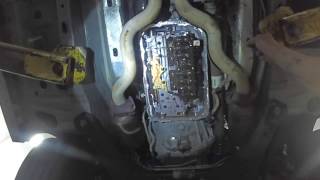
Typical fix: Repairing the damaged wiring, cleaning the connector terminals with electrical contact cleaner, or replacing the connector pigtail. Ensure the harness is properly secured away from sharp edges. 🎬 Watch: This tutorial shows how to handle the 6L80e connector.
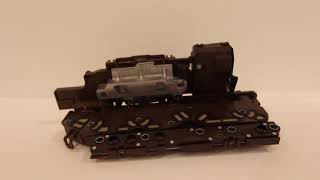
Est. part cost: $20-$100 - Faulty Transmission Control Module (TCM) 🟡 Medium Probability The TCM, often integrated with the valve body (TEHCM), is a complex electronic component that can fail from heat cycles and vibration. This can cause a total loss of communication.
How to confirm: If a professional scan tool cannot communicate with the TCM at all, and all power, ground, and communication network wires to the module test good for continuity and voltage, the TCM is likely faulty.
Typical fix: Replacement and programming of the Transmission Control Module. This is a job for a professional as it requires vehicle-specific programming.
Est. part cost: $400-$900 - Internal Transmission Fault (e.g., Solenoid, Sensor) 🟡 Medium Probability
How to confirm: A scan of the TCM will reveal specific codes (e.g., P0751 for a shift solenoid, P0721 for a speed sensor) that point to the internal component that has failed. These secondary codes are the root cause.
Typical fix: Replacing the specific failed component, which may require removing the transmission oil pan or valve body.
Est. part cost: $50-$300 - Low or Dirty Transmission Fluid ⚪ Low Probability
How to confirm: Check the transmission fluid level and condition according to the manufacturer's procedure. These transmissions do not have a traditional dipstick, so the check must be done via a fill plug when the vehicle is level and at a specific temperature. Fluid should be bright red and not smell burnt.
Typical fix: Topping off the fluid or performing a transmission fluid and filter change.
Est. part cost: $50-$250
Rare But Worth Checking
- Poor TCM Ground:
Diagnosis Steps
- Connect a professional scan tool capable of communicating with the Transmission Control Module (TCM). A basic code reader may only show P0700 from the ECM.
- Record all codes from the ECM and, most importantly, the TCM. The TCM codes (e.g., U-codes for communication, other P-codes for components) will guide the diagnosis.
- Check the transmission fluid level and condition. This requires raising the vehicle and opening a check/fill plug at a specific fluid temperature. The fluid should be clean, at the proper level, and not smell burnt.
- Following the guidance of TSB PIC4740E, carefully inspect the transmission's main X1 connector and associated wiring harness for any signs of damage, corrosion, chafing, or unseated pins. Pay close attention to where the harness is secured near the bell housing.
- If communication codes like U0073 or U0101 are present, test the CAN bus wiring between the ECM and TCM for proper resistance (should be around 60 ohms 🎬 See how to solve no communication and data issues. with the battery disconnected) and check for shorts to power or ground.
- Address any specific codes found in the TCM by following the manufacturer's diagnostic procedures for those codes (e.g., testing a specific shift solenoid's resistance).
- If no communication is possible with the TCM, test the power, ground, and data lines running to the module to rule out a wiring issue before condemning the TCM itself.
- If wiring is confirmed to be good and the TCM is unresponsive or has internal fault codes that cannot be resolved by replacing external parts, the TCM is the likely point of failure.
Parts You'll Likely Need
- Transmission Control Module (TCM)
(OEM #ACDelco 24275874 (for some 2010-2011 models, verify by VIN))— This module can fail electronically, causing a P0700 and often a loss of communication. It is a common point of failure after wiring issues have been ruled out. 🎬 Watch: A mechanic explains TEHCM and TCM replacement options.
Trusted brands: ACDelco, Dorman
OEM price range: $600-$900
Aftermarket price range: $400-$700 - Transmission Wiring Harness Connector — As identified in TSB PIC4740E, the connector itself can have poor pin fitment or corrosion, disrupting communication and triggering a P0700. A pigtail kit may be needed for repair.
Trusted brands: ACDelco, Dorman
OEM price range: $50-$120
Aftermarket price range: $20-$60 - Transmission Shift Solenoid — A common internal failure that the TCM will detect and report, leading to a P0700 code in the ECM. The specific solenoid at fault will be identified by another code in the TCM.
Trusted brands: ACDelco, Bosch
OEM price range: $60-$120
Aftermarket price range: $40-$80
Related Codes That Often Appear With This One
- U0073 — Indicates a Control Module Communication Bus 'A' Off, pointing to the network communication issues mentioned in TSB PIC4740E.
- U0100 — Means Lost Communication With ECM/PCM, which can be triggered by the same wiring faults at the transmission connector or a failing TCM.
- U0101 — Signifies Lost Communication with TCM. This is a primary indicator that the TCM is offline or has a wiring issue, directly leading to the P0700 being set by the ECM.
- P-codes specific to transmission components — Codes for shift solenoids (e.g., P0751, P0746), speed sensors (e.g., P0721), or pressure switches will be stored in the TCM and are the root cause that the TCM is reporting.
Technical Service Bulletins (TSBs) & Recalls
- PIC4740E: Notes that various communication DTCs, including P0700, U0073, U0100, and U0101 can be stored due to unseated pins in the transmission X1 connector or a chafed harness. Recommends inspecting these connections carefully.
Platform-Specific Known Issues
- TSB #PIC4740E documents a known issue where intermittent loss of communication with the TCM and other modules can be caused by unseated pins or harness chafing at the transmission X1 connector.
Mechanic-Grade Diagnostic Values
- High-Speed GMLAN Bus Resistance — expected: 60 Ω (Ohms) ± 5 Ω. Failure: A reading of 120 Ω indicates an open circuit to one of the two terminating resistors. A reading significantly less than 60 Ω suggests a short between the CAN high and low wires.
Hidden / Shadow Codes Worth Checking
- TCM-Specific P-codes (e.g., P07XX, P17XX, P18XX): These are the actual fault codes (e.g., for solenoids, sensors, pressure switches) that cause the TCM to request the P0700 code from the ECM. They are the true source of the problem. (see via A professional scan tool capable of communicating directly with the Transmission Control Module (TCM), such as a GM Tech2 or GDS2.)
- TCM-Specific U-codes (e.g., U0073, U0100, U0101): These codes indicate a loss of communication on the CAN bus network, either with the network as a whole (U0073) or with specific modules like the ECM (U0100) or TCM itself (U0101). (see via A professional scan tool capable of performing a full vehicle network scan.)
Scan Tool Commands That Help
- GDS2 / Tech2: Service Fast Learn Adapts — This procedure is required after replacing the TEHCM (TCM) or reprogramming it. It allows the module to learn the hydraulic and mechanical characteristics of the specific transmission for proper shift timing and pressure control.
- GDS2 / Tech2: Clear All DTCs — After programming a new module, it is critical to clear codes from all modules on the network, not just the ECM or TCM, to eliminate historical faults that could cause confusion in future diagnosis.
- GDS2 / Tech2: Solenoid Valve Control — This bidirectional command allows a technician to manually command individual shift or pressure control solenoids on and off to verify their electrical operation and listen for an audible click from the transmission, helping to isolate a faulty solenoid.
Wiring & Ground Locations

- X1 Connector — The main 16-pin electrical connector on the outside of the transmission case.. This is the primary interface between the vehicle's main harness and the internal TEHCM. TSB PIC4740E specifically calls out unseated pins and corrosion in this connector as a high-probability cause for P0700 and associated communication codes.
- Harness Securing Bracket — Located on the passenger side of the vehicle where the transmission bell housing attaches to the engine block.. TSB PIC4740F identifies this as a specific chafe point for the CTS, where the wiring harness can rub against the bracket, causing shorts in the communication or power wires leading to the transmission.
- G102 — On the right front of the engine compartment.. This is a primary engine compartment ground point. For the 2014 CTS, wiring diagrams show the Transmission Control Module relies on this ground. A loose or corroded connection here can cause intermittent power and communication issues.
- G131 — Located on the left rear of the engine.. This is another key engine ground point. Poor grounding at this location can affect multiple systems, including the ECM and its ability to communicate reliably with the TCM.
Real Owner Repair Stories
- LS1TECH Forums (2016 Cadillac CTS-V (Similar GM platform with 8-speed, but identical communication codes)) — Intermittent limp mode (stuck in one gear), multiple communication codes (U0073, U0100, U0101, P0700).
❌ Tried (didn't work) Initial diagnosis was difficult due to the intermittent nature of the fault.
✅ What actually fixed it The problem was traced to the main TCM harness connector. The user cleaned the female terminals and ensured the connector was securely latched, which permanently resolved the communication errors and limp mode. This strongly supports the diagnosis outlined in GM TSB PIC4740E. - Reddit r/Cadillac (2013 Cadillac XTS (Similar GM FWD/AWD platform and era)) — Sporadic limp mode (stuck in 4th gear), speedometer drops to zero, AC blows hot, multiple dash lights. Codes P0700 and U0100 were present.
❌ Tried (didn't work) Restarting the car would temporarily clear the issue, but the check engine light would remain for a few days.
✅ What actually fixed it The user was seeking a solution, but the cluster of symptoms (TCM, ECM communication loss, and instrument panel failure) is highly indicative of a network communication failure originating from a wiring harness issue or a failing TCM/TEHCM, as described in the common causes.
Model Year Variations Within This Range
- 2008-2014: The second-generation CTS uses a Transmission Electro-Hydraulic Control Module (TEHCM), where the TCM is integrated with the valve body and solenoids inside the transmission pan. This differs from the first-generation CTS (2003-2007) which used a separate, externally-mounted TCM in the engine bay. This means diagnosis may start similarly (checking wiring), but repair of a faulty module is more labor-intensive, requiring transmission fluid drainage and oil pan removal.
Helpful Videos

Used OEM Parts in Stock


New Aftermarket Parts Available



The information in this article is provided for general reference and educational purposes only. Vehicle specifications, procedures, and part compatibility can vary by production date, trim level, and region. Always consult your vehicle's factory service manual and verify part numbers before purchasing or performing repairs. Safety-critical components such as airbags, seat belts, and braking systems should be installed by a qualified professional.
- Cadillac CTS:
- 🎬 Helpful Videos
- 🛍️ Shop This Part
- What's Unique About the 2008-2014 Cadillac CTS
- Diagnostic Flowchart
- Symptoms You May Notice
- Most Likely Causes
- Rare But Worth Checking
- Diagnosis Steps
- Parts You'll Likely Need
- Related Codes That Often Appear With This One
- Technical Service Bulletins (TSBs) & Recalls
- Platform-Specific Known Issues
- Mechanic-Grade Diagnostic Values
- Hidden / Shadow Codes Worth Checking
- Scan Tool Commands That Help
- Wiring & Ground Locations
- Real Owner Repair Stories
- Model Year Variations Within This Range
- 🎟️ Get 5% Off