

P0651 on 2016-2019 GMC Acadia: Sensor Voltage 'B' Circuit Fault Causes and Fixes
On a 2016-2019 GMC Acadia, code P0651 is often a secondary code triggered by an oil pressure system fault that sets code P06DE. The most likely cause is a faulty oil pressure sensor or the oil pressure control solenoid, part of the vehicle's two-stage oil pump system. Diagnosis must start with the oil pressure system per GM TSB PIP5247A.
- P0651 on a 2016-2019 Acadia is very likely related to the engine oil pressure system.
- Always check for other codes. If P06DE is present, it is the primary fault to diagnose.
- The most common fix is replacing a faulty oil pressure sensor or solenoid, or repairing a damaged wire.
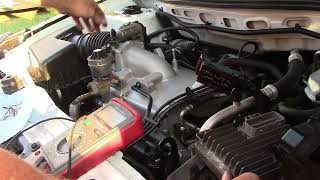
- Diagnosis involves using a multimeter to test the 5-volt circuit and isolating the faulty component by unplugging sensors one by one.
- Do not assume the ECM is bad; it is the least likely cause.
What's Unique About the 2016-2019 Gmc ACADIA
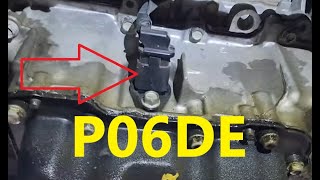
For the 2016-2019 GMC Acadia, particularly those with the 3.6L V6 engine, this code has a very specific and documented relationship with the engine's two-stage oiling system. A GM Technical Service Bulletin (TSB #PIP5247A) explicitly states that P0651 may appear alongside code P06DE (Engine Oil Pressure Control Circuit Stuck On). The bulletin directs technicians to diagnose the P06DE code first, 🎬 Watch: A guide to diagnosing and fixing P06DE codes. strongly suggesting the root cause of P0651 is often a fault within the oil pressure control system, not a random sensor failure. This system uses a solenoid to switch between high and low pressure modes for efficiency, and a failure in this system can pull down the 5V reference circuit.
Diagnostic Flowchart
Tap your situation to follow the diagnostic path that matches what you're seeing on this vehicle.
Generation note: The 2016-2019 range covers the end of the first generation (2016) and the beginning of the second generation (2017-2019). While they are different platforms, the TSB linking P0651 to oil pressure issues (P06DE) covers this entire year span, indicating a similar diagnostic path for both generations equipped with affected engines.
Symptoms You May Notice
- Check Engine Light is on
- Oil pressure warning light or "Low Oil Pressure, Stop Engine" message on the driver information center
- Engine may run rough or stall
- Reduced engine power (Limp Mode)
- Unstable idle
- Erratic oil pressure gauge readings (jumping, or pegged high/low)
- Engine knocking or noisy timing chain if actual oil pressure is low
- Replacing sensors not on the 'B' reference circuit.
- Replacing the ECM before thoroughly testing the wiring and all connected sensors.
- Ignoring the P06DE code and focusing only on P0651, leading to incorrect diagnosis of a general electrical fault instead of the specific oil pressure system issue.
Most Likely Causes
- Faulty Oil Pressure Sensor or Solenoid 🔴 High Probability As per TSB PIP5247A, this code is frequently set with P06DE, which relates to the oil pressure control circuit. The sensor itself can fail, short internally, or get clogged, pulling down the 5-volt reference for the entire 'B' circuit. The oil pressure control solenoid, which manages the two-stage pump, can also fail.
How to confirm: Follow diagnostic procedures for code P06DE first. If the oil pressure sensor is on the 'B' circuit, unplug it and check if the 5-volt reference returns to normal on other sensors on the same circuit. A mechanic can also test actual oil pressure with a mechanical gauge to rule out a bad pump.
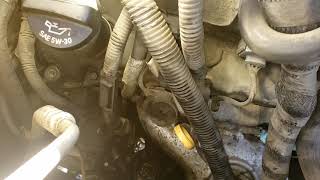
Typical fix: Replace the faulty oil pressure sensor 🎬 Watch: See how to replace the oil pressure sensor yourself. and the small filter screen beneath it. If diagnostics point to the solenoid, it will need to be replaced, which may require removing the oil pan.
Est. part cost: $40-$120 - Damaged Wiring Harness 🟡 Medium Probability Wires can chafe against the engine, transmission, or other components, causing a short or open circuit. One common failure point found in a similar GM vehicle was a harness crushed between the engine and transmission after a repair, shorting the 5V reference wire.
How to confirm: Visually inspect the wiring harness leading to all sensors on the 'B' reference circuit, especially around the oil pressure sensor, A/C compressor, and accelerator pedal. Perform a continuity test with a multimeter on the 5-volt reference wire from the ECM to the sensor connectors.
Typical fix: Repair the damaged section of the wire and protect the harness from future damage using looms or re-routing.
Est. part cost: $5-$50 - Faulty Sensor on the 'B' Circuit (Non-Oil Related) ⚪ Low Probability Any sensor on the circuit can fail. On GM vehicles, this circuit may include the A/C pressure sensor or the accelerator pedal position (APP) sensor. A faulty APP sensor can also cause reduced power mode.
How to confirm: With the key on, unplug sensors on the 'B' circuit one by one. Use a multimeter to check the 5-volt reference at another sensor on the same circuit. If the voltage returns to 5V after unplugging a specific sensor, that sensor is the one causing the short.
Typical fix: Replace the identified faulty sensor, such as the accelerator pedal assembly.
Est. part cost: $50-$150
Rare But Worth Checking
- Damaged Piston Oil Nozzles/Squirters: TSB PIP5247A notes that if diagnostics for P06DE lead to oil pan removal, the piston oil nozzles should be inspected. Debris from broken nozzles can be found in the oil pan, indicating a more serious internal engine issue that is causing the oil pressure fault.
- Faulty Engine Control Module (ECM): This is a very rare cause and should only be considered after all other possibilities (sensors, wiring) have been exhaustively ruled out. An ECM failure is uncommon.
Diagnosis Steps
- Connect an OBD-II scanner and check for all stored trouble codes. Pay close attention if P06DE or P0521 are present with P0651.
- If P06DE is present, follow the manufacturer's diagnostic procedure for P06DE first, as recommended by TSB PIP5247A. This will likely lead you to inspect the oil pressure control solenoid and its wiring.
- If P0651 is the only code, identify the sensors on the 5-volt reference 'B' circuit. This typically includes the oil pressure sensor, A/C pressure sensor, and sometimes the accelerator pedal sensor.
- Locate the oil pressure sensor on the front of the engine, near the oil filter housing. Using a multimeter, check for 5 volts at the reference wire on its connector.
- If the voltage is low or zero, the circuit is being pulled down. Disconnect the sensors on the 'B' circuit one at a time. After unplugging each sensor, re-check the 5-volt reference at one of the other sensor connectors on the same circuit.
- If the 5 volts return after unplugging a specific sensor, that sensor is faulty and needs replacement.
- If the voltage does not return after unplugging all sensors, the problem is likely in the wiring harness (a short to ground) or, rarely, the ECM itself.
- Inspect the wiring harness for any signs of physical damage, chafing, or corrosion, paying special attention to areas where it might rub against the engine or transmission. A known issue on a similar vehicle involved a harness crushed between the engine and transmission.
- If TSB diagnostics for P06DE lead to low oil pressure confirmation, the oil pan may need to be removed to inspect the oil pump pickup tube and for debris from broken piston oil squirters.
- If no wiring faults are found, the final step is to test the ECM, which is best left to a professional.
Parts You'll Likely Need
- Engine Oil Pressure Sensor / Switch
(OEM #12673134 (replaces 12621234, 12596951))— This is the most likely culprit when P0651 is accompanied by P06DE, as indicated by GM's own service bulletin. It's a common failure item.
Trusted brands: ACDelco (GM Genuine), Delphi, Standard Motor Products
OEM price range: $60-$90
Aftermarket price range: $40-$70 - Engine Oil Pressure Control Solenoid
(OEM #12677698 (check VIN for exact fitment))— The P06DE code points to a fault in the oil pressure control circuit, and this solenoid is the primary actuator for the two-stage oil pump. It may require removing the oil pan to access.
Trusted brands: ACDelco (GM Genuine), Dorman
OEM price range: $80-$150
Aftermarket price range: $50-$100
Related Codes That Often Appear With This One
- P06DE — This code for 'Engine Oil Pressure Control Circuit Stuck On' is directly linked to P0651 by GM TSB #PIP5247A. A fault in the oil pressure control system is a primary cause for P0651 on this vehicle.
- P0521 — This code for 'Engine Oil Pressure Sensor Performance' is also mentioned in related TSBs and forum discussions for P06DE issues, indicating the entire oil pressure monitoring system is involved.
Technical Service Bulletins (TSBs) & Recalls
- PIP5247A: Notes that P0651 may set along with P06DE and diagnostics for P06DE should be followed first. Also warns to inspect for broken piston oil nozzles if the oil pan is removed.
Platform-Specific Known Issues
- A known issue documented in TSB #PIP5247A involves code P0651 setting along with P06DE. The recommended procedure is to diagnose P06DE first, which points to a fault in the two-stage oil pressure control system.
- Ignoring the P06DE code can lead to further engine damage. The TSB mentions that low oil pressure can cause piston oil nozzles (squirters) to break, with pieces falling into the oil pan.
Mechanic-Grade Diagnostic Values
- 5-Volt Reference Circuit Voltage at Sensor Connector — expected: 4.8V to 5.2V with key on, engine off.. Failure: Voltage near 0V indicates a short to ground. Voltage significantly higher than 5.2V could indicate a short to power or an internal ECM fault.
- Oil Pressure Control Solenoid Valve Resistance — expected: 10 to 30 Ω. Failure: A reading outside this range indicates a faulty solenoid.
- Accelerator Pedal Position (APP) Sensor 1 Voltage (Idle) — expected: ~2.8 V. Failure: Voltage that doesn't change smoothly when the pedal is pressed, or is stuck high/low.
- Accelerator Pedal Position (APP) Sensor 1 Voltage (Wide Open Throttle) — expected: ~2.3 V (Voltage decreases on this sensor). Failure: Voltage does not decrease consistently to this level, or has spikes/drops.
- Accelerator Pedal Position (APP) Sensor 2 Voltage (Idle) — expected: ~2.1 V. Failure: Voltage that doesn't change smoothly when the pedal is pressed, or is stuck high/low.
- Accelerator Pedal Position (APP) Sensor 2 Voltage (Wide Open Throttle) — expected: ~0.6 V (Voltage decreases on this sensor). Failure: Voltage does not decrease consistently to this level, or has spikes/drops.
Scan Tool Commands That Help
- GDS2 (GM Techline Connect): Engine Oil Pressure Control Solenoid Valve Test — When diagnosing code P06DE alongside P0651, this bidirectional control allows a technician to command the solenoid on and off to verify its mechanical and electrical operation without removing it from the engine. This helps isolate the fault between the solenoid, wiring, or the ECM.
Wiring & Ground Locations
- 5V Reference 1 Circuit — On some GM platforms, this circuit (which can trigger P0641) often includes the Engine Oil Pressure Sensor, Fuel Rail Pressure Sensor, and A/C Refrigerant Pressure Sensor. The wire is typically Gray.. Although P0651 is for circuit 'B', knowing the layout of circuit 'A' (P0641) helps differentiate and isolate the problem. The oil pressure sensor is a key component linked by the TSB.
- 5V Reference 2 Circuit — On some GM platforms, this circuit (related to P0651) often includes Accelerator Pedal Position (APP) Sensor 2 and the MAP sensor.. This identifies other potential sensors on the 'B' circuit that could be shorted and causing the code, if the oil pressure system checks out.
- G103 / G104 / G105 — These are primary engine and chassis ground points. On similar GM trucks, G103 is on the passenger side cylinder head, G104/G105 are on the front of the engine block. For the Acadia specifically, a key ground is on the passenger fender well beneath the airbox.. A poor engine ground can cause floating voltages and erratic sensor readings, mimicking a sensor or ECM failure. Verifying these grounds are clean and tight is a critical step in any electrical diagnosis.
- ECM Connector J2, Pin 40 — This pin on the Engine Control Module connector is designated as '5V REFERENCE - ENGINE OIL PRESSURE' on some GM wiring diagrams. The wire color is typically Gray.. This is a specific pin to test for the 5-volt signal directly at the ECM, helping to determine if the fault is in the ECM itself or downstream in the wiring or a sensor.
Real Owner Repair Stories
- YouTube channel 'Diesel Dan' (2007 Chevy Equinox (Similar GM platform with P0651)) — Code P0651 - Sensor Reference Signal B Open.
❌ Tried (didn't work) Initial scanning and inspection of individual sensors.
✅ What actually fixed it The wiring harness was found to be crushed and pinched between the engine and the transmission, likely from a previous transmission replacement. The gray 5V reference wire within the harness was shorted. Repairing the damaged wires in the harness resolved the P0651 code. - YouTube channel 'Just a Dude' (2009 GMC Acadia, 120,000 miles) — Intermittent 'low oil pressure' warning on the dashboard.
✅ What actually fixed it Replaced the engine oil pressure sensor (ACDelco brand). The video details the tools needed, including an inch-and-a-sixteenth deep well socket and a wobble extension, to access the sensor located next to the oil filter housing.
Model Year Variations Within This Range
- 2016 vs 2017-2019: The 2016 model year is the last of the first-generation Acadia, while 2017 marked the start of the smaller second-generation platform. While they share the 3.6L V6 engine option, wiring harness routing, ground locations, and ECM location may differ. However, TSB PIP5247A covers this entire span, indicating the oil pressure system fault (P06DE) and its link to P0651 is common to the engine across both generations.
Helpful Videos

We Have This Part in Stock



The information in this article is provided for general reference and educational purposes only. Vehicle specifications, procedures, and part compatibility can vary by production date, trim level, and region. Always consult your vehicle's factory service manual and verify part numbers before purchasing or performing repairs. Safety-critical components such as airbags, seat belts, and braking systems should be installed by a qualified professional.
- Gmc ACADIA:
- 🎬 Helpful Videos
- 🛍️ Shop This Part
- What's Unique About the 2016-2019 Gmc ACADIA
- Diagnostic Flowchart
- Symptoms You May Notice
- Most Likely Causes
- Rare But Worth Checking
- Diagnosis Steps
- Parts You'll Likely Need
- Related Codes That Often Appear With This One
- Technical Service Bulletins (TSBs) & Recalls
- Platform-Specific Known Issues
- Mechanic-Grade Diagnostic Values
- Scan Tool Commands That Help
- Wiring & Ground Locations
- Real Owner Repair Stories
- Model Year Variations Within This Range
- 🎟️ Get 5% Off