

P0626 on 2011-2015 Kia Sorento: Generator Field Circuit High Causes and Fixes
P0626 on a 2011-2015 Kia Sorento most often indicates a faulty alternator with a failed internal voltage regulator. Replacing the alternator assembly is the most common fix. A visual inspection of the alternator's wiring connector for damage is a critical first step. Expect to pay between $250 and $600 for a quality replacement part.
- P0626 on your Sorento means there's a problem with the alternator's control circuit, and the alternator itself is the most likely cause.
- Symptoms to watch for are a battery light, flickering or dimming lights, and stalling.
- Before replacing parts, always test the battery and charging system voltage with a multimeter to confirm if the system is overcharging or undercharging.
- Carefully inspect the wiring and connector at the alternator for damage, as this is a common and less expensive fix.
- Consider using a genuine Kia (OEM) or a high-quality remanufactured alternator, as some aftermarket parts may not work correctly with the Sorento's electrical system.
What's Unique About the 2011-2015 Kia Sorento
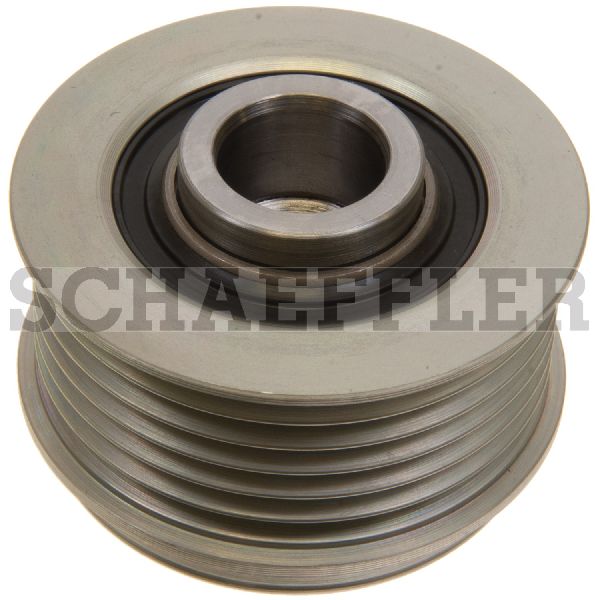
The 2011-2015 Sorento uses a modern, PCM-controlled charging system. While the P0626 code is generic, owner experiences suggest these vehicles can be sensitive to the quality of the replacement alternator. Some owners have reported that using non-OEM or lower-quality aftermarket alternators did not resolve their charging system issues, indicating that using a genuine Kia or high-quality remanufactured part is often crucial for a successful repair. Furthermore, some 2013 models with the 2.4L GDI engine were subject to a TSB (ENG 126) to replace the alternator pulley to address idle instability, showing OEM sensitivity in the charging system.
Symptoms You May Notice
- Battery or charging system warning light illuminated on the dashboard.
- Headlights and interior lights are dim, flickering, or excessively bright.
- Engine stalling unexpectedly, especially while idling.
- Slow engine cranking or a no-start condition due to a dead battery.
- A burning smell from the battery area or visible signs of battery acid leakage, which indicates an overcharge condition.
- Electrical accessories (radio, A/C, etc.) behaving erratically.
- Whining or grinding noise from the alternator indicating bearing failure.
- Replacing the battery without testing the alternator. A new battery will quickly be drained or damaged by a faulty charging system.
- Replacing the alternator without first carefully inspecting the wiring connector. A simple broken wire at the connector is a known issue and a much cheaper fix.
- Addressing other symptoms like stalling or drivability issues without first diagnosing the charging system fault code. A lack of stable electrical power can cause many secondary problems.
Most Likely Causes
- Faulty Alternator 🔴 High Probability The internal voltage regulator, which is part of the alternator assembly, is the most common failure point that triggers a P0626 code. Over time, the electronic components within the regulator can fail, causing it to send an incorrect 'high' voltage signal back to the PCM or to dangerously overcharge the battery.
How to confirm: Perform a charging system test. With the engine running, use a multimeter to check the voltage at the battery terminals. A reading significantly above 14.8 volts indicates overcharging, while a reading below 13.2 volts indicates undercharging. Most auto parts stores can also perform a bench test on the alternator if you remove it.
Typical fix: Replace the entire alternator assembly. It is recommended to use an OEM or a high-quality remanufactured unit from brands like Denso or Valeo.
Est. part cost: $250-$600 - Damaged Wiring or Connectors 🟡 Medium Probability The wiring harness leading to the alternator is exposed to heat and vibration in the engine bay. Wires can become frayed, corroded, or broken, particularly right at the alternator connector, causing a short or open in the field circuit.
How to confirm: Visually inspect the wiring harness and the electrical connector at the back of the alternator. Look for any signs of broken wires (one wire is often broken right at the plug), melted plastic, or green/white corrosion on the pins. Check for continuity on the field control wire between the alternator and the PCM.
Typical fix: Repair the damaged section of wire or replace the alternator connector pigtail. In many cases, simply re-soldering a broken wire at the connector and protecting it with heat shrink will solve the problem. Clean any corrosion from the connector pins and apply dielectric grease before reconnecting.
Est. part cost: $15-$50 - Failing Vehicle Battery ⚪ Low Probability An old or weak battery with an internal short can place extreme demand on the alternator. More relevant to P0626, a battery damaged by a previous overcharging event (from a failing alternator) can hold residual issues that may confuse the charging system even after the alternator is replaced.
How to confirm: Have the battery professionally load-tested. A simple voltage check is not sufficient. If the alternator failed by overcharging and caused the battery to leak acid, the battery should be considered suspect and replaced.
Typical fix: Replace the vehicle battery.
Est. part cost: $150-$250
Rare But Worth Checking
- Faulty Powertrain Control Module (PCM): This is very rare. The PCM's internal driver for the alternator circuit can fail, but all other possibilities, especially the alternator and wiring, should be exhaustively ruled out before considering PCM replacement.
Diagnosis Steps
- Scan the vehicle's computer for P0626 and any other related trouble codes.
- With the engine off, check the battery voltage with a multimeter. A healthy battery should read approximately 12.6 volts.
- Start the engine. Measure the voltage at the battery terminals again. It should be between 13.5 and 14.5 volts. A reading that is too high (over 14.8V) or too low (under 13.2V) points to a charging system problem.
- Turn the engine off and disconnect the battery. Thoroughly inspect the wiring and the electrical connector going to the alternator. Pay close attention to the individual wires entering the back of the plastic connector, as they are known to break internally or fray.
- If the wiring appears to be in good condition, the alternator is the most likely culprit.
- Confirm the diagnosis by having the alternator tested. This can be done on the vehicle at some shops or by removing it and taking it to an auto parts store for a bench test.
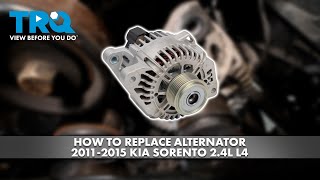
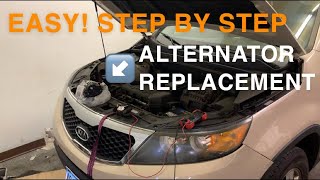
- If an overcharge event occurred (voltage >15V, leaking battery), it is wise to replace the battery along with the alternator, 🎬 See how to replace both a dead alternator and battery. as it has likely been damaged.
- If the alternator and wiring are confirmed to be good, the final, though rare, possibility is a fault in the PCM.
Parts You'll Likely Need
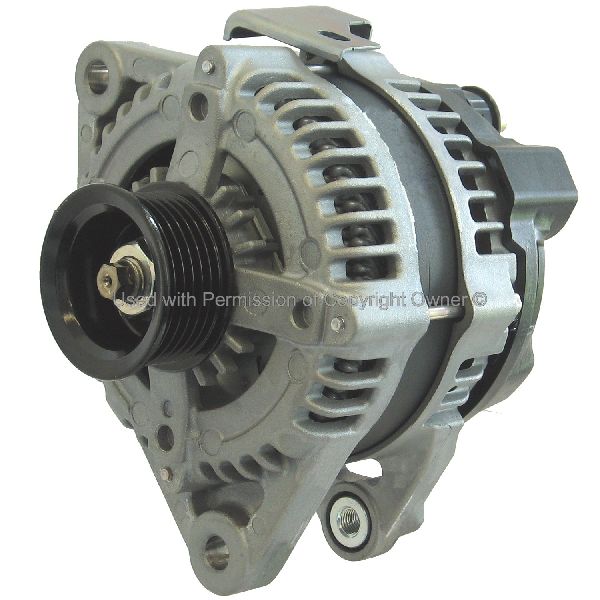
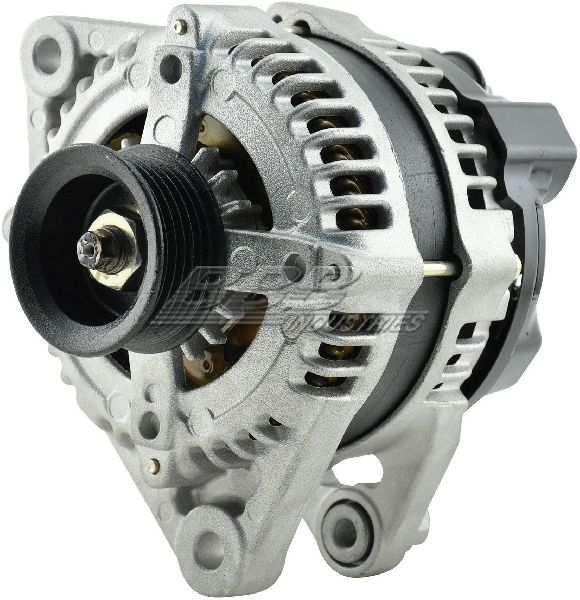
- Alternator
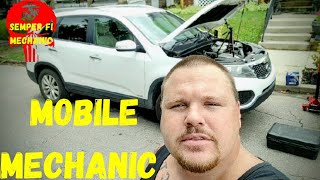
(OEM #For 2.4L Engine: 37300-2G500 (or remanufactured 37300-2G500RU). For 3.5L/3.3L V6 Engine: 37300-3C510.)— This is the most common cause of a P0626 code, as the internal voltage regulator fails. Part numbers differ between the 4-cylinder and V6 engines. 🎬 Watch: Professional mechanic replaces an alternator on the 3.5L V6.
Trusted brands: Kia (Genuine OEM), Mando (OEM supplier), Denso, Valeo
OEM price range: $400-$600
Aftermarket price range: $250-$450
Related Codes That Often Appear With This One
- P0625 — This code means 'Generator Field / F Terminal Circuit Low'. It's the opposite of P0626 and points to a similar set of faults within the same alternator control circuit.
- P0562 — This code means 'System Voltage Low'. It often appears with P0626 when the alternator is failing to charge the battery, causing the overall system voltage to drop.
Technical Service Bulletins (TSBs) & Recalls
- TSB ENG 126: For some 2013 Sorento models with the 2.4L GDI engine, Kia issued this bulletin to address idle instability by replacing the standard alternator pulley with an Overrunning Alternator Pulley (OAP) and performing an ECU update. While not directly for P0626, it highlights the sensitivity of the charging and engine management systems.
Platform-Specific Known Issues
- Overcharge Leading to Battery Damage: There are owner reports on forums like Reddit of alternator failure on the 2011 Sorento V6 leading to a severe overcharge condition, causing the battery to overheat and leak acid. In some cases, replacing the alternator alone was not enough, and the code returned until the damaged battery was also replaced.
- Aftermarket Alternator Incompatibility: Forum discussions indicate that some aftermarket alternators may not be fully compatible with the Sorento's PCM-controlled charging system, leading to persistent problems. Using a genuine OEM or a high-quality remanufactured alternator from a known OEM supplier like Mando or Denso is often recommended for this repair.
- Broken Wire at Alternator Connector: A known failure point is a single wire breaking right at the alternator's electrical connector plug due to engine vibration and heat stress. This can trigger a P0626 code and is often misdiagnosed as a failed alternator. A careful inspection of this connector is crucial before replacing expensive parts.
Mechanic-Grade Diagnostic Values
- Battery Voltage (Engine Off) — expected: ~12.0 - 12.8 Volts. Failure: Below 12.0V indicates a discharged or faulty battery.
- Charging System Voltage (Engine Running at Idle) — expected: 13.5 - 14.8 Volts. Failure: A voltage above 14.8V indicates an overcharge condition. A voltage below 13.5V indicates an undercharge condition.
- Alternator F-Terminal Voltage (Commanded Off) — expected: Near 0 Volts. Failure: Significantly higher voltage suggests a short to power in the control circuit.
- Alternator F-Terminal Voltage (Commanded On) — expected: Varies, cycling up toward battery voltage depending on PCM command (duty cycle).. Failure: Voltage that is stuck high or does not respond to engine load changes points to a wiring or alternator regulator fault.
- Engine Block to Chassis Ground Resistance — expected: Near 0 Ohms (e.g., 0.004 Ω). Failure: Any significant resistance (more than 0.1 Ω) indicates a poor ground connection which can cause charging system issues.
Scan Tool Commands That Help
- Kia GDS (Global Diagnostic System): Actuator Test / Functional Test for Alternator Field Control — After verifying wiring integrity, a technician can use the GDS to command the alternator's field circuit to a specific duty cycle (e.g., 25%, 50%, 75%). This isolates the fault by confirming if the PCM can control the circuit and if the alternator responds correctly. If the alternator output doesn't change with the command, the alternator is likely faulty. If the command cannot be sent, the PCM or wiring is suspect.
Wiring & Ground Locations
- Alternator Ground — The alternator grounds itself directly to the engine block through its metal mounting bracket. There is no separate ground wire for the alternator housing.. A corroded or loose mounting bracket or bolts can create a poor ground, leading to erratic alternator behavior and various charging system codes. The connection between the bracket and the engine block must be clean and tight.
- Main Engine Ground Strap — Typically runs from the rear of the engine block or cylinder head to a grounding point on the vehicle's firewall or frame rail in the engine bay.. This is the primary ground path for the entire engine, including the alternator. If this strap is corroded, loose, or broken, the alternator cannot effectively charge the battery, leading to a host of electrical problems including P0626.
- Alternator Electrical Connector — A multi-pin plastic connector on the back of the alternator assembly. It contains the pin for the F-Terminal (field control circuit).. This is a known weak point. The wires, especially the field control wire, can break right at the back of the connector due to engine vibration and heat, causing an open or intermittent high-resistance condition that directly triggers P0626.
- Main Interior Grounding Point — There is often a primary grounding bolt with multiple wires attached located near the interior fuse panel, behind the driver's side kick panel.. While less likely to cause P0626 directly, a loose ground here can cause erratic behavior in the PCM or instrument cluster, potentially leading to false codes or confusing symptoms.
Real Owner Repair Stories
- YouTube - 'Kia P0626 Generator field F terminal circuit high, easy solution.' (Kia Cerato (similar PCM-controlled charging system)) — Battery light on, P0626 code stored.
❌ Tried (didn't work) The video directly identifies the problem without showing failed attempts, but implies that one might otherwise replace the alternator.
✅ What actually fixed it The mechanic found a broken wire right at the alternator's electrical connector. Repairing the broken wire and re-securing the connection resolved the fault code and the battery light.
OEM Part Supersession History
37300-2G500→37300-2G600, and remanufactured part 37300-2G500RU— Standard part evolution and availability of remanufactured units.
Heads up: These part numbers apply to the 2.4L Theta 2 engine. They are not compatible with the V6 engines. Always verify the part number with the vehicle's VIN.
Model Year Variations Within This Range
- 2014-2015: For the 2014 model year, the Sorento's optional V6 engine was updated from the 3.5L Lambda II MPI to the 3.3L Lambda GDI. This change requires a different alternator and associated part numbers compared to the 2011-2013 V6 models.
Diagnostic Flowchart
Other Known Issues on This Vehicle
Issues unrelated to this code that are worth knowing about as an owner of this generation:
- Catastrophic Theta II Engine Failure 🔴 High — Widespread on 2.4L GDI and 2.0L Turbo engines, often occurring before 100,000 miles. Caused by manufacturing debris blocking oil passages, leading to connecting rod bearing failure and engine seizure. (Ref: Multiple recalls (e.g., SC147) and a large class-action settlement provide lifetime warranties and engine replacements for affected vehicles.)
- Transmission Problems (Shift Shock & Failure) 🟠 Medium — Common issues include harsh shifting, jerking, and torque converter failures. Some owners report limp mode activation or complete failure. (Ref: Recall SC124 was issued for a faulty brake-shift interlock mechanism on 2011-2013 models, which could allow the vehicle to roll away.)
- Peeling 'Snow White Pearl' Paint 🟡 Low — Affects 2013-2016 models with this specific paint code. The paint can bubble and peel in large sheets, exposing the primer and bare metal.
- Engine Stalling / Loss of Power 🔴 High — Numerous complaints filed with the NHTSA for sudden engine stalling at highway speeds, sometimes related to the HECU fire risk or other engine defects. (Ref: Recall 23V877000 addresses a fire risk from the HECU short-circuiting, but many stalling complaints exist outside this recall.)
- AC Compressor Clutch Failure 🟠 Medium — The clutch on the AC compressor is a common failure point for this generation, resulting in a non-functional AC system even when refrigerant levels are correct. The typical fix is to replace the entire compressor assembly.
Used vs. New Parts: Buying Guide for This Vehicle
When a used part is the smart pick: A used OEM alternator from a reputable salvage yard can be a smart choice, especially if the donor vehicle has low mileage. This approach can be more cost-effective than a new OEM part while avoiding the potential electronic incompatibility issues reported with some new, non-OEM aftermarket brands.
Donor-vehicle mileage cap: roughly under 75000 miles for the part to have meaningful remaining life.
What to inspect on the donor part:
- Verify it is a genuine OEM part (look for Kia/Hyundai logos or markings from OEM suppliers like Valeo or Mando).
- Spin the pulley by hand; it should be smooth with no grinding or excessive noise.
- Inspect the electrical connector pins for any signs of corrosion, melting, or damage.
- Check the alternator housing for any cracks or signs of extreme heat damage.
OEM-only on this vehicle (don't cheap out):
- Alternator/Voltage Regulator: Due to the PCM-controlled nature of the charging system, using a genuine OEM or a high-quality remanufactured unit from an OEM supplier (Mando, Valeo, Denso) is strongly recommended to prevent compatibility issues that can cause the P0626 code to persist.
Aftermarket brands forum-validated for this vehicle:
- Denso
- Valeo
- Mando (often the original OEM supplier)
Brands owners have reported issues with on this vehicle:
- Unbranded or 'white-box' alternators from online marketplaces have a higher risk of being incompatible with the Sorento's sensitive charging system, according to owner forums.
Real Owner Stories
Aggregated from forums and TSBs cited above. Mileages and costs reflect what owners reported in those sources.
2011 Kia Sorento V6
Symptoms: The alternator failed, which caused a severe overcharge condition that ruined the vehicle's battery.
What fixed it: The P0626 code persisted after replacing only the alternator. The problem was fully resolved by replacing the alternator and the battery that had been damaged by the overcharging.
Source hint: r/AskAMechanic (Reddit): A thread from a 2011 Sorento V6 owner titled 'Alternator went bad and overcharged the battery'
2011-2015 Kia Sorento
Symptoms: The vehicle set a P0626 code, indicating a fault in the generator field circuit.
What fixed it: The problem was traced to a single broken wire right at the alternator's electrical connector. Repairing this wire resolved the code without needing to replace the alternator.
Source hint: YouTube - 'Kia P0626 Generator field F terminal circuit high, easy solution.'
Related OBD-II Codes
Frequently Asked Questions
My mechanic says I need a new alternator for my Sorento, but I've heard aftermarket ones can cause issues. Is this true?
I have a P0626 code and my battery is leaking acid. Is it enough to just replace the alternator?
Before I replace the alternator for P0626, is there anything specific I should check on my 2011-2015 Sorento?
Does TSB ENG 126 for the 2.4L engine address the P0626 code?
My Sorento has the 2.4L engine with the Theta II recall. Could my P0626 charging issue be related to that?
Could a bad battery be the only cause for a P0626 code on my Sorento?
Is this P0626 problem common on other vehicles besides the Sorento?
Helpful Videos
Used OEM Parts in Stock


New Aftermarket Parts Available


The information in this article is provided for general reference and educational purposes only. Vehicle specifications, procedures, and part compatibility can vary by production date, trim level, and region. Always consult your vehicle's factory service manual and verify part numbers before purchasing or performing repairs. Safety-critical components such as airbags, seat belts, and braking systems should be installed by a qualified professional.
- Kia Sorento:
- 🎬 Helpful Videos
- 🛍️ Shop This Part
- What's Unique About the 2011-2015 Kia Sorento
- Symptoms You May Notice
- Most Likely Causes
- Rare But Worth Checking
- Diagnosis Steps
- Parts You'll Likely Need
- Related Codes That Often Appear With This One
- Technical Service Bulletins (TSBs) & Recalls
- Platform-Specific Known Issues
- Mechanic-Grade Diagnostic Values
- Scan Tool Commands That Help
- Wiring & Ground Locations
- Real Owner Repair Stories
- OEM Part Supersession History
- Model Year Variations Within This Range
- Diagnostic Flowchart
- Other Known Issues on This Vehicle
- Used vs. New Parts: Buying Guide for This Vehicle
- Real Owner Stories
- 2011 Kia Sorento V6
- 2011-2015 Kia Sorento
- Related OBD-II Codes
- Frequently Asked Questions
- 🎟️ Get 5% Off