

P0606 on 2003-2011 Saab 9-3: Trionic 8 ECM Processor Fault Causes and Fixes
P0606 on a Saab 9-3 almost always indicates a failure of the Engine Control Module (ECM), known as Trionic 8. While external wiring, ground issues, or software glitches can be a cause, the most common fix is replacing or repairing the ECM, which requires special programming. The ECM's location on the engine makes it prone to heat and vibration damage. Expect costs to range from $400 for a used, reprogrammed unit to over $1,000 for a new one from a specialist.
- P0606 on a Saab 9-3 is a critical fault code that almost always points to the Engine Control Module (ECM).
- Before replacing the expensive ECM, always check the simple things first: battery health, charging system output, and all power/ground connections to the ECM.
- If your Saab is an early model (2003-2004), be aware that a software glitch could be the cause, not a hardware failure.
- ECM replacement is NOT a DIY job for most people. The new unit must be professionally programmed to your car's VIN and security system.
What's Unique About the 2003-2011 Saab 9-3
The Saab 9-3 with the B207 engine uses a sophisticated, Saab-specific engine management system called Trionic 8 (T8). While the P0606 code is a generic SAE definition for a processor fault, its occurrence on this platform is often linked directly to the T8 ECM itself, which is known to be susceptible to failure. The ECM is mounted directly on the engine, where it is exposed to significant heat and vibration, which can degrade internal electronic components and solder joints over time. Early models also had software issues that could falsely trigger this code, making diagnosis slightly more complex than on other vehicles.
🎬 Watch: A professional guide to diagnosing ECM processor errors.Generation note: This guide covers the second-generation Saab 9-3 (YS3F). While the Trionic 8 ECM was used throughout this period, early models (approx. 2003-2004) were subject to a software glitch that could erroneously generate a P0606 code, particularly on cars with automatic transmissions. A technical advisory was issued to prevent unnecessary ECM replacements for this software issue. The B207 engine itself is a GM Ecotec-family engine (also known as GM LK9 or Opel Z20NET) but with significant Saab-specific engineering and the unique Trionic management system.
Symptoms You May Notice
- Check Engine Light is on
- Vehicle enters 'Limp Home' mode with severely reduced power
- Engine stalls, runs rough, or idles erratically
- Engine will not start or is difficult to start
- Erratic shifting or other transmission performance issues
- Multiple other seemingly unrelated fault codes may appear simultaneously
- Tachometer needle may drop to zero or behave erratically while driving
- Noticeable loss of turbo boost pressure
- Replacing fuel system or ignition system components. Symptoms like rough running or stalling can mimic a bad fuel pump or spark plugs, but P0606 points directly to the control unit.
- Replacing the throttle body. P0638 often accompanies P0606, but the throttle body is usually not the root cause; it's a symptom of the ECM being unable to control it.
Most Likely Causes
- Internal ECM Failure 🔴 High Probability The Trionic 8 ECM is mounted on the engine, exposing it to constant heat cycles and vibration. This can cause internal solder balls on the main processor to crack or fail, leading to an internal fault. This is the most common root cause for a persistent P0606.
How to confirm: After ruling out all external factors (power, ground, wiring, and software), the ECM is condemned. This is a process of elimination. Specialists can also perform bench tests or, in some cases, identify a failed processor by observing which components get hot on the circuit board.
Typical fix: The ECM must be replaced with a new or refurbished unit and programmed to the vehicle, or the original unit can be sent to a specialist for repair and cloning.
Est. part cost: $400-$1200 - Poor Power or Ground Connection to ECM 🟡 Medium Probability Ground straps can corrode or become loose. A critical ground wire for the ECM is secured by one of the ECM's own mounting screws (Grounding Point G7). If this is forgotten during a repair (like a vacuum pump gasket replacement), it will immediately trigger a P0606 and limp mode. Corrosion on main chassis grounds can also cause unstable voltage.
How to confirm: Visually inspect and test the main power and ground wires connected to the ECM. Use a multimeter to check for voltage drops between the battery and the ECM connector. Specifically check the ground connection G7 under the ECM's top right-hand attachment lug.
Typical fix: Clean the contact points of the ground straps and power wires with a wire brush, tighten all connections, and apply dielectric grease. Replace corroded wires/terminals if necessary.
Est. part cost: $5-$50 - Low Battery Voltage or Failing Alternator ⚪ Low Probability Like any modern computer, the Trionic 8 ECM is sensitive to voltage irregularities. A weak battery or failing alternator can provide 'dirty' or insufficient power, especially during cranking, causing the processor to glitch and report an internal fault.
How to confirm: Test the battery voltage with the engine off (should be ~12.6V). A reading below 12.4V may indicate a weak battery. Then, test the charging system with the engine running (should be ~13.5-14.5V). Any significant deviation warrants further testing of the battery and alternator.
Typical fix: Replace the battery and/or alternator.
Est. part cost: $150-$500
Rare But Worth Checking
- Software Glitch (Early Models): A technical advisory from December 2003 (later updated to TSB 248-2336) noted that early production 9-3s with automatic transmissions could falsely generate a P0606 due to a software issue. The fix was a software update, not a hardware replacement. If the code appears intermittently, it's worth clearing it and performing two 5-minute drive cycles to see if it returns before condemning the hardware.
- Short Circuit in an External Component: In one instance, a melted wire on a faulty aftermarket thermostat caused a fuse to blow. This fuse powered several components, and the resulting electrical chaos triggered a P0606 code. The ECM was not faulty. This highlights the need to check all related fuses and look for other fault codes that might point to an external short. A shorted sensor sharing the 5V reference circuit can also cause a P0606.
- Improper ECM Cloning/Programming: If the code appears immediately after attempting to clone or program a replacement ECM, the process may have failed or created a checksum error, which can trigger P0606. This is a known issue among tuners and repair shops, sometimes caused by a high number of dropped frames during the flashing process with a faulty original ECU.
Diagnosis Steps
- Check for Technical Service Bulletins (TSBs): Especially for 2003-2004 models with automatic transmissions, check if the software update related to false P0606 detection (TSB 248-2336) was ever performed.
- Verify Battery and Charging System Health: Use a multimeter to confirm the battery has at least 12.4V with the engine off and the alternator is charging between 13.5V and 14.5V with the engine running. A professional battery test for cold cranking amps is also recommended.
- Inspect All ECM Power and Ground Connections: Carefully check the wiring harness and connectors at the ECM for any signs of corrosion, damage, or looseness. Pay special attention to the main ground wire (G7) secured by the ECM's top right-hand mounting bolt, as it's a known culprit if left loose after other repairs.
- Check Fuses: Inspect all fuses related to the engine management system (often labeled ECM, PCM, EFI). Check for high resistance across the fuse with a multimeter, not just a visual inspection.
- Check for External Shorts: Investigate any other codes present. A shorted sensor (like an O2 sensor or thermostat sensor) can sometimes trigger a P0606. Check the 5-volt reference circuit at a sensor like the TPS; if it's low, unplug sensors one by one to find the culprit.
- Clear Codes and Test Drive: If all connections are good, clear the code and perform two separate 5-minute drive cycles with an ignition off period in between. If the code does not return, it may have been a temporary glitch.
- Condemn the ECM: If the code returns immediately or with the same symptoms after all the above steps have been verified, the ECM has a high probability of internal failure and requires repair or replacement.
Parts You'll Likely Need
- Engine Control Module (ECM), Trionic 8
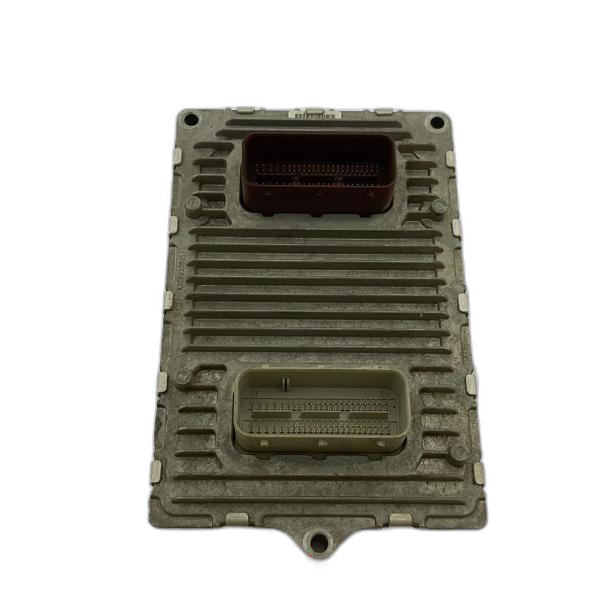
(OEM #55352571, 55353231, 55567225 (multiple revisions exist))— This is the most common failure point for a persistent P0606 code after external checks are completed. The original part number for early models is 55352571, but several revisions exist. It's critical to match the part number or use a compatible replacement and have it programmed.
Trusted brands: Bosch (Original Equipment), Remanufactured/Repaired units from specialists like eSaabParts, Nick's Electronics Repair, Cartech Electronics
OEM price range: $1000-$1400 (New/Remanufactured from dealer, if available)
Aftermarket price range: $150-$800 (Repair service or Used/Remanufactured and programmed)
Related Codes That Often Appear With This One
- P0638 — Throttle Actuator Control Range/Performance. This code often appears with P0606 because the faulty ECM can no longer properly command or read the electronic throttle body.
- P1681 — A Saab-specific code often related to a communication issue between the ECM and another module, frequently appearing when the ECM is failing.
- P0201, P0202, P0203, P0204 — Injector Circuit Malfunction codes for cylinders 1-4. A failing ECM can lose the ability to properly fire the fuel injectors, leading to these codes and misfires.
Technical Service Bulletins (TSBs) & Recalls
- TSB 248-2336 (supersedes TA248-0336 from Dec 2003): Addresses false detection of DTC P0606 00 on Trionic 8 systems due to a software problem and advises against replacing the ECM hardware. The procedure involves clearing the code and performing two 5-minute drive cycles to confirm if the fault is persistent.
- TSB Bulletin #05-06-04-060A: While issued for the 9-7X, this informational bulletin notes that control module Diagnostic Trouble Codes including P0601, P0602, P0603, P0604, P0606, P062F, P06F3, and P1621 can be shared across multiple modules within the manufacturer's vehicle architecture.
Platform-Specific Known Issues
- The on-engine mounting location of the Trionic 8 ECM makes it prone to failure from heat soak and vibration, leading to cracked internal solder joints.
- Early model year software could falsely trigger P0606, requiring a software update (TSB 248-2336) rather than a hardware replacement.
- A critical ECM ground wire is attached via one of the ECM's own mounting bolts, making it easy to forget during reassembly and causing an immediate P0606.
Mechanic-Grade Diagnostic Values
- Battery Voltage (Static, Engine Off) — expected: 12.4V to 12.6V. Failure: Below 12.4V indicates a weak or discharged battery that can cause processor glitches. A reading of ~10.5V (12.6V - 2.1V) can indicate a dead cell.
- Charging System Voltage (Engine Running) — expected: 13.5V to 14.5V. Failure: Voltage below 13.5V or above 14.5V, or fluctuating wildly, indicates a faulty alternator or voltage regulator which can provide 'dirty' power to the ECM.
- 5-Volt Sensor Reference Circuit — expected: ~5.0V at any accessible sensor connector (e.g., Throttle Position Sensor) with key on, engine off.. Failure: Voltage significantly below 5.0V indicates a short to ground in the wiring or a connected sensor. This can drag down the ECM's internal power supply and trigger a false P0606.
- ECM Power and Ground Pins — expected: Battery voltage at the main power supply pins and near-zero resistance ( < 1 ohm) to ground at the main ground pins on the ECM connector.. Failure: A significant voltage drop on the power supply or high resistance on the ground circuit indicates a wiring fault that can starve the ECM of stable power.
Scan Tool Commands That Help
- GM Tech 2 (with Saab software): Add/Remove Control Module > ECM > Add — This function is used to 'marry' a new or used (but 'divorced') ECM to the car's Column Integration Module (CIM) for security. It requires obtaining Security Access via the TIS2Web/GlobalTIS service. This is the official dealer method for replacing an ECM.
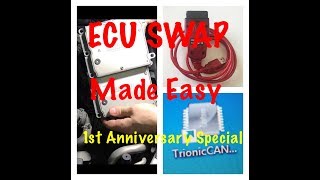
- TrionicCanFlasher (PC Software with OBDLink SX/EX adapter): Read ECU (Main and MCP) / Flash ECU (Main and MCP) — This is a popular DIY method to 'clone' a faulty ECM. It reads all data (including VIN, immobilizer, and tuning) from the old ECM and writes it to a compatible donor ECM. This avoids the need for Tech 2 and Security Access, creating a plug-and-play replacement. It requires the old ECM to be communicative enough to be read.
Wiring & Ground Locations
- G7 — On the engine control module's (ECM) upper right-hand attachment lug. A ground wire is secured by one of the bolts that holds the ECM to its bracket.. This is a primary ground for the Trionic 8 ECM. If it is left loose, corroded, or forgotten during a repair (like a vacuum pump gasket replacement), it can cause unstable ECM operation and immediately trigger a P0606 code.
- G2 — Main chassis ground, located on the side of the left-hand structural member by the connector bracket, near the battery.. This is the main battery-to-chassis ground point. Corrosion or looseness here can cause system-wide voltage instability, affecting the ECM and potentially causing a P0606.
- G25 — Engine ground, located on the left-hand engine mounting.. This is a primary engine-to-chassis ground. A poor connection here can create grounding issues for all engine-mounted components, including the ECM, leading to various electrical faults.
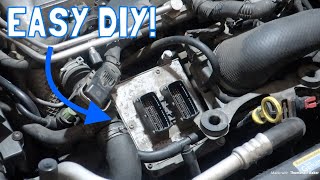
- ECM Connectors — The two large multi-pin connectors on the Trionic 8 ECM, mounted on the front of the engine.. All power, ground, and sensor signals pass through these connectors. Bent pins, corrosion, or wiring damage at these connectors can interrupt critical signals and cause the ECM to report an internal fault.
Real Owner Repair Stories
- Reddit user on r/saab (2003 Saab 9-3 Vector) — After replacing vacuum pump gaskets (which requires moving the ECM), the car threw a P0606 code and went into limp mode.
❌ Tried (didn't work) Disconnecting and reconnecting the ECM connectors.
✅ What actually fixed it The user had forgotten to re-attach the ECM ground wire that is held in place by one of the ECM's own mounting screws (Ground G7). Re-securing this ground wire resolved the code. - Reddit user on r/saab (2006 Saab 9-3) — P0606 and P0638 codes.
❌ Tried (didn't work) Initially suspecting the ECM itself.
✅ What actually fixed it The root cause was a melted wire on a faulty aftermarket thermostat sensor. This caused a short that blew a fuse powering multiple engine components. Replacing the fuse and the faulty thermostat resolved the P0606 code without needing to replace the ECM. - Reddit user on r/saab (2007 Saab 9-3 with 220k miles) — P0606, multiple other codes including one for throttle control, severe misfires, and inability to rev over 2,500 RPM.
❌ Tried (didn't work) The user's father had a similar issue and gave up on the car.
✅ What actually fixed it The recommended and successful fix was to order a remanufactured, pre-cloned ECM from a specialist (eSaabParts was mentioned). The fix also included installing an ECM spacer kit to improve cooling and prevent future heat-related failures.
OEM Part Supersession History
55352571, 55353231, 55352688→55565020, 55567225, 55569738 (and others)— Revisions to address hardware vulnerabilities and improve reliability.
Heads up: For Front-Wheel Drive (FWD) models, nearly all Trionic 8 ECMs are physically interchangeable. However, they are not plug-and-play. The software must be correct for the car's engine, transmission, and options. Using a cloning tool like TrionicCanFlasher makes part numbers largely irrelevant as the original software is copied over. XWD (all-wheel drive) models require an XWD-specific ECM.
Model Year Variations Within This Range
- 2003-2004: Early models, particularly with automatic transmissions, were susceptible to a software glitch that could falsely trigger P0606. A Saab Technical Service Bulletin (TSB 248-2336) was issued to perform a software update to prevent unnecessary ECM replacement.
- 2003-2006 vs 2007-2011: While not a strict cutoff, later part numbers (e.g., 55567225) are associated with later model years (2007-2011), while earlier numbers (e.g., 55353231) are associated with 2003-2006 models. However, due to cloning compatibility, this distinction is less critical than ensuring the donor ECU is from a FWD car if the recipient is FWD.
Diagnostic Flowchart
Real Owner Stories
Aggregated from forums and TSBs cited above. Mileages and costs reflect what owners reported in those sources.
2006 Saab 9-3 — 150000 miles
Symptoms: Car runs perfectly for 10 minutes after unplugging the negative terminal, then enters limp mode with an eventual low idle that rattles the whole car. Also presented with code P0638.
What fixed it: Unresolved at the time of the report; applying Deoxit to the connector pins did not solve the issue.
Source hint: Reddit r/saab
Saab 9-3
Symptoms: Triggered a P0606 code immediately after replacing a vacuum pump gasket and moving the ECM.
What fixed it: Reattaching the forgotten ground wire that attaches under one of the ECM mounting screws.
Source hint: Reddit r/saab - Thread 'Help with a P0606 code'
2003 Saab 9-3
Symptoms: Running rough, rough idle, and limp mode.
What fixed it: Identified as the ECU getting roasted from engine heat; suggested using an aftermarket ECU insulator to prevent future failures.
Source hint: Reddit r/saab - Thread '2003 9-3 P0606 running rough, rough idle, limp mode'
2003 Saab 9-3 2.0t
Symptoms: Experienced P0606 alongside P0638 and P1681 codes.
What fixed it: ECM replacement, though the owner also noted checking the H42-2 connector under the battery for corrosion as a diagnostic step.
Source hint: SaabTuning.pl - Article 'P0606 P0638 P1681... uszkodzony sterownik silnika ECU'
Related OBD-II Codes
Frequently Asked Questions
Does TSB 248-2336 apply to my Saab 9-3?
I just replaced my vacuum pump gasket and now I have a P0606 code. What happened?
Why is the Trionic 8 ECM so prone to failure on the B207 engine?
Can I prevent my ECM from failing due to engine heat?
Besides the ECM itself, what other wiring should I check for a P0606 on my 9-3?
Helpful Videos

We Have This Part in Stock



The information in this article is provided for general reference and educational purposes only. Vehicle specifications, procedures, and part compatibility can vary by production date, trim level, and region. Always consult your vehicle's factory service manual and verify part numbers before purchasing or performing repairs. Safety-critical components such as airbags, seat belts, and braking systems should be installed by a qualified professional.
- Saab 9-3:
- 🎬 Helpful Videos
- 🛍️ Shop This Part
- What's Unique About the 2003-2011 Saab 9-3
- Symptoms You May Notice
- Most Likely Causes
- Rare But Worth Checking
- Diagnosis Steps
- Parts You'll Likely Need
- Related Codes That Often Appear With This One
- Technical Service Bulletins (TSBs) & Recalls
- Platform-Specific Known Issues
- Mechanic-Grade Diagnostic Values
- Scan Tool Commands That Help
- Wiring & Ground Locations
- Real Owner Repair Stories
- OEM Part Supersession History
- Model Year Variations Within This Range
- Diagnostic Flowchart
- Real Owner Stories
- 2006 Saab 9-3 — 150000 miles
- Saab 9-3
- 2003 Saab 9-3
- 2003 Saab 9-3 2.0t
- Related OBD-II Codes
- Frequently Asked Questions
- 🎟️ Get 5% Off