

P0606 on 2017-2024 Chevrolet Traverse: ECM Processor Fault Causes & Fixes
On a 2017-2024 Traverse, code P0606 almost always points to a critical internal failure of the Engine Control Module (ECM). The solution is typically a software reflash or a complete ECM replacement, both requiring a dealership or qualified shop. Expect costs from $150 for a software update to over $1,200 for a full replacement. Before condemning the ECM, a thorough battery and charging system test is essential, as low voltage is a known trigger for this code on GM vehicles.
- P0606 on a Traverse is a critical code indicating the engine's main computer (ECM) has an internal fault.
- Do not continue to drive the vehicle, as it can stall or lose power at any time.
- The most common fix is reprogramming or replacing the ECM, which must be done by a professional.
- Always check for software updates via TSB #24-NA-111 before replacing the hardware.
- Thoroughly test the battery and check ground connections before condemning the expensive ECM, as voltage issues are a known trigger.
What's Unique About the 2017-2024 Chevrolet TRAVERSE
For the Chevrolet Traverse, a P0606 code is specifically addressed by Technical Service Bulletin #24-NA-111, which points to a known software issue that can cause this processor performance fault. The bulletin's correction is to reprogram the ECM, not immediately replace it. This makes it highly likely to be a core software fault within the ECM itself, rather than a random hardware failure. While preliminary checks on battery and grounds are wise, the existence of this TSB strongly suggests the first step should be a software reflash by a dealer.
Diagnostic Flowchart
Tap your situation to follow the diagnostic path that matches what you're seeing on this vehicle.
Generation note: This year range covers two Traverse generations: the first generation (2017) and the second generation (2018-2024). While the code's meaning is the same, the specific ECM hardware and software differ. For example, the 2017 3.6L uses an ECM with part number like 12670801, while the 2018 3.6L uses a different one, like 12683348. However, the primary cause—an internal ECM fault often related to software as per TSB 24-NA-111—and the diagnostic procedure are consistent across both generations.
Symptoms You May Notice
- Check Engine Light is on
- "Reduced Engine Power" message on the driver information center
- Vehicle may stall unexpectedly, especially at idle
- Engine runs rough or misfires
- Difficulty starting the engine or a no-start condition
- Erratic or harsh automatic transmission shifting
- ABS or other warning lights may also illuminate
- Engine cooling fans may run constantly when the ignition is on
- Replacing sensors (e.g., oxygen sensors, camshaft sensors) because of other codes that may appear alongside P0606. P0606 indicates the computer itself is the likely source of the problem, not the sensors it is reading.
- Replacing the ECM without first attempting a software reflash as recommended by TSB 24-NA-111.
- Replacing the ECM without first performing a thorough battery load test and checking ground connections.
Most Likely Causes
- Corrupt ECM Software 🔴 High Probability Software glitches can trigger processor faults. GM has issued TSB #24-NA-111 specifically for P0606 on these vehicles, with the stated correction being to reprogram the module, indicating a known software problem.
How to confirm: A technician uses a GM-specific tool (MDI/SPS with Techline Connect) to check the current software version and attempt a reflash. If the update 🎬 Watch: How to perform a GM ECM software update completes and the code is resolved, this was the cause.
Typical fix: Reprogram the ECM with the latest available software from the manufacturer.
Est. part cost: $0 (labor for programming is separate) - Internal ECM Failure 🟡 Medium Probability If a software reflash fails to correct the issue, the processor or other internal components of the ECM have likely failed. This is the next logical step after software is ruled out.
How to confirm: This is confirmed after a technician has ruled out software, power, and wiring issues. If a software reflash fails or does not resolve the code, the module is condemned.
Typical fix: The ECM must be replaced and the new unit programmed to the vehicle's VIN and specific options.
Est. part cost: $600-$1200 - Poor Battery Health or Low Voltage ⚪ Low Probability Low voltage during cranking or from a failing alternator can cause modules to report internal faults. A separate GM TSB for other models (24-NA-050) explicitly links P0606 in the EBCM to low battery voltage events, showing a pattern in GM vehicles. A weak battery putting strain on the alternator is a common trigger.
How to confirm: Test the battery's state of charge and health using a digital battery analyzer (load test), not just a voltmeter. Check the alternator output with a multimeter (should be ~13.5-14.5V with the engine running).
Typical fix: Replace the weak battery or failing alternator.
Est. part cost: $150-$500
Rare But Worth Checking
- ECM Power or Ground Circuit Issue: While less common than outright ECM failure for this code, a corroded or loose ground wire can starve the module of stable voltage, mimicking an internal fault. It's a crucial check before ordering an expensive ECM. Inspecting main engine-to-chassis grounds and the specific ECM ground connections is a key diagnostic step.
Diagnosis Steps
- Scan for all Diagnostic Trouble Codes (DTCs) to see if other codes are present.
- Check for relevant Technical Service Bulletins (TSBs). TSB #24-NA-111 directly addresses P0606 for this vehicle and recommends reprogramming the ECM.
- Perform a comprehensive battery and charging system test. Use a digital analyzer to load test the battery. Ensure battery voltage is stable and above 12.4V with the engine off, and that the alternator provides steady voltage (~13.5-14.5V) when running.
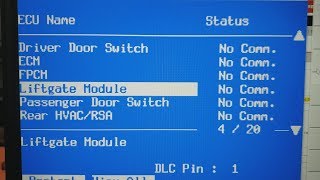
- Inspect the main engine and ECM ground connections for corrosion or looseness. Pay special attention to ground G110, located on the right front/rear of the cylinder head, as it is a common point of failure causing communication loss with the ECM. Check for hidden corrosion under the cable 🎬 See how a bad ground causes Traverse communication issues sheathing. Clean and tighten all grounds as necessary.
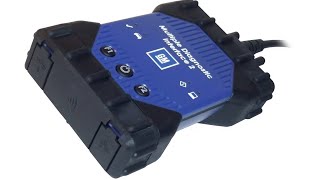
- Using a dealership-level scan tool (GM MDI/SPS), attempt to reprogram the ECM with the latest available calibration per TSB #24-NA-111.
- If reprogramming fails or the code immediately returns, test the power and ground circuits directly at the ECM connector with a multimeter to rule out wiring issues.
- If all wiring, power, and grounds are confirmed good and a reflash did not work, the ECM is faulty and must be replaced. The new module will require programming 🎬 Watch: Professional walkthrough of an ECM replacement to the vehicle.
Parts You'll Likely Need
- Engine Control Module (ECM)
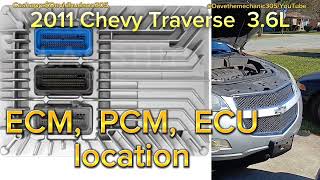
(OEM #Varies by year/engine. Ex: 12670801 (2017 3.6L), 12683348 (2018 3.6L). Must be verified with VIN.)— This part contains the processor that has failed, as indicated by code P0606. TSB #24-NA-111 points to a software or hardware issue within this module.
Trusted brands: ACDelco (OEM), Cardone (Remanufactured), FS1 (Remanufactured)
OEM price range: $600-$1200
Aftermarket price range: $350-$800
Technical Service Bulletins (TSBs) & Recalls
- 24-NA-111: MIL Set P0606: Control Module Processor Performance.
- 24-NA-050: MIL On, DTC P0606 in EBCM (Contextual - shows GM pattern of voltage-induced P0606).
- 24-NA-005: Headlamps Flashing, DTC P0606 in Lighting Control Module (Contextual - shows GM pattern of voltage-induced P0606).
Platform-Specific Known Issues
- TSB #24-NA-111 was issued by GM to address customer concerns of a Malfunction Indicator Lamp (MIL) with DTC P0606 set. The bulletin explicitly states the cause may be a software issue and the correction is to reprogram the Powertrain Control Module (PCM).
- Owners on forums frequently report experiencing the 'Reduced Engine Power' mode in conjunction with code P0606, often leading to a dealer visit for diagnostics.
Mechanic-Grade Diagnostic Values
- Battery Voltage (Key Off, Engine Off) — expected: 12.4V to 12.6V. Failure: Below 12.4V indicates a discharged or failing battery that can trigger false module codes.
- Charging System Voltage (Engine Running) — expected: 13.5V to 14.5V. Failure: Voltage below 13.5V or fluctuating wildly suggests a failing alternator or poor connections.
- Voltage Drop Test (Power or Ground Circuit) — expected: Less than 0.2 Volts (200mV). Failure: A reading higher than 0.2V indicates excessive resistance in the circuit from corrosion or a loose connection.
- ECM Fuse Resistance — expected: Near 0 ohms. Failure: Any significant resistance indicates a damaged fuse that may fail under load, even if it appears visually intact.
Hidden / Shadow Codes Worth Checking
- P0606 5A: This is a GM-specific symptom byte meaning 'Control Module Processor Performance'. It confirms the module has failed an internal performance self-check, helping to differentiate it from other potential internal faults. (see via A professional GM-specific scan tool like the GDS2 (Global Diagnostic System 2) is required to view symptom bytes.)
- GM.CPUFAULT (PID): This is a Parameter ID (PID) that may be available on some scan tools. When logged, it can return a specific number that indicates the exact nature of the processor fault, providing more granular detail than the generic P0606 code. (see via Advanced scan tools with access to manufacturer-specific PIDs, such as EFILive or a GDS2.)
Scan Tool Commands That Help
- GDS2 / Techline Connect: Replace and Reprogram — This function is used within the SPS2 (Service Programming System) environment after a new or used ECM is installed. It flashes the module with the correct VIN, software, and calibrations for the specific vehicle.
- GDS2: Data Bus Diagnostic Tool — If multiple modules are not communicating, this tool can be used to analyze the CAN bus, identify which modules are active, and help pinpoint the location of a communication breakdown (e.g., open or shorted wire).
- GDS2: Module Diagnostics / Control Functions — This allows a technician to perform bidirectional tests, such as commanding lights, relays, or solenoids on and off. While not a direct test for P0606, it can help verify the ECM's ability to control outputs and check the integrity of related circuits.
Wiring & Ground Locations
- G110 — On the right front of the engine, mounted to the cylinder head. On the first-generation Traverse, this is on the rear cylinder head (closer to the firewall).. This is a critical ground shared by the Engine Control Module (ECM) and Transmission Control Module (TCM). A poor connection here is a confirmed cause of intermittent no-start and loss of communication with the ECM, which can manifest as a P0606.
- G103 — Located on the left side of the engine compartment, on the inner fender panel, sometimes above the brake booster.. This ground serves the ECM and Body Control Module (BCM). A fault here can cause a wide range of erratic electrical behavior, including false codes from the ECM.
- G113 — Located on the left side of the engine, at the engine-to-transmission stud.. This is another primary engine ground. A loose or corroded connection can cause intermittent issues with the ECM and its sensor readings.
- ECM Connector X1 (2018+) — Of the three main connectors on the E92 ECM used in second-generation Traverses, X1 is often identified by a Blue connector or Terminal Position Assurance (TPA) clip.. Properly identifying the correct connector is essential for performing pin-out voltage and ground tests directly at the module to rule out wiring faults.
Real Owner Repair Stories
- YouTube channel 'WeberAuto' (2010 Chevrolet Traverse) — Intermittent no-crank, no-start. No gear indicator displayed on the dash. Scan tool showed no communication with the Engine Control Module (ECM) and Transmission Control Module (TCM).
❌ Tried (didn't work) Initial checks of fuses and relays were inconclusive.
✅ What actually fixed it The problem was traced to a poor connection at ground G110, which is shared by the ECM and TCM. The ground point was difficult to access but after removing, cleaning, and tightening the connection, communication with the modules was restored and the engine started and ran correctly. - Reddit user in r/gmcsierra (2022 GMC Sierra (related GM platform)) — Persistent, intermittent check engine light with voltage-related codes, including P0606 and P0562. Occasional no-start condition.
❌ Tried (didn't work) Multiple dealer visits over a year could not resolve the issue permanently.
✅ What actually fixed it The root cause was identified as a ground strap from the engine to the cab that was improperly installed during a previous service. The fix required removing the vehicle's cab to properly access and repair the ground connection.
OEM Part Supersession History
12683348→Interchangeable with 12679078, 12679552, 12687296, 12687483.— These are various service numbers for the same E92 ECM used in the 2018+ 3.6L Traverse and other GM models.
Heads up: While part numbers may be interchangeable, the module MUST be programmed with the vehicle's specific VIN and calibration files to function. It is not a plug-and-play part.12670801→N/A— This is the ECM for the 2017 Traverse 3.6L. No specific supersession data found.
Heads up: For replacement, the service part number on the replacement module must match the original module to ensure compatibility before programming.
Model Year Variations Within This Range
- 2017 (First Generation): Uses an older generation ECM (e.g., Part #12670801) and a 6-speed automatic transmission. The wiring diagrams and ground locations (like G110) are specific to the Lambda platform.
- 2018-2024 (Second Generation): Underwent a complete redesign. Uses a newer E92 ECM (e.g., Part #12683348) and a 9-speed automatic transmission. The E92 ECM has a different connector configuration (typically 3 connectors: X1, X2, X3) than the first-gen model.
Helpful Videos


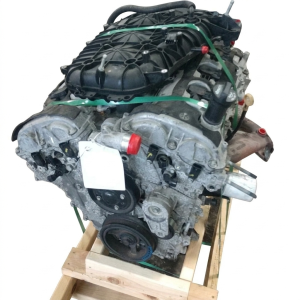
We Have This Part in Stock



The information in this article is provided for general reference and educational purposes only. Vehicle specifications, procedures, and part compatibility can vary by production date, trim level, and region. Always consult your vehicle's factory service manual and verify part numbers before purchasing or performing repairs. Safety-critical components such as airbags, seat belts, and braking systems should be installed by a qualified professional.
- Chevrolet TRAVERSE:
- 🎬 Helpful Videos
- 🛍️ Shop This Part
- What's Unique About the 2017-2024 Chevrolet TRAVERSE
- Diagnostic Flowchart
- Symptoms You May Notice
- Most Likely Causes
- Rare But Worth Checking
- Diagnosis Steps
- Parts You'll Likely Need
- Technical Service Bulletins (TSBs) & Recalls
- Platform-Specific Known Issues
- Mechanic-Grade Diagnostic Values
- Hidden / Shadow Codes Worth Checking
- Scan Tool Commands That Help
- Wiring & Ground Locations
- Real Owner Repair Stories
- OEM Part Supersession History
- Model Year Variations Within This Range
- 🎟️ Get 5% Off