

P0604 on 2015-2019 Subaru Outback: RAM Error, Battery Drain, and Fixes
On a 2015-2019 Subaru Outback, code P0604 is almost always caused by a weak battery or a parasitic electrical drain, not a failed engine computer. Subarus from this era are known for battery issues, often linked to the Starlink/DCM module which fails to sleep after the 3G network shutdown. Start by load testing your battery and checking for a parasitic draw before considering any expensive parts. A DIY fix involves rewiring the DCM to an ignition-switched fuse.
- Do not assume P0604 means you need a new computer. On this car, it's a huge red flag for a power supply problem.
- Your first step should always be a professional load test of your battery.
- Be aware of the known parasitic drain issue caused by the Starlink Data Communications Module (DCM).
- Check with a Subaru dealer to see if your vehicle is covered by the extended warranties for the battery or DCM before paying for repairs.
What's Unique About the 2015-2019 Subaru Outback
While P0604 sounds like a computer failure, on this specific generation of Subaru Outback, it's most often a symptom of a different, well-documented problem: poor battery life and parasitic electrical drains. Many of these vehicles suffer from a faulty Data Communications Module (DCM), the hardware for the Starlink telematics system. Following the shutdown of 3G cellular networks, the DCM fails to enter a 'sleep' mode and gets stuck in a loop continuously searching for a signal, draining the battery. 🎬 Watch: How the Starlink DCM causes this battery drain. This chronic low voltage condition can easily corrupt the ECM's RAM during startup, triggering a P0604 code without the ECM itself being faulty. This issue was the subject of a class-action lawsuit, *In re Subaru Battery Drain Products Liability Litigation*, leading to warranty extensions.
Symptoms You May Notice
- Check Engine Light is on
- Vehicle may not start or is hard to start
- Engine stalls intermittently, sometimes shortly after starting
- Erratic engine performance, hesitation, or sudden loss of power
- ABS or Traction Control lights may also illuminate
- Solid red SOS light on the overhead console that stays on after the car is off
- MySubaru app fails to connect or times out
- Replacing the Engine Control Module (ECM) first. This is an expensive mistake. The code is almost always a symptom of an underlying power supply issue on this particular vehicle.
- Replacing the battery without diagnosing the parasitic drain. If the DCM is the culprit, the new battery will also be drained and damaged over time.
Most Likely Causes
- Weak or Failing Battery 🔴 High Probability This generation of Outback is known for having undersized batteries from the factory and is susceptible to parasitic drains that shorten battery life. A class-action lawsuit was filed over this issue, resulting in warranty extensions (TSB 07-207-22R).
How to confirm: Have the battery professionally load tested. A simple voltage check is not sufficient, as a battery can show 12.6V but fail under load. Cranking voltage should not drop below 9.5V. Many auto parts stores perform this service for free.
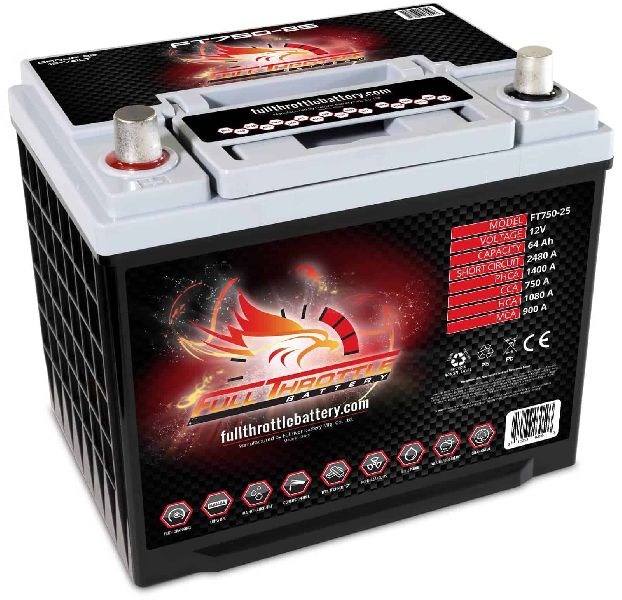
Typical fix: Replace the battery. Many owners choose to upgrade to a higher capacity Absorbent Glass Mat (AGM) battery with a higher Cold Cranking Amps (CCA) rating than the original equipment.
Est. part cost: $180-$350 - Parasitic Drain from Data Communications Module (DCM) 🔴 High Probability A widely known issue where the Starlink telematics module fails to shut down after the 3G network sunset, continuously searching for a signal and draining the battery. Subaru has issued warranty extensions for this part (TSB 15-308-23).
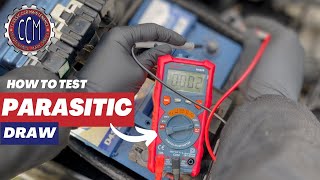
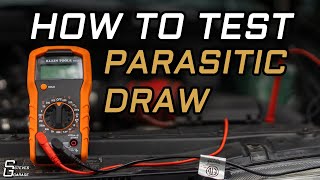
How to confirm: Perform a parasitic draw test. 🎬 See the easiest way to test for parasitic draw. After letting the vehicle sit for at least 20-30 minutes to allow all modules to sleep, the draw should be under 70mA. If the draw is high (e.g., 150mA or more), pull the DCM fuse (often fuse #9 in the interior fuse box) and see if the draw drops significantly.
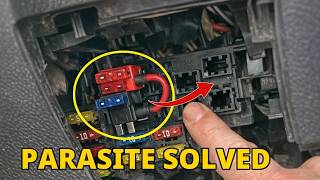
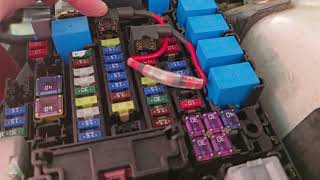
Typical fix: A dealer may perform a software update (Service Program WRD-24) or replace the DCM under warranty. A common DIY fix is to install an 'add-a-circuit' fuse tap to move the DCM's power from a constant-hot circuit to an ignition-switched circuit (like an accessory outlet), which physically cuts power when the car is off. Another option is a dedicated bypass harness that disconnects the DCM while restoring audio pass-through. 🎬 Watch: DIY fuse tap solution for the DCM drain.
Est. part cost: $0 if covered by warranty; $10-$25 for DIY fuse tap parts; $500-$800 for out-of-pocket DCM replacement. - Loose or Corroded Battery Terminals / Ground Straps 🟡 Medium Probability Corrosion creates high resistance, leading to voltage drops that can mimic a bad battery and cause computer glitches. There are known issues with corrosion on the main engine-to-chassis ground strap and the grounds on the intake manifold where the ECU gets its reference.
How to confirm: Visually inspect the battery terminals, main power cables, and body/engine ground straps for corrosion, looseness, or damage. Test for voltage drop across the ground circuit by placing one multimeter lead on the negative battery post and the other on the engine block; with the engine running, it should be less than 0.1 volts.
Typical fix: Clean the battery terminals and cable ends with a wire brush. Ensure all connections are tight. Replace corroded ground straps. An OEM ground strap part number is 81831AG000.
Est. part cost: $10-$50 - Failing Alternator ⚪ Low Probability
How to confirm: With the engine running, test the voltage at the battery terminals. A healthy alternator should output a stable voltage between 13.5V and 14.5V. Most auto parts stores can also test your alternator.
Typical fix: Replace the alternator.
Est. part cost: $250-$600
Rare But Worth Checking
- Faulty Engine Control Module (ECM): This is the absolute last thing to suspect. The P0604 code definition points to the ECM, but on this vehicle, it is almost always caused by one of the external electrical issues listed above. Exhaust all other possibilities before considering ECM replacement, as it is expensive, rarely the true cause for this specific platform, and requires programming.
- ECM Software Glitch: Subaru has issued software updates to fix P0604 on other models (like the 2014-2016 Crosstrek Hybrid, TSB 11-163-16). It's possible a reflash could solve the issue, but this is less common than the battery-related causes for the Outback.
- Rapid Ignition Cycling: A manufacturer service bulletin for a related model, TSB Bulletin #07-107-16, notes that if an operator cycles the ignition off then back on again within a very short period of time, the check engine lamp may come on and store DTC P0604 in memory, accompanied by a detail code 0901.
Diagnosis Steps
- Read all stored trouble codes with an OBD-II scanner. Note any other codes, especially telematics codes like B2821.
- Visually inspect the battery terminals and cables. Clean any corrosion and ensure the connections are tight.
- Have the battery professionally load tested. Do not skip this step. A weak battery is the #1 cause.
- With the engine running, use a multimeter to check the alternator's output voltage at the battery terminals. It should be roughly 13.5-14.5 volts.
- Inspect the main engine and body ground straps for corrosion or damage. Key locations are from the engine block to the chassis and on the intake manifold. Perform a voltage drop test on the ground side.
- If the battery and charging system are good, perform a parasitic draw test. Connect a multimeter in series with the negative battery cable and measure the amperage after the car has been off and locked for 30 minutes. A reading over 70mA indicates a problem.
- If the draw is high, pull the DCM fuse (check your owner's manual, but it is often fuse #9 in the interior panel). If the amperage drops to a normal level (typically under 50mA), you have confirmed the DCM is the cause.
- Contact a Subaru dealer with your VIN to check for open recalls or warranty extensions related to the battery (TSB 07-207-22R) or DCM (TSB 15-308-23).
- Only after confirming all power and ground circuits are perfect should you consider the possibility of a faulty ECM.
Parts You'll Likely Need
- 12V Automotive Battery — The original equipment battery is often cited as being weak, and parasitic drain issues shorten its life significantly. A new, fully charged battery often resolves the code, but the underlying drain must also be fixed.
Trusted brands: Interstate, Deka / East Penn, Bosch
OEM price range: $180-$250
Aftermarket price range: $180-$350 - Add-A-Circuit Fuse Tap Kit — Used for the common DIY fix of moving the DCM from a constant power source to an ignition-switched power source, preventing it from draining the battery when the car is off.
Trusted brands: JABINCO, Bussmann
OEM price range: N/A
Aftermarket price range: $10-$20
Related Codes That Often Appear With This One
- P0603 — Internal Control Module Keep Alive Memory (KAM) Error. This code is often triggered by a recent battery disconnection or chronic power supply issues, which are the same root causes of P0604.
- B2821, B2805 — These are telematics-specific DTCs related to DCM internal communication or power source failures. If present, they strongly point to the DCM as the root cause of the battery drain.
- P0602 — Control Module Programming Error. This can appear with P0604 if there has been a failed software update or significant voltage spike that corrupted the ECM's programming and memory.
Technical Service Bulletins (TSBs) & Recalls
- 07-207-22R: Details the extended warranty for the 12V battery to 5 years / 60,000 miles as part of the class action settlement.
- 15-308-23: A TSB related to the DCM parasitic drain issue.
- 15-317-24: Extended warranty for the Data Communications Module (DCM) to 8 years / 100,000 miles. (Note: This TSB number from Pass 1 may be a typo, but the warranty extension exists as part of the settlement program).
- WRD-24: This is a Service Program, not a TSB, which involves a firmware update to the DCM to correct the handshake protocol and prevent the parasitic drain.
- TSB Bulletin #07-107-16: Describes how cycling the ignition off then back on within a very short period can trigger P0604 and detail code 0901 on related Subaru platforms.
Platform-Specific Known Issues
- A class-action lawsuit, *In re Subaru Battery Drain Products Liability Litigation*, was settled regarding battery drain issues on these vehicles, leading Subaru to offer warranty extensions on batteries and the Data Communications Module (DCM).
- The Data Communications Module (DCM) for the Starlink system can fail to enter sleep mode due to the 3G cellular network shutdown, causing a significant parasitic draw that drains the battery and triggers low-voltage conditions that set P0604.
- Pulling the DCM fuse to stop the drain may also disable the front speakers and Bluetooth microphone on some models, as the audio is routed through the DCM. A proper bypass harness is needed to restore audio function in this case.
Mechanic-Grade Diagnostic Values
- Parasitic Draw (Dark Current) — expected: Less than 70mA. Failure: A sustained reading over 70mA after all modules have entered sleep mode (approx. 20-30 minutes). A faulty DCM often causes a draw of 150mA or higher.
- Ground Circuit Voltage Drop — expected: Less than 0.1 Volts (100mV). Failure: A reading higher than 0.1V between the negative battery post and a clean spot on the engine block (while running) indicates high resistance in the ground path.
- Alternator Output Voltage — expected: 13.5V - 14.5V. Failure: Voltage below 13.5V indicates undercharging, while voltage above ~14.8V indicates overcharging. Both can cause ECU issues.
Hidden / Shadow Codes Worth Checking
- Detail Code 0901: A sub-code that may accompany P0604, specifically related to a software logic issue in the Drive Motor Control Module (DMCM) on Hybrid models when the ignition is cycled quickly. While for a different model (Crosstrek Hybrid), it demonstrates Subaru's use of detail codes. (see via Subaru Select Monitor (SSM) diagnostic tool.)
Scan Tool Commands That Help
- Subaru Select Monitor (SSM) or compatible J2534 device: ECM Reprogramming (FlashWrite) — Used to apply factory software updates. While less common for P0604 on this platform, it's a possibility if Subaru issued a logic update. It's critical to use a stable power supply (like a Midtronics GR8) during this process to prevent bricking the ECM.
- Specialized cloning tool (e.g., Car-Prog): EEPROM Read/Write (Cloning) — If the ECM or Body Integrated Unit (BIU) must be replaced, the immobilizer data from the original module's EEPROM chip must be read and written to the donor unit. This avoids expensive dealer programming and makes the used part plug-and-play.
Wiring & Ground Locations
- Intake Manifold Grounds — On top of the intake manifold, typically secured by 12mm bolts.. The ECU gets its primary ground reference from the top of the intake manifold, not directly from the chassis or block. Corrosion or looseness at these specific ground points can cause erratic ECU behavior and trigger various codes, including P0604.
- Main Chassis Ground — The main negative battery cable connects directly to the chassis, often near the battery tray.. This is the primary return path for the entire electrical system. Corrosion here creates system-wide low voltage conditions.
- DCM Fuse — Typically fuse #9 in the interior fuse panel, located near the driver's left knee.. Pulling this 7.5A fuse is the definitive diagnostic step to confirm a parasitic draw from the Data Communications Module.
- DCM Connector i87 (at head unit) — A connector on the rear of the main infotainment head unit.. When installing an official DCM Bypass Box, a wire must be moved to pin #4 of this connector to restore power to the microphone.
Real Owner Repair Stories
- YouTube user 'Subaru Battery Drain Fix' (2016 Subaru Outback) — Recurring dead battery, parasitic draw that fluctuates between 80-200mA.
❌ Tried (didn't work) Taking the car to a dealership that refused to diagnose the issue under the warranty extension.
✅ What actually fixed it The owner confirmed the draw was from the DCM by pulling fuse #9 and seeing the current drop to a stable 29-36mA. The final fix was a DIY 'add-a-circuit' fuse tap to move the DCM power to an ignition-switched source.
OEM Part Supersession History
Various (related to 3G DCM)→86229AL400 (DCM Bypass Box)— As an alternative to replacing the entire faulty DCM on vehicles without an active Starlink subscription, Subaru released a 'Bypass Box'. This part restores audio/mic functionality that is lost when simply pulling the DCM fuse, while keeping the faulty telematics module disconnected.
Heads up: This bypass box is only for vehicles with no active Starlink subscription. If the subscription is active, a full DCM replacement must be used.
Model Year Variations Within This Range
- 2018-2019: The 2018 model year marked a mid-cycle refresh. The infotainment system was upgraded with larger screens (6.5" or 8.0"), Apple CarPlay and Android Auto support, and improved voice recognition with two microphones. While the underlying DCM 3G issue persists, the head unit and associated wiring may differ slightly from 2015-2017 models when performing a bypass.
Diagnostic Flowchart
Used vs. New Parts: Buying Guide for This Vehicle
When a used part is the smart pick: A used part is generally a poor choice for the primary components related to this code. A used battery is never recommended. A used DCM from the same model years will have the identical 3G sunset hardware/software flaw and will not solve the parasitic drain. A used ECM or BIU can be a cost-effective option *only if* you use a mail-in cloning service to transfer the immobilizer data from your original module to the donor, making it plug-and-play.
Donor-vehicle mileage cap: roughly under 120000 miles for the part to have meaningful remaining life.
What to inspect on the donor part:
- For an ECM/BIU, verify the part number matches your original exactly.
- Ensure the donor module comes from a vehicle that was not flood-damaged.
- Visually inspect connectors for any signs of corrosion, bent pins, or heat damage.
OEM-only on this vehicle (don't cheap out):
- Data Communications Module (DCM): Aftermarket versions do not exist. However, instead of a new OEM DCM, the official OEM 'DCM Bypass Box' (P/N 86229AL400) is the recommended fix for cars without a Starlink subscription.
Aftermarket brands forum-validated for this vehicle:
- For the DIY fuse-tap fix: Bussmann or Littelfuse 'Add-A-Circuit' taps are reliable.
- For the battery: Upgrading to a quality AGM battery from brands like Deka, East Penn, or Odyssey is a common and recommended improvement.
Brands owners have reported issues with on this vehicle:
- Avoid generic, unbranded electronic modules from online marketplaces, as their quality control is unknown and they can introduce new, hard-to-diagnose problems.
Real Owner Stories
Aggregated from forums and TSBs cited above. Mileages and costs reflect what owners reported in those sources.
2019 Subaru Outback
Symptoms: The battery was constantly dying, triggering the P0604 check engine light. The car would be fine one day and completely dead the next.
What fixed it: Created a homemade jumper with fuse taps to move the DCM's power source from a constant-hot circuit to an accessory circuit, which solved the parasitic drain.
Cost: $10-$25
Source hint: YouTube - '2019 Subaru Outback Legacy DCM Parasitic Battery Drain Fix'
2017 Subaru Outback
Symptoms: Owner experienced frustration with repeated dead batteries and the check engine light coming on.
What fixed it: Successfully fixed the issue using the 'add-a-circuit' method to cut power to the DCM when the car is off.
Cost: $10-$25
Source hint: Reddit (r/subaru, r/Subaru_Outback)
2016 Subaru Outback
Symptoms: The vehicle suffered from prevalent battery drain issues, which led to the P0604 code and other electrical glitches.
What fixed it: After discussions on forums, the owner identified the Data Communications Module (DCM) as the culprit and performed a DIY fix to resolve the drain.
Source hint: subaruoutback.org
Related OBD-II Codes
Frequently Asked Questions
My 2018 Outback's battery keeps dying. Is there a warranty or recall for this?
I heard the Starlink system causes the P0604 code. How do I fix the battery drain?
If I pull the DCM fuse to stop the battery drain, will my radio and Bluetooth still work?
My red SOS light is stuck on and the MySubaru app won't connect. Is this related to P0604?
What is the best replacement battery for my Outback to prevent this from happening again?
How can I be sure the DCM is what's draining my battery before I try to fix it?
Helpful Videos

Used OEM Parts in Stock


New Aftermarket Parts Available

The information in this article is provided for general reference and educational purposes only. Vehicle specifications, procedures, and part compatibility can vary by production date, trim level, and region. Always consult your vehicle's factory service manual and verify part numbers before purchasing or performing repairs. Safety-critical components such as airbags, seat belts, and braking systems should be installed by a qualified professional.
- Subaru Outback:
- 🎬 Helpful Videos
- 🛍️ Shop This Part
- What's Unique About the 2015-2019 Subaru Outback
- Symptoms You May Notice
- Most Likely Causes
- Rare But Worth Checking
- Diagnosis Steps
- Parts You'll Likely Need
- Related Codes That Often Appear With This One
- Technical Service Bulletins (TSBs) & Recalls
- Platform-Specific Known Issues
- Mechanic-Grade Diagnostic Values
- Hidden / Shadow Codes Worth Checking
- Scan Tool Commands That Help
- Wiring & Ground Locations
- Real Owner Repair Stories
- OEM Part Supersession History
- Model Year Variations Within This Range
- Diagnostic Flowchart
- Used vs. New Parts: Buying Guide for This Vehicle
- Real Owner Stories
- 2019 Subaru Outback
- 2017 Subaru Outback
- 2016 Subaru Outback
- Related OBD-II Codes
- Frequently Asked Questions
- 🎟️ Get 5% Off