

P0604 on 2014-2018 Subaru Forester: RAM Error Causes and Fixes
On a 2014-2018 Subaru Forester, code P0604 is most often caused by a weak battery or poor electrical grounds, not a failed engine computer. Before considering expensive repairs, fully test the battery and clean all major ground connections, particularly the strap from the battery to the chassis on the passenger side strut tower.
- Do not immediately assume the ECM has failed. P0604 on a Forester is usually an electrical problem.
- Start your diagnosis with the cheapest and most likely solutions: test the battery and clean all ground connections.
- A simple visual check of the battery isn't enough; it must be properly load-tested.
- If the battery and grounds are good, ask a professional about potential ECM software updates before paying for a replacement.
- Driving with this code is a risk, as the engine could stall at any time.
What's Unique About the 2014-2018 Subaru Forester
While P0604 sounds like a catastrophic computer failure, on Subarus of this era, it's frequently a symptom of an unstable electrical system rather than a faulty ECM. These vehicles are known to have sensitive electronics and are prone to issues from low voltage or poor grounds. A weak battery, failing alternator, or corroded ground straps are common culprits that can trigger this memory error code. Owners often resolve the issue by addressing these basic electrical components, avoiding a costly and unnecessary ECM replacement. There is also a history of software updates being issued to correct erroneous codes and improve charging logic on these and related Subaru models.
Symptoms You May Notice
- Check Engine Light is on
- Vehicle may not start or may be hard to start
- Engine may stall intermittently or run rough
- ABS or Traction Control lights may illuminate
- Transmission shifting issues
- Vehicle may enter 'limp mode' with reduced power
- Replacing the ECM without first testing the battery, charging system, and ground connections. This is an expensive mistake, as the new ECM may show the same code if the underlying electrical issue is not resolved.
Most Likely Causes
- Weak or Dying Battery 🔴 High Probability The ECM is sensitive to voltage drops. A battery that fails to maintain at least 9.5-10 volts during engine cranking can corrupt the ECM's RAM and trigger a P0604 code. Subarus of this era are also subject to a class-action lawsuit and related TSBs (like 07-207-22R) for battery drain issues, making a weak battery a very common starting point for electrical gremlins.
How to confirm: Test the battery with a professional load tester, not just a voltmeter. 🎬 See how to test your battery and alternator with a multimeter. A battery can show 12.6V at rest but fail under the load of starting the engine. Voltage should not drop below 9V during cranking.
Typical fix: Replace the battery and clear the trouble codes. Ensure the new battery is fully charged before installation.
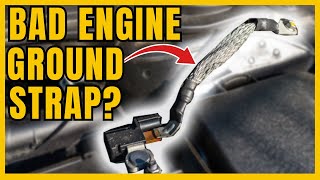
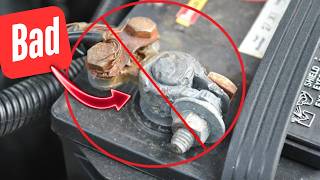
Est. part cost: $150-$300 - Loose or Corroded Battery Terminals / Ground Straps 🟡 Medium Probability Subaru ground points, particularly the braided ground straps, are known to be undersized and corrode over time, creating high resistance in the circuit. This can lead to intermittent voltage drops to the ECM, mimicking a bad battery. A broken or corroded strap is a frequent, documented cause of electrical issues.
How to confirm: Visually inspect the battery terminals, the main battery-to-chassis ground (often on the passenger side strut tower), and the engine-to-chassis ground strap for corrosion or looseness. Use a multimeter to perform a voltage drop test between the battery negative post and the engine block/chassis (should be less than 0.2V with the engine running).
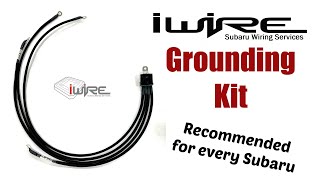
Typical fix: Disconnect, thoroughly clean all contact points with a wire brush to bare metal, apply a dielectric grease or anti-corrosion spray, and securely retighten all connections. Consider replacing the thin OEM braided straps with a heavier gauge cable. 🎬 Watch: How to install a heavy-duty Subaru grounding kit.
Est. part cost: $10-$40 - Failing Alternator ⚪ Low Probability An alternator producing unstable voltage or excessive AC ripple voltage can disrupt the ECM's operation. TSB 07-112-16R was issued for 2014-2016 Foresters for an alternator issue causing a P0300 code, showing a precedent for alternator problems on this platform.
How to confirm: With the engine running, measure the voltage at the battery terminals. A healthy charging system should read between 13.5 and 14.8 volts. For a more definitive test, use a multimeter set to AC volts to check for ripple voltage at the battery terminals; a reading above 0.5V (500mV) AC indicates failing alternator diodes that are introducing electrical 'noise'.
Typical fix: Replace the alternator.
Est. part cost: $250-$600
Rare But Worth Checking
- ECM Software Glitch: A TSB for the 2014 Crosstrek Hybrid (07-107-16R) notes that P0604 can be set by cycling the ignition too quickly, resolved with a software update. While not specific to the Forester, it shows a precedent for software-related fixes. Other TSBs like 11-174-17R and 11-176-17 address ECM logic for battery charging, further highlighting the role of software in the electrical system's stability.
- Faulty Engine Control Module (ECM): This is the least likely cause. The ECM should only be suspected after all other power, ground, and software issues have been definitively ruled out. An internal hardware failure of the RAM chip is possible but rare. One user on a forum with a persistent P0604 that returned immediately after clearing, even after two programmed ECMs, highlights the difficulty in condemning the module.
- Aftermarket Performance Tuner: If the vehicle has an aftermarket engine tune (e.g., from a Cobb Accessport), a poorly written map or improper flashing process can corrupt the ECM's memory and trigger a P0604. The first step in this case should be to uninstall the tuner and flash the ECM back to the stock factory tune.
Diagnosis Steps
- Read the code with an OBD-II scanner and note any other codes present.
- Clear the code. Turn the ignition completely off, remove the key, and wait at least 60 seconds. Restart the vehicle to see if the code immediately returns. If it doesn't, it may have been a one-time glitch.
- Perform a complete battery and charging system test. The battery must be load-tested. Check that charging voltage is stable and within the 13.5-14.8V range.
- Perform an alternator AC ripple test. With the engine running and multimeter set to AC volts, check for voltage at the battery terminals. A reading above 500mV (0.5V) AC suggests a failing alternator.
- Disconnect the battery (negative terminal first).
- Thoroughly inspect and clean the battery terminals and cable ends.
- Locate, remove, and clean the main ground connections. Key locations include the negative battery cable to the chassis (often on the passenger strut tower) and the engine-to-chassis ground strap(s). Ensure all contact surfaces are bare, clean metal before retightening.
- Reconnect the battery and re-scan for codes.
- If a performance tuner is installed, uninstall it and flash the ECM back to the stock map.
- If the code persists, contact a dealership or qualified shop to check for any available ECM software updates. Reference TSBs like 07-107-16R (for related models) and TSBs regarding battery charging logic like 11-174-17R.
- If all electrical inputs are perfect and the software is up to date, the ECM may be faulty and require replacement.
Parts You'll Likely Need
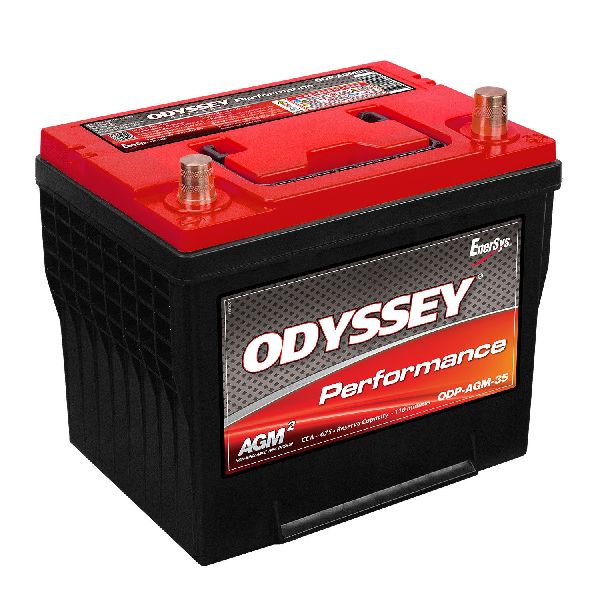
- Car Battery — A weak battery is the most common trigger for this code on a Subaru Forester due to voltage drops during cranking.
Trusted brands: Interstate, DieHard, Duralast, EverStart
OEM price range: $200-$350
Aftermarket price range: $150-$300 - Engine Ground Strap
(OEM #81820AG00B (example, verify for specific application))— The original braided straps are prone to corrosion and breakage, causing intermittent electrical faults.
Trusted brands: Subaru (OEM)
OEM price range: $15-$30
Aftermarket price range: $10-$20 - Engine Control Module (ECM)
(OEM #22765AG744 (for 2015 Forester 2.5i, supersedes 22765AG741, 22765AG742). Note: Many different part numbers exist based on year, transmission, and emissions.)— This is the last resort if all power, ground, and software issues have been ruled out. It is rarely the actual cause of the problem. Must be programmed to the vehicle. 🎬 Watch this walkthrough on how to replace and program a Subaru ECU.
Trusted brands: Subaru (OEM)
OEM price range: $700-$1050
Aftermarket price range: $400-$700 (Remanufactured)
Related Codes That Often Appear With This One
- P0603 — P0603 refers to a Keep Alive Memory (KAM) error, which is often triggered by battery disconnection or power loss, similar to the causes of P0604.
- P0606 — P0606 is an 'ECM/PCM Processor Fault'. On some Subarus, particularly turbo models, this code can also be triggered by a software glitch after a battery power loss, similar to P0604.
Technical Service Bulletins (TSBs) & Recalls
- 07-107-16R: For the 2014-16 XV Crosstrek Hybrid, this TSB addresses a P0604 code caused by rapid ignition cycling, fixed by a software update. This is relevant as it shows a precedent for software fixes for this code in Subarus of this era.
- 11-174-17R & 11-176-17: These TSBs for various Subaru models address updating the ECM charging logic to prevent battery drain from short-trip driving and improve battery life, showing the interplay between software and battery health.
- 07-207-22R: This TSB is related to a class-action lawsuit for battery drain issues on 2015-2020 Foresters (among other models) and extends the battery warranty. It corroborates that battery issues are a widespread, known problem.
- 07-112-16R: For 2014-16 Foresters, this bulletin provides a procedure to diagnose DTC P0300 caused by alternator output fluctuation, establishing a known history of alternator issues on this specific platform.
Platform-Specific Known Issues
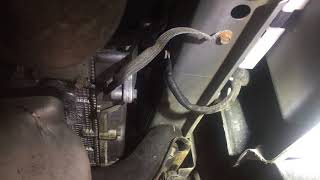
- Corroding Ground Straps: The thin, braided factory ground straps are a known weak point. One user on a Subaru club forum noted one of their two braided ground straps had completely corroded away on a 2010 model, and others agreed that upgrading them is a good preventative modification. A Reddit thread shows a picture of a severely corroded strap on a Forester, with multiple users immediately identifying it as a common problem that will lead to serious electrical issues.
- Parasitic Battery Drain: Many Subaru models of this era
Mechanic-Grade Diagnostic Values
- Battery Voltage During Cranking — expected: > 9.5 Volts. Failure: Voltage dropping below 9.0V can corrupt ECM memory and trigger P0604.
- Alternator AC Ripple Voltage — expected: < 0.5V AC (500mV AC). Failure: A reading above 0.5V AC indicates failing alternator diodes are introducing electrical noise that can disrupt the ECM.
- Ground Circuit Resistance — expected: < 0.1 Ω. Failure: High resistance in the ground path from the ECM to the chassis can cause floating voltages and memory errors.
- ECM Power Supply Voltage (at module connector) — expected: Should match battery voltage (approx. 12.6V KOEO, 13.5-14.8V engine running). Failure: A significant voltage drop between the battery and the ECM connector points to a wiring or main relay issue.
Hidden / Shadow Codes Worth Checking
- Detail Code 0901: A detail code that can accompany P0604, as noted in a Subaru TSB for a related platform (XV Crosstrek Hybrid). It points towards a software glitch related to rapid ignition cycling. (see via Subaru Select Monitor (SSM) or equivalent professional scan tool.)
Scan Tool Commands That Help
- Subaru Select Monitor (SSM): {Clear Memory 2} — Use this function after a repair to clear not only the DTCs but also the learned control memory from the ECM and TCM. This forces the modules to relearn adaptive values.
- Subaru Select Monitor (SSM): FlashWrite — This is the procedure for reprogramming (flashing) a control module with updated software, such as when a TSB is issued to fix a software glitch causing erroneous codes like P0604.
- Subaru Select Monitor (SSM): {Current Data Display & Save} — Used to monitor live data from sensors and modules to diagnose intermittent issues. For P0604, a technician would monitor ECM voltage and status while wiggling harnesses to find intermittent opens or shorts.
Wiring & Ground Locations
- Main Fuse and Relay Box — In the engine compartment, on the passenger side, next to the battery.. This box contains the primary fuses for the ECM and potentially the main relay that supplies power to it. A faulty fuse or relay here is a primary suspect.
- Secondary Relay Box — On some models, a smaller relay box is located in the engine bay to the front-left of the main fuse box.. May contain relays critical to engine management; its location should be verified during diagnosis.
- Main Relay — While some relays are under the hood, the main relay on many Subarus is located inside the cabin, often under the dashboard or behind the glove box.. This relay provides the primary power to the ECM. Intermittent failure of this relay can cause voltage drops or complete power loss to the ECM, directly causing memory errors like P0604.
- ECM Keep Alive Memory Power — Supplied by a dedicated fuse, typically in the main fuse box under the hood.. This circuit provides constant power to the ECM to retain memory when the ignition is off. A problem with this specific fuse or circuit will trigger KAM-related codes like P0603 and can contribute to P0604.
OEM Part Supersession History
22765AG741, 22765AG742→22765AG744— Updated hardware/software revision from the manufacturer.
Heads up: Part number 22765AG744 is specified for 2015 Forester 2.5i models built from 09/25/2014 onward. Using the wrong part number, even if it physically fits, will result in a no-start condition or other malfunctions.22765AH290, 22765AH291, 22765AH292→22765AH295— Updated hardware/software revision from the manufacturer.
Heads up: These part numbers are for the 2016 Forester (non-turbo). This highlights that ECMs are not interchangeable between model years within the same generation and must be matched exactly.
Model Year Variations Within This Range
- 2014-2015 (2.0L DIT Turbo Models): A specific service program (WQW-58) was issued to reprogram the ECM on certain turbo models to address engine roughness and spark knock, indicating unique software concerns for the turbo engine not present on the 2.5i.
- 2017-2018: These models received a mid-cycle refresh including revised styling and an updated EyeSight driver assistance system with color cameras. While not directly causing P0604, the electrical architecture and software may differ from earlier models.
- 2015 vs. 2016: The OEM part numbers for the ECM are different, confirming internal hardware or software changes between these model years. For example, a 2015 2.5i uses a 22765AG74x series ECM, while a 2016 uses a 22765AH29x series.
Diagnostic Flowchart
Used vs. New Parts: Buying Guide for This Vehicle
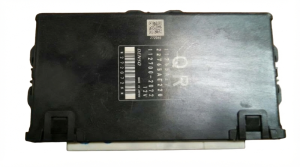
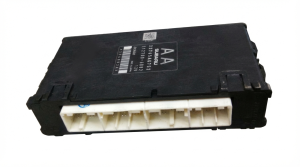
When a used part is the smart pick: A used OEM Engine Control Module (ECM) is a smart, cost-effective choice if, and only if, you have confirmed the original ECM is faulty and have a definitive plan for programming. It is not a DIY-friendly plug-and-play part.
Donor-vehicle mileage cap: roughly under 150000 miles for the part to have meaningful remaining life.
What to inspect on the donor part:
- Part number MUST be an exact match to the original unit.
- Inspect all connector pins for corrosion, moisture, or physical damage.
- Purchase from a reputable auto recycler that offers a warranty and return policy.
- Ask if the donor vehicle's history is known (e.g., was it in a flood?).
OEM-only on this vehicle (don't cheap out):
- Engine Control Module (ECM)
Brands owners have reported issues with on this vehicle:
- No-name, unbranded remanufactured ECMs from online marketplaces without a strong warranty and clear programming instructions should be avoided.
Real Owner Stories
Aggregated from forums and TSBs cited above. Mileages and costs reflect what owners reported in those sources.
Subaru Forester
Symptoms: A user found a completely corroded and broken ground strap hanging near the engine.
What fixed it: Commenters identified it as a common problem and advised immediate replacement of the ground strap to prevent major electrical issues.
Source hint: Reddit r/autorepair: "Piece hanging between what looked like engine and box beneath battery..."
2010 Subaru Forester
Symptoms: The owner discovered one of the two braided ground straps had completely corroded away.
What fixed it: Other owners recommended upgrading the small OEM straps with a heavier gauge cable as a worthwhile preventative modification to avoid electrical problems.
Source hint: Subaru Forester Club UK: "ground wire or earth straps"
2014-2016 Subaru XV Crosstrek Hybrid
Symptoms: The vehicle was setting a P0604 code, which was found to be caused by rapid cycling of the ignition.
What fixed it: A specific ECM software update was released to correct the logic and resolve the code.
Source hint: TSB 07-107-16R
Related OBD-II Codes
Frequently Asked Questions
My 2015 Forester's battery keeps dying. Is this a known problem that could cause a P0604 code?
Are the factory ground straps on my Forester really a common failure point?
I heard there's a software update for P0604. Does that apply to my 2014-2018 Forester?
Could a bad alternator on my 2016 Forester cause this P0604 code?
My mechanic wants to replace the ECM for P0604. Should I do it?
What is the first thing I should check myself if I get a P0604 code?
Helpful Videos
Used OEM Parts in Stock


New Aftermarket Parts Available


The information in this article is provided for general reference and educational purposes only. Vehicle specifications, procedures, and part compatibility can vary by production date, trim level, and region. Always consult your vehicle's factory service manual and verify part numbers before purchasing or performing repairs. Safety-critical components such as airbags, seat belts, and braking systems should be installed by a qualified professional.
- Subaru Forester:
- 🎬 Helpful Videos
- 🛍️ Shop This Part
- What's Unique About the 2014-2018 Subaru Forester
- Symptoms You May Notice
- Most Likely Causes
- Rare But Worth Checking
- Diagnosis Steps
- Parts You'll Likely Need
- Related Codes That Often Appear With This One
- Technical Service Bulletins (TSBs) & Recalls
- Platform-Specific Known Issues
- Mechanic-Grade Diagnostic Values
- Hidden / Shadow Codes Worth Checking
- Scan Tool Commands That Help
- Wiring & Ground Locations
- OEM Part Supersession History
- Model Year Variations Within This Range
- Diagnostic Flowchart
- Used vs. New Parts: Buying Guide for This Vehicle
- Real Owner Stories
- Subaru Forester
- 2010 Subaru Forester
- 2014-2016 Subaru XV Crosstrek Hybrid
- Related OBD-II Codes
- Frequently Asked Questions
- 🎟️ Get 5% Off